Sichuan Province Attractions



Chengdu Metro
The project of the 9-line metro system started at 2005, but so far, only Line 1 is operating, Line 2 is under construction,and will be completed by the end of 2012. Construction of Line 3 is just going to start.
Tourists may have little chance to use the metro when trave...
The project of the 9-line metro system started at 2005, but so far, only Line 1 is operating, Line 2 is under construction,and will be completed by the end of 2012. Construction of Line 3 is just going to start.
Tourists may have little chance to use the metro when travelling in Chengdu,due to its incomplete metro system.
Stops alone the Line 1(from north to south)
升仙湖(Shengxianhu)-火车北站(North Railway Station)-人民北路(Renmin Road North)-文殊院(Wenshu Monastery)-骡马市(Luomashi)-天府广场(Tianfu Square)-锦江宾馆(JinjiangHotel)-华西坝(Huaxiba)-省体育馆(Sichuan gymnasium)-倪家桥(Nijiaqiao)-桐梓林(Tongzilin)-火车南站(South Railway Station)-高新(Hi-tech Zone)-金融城(Finantial District)-孵化园(Incubation Center)-世纪城(Centry City)
Sichuan Province Articles
San Sheng Xiang
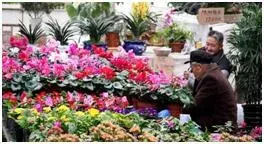
San Sheng Xiang (三圣乡), one of our favorite ten place in chengdu , is a flower growing village just outside of the Third Ring Road about 30 minutes from the center...
San Sheng Xiang (三圣乡), one of our favorite ten place in chengdu , is a flower growing village just outside of the Third Ring Road about 30 minutes from the center of Chengdu. The development, dubbed Flower Town by locals and foreigners, is intended to link the urban and rural areas of Chengdu and provide jobs and income for local farmers. For us, it’s a great place to spend an afternoon outside of the city, basking in the sunlight and lush surroundings away from crowded streets and honking car horns.
The project envisioned a flower manufacturing base with foreign cooperation that could sell to residents of the city of Chengdu and also export to other Chinese cities and abroad. Local farmers were encouraged to invest money in the project as well as switch traditional crops for flowers. The idea has worked inasmuch as local farmers have gained a new source of income and have managed, for the most part, to upgrade their standard of living.
The flower base also developed into a bed and breakfast phenomenon on the weekends, as local farmers opened up their doors to throngs of city-slickers wanting to get away from the urban chaos, buy some flowers for their homes and eat home-style meals.
Many of the locals also rent their homes out long term to artists, musicians and foreigners who are eager to live in a cleaner, greener environment. There have been some hiccups, as real estate developers and local government officials buy and develop land owned by local farmers, but the overall goal of enriching the countryside, bringing development to the suburban areas and giving city residents a place to enjoy themselves has been reached.
We recently visited San Sheng Xiang and took some pictures on a busy weekend. If you are in need of some flowers, some homestyle cooking or just a day of walking around in a less urban setting, then hop on the number 56 (or 343) bus heading east and get off at the main gate of San Sheng Xiang. The gate on your left is a large brown structure with four A’s proudly written across the top to signify that Flower Town has been designated a Class 4-A tourist destination by the local government.
Once you reach the main gate, the best thing to do is pick a direction and walk. There are bed and breakfast’s (known as Nong Jia Le’s) off of the main street and the main flower warehouse is right across from the main gate. There are also people selling flowers up and down the main highway leading to Flower Town and in the development itself.

Teddy Bear Museaum Chengdu
Teddy Bear Museaum Chengdu according to the lyrics written in 1932 by Irish song writer Jimmy Kenndy...
"If you go down in the woods today you're sure of a big surprise
If you go down in the woods today you'd better go in disguise...
Teddy Bear Museaum Chengdu according to the lyrics written in 1932 by Irish song writer Jimmy Kenndy...
"If you go down in the woods today you're sure of a big surprise
If you go down in the woods today you'd better go in disguise
For every bear that ever there was will gather there for certain
Beacuse today's the day the Teddy Bears have their picnic"
Well here's some very good news, you don't have to go down in the woods, and you don't have to go in disguise, you just have to make your way to Chengdu's Teddy Bear Museum located on the banks of Jimma Lake in Chengdu's Wenjiang district to see Teddy Bears in every imaginable costume and environment possible, and enjoy your own picnic by the lake.
Chengdu's Teddy Bear Museum, said to be the worlds largest covering more than 10,000 square meters, is home to more than 1,100 teddy bears. Teddy bears designed by world famous designers, Teddy bears wearing all manner of costumes and set in minature envoronments depicting famous events, and places including the great man-made wonders of the world such as Indiia's Taj Mahal, Egypt's Pyramids, Jordan's Petra, and of course China's Great Wall.
Teddy Bears, named after Theodore Roosevelt Jr. following the famous hunting incident of 1902 whereby he stopped a black bear being clubbed and taunted, and had it mericfully put down, were developed simultaneously by toy makers Morris Mitchtom in the USA and Richard Steiff in Germany. The bears housed in the 12 halls of Chengdu's museum have been collected from around the world with many limited editions, and rare specimens, even a Titanic Memorial Bear of which there were only 600 produced.
The museum, a great destination for families, offers a fun and entertaining look at world history, famous world events, famous accomplishments throughout history and famous works of art such as Michelangelo's David, and Van Goh's Bedroom in Arles, along with several notable characters from the modern era.
However the museum is not just all Teddy Bears, there's a Colour Painting Area designed by the famous Hong Kong artist Mr. Wang Hai which shows off a number of modern-day superstars such as Capatain Jack Sparrow from the Pirates of the Carabean, pop legend Michael Jackson, and Kund Fu master Li Xialong to name a few. An Optical Illusion Hall provides another break from the the Teddy's and a great opportunity for some weird and wonderful selfies.
Mini Barto take a break and enjoy some refreshments, and with thousands to choose from a cuddly teddy can be found waiting for you to take home from the Souvenir Bear Shop.
Jiuzhai Valley
...
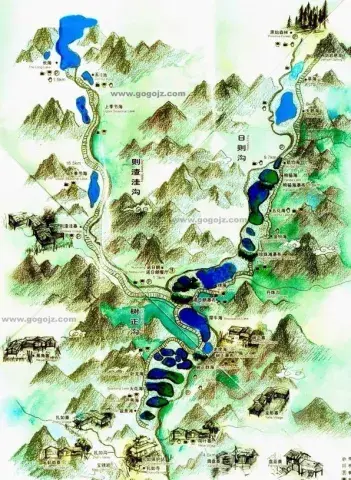
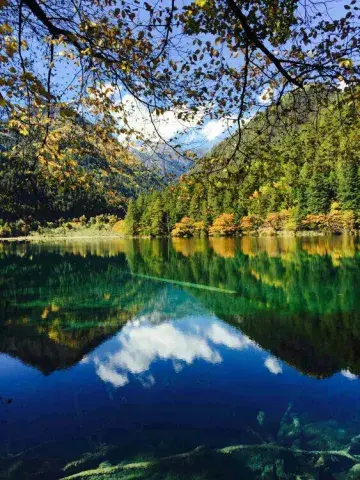
Jiuzhai Valley is nestled amongst a dozen high mountain peaks which can remain snow covered throughout the year. Meanwhile far below the white capped peaks the river valley glistens and reflects amazing landscapes in crystal clear waters.
Scattered in trapezoid fashion between these heavenly lakes, ponds and pools are one hundred & fourteen large & small waterfalls, seventeen waterfall gathering areas, five travertine banks, forty seven fountains, and eleven turbulences. All of which span, in the form of a Y shaped necklace, over an area of some 60km. Majestically sitting amongst the twelve, mostly snow covered peaks, at an elevation of 1870m, Jiuzhai Valley is the only scenic spot boasting alpine lakes, waterfalls, and travertine banks in China, and numbered amongst only a few such landscapes in the world.
The smallest water pool of the valley is only several square meters in size, while the largest, Changhai Lake, stretches on for 7 eye-pleasing kilometers. Clear all year round, the lakes simmer with gorgeous blues, yellows, oranges, greens that literally glow in the sunlight. On such bright clear days, reflecting the blue sky, white clouds, snow peaks and the surrounding forests, the lakes present a most picturesque scene throughout all four seasons. Thus it is said “no water is as good as that at the Jiuzhai Valley”.
Jiuzhai also boasts abundant flora and fauna species. The 300km2 primeval forest is home to 3,553 indigenous species including Kingdonia Uniflora, Circaeaster Agrestis, Fargesia and several other plants from the late Cretaceous to early Tertiary periods. The forest also provides a very favorable habitat for a wide variety of animals. Preliminary surveys indicate there are 693 invertebrates and 313 vertebrates in the valley. Rare species such as giant panda, snub-nosed monkey, red panda and antelope also constitute another unique attraction.
Certainly not the only reason to visit Leshan but most certanly a massive reason to do so. At over 70 meters tall Leshan's iconic 1200 year old giant seated Buddha (the worlds tallest) draws world wide visitors to this laid-back river town.
Overlooking the confluence of the rivers Dadu and Min whilst resting on feet with big toes each longer than 8 meters. Leshan's giant Buddha has shoulders spanning a whopping 28 meters, sitting below ears that dangle for 7 meters, this beautiful giant statue carved into a pink rock-face can bring visiting crowds to a near stand-still.
After getting up-close and personal with the Buddha's enormous stone head, and taking in the panoramic cliff views, descending a rather steep set of stairways allows visitors to linger at the Buddha's feet for a neck-craning view of this wonderfully incredible sight. Even the return climb to the cliff's top via hidden stone steps recessed into the right side of the cliff continues to inspire admiration for this magnificent man-made wonder.
By adding a quick boat trip , visitors will be afforded about 10 minutes to snap the perfect selfie, and or full length picture from the river to include the two river-side guards also carved into the cliff but not visible from land. The boat trips, costing 70CNY per person, leave at very regular intervals from Leshan dock are fun, and safe with each passenger being required to wear a life vest upon boardin
A word of caution, where possible try to avoid visiting this grand old Buddha during a Chinese national holiday, or on weekends when crowds are typically at their largest.
Top Sichuan Province Tours
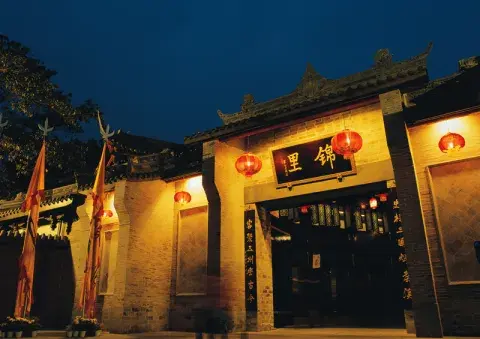
$200 Per Day
CHENGDU, A PANDA CITY, A GOURMET CITY, A TEA CITY, LOOKING FOWARD TO YOUR ARRIVAL
Chengdu, with an area of 12,400 square kilometers and a polulation of about 14,170,000 is not just the biggest provincial capital in west China, but also the only city in the history of China whose name has reminded the same for 3,000 years since its establishment. In Chinese, "Cheng" means "success or successful" and "Du" means "big city or capital". This "Successful City" boasts a long history. It is believed that everything about Chengdu has their origin from "Sanxingdui Ruins", from where you can deeply discover the history story of Chengdu.
...Read moreChengdu, with an area of 12,400 square kilometers and a polulation of about 14,170,000 is not just the biggest provincial capital in west China, but also the only city in the history of China whose name has reminded the same for 3,000 years since its establishment. In Chinese, "Cheng" means "success or successful" and "Du" means "big city or capital". This "Successful City" boasts a long history. It is believed that everything about Chengdu has their origin from "Sanxingdui Ruins", from where you can deeply discover the history story of Chengdu.
Giant pandas definitely are the best calling card and trademark of Chengdu. Every year, million of people are attracted by giant pandas to spend their holidays here, go sightseeing here, make investment here and even settle here permanently. The reason is that for people around the world, the charm of giant pandas cannot be replaced by anything else.
Various kinds of wonderful food shall be another reason attracting you to visit Chengdu. Of the four most famous schools of culinery art in China (Beijing cuisine, Sichuan cuisine, Jiangsu cuisine, Guangdong cuisine), Sichuan cuisine boasts tongue-numbing, hot, delicate and fresh taste and a variety of flavors, as "each dish has its unique taste and no two dishes have the same flavor." Such spcial flavors as fish-flavored, gongbao (with peanuts), and water-boiled are incomparable at home and abroad.
"The teahouses in Sichuan top the world, and those in Chengdu Top Sichuan." This widespread saying not only points out the status of Chengdu's teahouses but also the inseverable ties between Chengdu culture and tea. Like bars in Paris and cafes in Vienna, teahouse add a touch of refinement and leisureliness to Chengdu, an ancient yet modern metropolis. The practice of driking tea prevailed in Sichuan as earlt as prior to the Qin and Han Dynasties.
Wish you can have a nice trip in Chengdu. You will love it.
$1 Per Day
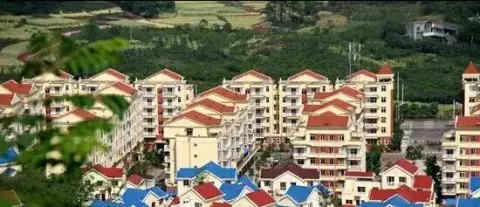
One town sleep under the mouantain
One biggest surprise on the high-speed way.
Pool , lake, grass, trees and more interesting things make this little town like one fairy tale.
The colors of these buildings are cute,green、 red、 blue, all the colors make this place looks like are the one line with the sky .
Some kind of farms here, wehn strawberry grown up , you can also pick the up , you get more closer here, more surprises for you.
Good place for pleasure.

$40 Per Day
Lake Lugu
LAke Lugu is a province located between Yanyuan County in Sichuan Province and Ninglang County in yunnan Province,258 kilometers from Xichang,and 830kilometers from chengdu. Lake Lugu is a provincial sxenic spot in sichuan. The community of Lake Lugu is the only existing matriarchal society in the world. The custom of the "walking marriage"is a "living fossil" for the study on the evolution of human marriage. And Lugu Lake is world famous for its beautiful natural scenery and for its old and mysterious custom of a "walking marriage"....Read more
LAke Lugu is a province located between Yanyuan County in Sichuan Province and Ninglang County in yunnan Province,258 kilometers from Xichang,and 830kilometers from chengdu. Lake Lugu is a provincial sxenic spot in sichuan. The community of Lake Lugu is the only existing matriarchal society in the world. The custom of the "walking marriage"is a "living fossil" for the study on the evolution of human marriage. And Lugu Lake is world famous for its beautiful natural scenery and for its old and mysterious custom of a "walking marriage". We visit the Qionghai Lake Scenic Area in here.