Sichuan Province Attractions
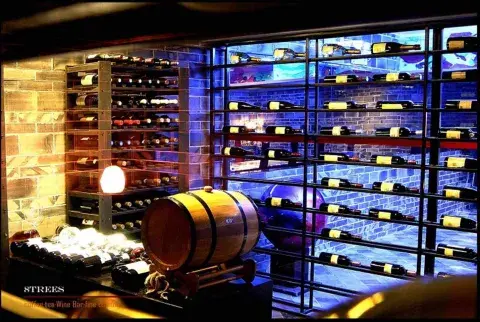
Traffic Inn
The Traffic Hotel is actually a youth hostel, but it is listed under hotels to avoid confusion. While the Traffic Hotel’s staff and atmosphere isn’t as friendly and personable as other hostels in Chengdu, it does have an unbeatable location. It is adjacent to the Xinnanmen bus st...
The Traffic Hotel is actually a youth hostel, but it is listed under hotels to avoid confusion. While the Traffic Hotel’s staff and atmosphere isn’t as friendly and personable as other hostels in Chengdu, it does have an unbeatable location. It is adjacent to the Xinnanmen bus station, which is where you can catch buses to basically anywhere in Sichuan. Since Sichuan’s railway system is rather inconvenient, you will be riding many buses on your journeys in Sichuan province. The hotel is right along the river, across from Dave’s Oasis and within 30 minutes walk of basically anywhere relevant in Chengdu.
Guests say the rooms and bathrooms are very clean, but the hotel doesn’t have many public areas for travelers to meet and chat. It’s a youth hostel that feels like a hotel. Still, there is laundry, a game room, and a travel desk to book tours and tickets. If you call ahead, the Traffic Hotel can arrange to pick you up at the train station for free. Dorm beds without bathroom are as cheap as Y30-40, while there are double rooms for Y200-240 including bathroom.
Just outside the hotel there is a bulding with a Thai restaurant attached to a low-key bar called the Anchor Bar. A Canadian recently reported finding a bug the size of his thumb in his salad in the Thai restaurant, so be careful.
Directions: The Traffic Hotel is on Linjiang Zhonglu, right along the south side of the river. If you get off the bus at Xinnanmen station, you can’t miss it. If you take bus 16 or 99 from the train station, get off after you cross the river after passing through the center of town. Then walk east along the river, the hotel will be on your right.


Sichuan Province Articles

Chinese Cyclist
National road 318 from Chengdu to Lhasa via TAR area considered to be most difficult and dangerous road in China, more and more young Chinese challenge themselves on cycling from Chengdu to Lhasa along this road, total distance is 2166 km and need about 40 days, will conquer 2 mountains over 5000...
National road 318 from Chengdu to Lhasa via TAR area considered to be most difficult and dangerous road in China, more and more young Chinese challenge themselves on cycling from Chengdu to Lhasa along this road, total distance is 2166 km and need about 40 days, will conquer 2 mountains over 5000 meters and10 mountains over 4000 meters, it's unbelievable trip will obtain great scenery along the way.
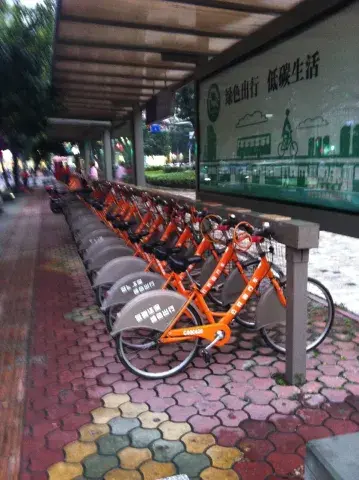
Public Bicycle Rental
Stroll around the city with a bicycle is the best way to get close to local people and know the place. Now it's easy to get a bicycle from I Tianfu Cycling station, which dotted in the city proper by Chengdu Public Transportation Company.
...Stroll around the city with a bicycle is the best way to get close to local people and know the place. Now it's easy to get a bicycle from I Tianfu Cycling station, which dotted in the city proper by Chengdu Public Transportation Company.
You need to require a local transportation card (Tianfu Tong), which can get from bus stations, some super markets and grocery stores, this card also can be used for city bus and metro, after recharging 300 RMB as bicycle deposit to your card, you can use the card to get a bicycle from any cycling station.
It's free if you only used for less than one hour, then every two hours is 2 RMB.
You can get your deposit back from Public Transportation Company service window when you won't use this service anymore.
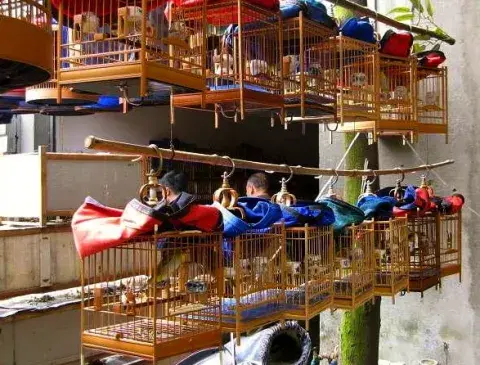
Chengdu Bird Market
Market-day for Chengdu Bird Market is on Wednesday, Saturday and Sunday, but Saturday and Sunday are more crowded and bird lovers from every corner of city gather together to exchange bird feeding experience, buy bird food and utensils, and of course some bird lovers come to look for good quality...
Market-day for Chengdu Bird Market is on Wednesday, Saturday and Sunday, but Saturday and Sunday are more crowded and bird lovers from every corner of city gather together to exchange bird feeding experience, buy bird food and utensils, and of course some bird lovers come to look for good quality pullus.
Top Sichuan Province Tours
$200 Per Day
CHENGDU, A PANDA CITY, A GOURMET CITY, A TEA CITY, LOOKING FOWARD TO YOUR ARRIVAL
Chengdu, with an area of 12,400 square kilometers and a polulation of about 14,170,000 is not just the biggest provincial capital in west China, but also the only city in the history of China whose name has reminded the same for 3,000 years since its establishment. In Chinese, "Cheng" means "success or successful" and "Du" means "big city or capital". This "Successful City" boasts a long history. It is believed that everything about Chengdu has their origin from "Sanxingdui Ruins", from where you can deeply discover the history story of Chengdu.
...Read moreChengdu, with an area of 12,400 square kilometers and a polulation of about 14,170,000 is not just the biggest provincial capital in west China, but also the only city in the history of China whose name has reminded the same for 3,000 years since its establishment. In Chinese, "Cheng" means "success or successful" and "Du" means "big city or capital". This "Successful City" boasts a long history. It is believed that everything about Chengdu has their origin from "Sanxingdui Ruins", from where you can deeply discover the history story of Chengdu.
Giant pandas definitely are the best calling card and trademark of Chengdu. Every year, million of people are attracted by giant pandas to spend their holidays here, go sightseeing here, make investment here and even settle here permanently. The reason is that for people around the world, the charm of giant pandas cannot be replaced by anything else.
Various kinds of wonderful food shall be another reason attracting you to visit Chengdu. Of the four most famous schools of culinery art in China (Beijing cuisine, Sichuan cuisine, Jiangsu cuisine, Guangdong cuisine), Sichuan cuisine boasts tongue-numbing, hot, delicate and fresh taste and a variety of flavors, as "each dish has its unique taste and no two dishes have the same flavor." Such spcial flavors as fish-flavored, gongbao (with peanuts), and water-boiled are incomparable at home and abroad.
"The teahouses in Sichuan top the world, and those in Chengdu Top Sichuan." This widespread saying not only points out the status of Chengdu's teahouses but also the inseverable ties between Chengdu culture and tea. Like bars in Paris and cafes in Vienna, teahouse add a touch of refinement and leisureliness to Chengdu, an ancient yet modern metropolis. The practice of driking tea prevailed in Sichuan as earlt as prior to the Qin and Han Dynasties.
Wish you can have a nice trip in Chengdu. You will love it.
$1 Per Day
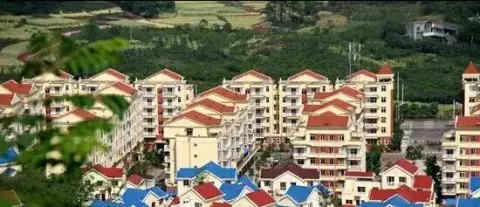
One town sleep under the mouantain
One biggest surprise on the high-speed way.
Pool , lake, grass, trees and more interesting things make this little town like one fairy tale.
The colors of these buildings are cute,green、 red、 blue, all the colors make this place looks like are the one line with the sky .
Some kind of farms here, wehn strawberry grown up , you can also pick the up , you get more closer here, more surprises for you.
Good place for pleasure.

$40 Per Day
Lake Lugu
LAke Lugu is a province located between Yanyuan County in Sichuan Province and Ninglang County in yunnan Province,258 kilometers from Xichang,and 830kilometers from chengdu. Lake Lugu is a provincial sxenic spot in sichuan. The community of Lake Lugu is the only existing matriarchal society in the world. The custom of the "walking marriage"is a "living fossil" for the study on the evolution of human marriage. And Lugu Lake is world famous for its beautiful natural scenery and for its old and mysterious custom of a "walking marriage"....Read more
LAke Lugu is a province located between Yanyuan County in Sichuan Province and Ninglang County in yunnan Province,258 kilometers from Xichang,and 830kilometers from chengdu. Lake Lugu is a provincial sxenic spot in sichuan. The community of Lake Lugu is the only existing matriarchal society in the world. The custom of the "walking marriage"is a "living fossil" for the study on the evolution of human marriage. And Lugu Lake is world famous for its beautiful natural scenery and for its old and mysterious custom of a "walking marriage". We visit the Qionghai Lake Scenic Area in here.