Sichuan Province Attractions

Sichuan University
Locally known as 'Chuan Da' (川大), Sichuan University is one of China's top centers of higher learning. There are Chinese language and literature courses available for foreign students. Foreign students have the option of full semester, summer term, and short term courses. See the university'...
Locally known as 'Chuan Da' (川大), Sichuan University is one of China's top centers of higher learning. There are Chinese language and literature courses available for foreign students. Foreign students have the option of full semester, summer term, and short term courses. See the university's website below for more information.

Leshan Giant Stone Buddha
This superb adventure in remote China combines the experience of real Tibetan culture with a spectacular trek through the beautiful valleys of Riwoche and Moxi to the Monastery below the ice-fluted shark's fin of Minya Konka (7556m), the world's third highest peak outside the Himalaya. Situated o...
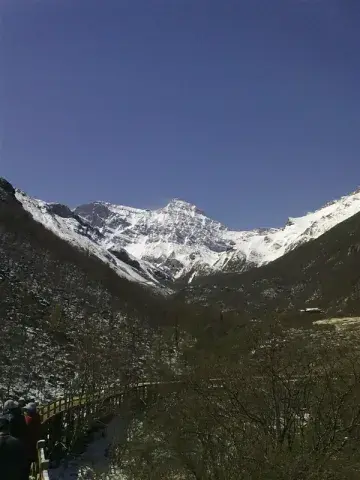
This superb adventure in remote China combines the experience of real Tibetan culture with a spectacular trek through the beautiful valleys of Riwoche and Moxi to the Monastery below the ice-fluted shark's fin of Minya Konka (7556m), the world's third highest peak outside the Himalaya. Situated on the eastern edge of the Tibetan Plateau, Minya Konka is also one of the most sacred mountains to Tibetan Buddhists, equal in status to Mount Kailas in Western Tibet. Impressive mountain panoramas and austere glaciers, babbling brooks and river torrents, azure blue lakes, enchanting mixed woodland, grazing yaks and their nomadic herders, chortens, mani walls, prayer flags and elaborately decorated Gompas can all be found here.
Our week long trek begins just south of Kangding. the 'Gateway to Tibet'. We make a steady ascent of the Riwoche valley with its soaring cliffs and fast river torrents. At the head of this valley we enter a high grazing area where we will encounter the temporary settlements of the nomadic yak herders. Climbing to cross the 4900 metre Bhuchu La, we then descend the beautiful Moxi valley eventually entering forests of rhododendron, juniper, birch and oak which in October become a riot of Autumnal colours. We stay overnight in the Konka monastery and the climax of our trek is the climb to the ridge above for unrivalled views of Minya Konka and the Daxue range of 6000-metre snowy peaks. Although Minya Konka is the undoubted centre-piece of this great trekking holiday to a little visited mountain region of Sichuan, there is much more to the holiday than this, admittedly, superbly photogenic mountain.
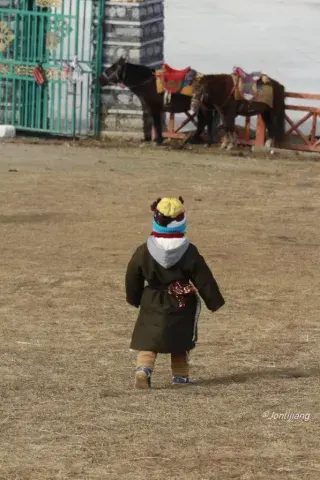
If you want to see real Tibetan culture, this is where you should come. This holiday will give you an insight into the rural life of the Kham region and also of the Minyak people who are an ethnic group distinct again from their Khampa neighbours. Combined with a fascinating journey through Sichuan province, with its many spectacular monasteries, gigantic 'hill paintings' and the great Mani Pile of Tagong, and sightseeing in the city of Chengdu, including the Pandas at the world famous breeding centre. This is a world class trekking holiday and also a real adventure and travel experience in an area visited by very few Westerners.
Wenshu Monastery
In 1691 it was believed that the monk Ci Du reached such a state of enlightenment that he reportedly shook the ground and radiated light. Local officials concluded he must be the reincarnation of Manjusri and the monastery was renamed Wenshu (Manjusri). The Zen Buddhist monastery w...
In 1691 it was believed that the monk Ci Du reached such a state of enlightenment that he reportedly shook the ground and radiated light. Local officials concluded he must be the reincarnation of Manjusri and the monastery was renamed Wenshu (Manjusri). The Zen Buddhist monastery was originally built between 605-617 during the Tang Dynasty.
The Wenshu temple itself is easily the best-preserved temple in Chengdu. It is an imposing three story building as each story has a high ceiling. Three large paintings on the first floor should not be missed as each painting weaves an intricate tale about Buddhism in China or India. The paintings are filled with Buddhist symbolism set on a background of Indian and Chinese natural wonders and landmarks. If you speak Chinese, the monks will be more than happy to tell you about the paintings.
|
|
The monastery is a shady, quiet place to stroll about. Rugged rock gardens and bonsai trees bring a peaceful setting to a monastery crammed into urban China. Different buidlings around the complex contain nearly 1000 calligraphic works done by famous calligraphers from China, and suprisingly Japan. The inclusion of Japanese works is a testament to the shared religious friendship that transcends two nations historically at odds. |

Next to the Wenshu Temple, the Peace Pagoda of a Thousand Buddhas is a new addition to the monastery at 22 meters in height. The tallest iron cast pagoda in China features six bells at its top which chime with the wind. Naturally the monastery also has a large teahouse on the east side. If you visit the monastery, definitely have a meal at the vegetarian restaurant next to the teahouse. Dishes range from Y4-75, and they are excellent. Don’t be worried by the words "pork" and "beef" all over the bilingual menu, they use fake substitutes for meat. Also, don’t be scared away by dishes which the menu says are spicy. Compared to hotpot, they aren’t really spicy at all.
Recently a pleasant tourist neighborhood was built just to the east of the entrance. There are plenty of dining and shopping options if you are craving either after a stroll at the monastery.
Directions: The Wenshu Monastery is just off of the east side of Renmin Zhonglu down an alley called XiZhuShi Jie. If you take the 16 or 99 bus north along Renmin Lu, listen carefully, because the driver will call out "Wenshu Yuan" when you reach that stop. If you take a taxi, the fare should be Y10 or less from Tianfu Square.

Sichuan Province Articles
Paradise for Eaters
Talking about foods in Chengdu, as a local girl, I feel extremely proud. Chengdu has a got a fame for all kinds of delicious foods. For me, I’d like to divide them into three parts----local dishes, local snacks and hotpot....
Talking about foods in Chengdu, as a local girl, I feel extremely proud. Chengdu has a got a fame for all kinds of delicious foods. For me, I’d like to divide them into three parts----local dishes, local snacks and hotpot.
There is no doubt about the popularity of Sichuan foods around this world, and to many people, when they think about Sichuan foods, they will also think about the endless spicy flavor and their burning tongue. Spicy, this should be the most typical impression left to many visitors, as a local girl, I have to say, yeah, because of the humid and wet climate, people of Chengdu like to eat spicy foods, but it is not always the same case. In Chengdu, we have countless delicious foods, even though some of them are quite spicy but still, there are a lot of foods, dishes, snacks, hotpots that are totally not spicy, so don’t be afraid of trying them.
Talking about local dishes, I think it is the best way to see how careful but also how picky our Chengdu people are when we make our dishes. Foods in Sichuan are famous for its various sources, I have met a lot of lovely foreign people, sometimes when we go to a local dish restaurant, they will feel so confused when the waiter brings the dishes, because almost half of the dish is all kinds of sources and they don’t know which part they should eat. To tell a cook is qualified or not, it is very easy to tell from the taste of the dishes he makes. As long as he is careful enough to make all the sources in a balanced way, then he is a good cook for our Sichuan dishes. Now that you come to Sichuan, why not just be picky and try our exquisitely cooked local dishes?
One thing you must try when you are in Sichuan is our local snacks. Most of them have a long long history, perhaps even as long as hundreds of years. Chengdu has a history of more than 2700 years, together with the long history is our various local snacks. Almost each snack has its own story, they can be spicy, sour, sweet, salty; they can be also cute, round, slippery, colorful even surprising. Once you are in Chengdu, go to the time-honored snacks’ restaurant, order a collection of the local snacks, just give your stomach a great enjoyment!
Hotpot is a must-try when you are in Chengdu. Many eaters know that the original place for hotpots was Chongqing, another city next to Chengdu, however, the flavors of the hotpots in Chengdu are never worse than Chongqing. Not all the hotpots are spicy, we have two most common hotpots, one is the traditional flavor, can be spicy, but not too bad, the other one is not spicy at all, you can even drink the soup from it, which can be quite tasty and nutritious. But remember, never try the soup from another pot, unless, you have an iron tongue and stomach!
Sichuan foods are so famous for its reasons----almost all kinds of people can find something they like among our foods. When you are in Chengdu, just be a local people, forget how busy you are, how much you need to earn, just follow our local belief, live and be happy for the moment in your hand! Enjoy the most of your present life!
Ear massage / ear cleaning
In Chengdu tea houses,or the famous Jinli street or Kuanzhai Lane , you will see someone sitting on a bamboo chair, tilted his head, eyes closed, mouth revealing a trace from time to time issued by the inner pleasure expression, beside him stood a man staring at his ears, holding a heap tool...
In Chengdu tea houses,or the famous Jinli street or Kuanzhai Lane , you will see someone sitting on a bamboo chair, tilted his head, eyes closed, mouth revealing a trace from time to time issued by the inner pleasure expression, beside him stood a man staring at his ears, holding a heap tool salvage the dig, digging, as if looking for some treasure, this is for ear massage / or ear cleaning
When you sit in Chengdu teahouse chatting with friends, or leisurely walking in the street, you may hear the ringing "clatter" burst of trembling voice, heard this unique, trademark, exclusive trembling voice , those who are familiar with Chengdu, would know that the ear master signal at you
Chengdu is very relaxing, there are many tea houses.
pedicures, massage and acupuncture are national, I mean you can find these in other parts of China,but Ear Cleaning( or Ear massage) is unique to Chengdu, "a cup of tea, ear massage( ear cleaning) " has become a habit, a culture, a phenomenon in Chengdu.
how ear massage( ear cleaning) comes from?
According to legend, during the Tang Dynasty, Sichuan drought, the emperor visited the drought in Sichuan. Once the emperor wanted to inspect the situation along the river, the emperor sitting in the boat, the boat trackers were pulling on the bank. wind blows the sand to the emperor's mouth, nose, ears and nose.so they have to invite a master from barber shop to help pull out the sand from the ears. the master used a bamboo stick to dig the emperor's ears, and goose feather to sweep the ears. the emperor felt so comfortable and enjoyable, he rewarded the master.
are you still watching? just have a try of the fantastic ear massage
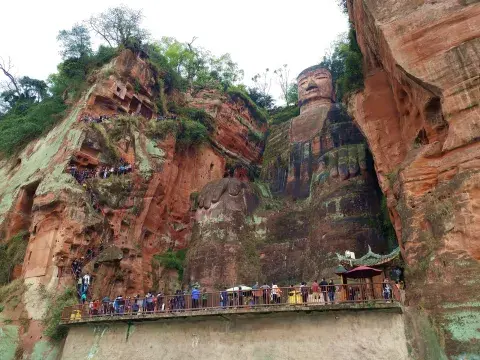
Leshan Grand Buddha
Leshan Giant Buddha Scenic Area is the must-see highlight of Leshan City. The world-famous Giant Buddha, carved into the western river cliff face of Lingyun Mountain, was included by UNESCO on the list of the World Heritage sites in 1996....
Leshan Giant Buddha Scenic Area is the must-see highlight of Leshan City. The world-famous Giant Buddha, carved into the western river cliff face of Lingyun Mountain, was included by UNESCO on the list of the World Heritage sites in 1996. Praised as the largest and the tallest carved stone Buddha Statue in the world, the Giant Buddha stands 70 meters tall. What makes the Giant Buddha so amazing is not only because of the huge size, but also the drainage system made of hidden gutters and channels. Because of this complex system, rainwater can be drained off, and the inner parts of the Buddha can keep dry and survive intact till now.
The opening hours of the Leshan Giant Buddha Scenic Spot:
1 st, April – 7 th, October ( Peak Seasons ): 07:30 – 18:30
8th ,October – 31st, March ( Low Seasons ): 08:00 – 17:30
Top Sichuan Province Tours
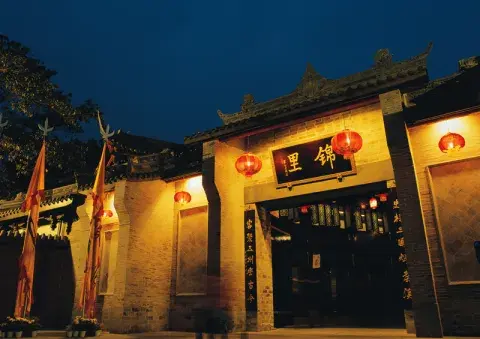
$200 Per Day
CHENGDU, A PANDA CITY, A GOURMET CITY, A TEA CITY, LOOKING FOWARD TO YOUR ARRIVAL
Chengdu, with an area of 12,400 square kilometers and a polulation of about 14,170,000 is not just the biggest provincial capital in west China, but also the only city in the history of China whose name has reminded the same for 3,000 years since its establishment. In Chinese, "Cheng" means "success or successful" and "Du" means "big city or capital". This "Successful City" boasts a long history. It is believed that everything about Chengdu has their origin from "Sanxingdui Ruins", from where you can deeply discover the history story of Chengdu.
...Read moreChengdu, with an area of 12,400 square kilometers and a polulation of about 14,170,000 is not just the biggest provincial capital in west China, but also the only city in the history of China whose name has reminded the same for 3,000 years since its establishment. In Chinese, "Cheng" means "success or successful" and "Du" means "big city or capital". This "Successful City" boasts a long history. It is believed that everything about Chengdu has their origin from "Sanxingdui Ruins", from where you can deeply discover the history story of Chengdu.
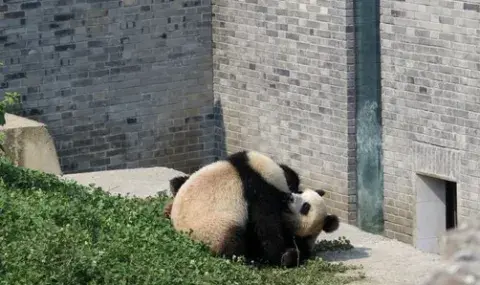
Giant pandas definitely are the best calling card and trademark of Chengdu. Every year, million of people are attracted by giant pandas to spend their holidays here, go sightseeing here, make investment here and even settle here permanently. The reason is that for people around the world, the charm of giant pandas cannot be replaced by anything else.
Various kinds of wonderful food shall be another reason attracting you to visit Chengdu. Of the four most famous schools of culinery art in China (Beijing cuisine, Sichuan cuisine, Jiangsu cuisine, Guangdong cuisine), Sichuan cuisine boasts tongue-numbing, hot, delicate and fresh taste and a variety of flavors, as "each dish has its unique taste and no two dishes have the same flavor." Such spcial flavors as fish-flavored, gongbao (with peanuts), and water-boiled are incomparable at home and abroad.
"The teahouses in Sichuan top the world, and those in Chengdu Top Sichuan." This widespread saying not only points out the status of Chengdu's teahouses but also the inseverable ties between Chengdu culture and tea. Like bars in Paris and cafes in Vienna, teahouse add a touch of refinement and leisureliness to Chengdu, an ancient yet modern metropolis. The practice of driking tea prevailed in Sichuan as earlt as prior to the Qin and Han Dynasties.
Wish you can have a nice trip in Chengdu. You will love it.
$1 Per Day
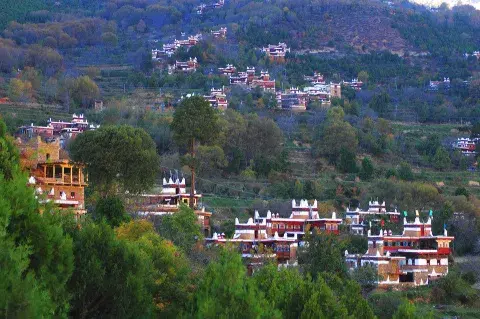
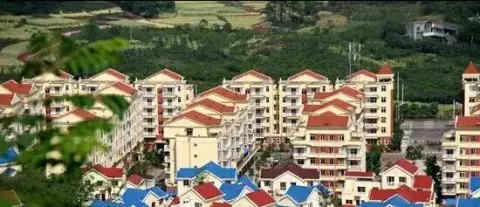
One town sleep under the mouantain
One biggest surprise on the high-speed way.
Pool , lake, grass, trees and more interesting things make this little town like one fairy tale.
The colors of these buildings are cute,green、 red、 blue, all the colors make this place looks like are the one line with the sky .
Some kind of farms here, wehn strawberry grown up , you can also pick the up , you get more closer here, more surprises for you.
Good place for pleasure.

$40 Per Day
Lake Lugu
LAke Lugu is a province located between Yanyuan County in Sichuan Province and Ninglang County in yunnan Province,258 kilometers from Xichang,and 830kilometers from chengdu. Lake Lugu is a provincial sxenic spot in sichuan. The community of Lake Lugu is the only existing matriarchal society in the world. The custom of the "walking marriage"is a "living fossil" for the study on the evolution of human marriage. And Lugu Lake is world famous for its beautiful natural scenery and for its old and mysterious custom of a "walking marriage"....Read more
LAke Lugu is a province located between Yanyuan County in Sichuan Province and Ninglang County in yunnan Province,258 kilometers from Xichang,and 830kilometers from chengdu. Lake Lugu is a provincial sxenic spot in sichuan. The community of Lake Lugu is the only existing matriarchal society in the world. The custom of the "walking marriage"is a "living fossil" for the study on the evolution of human marriage. And Lugu Lake is world famous for its beautiful natural scenery and for its old and mysterious custom of a "walking marriage". We visit the Qionghai Lake Scenic Area in here.