Danba Tibetan Village

This superb adventure in remote China combines the experience of real Tibetan culture with a spectacular trek through the beautiful valleys of Riwoche and Moxi to the Monastery below the ice-fluted shark's fin of Minya Konka (7556m), the world's third highest peak outside the Himalaya. Situated o...

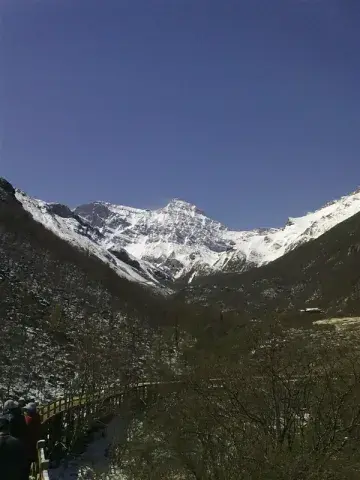
This superb adventure in remote China combines the experience of real Tibetan culture with a spectacular trek through the beautiful valleys of Riwoche and Moxi to the Monastery below the ice-fluted shark's fin of Minya Konka (7556m), the world's third highest peak outside the Himalaya. Situated on the eastern edge of the Tibetan Plateau, Minya Konka is also one of the most sacred mountains to Tibetan Buddhists, equal in status to Mount Kailas in Western Tibet. Impressive mountain panoramas and austere glaciers, babbling brooks and river torrents, azure blue lakes, enchanting mixed woodland, grazing yaks and their nomadic herders, chortens, mani walls, prayer flags and elaborately decorated Gompas can all be found here.

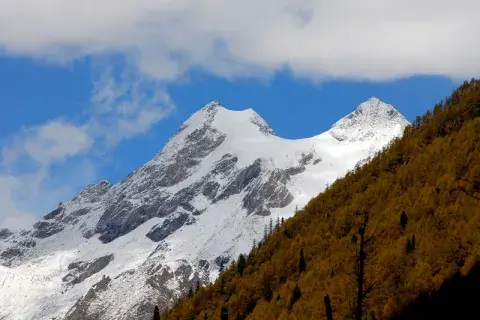
Our week long trek begins just south of Kangding. the 'Gateway to Tibet'. We make a steady ascent of the Riwoche valley with its soaring cliffs and fast river torrents. At the head of this valley we enter a high grazing area where we will encounter the temporary settlements of the nomadic yak herders. Climbing to cross the 4900 metre Bhuchu La, we then descend the beautiful Moxi valley eventually entering forests of rhododendron, juniper, birch and oak which in October become a riot of Autumnal colours. We stay overnight in the Konka monastery and the climax of our trek is the climb to the ridge above for unrivalled views of Minya Konka and the Daxue range of 6000-metre snowy peaks. Although Minya Konka is the undoubted centre-piece of this great trekking holiday to a little visited mountain region of Sichuan, there is much more to the holiday than this, admittedly, superbly photogenic mountain.

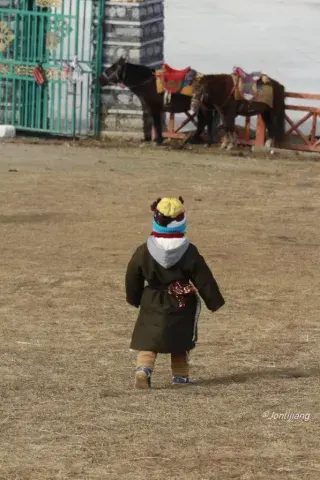
If you want to see real Tibetan culture, this is where you should come. This holiday will give you an insight into the rural life of the Kham region and also of the Minyak people who are an ethnic group distinct again from their Khampa neighbours. Combined with a fascinating journey through Sichuan province, with its many spectacular monasteries, gigantic 'hill paintings' and the great Mani Pile of Tagong, and sightseeing in the city of Chengdu, including the Pandas at the world famous breeding centre. This is a world class trekking holiday and also a real adventure and travel experience in an area visited by very few Westerners.

Tagong

This superb adventure in remote China combines the experience of real Tibetan culture with a spectacular trek through the beautiful valleys of Riwoche and Moxi to the Monastery below the ice-fluted shark's fin of Minya Konka (7556m), the world's third highest peak outside the Himalaya. Situated o...

This superb adventure in remote China combines the experience of real Tibetan culture with a spectacular trek through the beautiful valleys of Riwoche and Moxi to the Monastery below the ice-fluted shark's fin of Minya Konka (7556m), the world's third highest peak outside the Himalaya. Situated on the eastern edge of the Tibetan Plateau, Minya Konka is also one of the most sacred mountains to Tibetan Buddhists, equal in status to Mount Kailas in Western Tibet. Impressive mountain panoramas and austere glaciers, babbling brooks and river torrents, azure blue lakes, enchanting mixed woodland, grazing yaks and their nomadic herders, chortens, mani walls, prayer flags and elaborately decorated Gompas can all be found here.

Our week long trek begins just south of Kangding. the 'Gateway to Tibet'. We make a steady ascent of the Riwoche valley with its soaring cliffs and fast river torrents. At the head of this valley we enter a high grazing area where we will encounter the temporary settlements of the nomadic yak herders. Climbing to cross the 4900 metre Bhuchu La, we then descend the beautiful Moxi valley eventually entering forests of rhododendron, juniper, birch and oak which in October become a riot of Autumnal colours. We stay overnight in the Konka monastery and the climax of our trek is the climb to the ridge above for unrivalled views of Minya Konka and the Daxue range of 6000-metre snowy peaks. Although Minya Konka is the undoubted centre-piece of this great trekking holiday to a little visited mountain region of Sichuan, there is much more to the holiday than this, admittedly, superbly photogenic mountain.

If you want to see real Tibetan culture, this is where you should come. This holiday will give you an insight into the rural life of the Kham region and also of the Minyak people who are an ethnic group distinct again from their Khampa neighbours. Combined with a fascinating journey through Sichuan province, with its many spectacular monasteries, gigantic 'hill paintings' and the great Mani Pile of Tagong, and sightseeing in the city of Chengdu, including the Pandas at the world famous breeding centre. This is a world class trekking holiday and also a real adventure and travel experience in an area visited by very few Westerners.

Leshan Giant Stone Buddha

This superb adventure in remote China combines the experience of real Tibetan culture with a spectacular trek through the beautiful valleys of Riwoche and Moxi to the Monastery below the ice-fluted shark's fin of Minya Konka (7556m), the world's third highest peak outside the Himalaya. Situated o...

This superb adventure in remote China combines the experience of real Tibetan culture with a spectacular trek through the beautiful valleys of Riwoche and Moxi to the Monastery below the ice-fluted shark's fin of Minya Konka (7556m), the world's third highest peak outside the Himalaya. Situated on the eastern edge of the Tibetan Plateau, Minya Konka is also one of the most sacred mountains to Tibetan Buddhists, equal in status to Mount Kailas in Western Tibet. Impressive mountain panoramas and austere glaciers, babbling brooks and river torrents, azure blue lakes, enchanting mixed woodland, grazing yaks and their nomadic herders, chortens, mani walls, prayer flags and elaborately decorated Gompas can all be found here.

Our week long trek begins just south of Kangding. the 'Gateway to Tibet'. We make a steady ascent of the Riwoche valley with its soaring cliffs and fast river torrents. At the head of this valley we enter a high grazing area where we will encounter the temporary settlements of the nomadic yak herders. Climbing to cross the 4900 metre Bhuchu La, we then descend the beautiful Moxi valley eventually entering forests of rhododendron, juniper, birch and oak which in October become a riot of Autumnal colours. We stay overnight in the Konka monastery and the climax of our trek is the climb to the ridge above for unrivalled views of Minya Konka and the Daxue range of 6000-metre snowy peaks. Although Minya Konka is the undoubted centre-piece of this great trekking holiday to a little visited mountain region of Sichuan, there is much more to the holiday than this, admittedly, superbly photogenic mountain.

If you want to see real Tibetan culture, this is where you should come. This holiday will give you an insight into the rural life of the Kham region and also of the Minyak people who are an ethnic group distinct again from their Khampa neighbours. Combined with a fascinating journey through Sichuan province, with its many spectacular monasteries, gigantic 'hill paintings' and the great Mani Pile of Tagong, and sightseeing in the city of Chengdu, including the Pandas at the world famous breeding centre. This is a world class trekking holiday and also a real adventure and travel experience in an area visited by very few Westerners.

Wenshu Monastery

In 1691 it was believed that the monk Ci Du reached such a state of enlightenment that he reportedly shook the ground and radiated light. Local officials concluded he must be the reincarnation of Manjusri and the monastery was renamed Wenshu (Manjusri). The Zen Buddhist monastery w...

In 1691 it was believed that the monk Ci Du reached such a state of enlightenment that he reportedly shook the ground and radiated light. Local officials concluded he must be the reincarnation of Manjusri and the monastery was renamed Wenshu (Manjusri). The Zen Buddhist monastery was originally built between 605-617 during the Tang Dynasty.

The Wenshu temple itself is easily the best-preserved temple in Chengdu. It is an imposing three story building as each story has a high ceiling. Three large paintings on the first floor should not be missed as each painting weaves an intricate tale about Buddhism in China or India. The paintings are filled with Buddhist symbolism set on a background of Indian and Chinese natural wonders and landmarks. If you speak Chinese, the monks will be more than happy to tell you about the paintings.

The monastery is a shady, quiet place to stroll about. Rugged rock gardens and bonsai trees bring a peaceful setting to a monastery crammed into urban China. Different buidlings around the complex contain nearly 1000 calligraphic works done by famous calligraphers from China, and suprisingly Japan. The inclusion of Japanese works is a testament to the shared religious friendship that transcends two nations historically at odds.

  
Next to the Wenshu Temple, the Peace Pagoda of a Thousand Buddhas is a new addition to the monastery at 22 meters in height. The tallest iron cast pagoda in China features six bells at its top which chime with the wind. Naturally the monastery also has a large teahouse on the east side. If you visit the monastery, definitely have a meal at the vegetarian restaurant next to the teahouse. Dishes range from Y4-75, and they are excellent. Don’t be worried by the words "pork" and "beef" all over the bilingual menu, they use fake substitutes for meat. Also, don’t be scared away by dishes which the menu says are spicy. Compared to hotpot, they aren’t really spicy at all.

Recently a pleasant tourist neighborhood was built just to the east of the entrance. There are plenty of dining and shopping options if you are craving either after a stroll at the monastery.

Directions: The Wenshu Monastery is just off of the east side of Renmin Zhonglu down an alley called XiZhuShi Jie. If you take the 16 or 99 bus north along Renmin Lu, listen carefully, because the driver will call out "Wenshu Yuan" when you reach that stop. If you take a taxi, the fare should be Y10 or less from Tianfu Square. 
Jinli Promenade

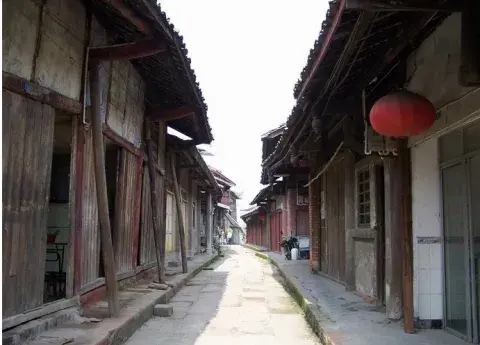
Right next to the Wuhou Temple is Jinli Promenade. Just walk through the large traditional gate and bring your wallet. Immediately on your left when you enter is the Sanguo Teahouse. Over 30 different kinds of tea and coffee are available and there is a wealth of cushy indoor and outdoo...

Right next to the Wuhou Temple is Jinli Promenade. Just walk through the large traditional gate and bring your wallet. Immediately on your left when you enter is the Sanguo Teahouse. Over 30 different kinds of tea and coffee are available and there is a wealth of cushy indoor and outdoor seating as well as private rooms. Prices are a little high at Y15-35/cup, but worth the ambience and quality of the tea.

Past the teahouse begins a long line of fancy shops selling traditional Chinese, Tibetan, and Indian clothing and jewelry. Other souvenir shops sell jade, wood crafts, engravings, paper cutting artwork
weavings, traditional Chinese paintings, and photographs. As you walk past a small goldfish pond, you will reach two parallel lines of snack vendors. Most stalls sell traditional Chengdu snacks such as ’niangao aihao’, a sticky green cake, ’boluo mi’, pineapple bases filled with rice pudding and other fruit, or ’zhuan fen’, flat noodles wrapped around vegetables prepared with a few varieties of spices. And of course what Chengdu locale would be complete without its share of ’Shao Kao’ vendors. A few vendors also sell traditional snacks from Hong Kong, including a salty soup of fish and meatballs with steamed vegetables.

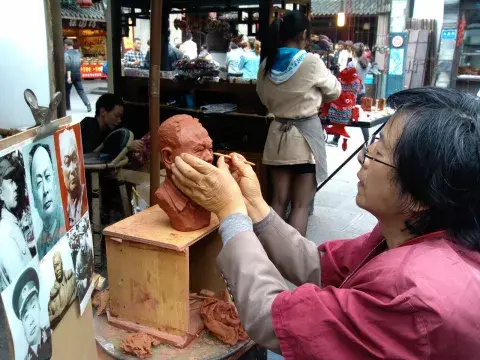
At the end of the promenade a few artists draw caricatures right on the spot. You might be surprised to see an American, Kid Cardona, with a shop of his own there as well. He charges only Y30 for a caricature, and will gleefully chat up any English speaker. Crowds usually form around him as he draws, possibly because he is a foreigner, but probably because he is more talented than the other Chinese artists there.

There are a few restaurants in Jinli Promenade as well, but they are expensive and are likely no better than restaurants outside the promenade. In fact, if you turn right out of the promenade and walk past Wuhou Temple, there are a few very popular hotpot restaurants. 

Local bus route: 1, 8, 10, 21, 26, 29, 57, 82, 109, 110, 213, 301, 302, 334, 335.

Taoping Qiang Village

Taoping Qiang Village is located in Aba Tibetan and Qiang Autonomous Prefecture,220km away from Chengdu.

Qiang people is one of the lodest people of 56 Peoples of China.

with the hills at its back and a river in front of it, facing the south, has a systematic and intricate layout....

Taoping Qiang Village is located in Aba Tibetan and Qiang Autonomous Prefecture,220km away from Chengdu.

Qiang people is one of the lodest people of 56 Peoples of China.

with the hills at its back and a river in front of it, facing the south, has a systematic and intricate layout. it is a

typical example of the Qiang architectural art. the stockaded village is known as "a mysterious ancient castle in the

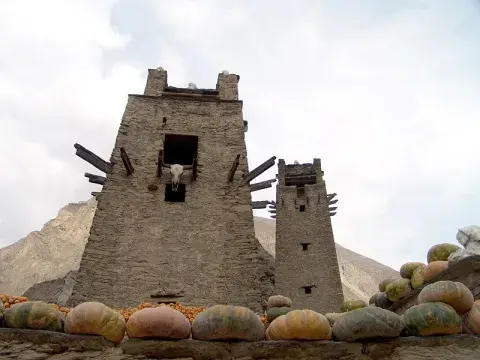
East". Among all the buildings, the blockhouse is the landmark of the Qiang village. it is the tallest building, a

stronghold which was contrusted to fight against invaders.

The Qiang blockhouses are contrusted in shapes of different kinds, such as the tetragonal, hexagonal or octagonal shapes;

some of them have thirteen or even fourteen storey, more than 30 meters in height. Most of them are made of flagstones

stuck with clay mud. The edges of the blockhouse look sharp and straight as if they were cut with a knife, and the surface

of the walls are smooth, solid and durable. They have stood aloft there for thousands of years.

Qiang Village is like a maze
When you stand on the house roof, you will find the village presents a layout of houses adjoinhing houses which are

accessible to one another. Entering the village lanes, you may think that each house is seperated, but when you wanl on the flat roofs, you will find that all the houses are connected by the roofs. with such an effective dfense system the villagers could help each other in case that someone is in trouble. The whole village is built just like a maze, where the villagers might set up ambushes and the intruders were likely to lose their way and therefore dared not dash about. Below the village, is hidden a great water network.
underground ditch that leads to every household. The ditch is lined and covered with greenish stones slabs. Spring water flows through the ditch to every household from the mountaintop so that the people can fetch water indoors. In time of war they were not afraid of being surrounded by enemy forces, as the water supply system  might help them hold fast to their post for a long time. Beside, this water network serves as a perfect fire-fighting facility and a safe underground passageway.

Looking at such plain and solid blockhouses, you can imagine how this old ethnic group has managed to survive with great tenacity and willpower in this narrow space enclosed by ranges of mountains.