Lizhuang Ancient town

location

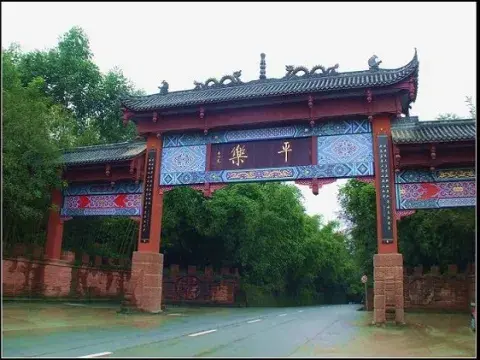
19km away from Yibin city, Sichuan, Lizhuang Ancient town is located on the edge of the Yangtze River
It was an important trading place during Ming and Qing Dynasty.
In the Ming and Qing Dynasty "Huguang - Sichuan" big migration movement,  as...

location

19km away from Yibin city, Sichuan, Lizhuang Ancient town is located on the edge of the Yangtze River
It was an important trading place during Ming and Qing Dynasty.
In the Ming and Qing Dynasty "Huguang - Sichuan" big migration movement,  as an important port, Li Zhuang town  accepted a large number of immigrants from Hubei and Hunan, Fujian, Guangdong and other places, and gradually developed into one of the region's commercial center in Southern Sichuan Province

Architecture

During the war while China was against Japan, Shanghai Tongji University . Central Institute , Central Museum etc .moved in Lizhuang since 1940.
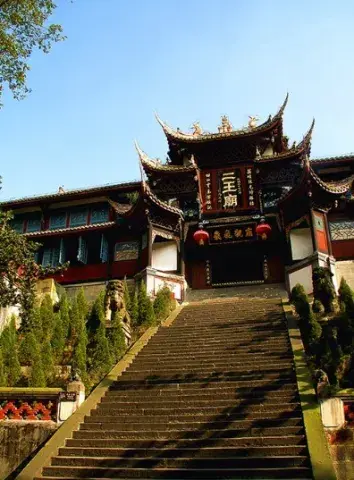
many ancient architectures such as the university and folk houses are well protected.

some TV programms have been directed  here . 

Tradition activities

Grass dragon dance, geraniol lantern and Yangtze River dragon boat race are  traditional folk activities of Li Zhuang.

Snacks

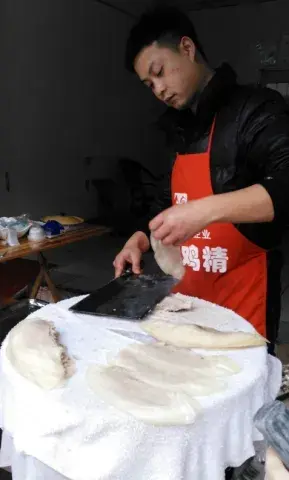
There are many snacks in Lizhuang Ancient town : such as the White Cake, the White meat ( one big piece of meat  ) , Yellow cake ( made of sticky rice with honey ) . steam cake etc.
the Yangtze River impact plain is very fertile , the soil can grow any plants , productive and rich. people have a very good life here .


The Ancient City of Songpan

       2 hours drive from Jiuzhai Valley, Songpan is the closest big town to Huanglong National Park and the Jiuhuang airport which services both Huanglong and Valley National parks 

       The ancient city of Songpan was built during the Tang ...

       2 hours drive from Jiuzhai Valley, Songpan is the closest big town to Huanglong National Park and the Jiuhuang airport which services both Huanglong and Valley National parks 

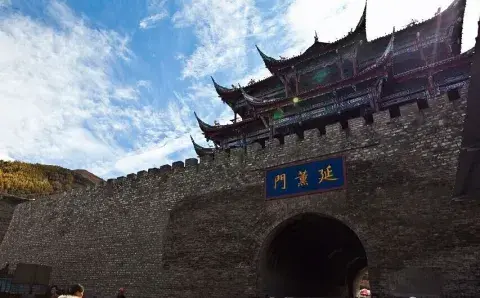
       The ancient city of Songpan was built during the Tang Dynasty( 618-907 AD) and it was later rebuilt during the Ming Dynasty( 1368-1644). Songpan was an important military post and economic and trading center for house and tea exchange between Sichuan, Gansu, Qinghai and Tibet. in 1935, led by Chairman Mao and Prim minister Zhou, the retreating Chinese Communist Army marched through the plateau of Songpan to advance to the North Western province 

      As well as the history and scenery of Songpan, the cultural diversity is fascinating. Because of its location, three ethnic groups are resident in Songpan namely Tibetan, Hui( Muslim ) and Han( Chinese).this contributes to the unique cultural style of this ancient town. This multi-cultural medley of the different cultural elements in this historical town makes for a rare example of cultural history in China 

     Walking along the bustling ancient streets in the town, some exquisite objects and ornaments can be found in the old stores, such as silver jewellery, enthnic costumes and even yak horn hair combs. such cultural diversity gives rise to many unusual and tempting culinary delights.

      While the ancient city of Songpan itself has plenty to keep you busy , the countryside surrounding the city offers a variety of tourist attractions. The Minshan mountain range surrounding the city provides such sights as Tibetan yak and goat herders leading their livestock over rolling grasses and endless valleys

     The best way to view this quthentic side of minority mountain likfe is through one of Songpan's many horse trekking excursions . 


Mt.Mengding

with an elevation of 1,500 meters, Mt.Mengding is situated in Mingshan County of Ya'an City.150 km away from Chengdu ,at the joint point of the southwest rim of the Sichuan Basin and Qinghai-Tibet Plateau

  Mt.Mengding has five steep and towering peaks, which are in the...

with an elevation of 1,500 meters, Mt.Mengding is situated in Mingshan County of Ya'an City.150 km away from Chengdu ,at the joint point of the southwest rim of the Sichuan Basin and Qinghai-Tibet Plateau

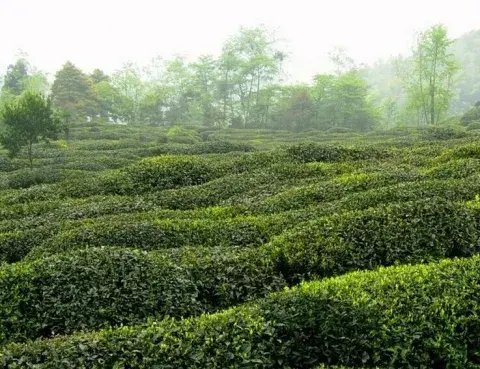
  Mt.Mengding has five steep and towering peaks, which are in the shape of lotus. There is an old saying: The Yangtze River tops the waters, the Mengding tea is the best of its kind" . Mt.Mengding is widely known for its elegant landscape and tea  culture. The average temperature is 14.5 ·C, with an annual rainfall of 2,000-2,200 milimteters. Such a special ecological environment is ideal for growing tea, especially for developing its fragrant elements.

   Mt.Mengding is one of the origins of Chinese tea culture

According to the historical records it is the first and earliest place to grow tea. Growing tea dates back to the Western Han Dynasty more than 2.000 yeas ago. in 53 B.C., a farmer named Wulizhen found that wild tea could be used as medicine. He planted seven tea trees in a sunken spot among the five peaks, which are alive for two thousand years.  Wulizhen is regarded as the " father of tea", the first person who grew tea in the world.  Since Tang Dynasty, Mengding tea has been listed as one of the tributes presented to emperors. The emperors either drank it or offered it as a sacrifice to their forefathers. this tradition lasted until the Qing Dynasty. 

In the Song Dynasty, a monk ChanHui who served in the temple of Mt.Mengding created the three wonders of Mengshan tea culuture: tea technique, tea Kongfu and tea art. 

the traditional celebrated teas on Mt. Mengding 

There are 1,250 mu of high-quality tea fields and 40 square km of forestland. Dew, Yellow Bud, Stone Flower, Spring Silver Leaf and Evergreen. Spring are well-know tea brands with a long and distinguished history. in addition, advanced green tea, roasting green tea, frying green tea, jasmine tea, cake tea are all members of the Mengshan  tea family.  Mengshan tea has a history of over 2,000 years. the production procedure of Mengdingshan tea , from picking, processing, assembling to packing, is closely monitored in order to guarantee quality and taste.