River Viewing Pavillion Park

River Viewing Pavillion Park is much more peaceful and interesting than its bland name suggests. The park features a four-story Qing dynasty pagoda built between 1886 and 1889. It provides a fantastic unobstructed view of a large portion of the Brocade river as well as the Chengdu skyli...

River Viewing Pavillion Park is much more peaceful and interesting than its bland name suggests. The park features a four-story Qing dynasty pagoda built between 1886 and 1889. It provides a fantastic unobstructed view of a large portion of the Brocade river as well as the Chengdu skyline. Entrance to the park itself is free. Like everywhere else in Chengdu, tea drinking, card slamming, and Mahjong foursomes leave you wondering, "When do these people actually work?"

The river-viewing pagoda is known as the Tower of Magnificence. It is included in a confined section of the park that is also dedicated to the Tang Dynasty poetess Xue Tao. Entrance to this area is Y20, but the fee is worth it. If you speak Chinese, but do not have student ID, tell them you are a student. If they ask for your ID, just say, "If I am not a student, then how am I speaking Chinese?" (At least this worked for me!) The student price is only Y10.

Very few travellers have the time to come here, and since the park isn’t very centrally located, even many expats aren’t familiar with it. Obviously locals aren’t interested in paying Y20 either. By putting up the entrance fee, you have the opportunity to relax in one of the quietest hideouts in urban Chengdu. The gardens in this section are extremely diverse, serene, and well-kept and finding a shady spot is not a problem. Climb the pagoda and bring a book. The opportunity to enjoy a moment as quiet as this one in a Chinese urban setting is very rare.

Xue Tao was born in Shaanxi province, and wrote her first poem at age 6. She came to Chengdu with no money after her parents died when she was 16 years old. She was quickly able to make a living for herself as a poet. She apparently loved bamboo, so this section of the park includes a bamboo garden featuring over 200 species of bamboo from all over Asia (according to one Chengdu resident). The Xue Tao commemorative hall includes beautiful murals with vibrant neon colors not often seen in China. 

The park is open everyday from 6:00 am until 9:00 pm. The Xue Tao Shrine and Tower of Magnificence are open from 8:00 am until 6:00 pm everyday.

Directions: The park is located southeast of the city center adjacent to Sichuan University. You can catch the no. 35 bus which runs on the north side of the river along Binjiang Lu by walking south on Renmin Lu from Tianfu Square. When you see the park, get off the bus, and walk along the river to the next bridge that allows you to reach the park’s southwest gate. A taxi from downtown should not cost more than Y10-12.

Take bus No. 19, 335, 35, 3 to get there.

Xinduqiao

Xinduqiao
Xinduqiao is located on the famous national highway 318 80km west to Kangding. It is an intersection of Danba, Mount Gongga, Kangding and Litang/Daocheng. There are no distinct landmarks or specific attractions in Xinduqiao but it is called “paradise for photographers” due to its...
Xinduqiao
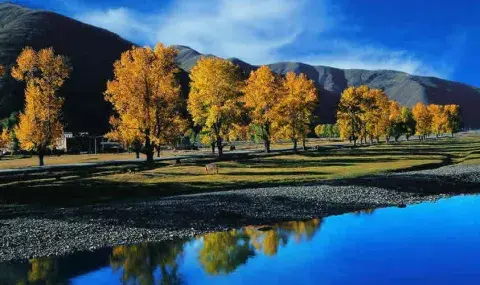
Xinduqiao is located on the famous national highway 318 80km west to Kangding. It is an intersection of Danba, Mount Gongga, Kangding and Litang/Daocheng. There are no distinct landmarks or specific attractions in Xinduqiao but it is called “paradise for photographers” due to its beautiful forest in different colors. Local Tibetan houses are with quite special style: big houses usually with 3 floors, big white walls and red gates. All house are built with stones. From Xinduqiao you can see Mount Gongga. Another less known name of Xinduqiao is called East Eluo.
Location/Transfer
Xinduqiao is located 80km west to Kangding and the best way is to drive. The Kangding Airport is located 30km east to Xinduqiao. There is now scheduled bus from Kangding to Xinduqiao and Tagong but there are not too much of them. The best way is to hire a car. There is currently no train to Xinduqiao although a new railway line is under construction and estimated to run within the next 10 year’s time.
Photo spots
A good photographer knows where to shoot good photos. At Xinduqiao there are plenty of places where you can take great photos. Below is a map of Xinddduqiao and it shows where normally people like to take photos.
Travel Season
The best season to travel to Xinduqiao is from June to November. Sumer is from late June to early September. Summer is a good time to see green mountains and flowers. Fall is from September to November when the trees turn into golden color. The golden color tree is a big deal for travelers. It only lasts for one week or less and it differs in different years. It usually starts to snow by end of November and until the next March the snow will melt.
Visiting Guide
Recommended length of visit: one hour to one day
Entrance charge: Free
Opening Hours: All day

Mugecuo Lake

Mugetso is a park 20km north to Kangding. It is called Kangding Qingge Mugetso Scenic Area. It covers an area of 350sqkm including the tourist attractions inside Azalea Gorge, Fancao Prairie, Seven-Color Lake, Yaochi Hot Spring, Mugetso Lake, Honghai Lake Prairie. It is a gallery of primitive f...
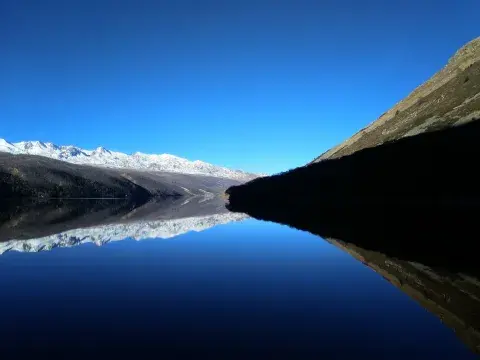
Mugetso is a park 20km north to Kangding. It is called Kangding Qingge Mugetso Scenic Area. It covers an area of 350sqkm including the tourist attractions inside Azalea Gorge, Fancao Prairie, Seven-Color Lake, Yaochi Hot Spring, Mugetso Lake, Honghai Lake Prairie. It is a gallery of primitive forest, alpine lakes, hot springs, prairies and snow-capped mountains.

Best time to go
Mugetso is located in on the east edge of Tibetan Plateau. It has cool summer and fall while cold winter and spring. From December to the next February, Mugeso Lake is iced up and will gradually melt from March. Summer is from late June to early September when the average temperature is between 10 and 14 C. The most distinct feature of the climate here is that it has warm day and cold night. Every year by the second half of October the snow comes usually. But some year the snow maybe little when it is dry. The best time of come to visit Mugetso is May to June for it is between the dry season and the monsoon season when it is not so cold nor too wet and you get to see the azalea flowers. While in July and August the park become alive due to its many flowers and green trees. But rain may come often in this season. October is also very good season to come to shoot the golden colors of Mugetso when the trees on the mountains will turn yellow or red.
What to expect
Fangcao Prairie
Fangcao Prairie is a place located by the end of Mugetso park. In summer time it becomes a fairyland for its many flowers and green grass. A horse-riding is available here for visitors. It is also a place where local people have picnic and spend their free time.
7-color Lake
7-color Lake is located at the elevation of 2600 meters above sea level. The lake resembles a crescent and is 20-meter deep. This lake is surrounded by forest and will usually have the reflections of sunlight therefore local people have given it the name 7-color lake. The reflections on the surface of the lake are also considered something amazing in this park. Another amazing fact of this lake is that it is half cold water and half warm water from the hot spring. By the exit of the hot spring at the bottom of the lake, somewhere the temperature is as high to 67C.
Azalea Gorge
The valley that connects 7-color lake and Mugetso is called Azalea Gorge with a stream running through this 8-km gorge. Many Azalea trees stand in this gorge by the river. It is a nice path to walk on with the newly built boardwalk. Normally visitors come to the end of the valley by bus and walk down through the Azalea Gorge.
Yaochi Hot Spring
Yaochi Hot Spring is called “Medicine Pool of Boiling Spring”. It is located at the elevation of 3500 meters and with a number of over 20 springs. Highest temperature gets to 90C. The hot spring is believed to have a medicinal effect on human body that is why it is called Medicine Pool.
Ticket Information
200 yuan per person includes the tourist bus (April to 15th November)
160 yuan per person includes the tourist bus (15th November to the next March)
Visiting Guide
Recommended length of visit: 5-6 hours
Opening Hour: 8:00-18:00