Tai Hu
Tai Hu, or Lake Tai, is a huge freshwater lake. it is the third largest lake in China with an area of 2250 square kilometres and average depth of 2 metres. It should come as little suprise that there are many great sights to see and experiences to enjoy at the lake.
...Tai Hu, or Lake Tai, is a huge freshwater lake. it is the third largest lake in China with an area of 2250 square kilometres and average depth of 2 metres. It should come as little suprise that there are many great sights to see and experiences to enjoy at the lake.
A good place to start is to catch a bus from the city to the park at Turtle Head Peninsula.
- Bus K1 takes you from the Train Station to the Chongshan (冲山) Gate of the park.
- Bus K87 takes you from the Train Station to the Dushan Gate of the park.
Entrance to the park is 70 yuan, but it’s only 35 yuan for children. The price of admission includes the cost of the bus trip to the main attractions and boat ride across to the three tiny "Fairy Islands". Of course there are plenty of other places to enjoy in the park, but when first visiting a lake, it’s logical to hop in a boat and get out there on the water.

The ferry takes tourists across to the three Fairy islands which are joined by bridges. Tourists enjoy a pleasant hour or two exploring the Memorial Gateway, Screen Wall of Heaven, Water Curtained Cave, Huixian Bridge, Heavenly Fragrance Mansion, Crying Buddha, Heaven Emperor’s Palace, Taoist Altar, Matchmaker God’s Temple, Goddess Palace … and much more. It’s a pleasant spot with something for everyone.

This is Laozi - the chap with the big ears.
There are also Speed Boat Rides from the dock on Fairy Island. For a mere 20 yuan each tourists go rocketing back to the main peninsula, cutting through the convoy line of barges crossing the lake.
Back at Turtle Head there is still much more to see. Take another boat ride on one of the elegant wooden sailboats. Then walk around and see the Sino-Japan friendship Cheery Woods (or maybe that was supposed to be "cherry"). From there cross the Second Spring Bridge to Misty Zhongdu Hill where the sites just keep unfolding.
Nantou Ancient City
Located in the far west of Shenzhen, close to the east bank of the mouth of the Pearl River, is the ancient city of Nantou (a.k.a. Xin’an city). Nantou is one of the earliest urban areas in what is now Shenzhen and was a busy commercial port in the Ming Dynasty. Excavations in this area h...
Located in the far west of Shenzhen, close to the east bank of the mouth of the Pearl River, is the ancient city of Nantou (a.k.a. Xin’an city). Nantou is one of the earliest urban areas in what is now Shenzhen and was a busy commercial port in the Ming Dynasty. Excavations in this area have revealed evidence of civilization as far back as the Shang Dynasty (1700 –1100BC), contradicting the traditional believe that until relatively recent times Guangdong was a forlorn wilderness to which errant officials were exiled.
Nantou is still home to thousands of residents today. They mostly live in modern apartment blocks within the city’s ancient walls. Between the functional white-tiled blocks, architectural gems from bygone days, such as the Dongguan Clubhouse, Sir Xinguo’s Shrine and the Baode Shrine, are preserved. Conspicuous for its European style, the Foundling Hospital is a reminder of foreign influences in this part of China. Today, it functions as a church for Nantou’s Catholics.
A museum, located near the South Gate provides an excellent insight into the city’s past with dozens of excavated artefacts on show. Unfortunately, the captions have not yet been translated into English. The RMB20 entrance charge includes a bilingual map of Nantou.
If you prefer to experience history with a sense of continuity, Nantou Ancient City is a treat. This is a lived-in, historical area, as opposed to a museum-type showpiece. Life goes on, somewhat changed, somewhat the same, in its narrow alleys: Farmers sell vegetables in the arches of its gates, as they have been doing for centuries; The heaps of fresh incense ash in its ancient shrines indicate that these deities are still being worshiped; Children play in streets pungent with the smell of the same foods their ancestors cooked and ate; and, open doorways provide flashing glimpses of meals being prepared, intense mahjong games and other scenes of family life. The contrast with the wide soulless roads and department stores outside its gates is dramatic.
For a similar but quieter experience check out Dapeng Ancient City.
Nantou’s South Gate can be entered from Shennan Boulevard, the far western end of Shennan Road, close to its intersection with Nanxin Road. Bus nos. 201, 301, 305, 310 and 355 go in this direction.
Alternatively, Nantou can be entered from Zhongshan Park from its south side.

Zhongshan Park
Zhongshan Park is dedicated to one of Guangdong’s most celebrated sons, Dr. Sun Yat-sen, who is represented in a large sculpture at the park’s main entrance. In Hero-Gathering Lawn, several local historical heroes from ancient and modern times are honoured with sculptures by renowned ...
Zhongshan Park is dedicated to one of Guangdong’s most celebrated sons, Dr. Sun Yat-sen, who is represented in a large sculpture at the park’s main entrance. In Hero-Gathering Lawn, several local historical heroes from ancient and modern times are honoured with sculptures by renowned artists. Driving home the revolutionary spirit of the park, a monument to martyrs of the liberation struggle stands among trees in the south side.
Although Zhongshan Park is not as pretty or as tidy as Lotus Hill Park, its proximity to Nantou Ancient City -- Nantou can be entered from the park’s southern edge -- makes it worth a peek. A stroll on the lawns by Zhongshan Park’s lake will be a pleasant conclusion to exploring the crowded lanes of Nantou.
Zhongshan Park’s main gate can be entered from Shennan Boulevard, the far western end of Shennan Road, near Nanshan Bus Station. Alternatively, the park can be entered from the north side of Nantou Ancient City.
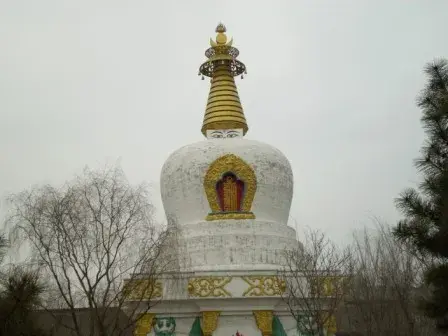
Four Ancient Towers
The four towers, like most of Shenyang’s historical sites, were built around 1643 during the early Qing Dynasty. The towers symbolize the four Buddhist Heaven Kings, and originally marked the borders of the city. The four towers, aptly named “North Tower”, “Sou...
The four towers, like most of Shenyang’s historical sites, were built around 1643 during the early Qing Dynasty. The towers symbolize the four Buddhist Heaven Kings, and originally marked the borders of the city. The four towers, aptly named “North Tower”, “South Tower”, “East Tower”, and “West Tower”, do in fact appear quite similar to each other. The towers themselves are white, bulb-shaped structures, with gold decoration on the top. Each one is surrounded by a small Buddhist temple. Reportedly the North Tower is the best restored and maintained tower.
The towers are pretty unspectacular, so don’t plan a whole day around visiting them. Entrance is free, however, so if you happen to be in the area of one of the towers, they are worth a look. The official operating hours are a bit unclear. The apparently sometimes close a bit early, so it’s best to go in the morning.
Locations: (click on pictures for larger images)
North Tower 北塔 běi tǎ:
This tower is probably the most popular tower among visitors. It is located on Wang Hua Jie (望花街), which is the same road as Xiao Bei Guan Jie (小北关街). It’s 2 km northeast of the North Train Station, and 2-3 km southeast of Beiling Park. Coming from the city center, it’s on the way to the 9-18 Museum, so consider making a stop on the way there.


Useful Bus Routes:
131 to/from Beiling Park East Gate, Shenyang University
213 to/from Beiling Park, Orthopedic Hospital, Middle Street, Imperial Palace, Wu Ai Market, South Tower
245 to/from Beiling Park, Orthopedic Hospital, South Tower
299 to/from 9-18 Museum, Liaoning University
325 to/from North Station, 9-18 Museum
South Tower 南塔 nán tǎ:
South Tower is located in Shenhe District (沈河区) on Wencui Lu (文萃路) just behind Shoe City.
Useful Bus Routes:
113 to/from Shenyang University
135 to/from Tiexi Square, Heping Square, San Hao Street, Exhibition Center
213 to/from Beiling Park, North Tower, Middle Street, Imperial Palace
239 to/from San Hao Street, Exhibition Center, Heping Square
286 to/from Summer Palace
环 to/from San Hao Street, Exhibition Center, Heping Square, Imperial Palace, Middle Street, Taiyuan Street, Zhongshan Square, South Train Station
West Tower 西塔 xī tǎ:
The area surrounding the West Tower is known as “Korea Town”, and is home to a large population of Koreans, as well as many Korean bars, restaurants, massage parlors, etc. click for more info on "Korea Town". The tower is at the east end of Shifu Road, at the beginning of Xi Ta Korea street.


Useful Bus Routes:
252 to/from Furniture City, Bei Hang
255 to/from South Station, Liaoning University
East Tower 东塔 dōng tǎ:
Located in Da Dong District (大东区) on Chang An Lu (长安路).
Useful Bus Routes: