Sprit of Longji Performance

Thousands of tourists who have been here from both home and abroad were amazed by the dreamlike landscape in Guilin. Meanwhile, they were also immersed and delighted in the colorful and mysterious minority folk lifestyle and custom, as Guilin is a compact inhabitant area of different mino...
Thousands of tourists who have been here from both home and abroad were amazed by the dreamlike landscape in Guilin. Meanwhile, they were also immersed and delighted in the colorful and mysterious minority folk lifestyle and custom, as Guilin is a compact inhabitant area of different minority nationalities as well.
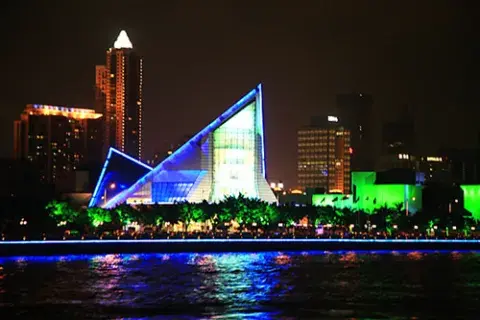
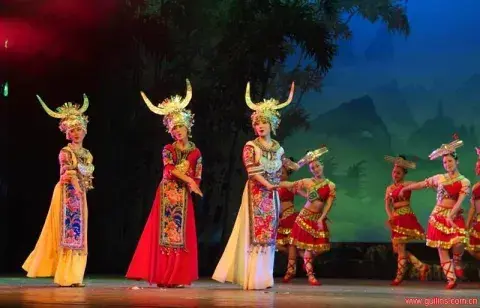
The show of Longji Soul combines song, dance and actual daily life of minorities, reappear the gallant scene of Longji Terrace, and unfurl the Longji spirit and character of minority to create the Longji Terrace by hand. In the show we can hear the “Dong Nationality Grand Song” which has already been applied to be a world non-material culture heritage. We can also admire the “the longest hair of colony in the World”--“Long Hair of Hong Yao” and you are going to appreciate brilliant acrobatics such as “Silk Suspending”, “Ballet on the shoulder of nation”, etc, which are all rewarded the International Acrobatics Golden Award and the Highest Award of International Acrobatics separately. Thanks to this 70 minutes show, one will no longer need to travel to remote mountainous areas where these people live, yet one still see and study their wonderful life style by coming to Lijiang Theater to enjoy the singing and dancing. It is really an ideal place to spend the evening in Guilin.

The Working People's culture Palace

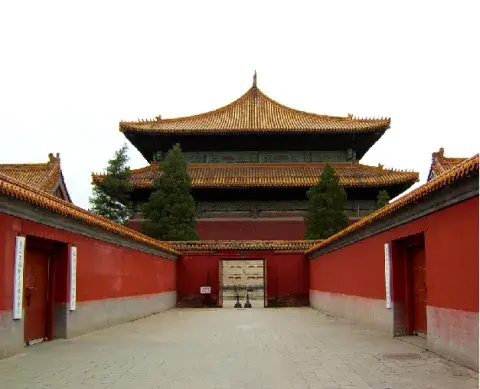
The Working People's Culture Palace is located on the eastern side of Tian'anmen Rostrum. It was the Supereme Ancestral Temple for the royal family in the Ming and Qing Dynasties.

It's the best-preserved and biggest ancient Ancestral worshipping temple structure in China. In the old days,...

The Working People's Culture Palace is located on the eastern side of Tian'anmen Rostrum. It was the Supereme Ancestral Temple for the royal family in the Ming and Qing Dynasties.

It's the best-preserved and biggest ancient Ancestral worshipping temple structure in China. In the old days, it's the most  important  temple structure, it was called " Number one Temple in the world".

The Culture Palace covers an area of 140 thousand square meters.  There are countless old Pine trees and  Cypress trees in the park. It's really a good choice to relax after the visit of the Tian'anmen Square or Forbidden City. There is the southern gate on the east of Tian'anmen Rostrum.  And western gate on the eastern part of the entrance to the Forbidden City.

If you don't  want to cross the middle route under Tian'anmen Rostrume, you can also go to the Working People's Culture Palace , and get out from the western gate.  And then, the entrance to the Forbidden City is infront of you.

On the way to the Forbidden City, if you want to avoid the crowd for the middle route.

Bus No.1, No.20 , No.2 Or No.10 etc.

Meixi Royal Stone Archways

Zhuhai is a cradle for people of excellence. She possesses a number of celebrities during the modern history of China period . Chenfang  is the one who was born and grew up in Meixi village Zhuhai .

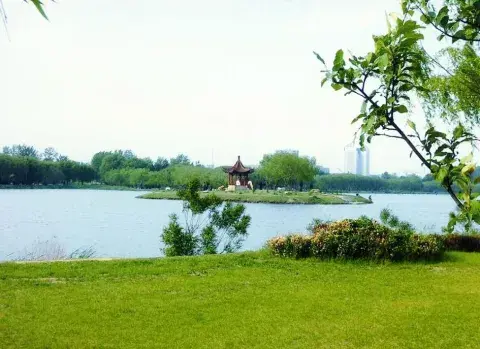
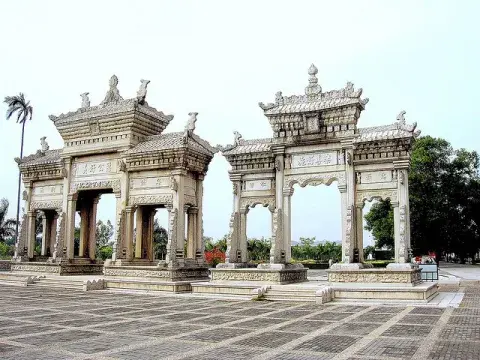
Once mentioning  Meixi village,we can't ignore the memory archway here .The Meixi Royal Stone Archways is located at Mei Xi Village in Qianshan town, Zhuhai City. It occupies 126,000 square meters. Its main sceneries are the first Chinese consulate in Hawaii at the end of the Qing dynasty, the oversea Chinese millionaire Mr. Cheng Fang's hometown, Cheng family's history, Chinese stone archways exhibition, Zhuhai famous people's waxwork, art gallery and articles, and more. It puts famous people, folk-custom and cultural relic protection together. It is an ideal place for relaxation and very popular for sightseeing.

Now, there are three stone archways left, which were built in 1886 and 1891. They were built by Guangxu Emperor in honor of Cheng Fang and his families. The stone archways are built from granite. It combines the architectural art of the west and east and it has many wonderful engravings. It is regarded as a major artistic treasure of Zhuhai. So highly regarded by the Zhuhai government is this building that it was pointed as the 'Special protection item of old architecture' by Guangdong provincial government in 1989.
 
The Meixi Royal Stone Archways area has a very beautiful garden scenery, and its service facilities are excellent. It is not far from the city, and making your way there and back is easy. It is a good place for you to visit.


 P.S.More about Chenfang 

Born in Meixi Village, Qianshan Town, Zhuhai, Chen Fang led quite a legendary life。 He traveled far across the sea to Honolulu, Hawaii at a young age and later became the first millionaire there.
Chen Fang was known in business circles as the “Business Giant”. He married a local princess of mixed blood named Julia, who gave birth to 12 daughters & 4 sons. Due to the fact that his children had mixed blood from China, Great Britain & Hawaii, Chen Fang built a luxurious villa on the island combining the art styles from these three countries. From the end of the 19th to the beginning of the 20th century, this villa has been a must for tourists visiting Honolulu. In 1881, Chen Fang was appointed by the Qing Government as China’s first Consul General to Hawaii,ln 1890,Chen Fang sold off his property and returned to his motherland where he built another villa similar to the one in Honolulu.

 bus,especially tour bus in Zhuhai city ,it's free

taxi or private car
Dingyuan Garden

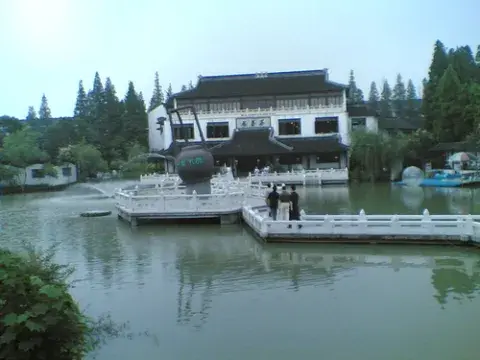
Dingyuan Garden of Suzhou is located in the "first garden scenic area camellias" huqiu mountain ancient village, covers an area of more than one hundred mu, of which 26 mu, natural water YingHua pavilion, including water corridor, monuments, more than 30 sites size.
 &n...

Dingyuan Garden of Suzhou is located in the "first garden scenic area camellias" huqiu mountain ancient village, covers an area of more than one hundred mu, of which 26 mu, natural water YingHua pavilion, including water corridor, monuments, more than 30 sites size.
      Since the song dynasty, by planting area of huqiu iddo, Hester prynne iddo, jasmine flower tea, etc, and is famous for its more than thousand years history already. Ministers from Ming dynasty founding as far away from a political opponents, liu bowen after retirement had settled here, so called for garden, Tang dynasty, scholars, ZhuYunMing, south ShenZhou, have to levy Ming etc, they traveled on the left, YinShi drinking, painted many legends anecdotes, In the qing dynasty ChenMingZhi has built PuJiTang, salvage, cold by emperor kangxi and qianlong commendations when swimming in the river, left, make this extensively of two emperors in qing dynasty YuBi ink.
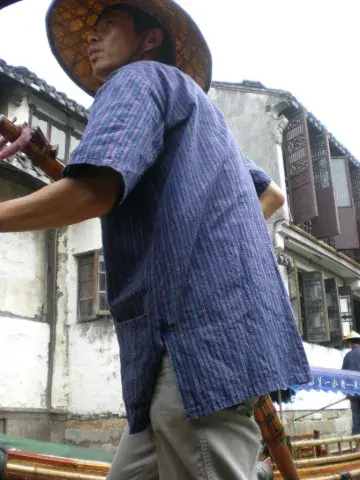
        Nowadays, the ancient village camellia garden in the ruins, fully restored the original architecture and landscape, become leading sets of suzhou jiangnan characteristics and classical garden style, showing of "water culture, tea culture in suzhou and the birthplace of the national characteristics of" AAA comprehensive tourism attractions.

        苏州定园,位于“吴中第一名胜”虎丘山南麓的茶花古村,占地一百多亩,其中自然水面26亩,亭台楼阁映画其中,曲廊流水浑然天成,古迹遗址、大小景点三十多处。
       自宋以来,虎丘一带便以种植茉莉、玳玳、白兰等花及制茶而闻名,距今已逾千年。相传明代开国重臣刘伯温为远避政敌,退隐后曾在此定居,故称为定园;明代中 叶,江南文人唐寅、祝允明、沈周、文征明等都曾到此游历,他们泛舟饮酒,吟诗作画,留下许多传奇佳话;清代有陈明智在此建普济堂,救助寒民,受到康熙帝的 嘉奖,乾隆游江南时,在此驻足题诗,使此处留下了清代两代帝王的御笔墨迹。
       如今,定园在茶花古村的遗址上,全面恢复了原有的建筑和景观,成为苏州首屈一指的集江南水乡特色与古典园林风貌为一体,展示苏州“水文化、茶文化和吴文化”特色的国家AAA级综合旅游名胜景区。

游程:
     入园简介——凤凰台、来仪厅——观花亭——双照井——蔚为

大观组景:三百六十行巨碑、十里红妆、喜庆堂(民俗婚庆表

演)、博古堂、根雕馆、茉莉泉——香岩普济组景:康熙御碑亭、

农耕木雕、普济堂遗址、寒民铜雕——刘伯温墓——诗碑廊——伞

亭、秋香亭——手工艺廊——吴中第一亭(斗鸡表演)——江南摇

橹船(吴歌)——岁时节令廊——信风廊——灵岚听瀑——花神

庙——天下第一壶/花钱廊——茶艺苑(品茗、评弹表演)——出


     斗鸡表演(上午10:00、下午14:30)、其他表演不限时
     全程由导游免费讲解,约90分钟。