Is Emei Shan worth the trouble ?

I' m sure there must be a big marketing team for Mt.Emei since the mountain is run by a listed company,and became a

huge money making machine . I have seen so much exaggerated advertisement about Emei.

Unfortunately my personal opinion about Emei is rather negative,and h...

I' m sure there must be a big marketing team for Mt.Emei since the mountain is run by a listed company,and became a

huge money making machine . I have seen so much exaggerated advertisement about Emei.

Unfortunately my personal opinion about Emei is rather negative,and have stopped offering tour to this mountain since September 2012.

Emei Shan or Mountain Emei,located in the western of Sichuan Basin and 160 kilometers away from Chengdu, said to be one of the 4 most sacred Buddhist Mountains in China(not many people in China are real Buddhist or know what Buddhism is) . It was listed as the World Culture and Nature Heritage by UNESCO in 1996.

1.The entrance tickets is very expensive,CNY185/PP,plus CNY90/PP for the mountain bus,plus CNY100/PP for its 5 minutes

cable car ride.

2. Extremely  touristy and crowded, each day ten thousands of domestic tourists visiting this mountain in the name of  pilgrimage,but I find few of them are real Buddhists, Chinese People are definitely not Buddhist, they are much more Confucius or Taoists.

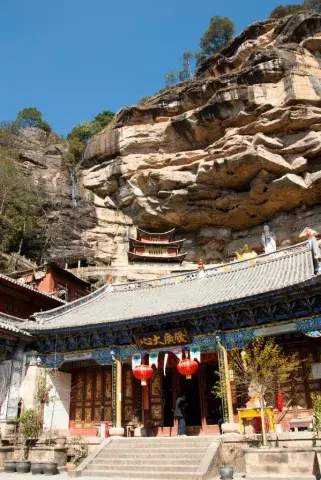
3.The main scenery there are forest and Buddhist Monasteries,which were rebuilt in the past 30 years,the old ones were destroyed during the Culture Revolution.And I personally just think they were over built,too much monasteries,get bored to see so much because they are mostly the same. I think a real Buddhist should learn from the Buddha's philosophy and act following his good teaching.I'm sad to see Buddha's teaching is completely distorted.

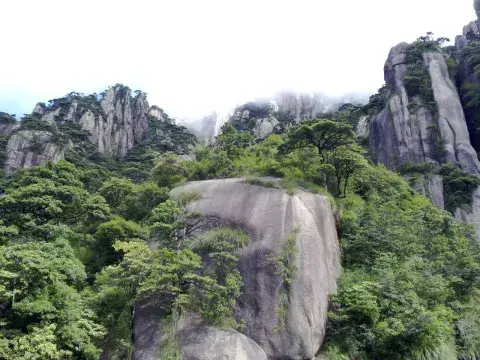
4.The weather in the mountain are always wet,cold,foggy and cloudy,don't expect to see the scenery as you see in the the pictures,you might notsee anything in a whole day tour in the mountain except for some temples or monkeys(some of them are very aggressive,be caution).

The positive points of this mountain is that thesummit of the mountain is covered by heavy snow during December until middle  March of the next year. For the people(mostly are people from south China or South Asia) who want to see snow ,it's might be a place to go.

The Emei has became a famous mountain since 1980s is mainly because of  Jin Yong's Kongfu novels/movies, for his fans,they just want to say I have been to Emeishan.

So whether it's worth going to this mountain,really depends on what you expect there. Do get a overall information before going,

for most European or American tourists,China is so far away and costly,you might only travel to China once in a life time.

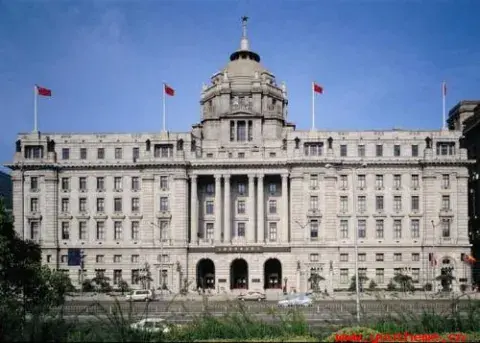
Dome Mosaics of Pudong Development Bank (Former HSBC Headquarters of Shanghai Branch)

The Pudong Development Bank is a majestic-looking building with a history of more than 80 years. In 1920, when it was being constructed, the Bund was designed to be “the Wall Street of Asia” and the new building was to become t...

The Pudong Development Bank is a majestic-looking building with a history of more than 80 years. In 1920, when it was being constructed, the Bund was designed to be “the Wall Street of Asia” and the new building was to become the Hong Kong and Shanghai Bank’s new headquarters to dominate the Bund. Sparing no expense in its construction, almost every piece of the building was crafted overseas and shipped to Shanghai at enormous cost.

The edifice was completed on June 23, 1923 and the opening was viewed as one of the most important events in the commercial world that year.

Among many other highlights, the mosaic murals on the interior dome is the one especially worth mentioning.

On the ceiling of the octagonal entrance hall of the bank building are eight mosaic murals that depict the twelve signs of the zodiac, as well personifications of the Sun and Moon. An enterprising architect had the mosaics covered over in stucco and paint to save them from destruction during the Cultural Revolution. In 1997, renovations uncovered them. The Pudong Development Bank then funded the restoration, but changed the HSBC emblems in the paintings to the Pudong Development Bank emblem.

The eight murals depict eight cities in which HSBC had branches: Shanghai, Hong Kong, Tokyo, London, New York, Bangkok, Paris, and Calcutta. In between every two panels are found eight words which all together make a popular Chinese saying: “All men in the four seas are brothers.” Each fresco features a principal mythological figure, supported by personifications of local rivers and the city, with city scenery in the background.

15-min walk from West Nanjing Road Station of Metro Line 2