Tiananmen Square
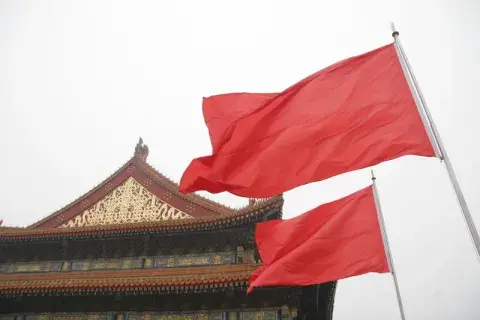
Forming the exact heart and center of the city, Tiananmen Square (天安门广场) is usually a first port of call on any Beijing tourist’s itinerary. Like the Forbidden City (紫禁城), the words T...
Forming the exact heart and center of the city, Tiananmen Square (天安门广场) is usually a first port of call on any Beijing tourist’s itinerary. Like the Forbidden City (紫禁城), the words Tiananmen Square are almost synonymous with Beijing. It is worth a visit not just for its historical significance, but also for the sheer prominence of its size. Said to be the largest public square in the world, this spotlessly clean, massive area of paved concrete can accommodate up to a million people. It was here that Chairman Mao (毛主席) proclaimed the founding of the People’s Republic of China in 1949.


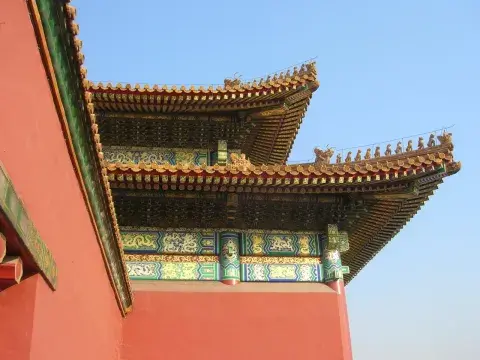
You’ll probably find yourself visiting, or at least passing by, Tiananmen more than once due to its central location and close proximity to other tourist stops, namely the Great Hall of the People, the Museum of History and Revolution, the Mao Zedong Memorial Hall (毛泽东纪念堂), and Tiananmen Gate(天安门), the main entrance to the Forbidden City. Above Tiananmen Gate hangs a huge portrait of Chairman Mao, supposedly the only public place in which Mao’s portrait is still displayed.

Bar the incessant hawkers, Tiananmen Square is the perfect spot to people watch and soak up the Beijing atmosphere; it is also great if you’re a keen kite watcher. Try and catch a glimpse of Tiananmen in the evening as it is beautifully lit at night.

The Bund
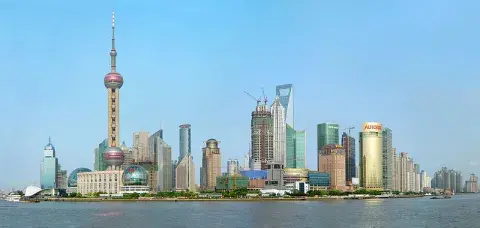
The Bund, a vision adorned on numerous postcards and fridge magnets, is a symbol of China’s prosperous future and Shanghai’s international past. The Bund is Shanghai’s waterfront. It lines the Huangpu River as it winds down from the mouth of the Yangtze towards the East China ...
The Bund, a vision adorned on numerous postcards and fridge magnets, is a symbol of China’s prosperous future and Shanghai’s international past. The Bund is Shanghai’s waterfront. It lines the Huangpu River as it winds down from the mouth of the Yangtze towards the East China Sea. The Huangpu River divides Shanghai into eastern and western districts otherwise known as Puxi and Pudong.
Walking the length of the Bund is a joy regardless of time of day. The one mile stroll affords many spectacular views. The Bund, with more than 50 individual architectural styles, is reminiscent of the time when Shanghai was the center of Chinese economy and culture in the late 19th and early 20th centuries. Consulates, banks and businesses from yesteryear make an eclectic and artistic architectural statement. Shanghai, though definitely Chinese, has had an international past and though it is often an unspoken truth, the Bund reveals its secrets.

From the Puxi side Pudong, and its thriving financial district, Lujiazui, are right in front of you. Oriental Pearl and Jin Mao Towers stand proudly as a testament to China’s growth and development.

Naturally the best place to see the Bund is from the river, and there are countless river trips to choose from. Some tours take just one hour while others can choose to take an excursion up the river into central China. My personal favorite is the Sea Captain which offers one hour trips for 50RMB. Though other operators may offer the same excursion for a cheaper fare, the Sea Captain, decked out to look like an old wooden ship, offers a luxurious and fun ride around the Bund. Though there are more authentic boats, none are traditionally Chinese, so any trip you make will be pleasure oriented and designed for tourists.
The Bund is a beautiful sight and one of my favorite places in Shanghai. It is worth braving the crowds to visit at night, when the lights of Shanghai sparkle till 10pm and reveal a truly majestic city.
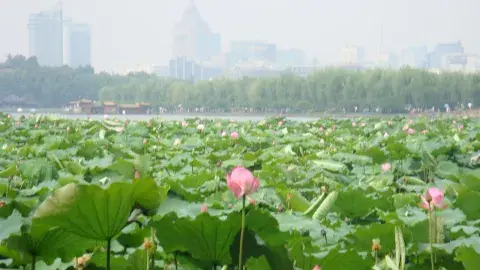
West Lake (Xi Hu)
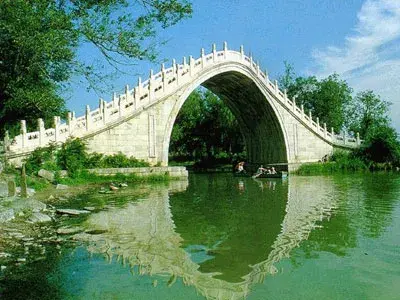
In China there are 36 West Lake, but we people mentioned "West Lake" usually refers to the Hangzhou West Lake.
There are ten famous Scenes Spots of West Lake we call it "西湖十景", which are:
In China there are 36 West Lake, but we people mentioned "West Lake" usually refers to the Hangzhou West Lake.
There are ten famous Scenes Spots of West Lake we call it "西湖十景", which are:
Remnant Snow on the Bridge in Winter (断桥残雪)
Dawn on the Su Causeway in Spring (苏堤春晓)
Curved Yard and Lotus Pool in Summer (曲院风荷)
Leifeng Pagoda in the Sunset (雷峰夕照)
Moon over the Peaceful Lake in Autumn (平湖秋月)
Two Peaks Piercing the Clouds (双峰插云)
Three Ponds Mirroring the Moon (三潭印月)
Orioles Singing in the Willows (柳浪闻莺)
Fish Viewing at the Flower Pond (花港观鱼)
Evening Bell Ringing at the Nanping Hill (南屏晚钟)