
YuYuan (Yu Garden) and Bazaar
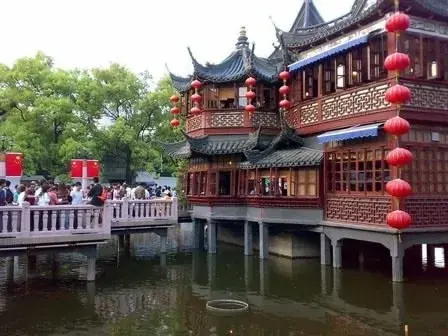
 Yu Gardens is one-half shopper’s paradise and one-half complete nightmare. With what sometimes feels like thousands of people crowded into a relatively small space, this important tourist attraction often gets a bad...Yu Gardens is one-half shopper’s paradise and one-half complete nightmare. With what sometimes feels like thousands of people crowded into a relatively small space, this important tourist attraction often gets a bad rap. Sidetracked by the numbers of people, the overbearing architecture, and the entertainment, I often forget that the main attraction here is a beautiful 400 year old Chinese garden at the center of the complex. For the 40RMB entrance fee, the garden is a peaceful, quiet refuge in the middle of a generally chaotic part of town . Most people do not actually pay to go inside the garden, they just stay outside and wander around, so for that reason alone, it’s a good idea to check out the garden. Although some aspects of this tourist locale make me slightly unsettled – thousands of people, terribly overpriced Haagen Dazs ice cream cones, two Starbucks within 200 meters of each other, and countless shops selling low quality Chinese memorabilia; there are several things that keep me going back.
 1. Nanxiang Steamed Dumplings: This fantastic restaurant is famous for its Shanghai specialty, Xiao Long Bao. Usually filled with pork, they also serve a version stuffed with fresh crab roe (oh so good!). Customers wait in the always long, but quick moving lines, to sit or take out these famous dumplings. Nanxiang Steamed Dumplings is located at the entrance of the zigzag bridge that brings you to the front of the Garden.
|
2. Shopping: Despite the fact that 90% of the stuff sold here is complete junk, the remaining 10% is well worth a look. I have bought some darling Chinese shoes here for 40RMB and all of my visitors have come away with beautiful painted scrolls (50RMB). Always bargain!!
In addition to the junk shopping in the center of the complex, there are many shops around the exterior of the large Chinese style buildings surrounding the Garden. These smaller shops, often housed in authentic historic structures, carry everything from furniture to porcelain. The authenticity of these items… well, since I’m not a professional, I generally go in assuming that what I’m looking at is a reproduction. |
Another surprise inside Yuyuan is Shanghai’s City
God Temple (5 yuan, open 8:30am-4:30pm) |

3. More Shopping: Perhaps my favorite thing to do at Yu Gardens is go to the pearl market. While pearls shops abound at the in Yu Gardens, this series of stalls and shops on the third floor of the First Asia Jewelry building (No. 288 Fuyou Lu) offers better prices, better quality, and more trustworthy sales people. Most tourists will visit the pearl market in Beijing, and find that this one certainly does not compare in size. Still, there is something about this smaller and less hectic market that makes the experience more pleasant for me. Be sure to ask lots of questions, do a little research on pearls if you plan on making a big purchase, and don’t forget to bargain! Here are a few shops I particularly like:
Polomec International (Chester Chou): Chester’s shop is the best for high quality Australian and Tahitian South Sea pearls, as well as beautiful Akoyas and the finest Chinese freshwater pearls. His salespeople are sweet and helpful (I like Crystal the best), and Chester himself is a gregarious fellow with perfect English.
Ellen’s: I’m always a little wary here, so check out your merchandise carefully, but Ellen’s offers some of the prettiest jewelry I’ve ever found at rock bottom prices. This place is great for $10 gifts that look like they cost $100.
Denise’s: Denise has by far the most beautiful selection of stones – everything from watermelon quartz to turquoise to jasper. She offers some jewelry that she has personally designed, but this shop is truly heaven for those looking to use their creative side to design their own jewelry. Otherwise, bring in a photo of something you like and she’ll do her best to make it for you.
Many visitors come to Yu Gardens with a tour group and therefore are limited in time, but if you have the time and patience you could certainly spend a day here. Take your time wandering about, and even head out onto Renmin Lu (人民路) where you’ll find shops filled with ribbons, buttons, sequins and even wedding gowns. Come relaxed and with a curious mind, be prepared for some crowds, and you’ll definitely enjoy yourself.
Polomec International (Chester Chou): Chester’s shop is the best for high quality Australian and Tahitian South Sea pearls, as well as beautiful Akoyas and the finest Chinese freshwater pearls. His salespeople are sweet and helpful (I like Crystal the best), and Chester himself is a gregarious fellow with perfect English.
Ellen’s: I’m always a little wary here, so check out your merchandise carefully, but Ellen’s offers some of the prettiest jewelry I’ve ever found at rock bottom prices. This place is great for $10 gifts that look like they cost $100.
Denise’s: Denise has by far the most beautiful selection of stones – everything from watermelon quartz to turquoise to jasper. She offers some jewelry that she has personally designed, but this shop is truly heaven for those looking to use their creative side to design their own jewelry. Otherwise, bring in a photo of something you like and she’ll do her best to make it for you.
Many visitors come to Yu Gardens with a tour group and therefore are limited in time, but if you have the time and patience you could certainly spend a day here. Take your time wandering about, and even head out onto Renmin Lu (人民路) where you’ll find shops filled with ribbons, buttons, sequins and even wedding gowns. Come relaxed and with a curious mind, be prepared for some crowds, and you’ll definitely enjoy yourself.
Terra-Cotta Warriors
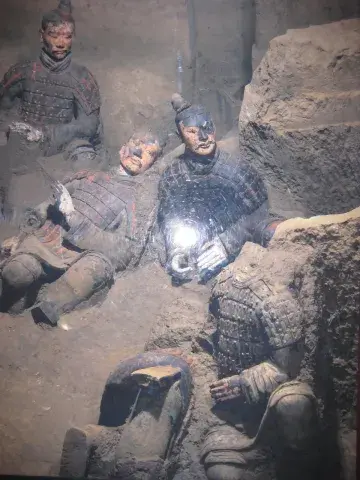
 In 1974, peasants digging a well first uncovered part of the over 2000 year-old great underground army of the first emperor of a unified China. 1000s of life-size ter...In 1974, peasants digging a well first uncovered part of the over 2000 year-old great underground army of the first emperor of a unified China. 1000s of life-size terra-cotta warriors with unique faces along with weapons, horses and chariots were meant to guard Emperor Qin Shihuang (秦始皇, Qín Shǐhuáng) into the afterlife.
In 1979 The Museum of Terra-Cotta Warriors and Horses of Qin Shihuang was opened. In 1987, it was listed as a world cultural heritage site by UNESCO. Excavation has continued for over 20 years.
Now, the Terra-Cotta Warriors (兵马俑, Bingmayong) is undoubtedly the number 1 tourist attraction in Xi’an and one of the top historical attractions in China. The site consists of 3 pits, simply named “pit 1”, “pit 2” and “pit 3”.
Pit 1 is the largest and most impressive of the three. Up until now, about 2000 pottery warriors and horses have been unearthed and it is expected that up to 6000 warriors and 50 chariots were buried. Pit 2 contains chariots, soldiers and archers. Pit 3 is considered the “headquarters” of the underground army. It contains over 60 warriors, 4 horses and a chariot.
The level of detail applied to the warriors is most impressive. Each warrior has a unique face. Many of the warriors held real weapons. Metal weapons were treated to resist corrosion so some of them were still sharp when they were unearthed.
Visitors are allowed to take photos within the vaults.
English speaking tour guides are available for 100 yuan or less.

How to Get There:
Terra-Cotta Warriors is located to the east of Xi’an in Lingtong County. A visit to the Terra-Cotta Warriors is usually combined with a visit to some of the following sites: Tomb of Qin Shi Huang, Qin Shi Huang’s Palace, Banpo Neolithic Village and Huaqing Pool.
Public Bus number 306, which is also called bus number 游5 (you 5, travel 5), travels from the train station, along the east route to it’s terminus at The Museum of Terra-Cotta Warriors and Horses of Qin Shihuang. Along the way it also stops at Huaqing Pool, Lingtong Museum, Qin Shi Huang’s Palace and the Tomb of Qin Shi Huang.
Nanjing Road
Nanjing Lu, long the hub of modern Shanghai’s shopping and business, is always mentioned in travel guides as a must see. While there are certain parts of Nanjing Road that I agree should not be missed, other parts can definitely be skipped. Here are some things you should not mi...
Nanjing Lu, long the hub of modern Shanghai’s shopping and business, is always mentioned in travel guides as a must see. While there are certain parts of Nanjing Road that I agree should not be missed, other parts can definitely be skipped. Here are some things you should not miss. Given an entire free day, a great idea is to start at the Bund and walk the entire length of Nanjing Road, ending at the Jing An Temple (about 3 km walk in total).

1. Starting at the Bund and walking west will lead you to People’s Square ( Renmin Guangchang), home to the Shanghai Museum and the Urban Planning Museum. The Shanghai Museum is fantastic, don’t miss it If you have enough time. However, I actually prefer the Urban Planning Museum, another treat definitive of life in Shanghai. This museum can be covered relatively quickly, and the miniature reproduction of the entire city is simply amazing. A model of the city both today and how it will look in 2010, the exhibition is breathtaking.
The People’s Square (Renmin Guangchang) is also home to Barbarossa, an awesome bar with beautiful interior decor and fantastic outdoor seating. From these seats patrons enjoy a view of maximal greenery, likely more than any other opportunity one has during a visit to Shanghai. Barbarossa is ideal for an afternoon drink, or, if you want to catch some of Shanghai’s social scene, the bar is routinely packed on summer and fall nights. Those seeking a tasty locale for lunch should check out Kathleen’s Rooftop Restaurant. See addresses and times below.
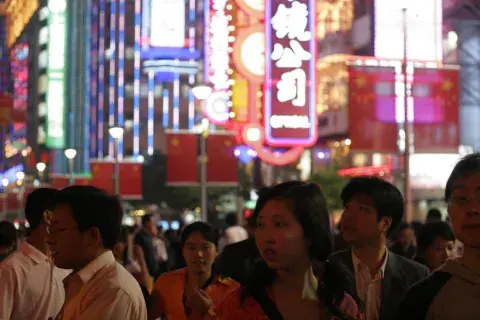
2. As you walk west along Nanjing Lu, the center of high end shopping and business in Shanghai makes itself very clear. Skyscrapers, malls (Plaza 66), and smaller shops line the street displaying Shanghai’s twist on the high life. I can’t really recommend shopping here, as most of the shops are found in every big city, and in Shanghai customers will pay an exorbitant import tax on their Burberry purses. At night when the neon lights are turned on, Nanjing Lu becomes the Las Vegas of China. Crowded yet entertaining, stop by Nanjing Lu for dinner or drinks at least one night in Shanghai. Also be sure to browse the Tongren Lu Bar Street article for bars or try Element Fresh for dinner.
3. Walk past the Shanghai Ritz Carlton at the Portman, the first 5 star hotel to land in Shanghai. The rooms could stand a little refurbishing, but this hotel lives up to the Ritz’s world famous standards of fantastic service and relaxing ambiance. The complex offers an impressive array of western bars and restaurants (Element Fresh, California Pizza Kitchen, Malone’s) as well as a small grocery store, named City Shop, with a ton of western goods.
4. Complete a Nanjing Lu stroll at the Jing An Temple, a worthwhile temple to explore.... if you haven’t already seen dozens, as it does kind of look like the rest of them.
I wrote this guide to Nanjing Lu from east to west, so that an early start allows you to view local citizens practice Tai Chi on the Bund around 6-8am. However, if that’s just too early to rise, then I would recommend starting at the Jing An Temple and heading east. This route will finish at the Bund for an amazing view of the new and old parts of the city. See Bar Rouge, New Heights, Jean Georges or M on the Bund for more ideas of where to go on Nanjing Road. Just make sure not to miss the museums!

Barbarossa: 231 Nanjing Xi Rd, Peoples Park (南京西路231号, 人民公园), Tel: +86 (0)21 6318 0220. The bar is behind Starbucks and next to the Shanghai Art Museum. Walk into the gate next to the Kathleen’s and follow the path into the center of the park. Open daily 11am to late
Kathleen’s Rooftop Restaurant: 5th floor of the Shanghai Art Museum. 325 Nanjing Xi Lu (南京西路325号), +86 (0)21 6327 2221. Open 11:30am to midnight.
Shanghai Museum, Open daily 9am – 5pm, last entry at 4pm. Entry is 20RMB per person.
Urban Planning Museum, Open daily 9am – 4pm.
Shanghai Ocean Aquarium
Those with little ones in tow, or if you are just a big kid like me, then I recommend the Pudong Aquarium. There are two aquariums in Shanghai; the other located in Changfeng Park. In my opinion the Pudong Aquarium is far better. However, with tickets costing 110RMB per person, it is certainly a ...
Those with little ones in tow, or if you are just a big kid like me, then I recommend the Pudong Aquarium. There are two aquariums in Shanghai; the other located in Changfeng Park. In my opinion the Pudong Aquarium is far better. However, with tickets costing 110RMB per person, it is certainly a pricey option.
The aquarium is divided into sections with marine life corresponding to various parts of the world including the Rivers in China, the Amazon, the Poles, the Mediterranean, Africa, Europe, and the Coral Reefs. My personal favorite section is the Arctic, whose attention craving penguins simply love the cameras!!
Each section is beautifully constructed, and the AC is carefully controlled to correspond with the natural environment of the marine life in each section.
The shark tunnel is the longest I have ever been through, and being a penguin enthusiast, I have visited aquariums all over the world!
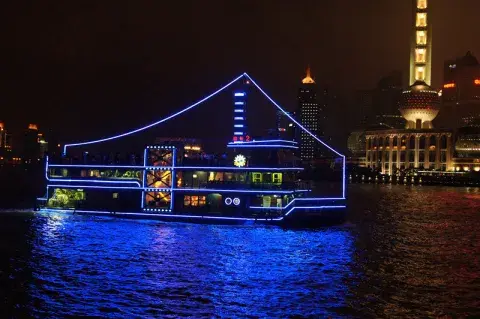
The price of admission is certainly a downside, but by Western standards, the admission is still a bargain at approximately $14. The aquarium only requires a few hours of your time, so I suggest combining it with a trip to the Pearl Tower, its lofty neighbor. The head across the street for lunch/dinner in the Grand Super Mall. Zoe’s is a fantastic eatery located in the Mall. Alternatively, jump on metro line 2 and head just one stop to Century Park or two stops to the Science and Technology museum.


Juyongguan Section of the Great Wall
Due to its position as a link to Beijing, Juyongguan Pass was one of the most strategically important parts of the Great Wall of China. Originally constructed during the fifth century, it was later rebuilt during the Ming dynasty. Juyongguan was neglected durin...
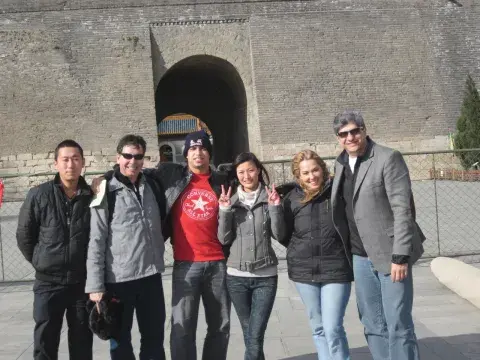
Due to its position as a link to Beijing, Juyongguan Pass was one of the most strategically important parts of the Great Wall of China. Originally constructed during the fifth century, it was later rebuilt during the Ming dynasty. Juyongguan was neglected during the Qing Dynasty, but has since been renovated and opened to the public.
The renovated section forms a circle with the central entrance to the pass at the bottom of the valley. Most visitors only walk up and down one half of the circle. It is very steep at some points, but a half-circuit can still be done in 2 hours. Guard towers are located on the mountains and Ming dynasty style iron cannons sit by the entrance to the pass.


How to Get There
Tourist Bus (recommended when available) - A simple and cheap option is to take a Beijing tourist bus. They provide one route that visits Juyongguan and Dingling (定陵) which is one of the Ming Tombs.
Public Bus - Bus 919 快车 (kuai che) stops at Juyongguan. It is just a short walk up the hill from the bus station. Alternatively, you can take bus 919 支线 (zhi xian) to Nankou (南口), and then take a cab to Juyongguan for about 20 yuan. Buses numbered 919 leave from the messy Deshengmen (德胜门) bus station which is about 500 meters east of the Jishuitan (积水潭) subway station (subway line 2).
It is not possible to walk from the Juyongguan section to the Badaling (八达岭) section of the wall.
Organized Tour - If you go with a tour group, try to pick one that not only gets you where you want to go, but also doesn't take you where you don't want to go. Tourists are sometimes not allowed to leave "factories" or "galleries" until they buy something which is, of course, overpriced.
Organized Tour - If you go with a tour group, try to pick one that not only gets you where you want to go, but also doesn't take you where you don't want to go. Tourists are sometimes not allowed to leave "factories" or "galleries" until they buy something which is, of course, overpriced.