Han Dynasty Tombs

Chunxi Lu

Chunxi Lu could be included in the shopping category, but because of the brand names, bright lights, and crowds of people it is likely better suited as a tourist stop. Filled with brand name shops from around the world, Chunxi Lu is an expensive place to go shopping. You could probably buy the sa...

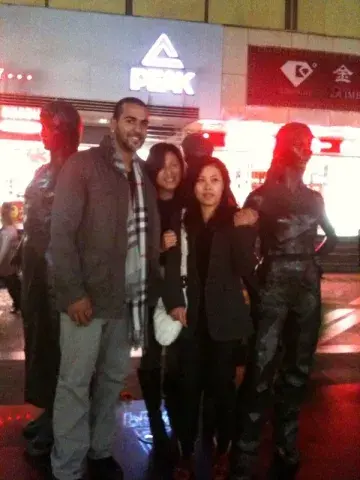
Chunxi Lu could be included in the shopping category, but because of the brand names, bright lights, and crowds of people it is likely better suited as a tourist stop. Filled with brand name shops from around the world, Chunxi Lu is an expensive place to go shopping. You could probably buy the same goods in your home country for similar rates. However, make time to walk down Chunxi Lu and night and witness a scene reminscient of Times Square in New York or Trafalgar Square in London. Bright lights and enormous colorful advertisements make your head spin. It is a perfect microcosm of the new globalized capitalist economy of China. The Chinese love to shop here, simply so they can say they bought the item at Chunxi Lu. Adidas, Gucci, Kappa, Nike, Seiko, Ito Yokado are just a few stores on Chunxi Lu. Try to avoid a visit on a weekend, as you will likely be overwhelmed by throngs of shoppers shoving their way down the promenade. The street is free of cars and sidestreets are filled with street vendors selling yummy snacks filled with sugar to keep you in a shopping frenzy.

Directions: Simply walk in the direction of people with shopping bags, slightly east/southeast of Tianfu Square. When the stores begin to get fancier with more and more recognizable brand names, you know you are close. All taxi drivers will know Chunxi Lu. 

Heptachord Terrace (Gu Qin Tai)

Heptachord Terrace is located on the west side of Tortoise Hill. The terrace is also named Boya Terrace after a popular story about friendship that took place here during the Spring and Autumn Period (770 - 476 B.C.). A famous musician named Yu Boya was once stranded here by a sudden heavy...
Heptachord Terrace is located on the west side of Tortoise Hill. The terrace is also named Boya Terrace after a popular story about friendship that took place here during the Spring and Autumn Period (770 - 476 B.C.). A famous musician named Yu Boya was once stranded here by a sudden heavy rain. He played a song named “High Mountains and Flowing Steams” on his boat. Another musician named Zhong Ziqi heard the music. Yu Boya discovered that Zhong Ziqi deeply understood his music, so Yu Boya invited him to come into the boat, and the two discussed the music for the whole night. The following day, they made an appointment to meet at the exact same place a year later. Unfortunately, Yu Boya only saw the grave of his friend one year later. He was so depressed that he played the same bit of music in front of the grave and then smashed his heptachord. After that, he never played music again.  The legendary story about their friendship touched many people, so Heptachord Terrace was built to memorize their friendship.
 

A visitor can easily get to Heptachord Terrace by any bus going to Hankou or coming to Wuchang. You can also take bus No.1.


Dong Quan Men Alley

Running parallel to the busy Wenchang Road is a quiet ancient back alley that contains a host of sites well worth visiting. The alley's main gate/entrance dates back to the Qing Dynasty. Small restaurants and craft shopss line the alley, yet it thankfully lacks any sense of commercialization. Oth...

Running parallel to the busy Wenchang Road is a quiet ancient back alley that contains a host of sites well worth visiting. The alley's main gate/entrance dates back to the Qing Dynasty. Small restaurants and craft shopss line the alley, yet it thankfully lacks any sense of commercialization. Other small alleys jet off to the sides, and wooden doors representing multiple eras of China's lengthy history serve as a backdrop to residents sitting on stools, smiling at passersby. Former Chinese president, and Yangzhou native, Jiang Zemin even has a residence in this alley.


Further down the alley lies one of the best preserved ancient residences in Yangzhou, that of the salt merchant Wang Shi (汪氏小苑). This residence and its nearby offshooting alleys allow for a unique opportunity to look into China's past and observe what has already been demolished in most other Chinese cities. The maze-like residence is a bit dusty and less renovated than other sights, which likely assist in making it feel as if you are walking on a piece of history.


Just east of this area is the Qiong Hua Temple (琼花观) and garden. The former temple, fronted by two 300 year old Gingko trees, is now an art gallery featuring rotating exhibitions of calligraphy and paintings by local artists. Behind the gallery is the quiet Qiong Hua garden which contains an abundance of Yangzhou’s city flower, the qiong hua. This flower was actually part of what drew emperors to Yangzhou for their spring tours.