Shao Lin Temple
Dear friends, it is my honor to be your tour guide and i believe you will have an unforgettable journey today. Shaolin Temple is located in Henan province ,which was the famous place with the religion culture. Now we are going to visit the origin place of Chinese zen ----- Sh...
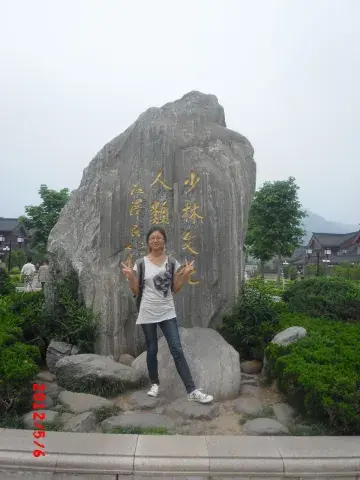
Dear friends, it is my honor to be your tour guide and i believe you will have an unforgettable journey today. Shaolin Temple is located in Henan province ,which was the famous place with the religion culture. Now we are going to visit the origin place of Chinese zen ----- Shaolin Temple. It located in the jungle of Shaoshi mountain, hence the name of Shaolin Temple. Nowadays , Shaolin Temple is not only famous for its ancient mysterious Buddhism, but also renowned at home and abroad because of its exquisite kongfu. As the saying goes:” Chinese kongfu crown the world, World martial arts out of Shaolin”, It also enjoys a reputation as “the imperial sacrifices courtyard" by world Buddhism nowadays. Especially during the Tang dynasty, 13 sticks Buddhist monk rescued the emperor of TaiZong ,so gained the fame “The world famous temple” in the world .
Here we are. In Shaolin Temple, now we are in the entrance palace, you can easily notice a statue of Buddha is consecrated. It is the big stomach Maitreya to welcomes guests with his kindness countenance. Behind the entrance palace is a statue of Weituo, who protects temple Buddha, the Buddhism and the monk.
Dear friends, among the entire temple central construction, the most splendid building is Main Hall. In center of the palace consecrates present world Buddha ---- Sakyamuni Buddha, left for passes Buddha, right for future Buddha ----- west extremely happy world Amitabha Buddha. The west and east Gable of the palace are consecrates eighteen Arhats, the other side consecrates goddess of Mercy. All of these consecrate indicate that Zen is a totally Chinese localization Buddhism.
There is a bell tower and a drum tower in front of the main hall, both of them are regular buildings in temple. They stands for activities schedule of the whole temple.
Around the main hall, we can visit a mass of buildings that can show us some related knowledge about the Chinese Buddhism. Such as: “Buddhist texts depositary”,” the snow pavilion”, and “Thousand Buddhist temple hall”, and so on.
Now, we are facing the Spectacular tower forest of Shaolin Temple, actually they are tombs of Eminent monk and tower come from India named Futu, used to stored Buddhist relics, and the tower here is so splendid that reward every tourist with an unforgettable memory. It rank number one in its scale and quantity among the ancient tower forest. The height of each tower is depend on the status, attainment and Prestige of the monk, the higher achievement, the higher the tower.
Dear friends, it is time to draw an end to our trip today, the scenic spots of Shaolin Temple is a good place for recreation and relaxation. even enjoy the peaceful of Zen. It has been attracting thousands of vistors from home and abroad with its lovely natural scenery and strong colorful China culture , so welcome back again. and I will be here waiting for you.

Yuntai Mountain
Situated in Xiuwu county, Henan province, Yuntai Mountain is among the first group of world geology park, and it is the only scenic spots combines many names together in Henan province, like national tourist attraction, national...
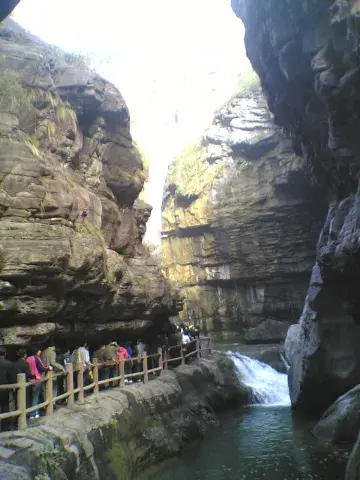
Situated in Xiuwu county, Henan province, Yuntai Mountain is among the first group of world geology park, and it is the only scenic spots combines many names together in Henan province, like national tourist attraction, national AAAAA grade scenic spots, national geology park, national forest park, national water conservancy tourist attraction, national macaque protection zone, national first group natural heritage. Covering an are of 190sqm, the scenic spots is composed of many sightseeing places, such as Tanpu Gorge, Quanpu Gorge, Red Stone Gorge, Zifang Lake, Macaque Valley etc.
Self Drive Tour or travel with travel agency

Guoliang Tunnel
Located in the Taihang Mountains of China, the small village of Guoliang is sitting on a mountaintop and was isolated from the rest of the world. The only way to reach it was to walk through a valley surrounded by steep cliffs, and then climb a series of cut out stone steps. Cut off from the rest...
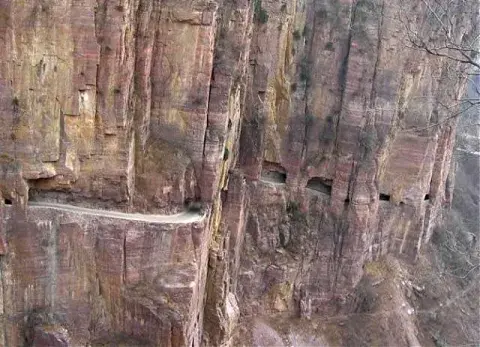
Located in the Taihang Mountains of China, the small village of Guoliang is sitting on a mountaintop and was isolated from the rest of the world. The only way to reach it was to walk through a valley surrounded by steep cliffs, and then climb a series of cut out stone steps. Cut off from the rest of the world, the village was doomed to become a ghost town, unless a road could be constructed trough the cliffs.
Guoliang tunnel
This all changed in 1972. When the Chinese government decided it wasn’t worth to invest several millions into a road that would only be used by 300 people, the villagers decided to dig the tunnel road themselves. It was their only hope to get connected to the rest of the world.
Construction of Guoliang tunnel
It took thirteen villagers five years to finish the 1,200-meter long tunnel road (0.8mile). The tunnel is about 5 meters high (15 ft) and 4 meters (12 ft) wide. It is wide enough for two vehicles to pass. Without any training, the construction of the tunnel was very dangerous. Farmers were working with explosives on the steep cliffs. Some of them died in fatal accidents, but the others kept on digging. Finally, on May 1, 1977, the tunnel was opened to traffic.
Guoliang tunnel
The tunnel itself has several windows looking out over the valley. These were carved to push the rubble out. The road surface and tunnel walls are very rough due to the primitive tools the workers were using. The rough, narrow and steep road is very dangerous in wet conditions. It can get very slippery, so use extreme caution if you explore this road whe it rains. You don't want to fall off those cliffs.
Guoliang tunnel
After all, the construction of the tunnel was a success. First of all, the village was now accessible by car, a huge leap forward. When China opened its borders for tourism around the year 2000, the tunnel became an attraction with thousands of visitors every year. The village even started to build hotels to accommodate all these guests.
Xiyagou and Kunshan tunnel
Not so far away from Guoliang, but located deeper into the Taihang mountains, there are two other villages who connected themselves to the world by means of a tunnel: Xiyagou and Kunshan.
In 1962, a county official visited the village of Xiyagou. The road he had to take to get there was so scary and dangerous that he donated 3,000 yuan to the villagers to construct another, safer road. Twenty years later, after a few unsuccessful attempts, they decided the road would spiral across the surface of a cliff with windows along the way to remove the crushed rocks, just like the villagers in the nearby Guoliang had done it. The tunnel section (about 3km, or 2 miles) was finally completed in 1991.
Xiyagou tunnel
Another tunnel road was also constructed in the nearby village of Kunshan. Very little is known about it, but just as the other tunnels it was constructed by farmers to create an easy access to their village. The pictures speak for themselves.
How to get there?
It’s rather difficult to find these tunnel roads. They are located in a very remote region deep into China. If you want to get there, you should start your trip in Xinxiang, a city in the Henan province (easy to find on google maps). Leave the city by driving north on Huanyu Avenue (the S229). After 13 miles you’ll enter the town of Huixian. Stay on the S229 for 15 miles more until you reach the junction with the S228. Turn left here and keep following the S229. After 8 miles you reach the village of Nanzhaizen. Turn left again and follow directions to Guoliang, 8 miles further.
Luoyang
Luoyang (IPA: [lwɔ̂jɑ̌ŋ]; Chinese: 洛阳) is a prefecture-level city in western Henan province of Central China. It borders the provincial capital of Zhengzhou to the east, Pingdingshan to the southeast, Nanyang to the south, Sanmenxia to the west, Jiyuan to the north, and Jiaozuo to the northeast. ...
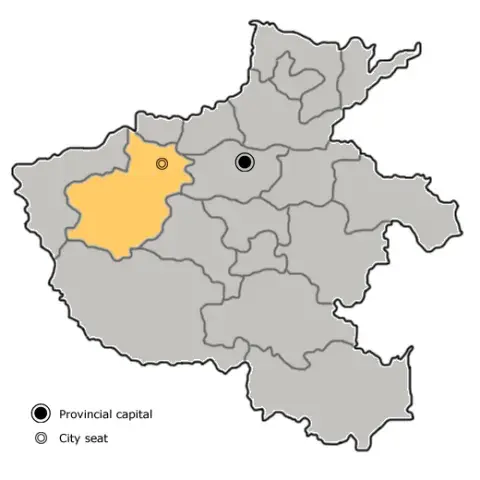
Luoyang (IPA: [lwɔ̂jɑ̌ŋ]; Chinese: 洛阳) is a prefecture-level city in western Henan province of Central China. It borders the provincial capital of Zhengzhou to the east, Pingdingshan to the southeast, Nanyang to the south, Sanmenxia to the west, Jiyuan to the north, and Jiaozuo to the northeast. As of the final 2010 census, Luoyang had a population of 6,549,941 inhabitants with 1,857,003 people living in the built-up (or metro) area made of city's five urban districts, all of which except the Jili District not urbanized yet.[1]
Situated on the central plain of China, Luoyang is one of the cradles of Chinese civilization, and is one of the Four Great Ancient Capitals of China.