Qingtian River

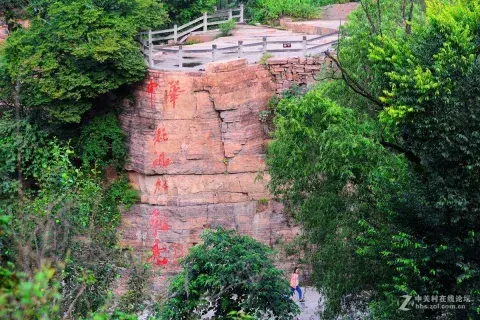
Qingtian River in the Northern Three Gorges is 37 kilometers northwest of BoAi County, Jiaozuo City, Henan Province. With the grand, precipitous, and quiet scenery and five millennia historic and cultural details,it gains the name as “the Small Three Gorges in the North,” and enjoys t...

Qingtian River in the Northern Three Gorges is 37 kilometers northwest of BoAi County, Jiaozuo City, Henan Province. With the grand, precipitous, and quiet scenery and five millennia historic and cultural details,it gains the name as “the Small Three Gorges in the North,” and enjoys the reputation as “Peculiar Springs and Ingenious Caves Surpassing the Central Plain.”

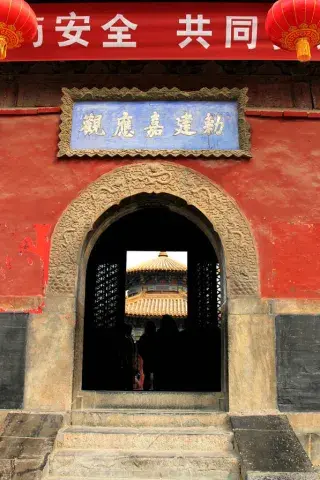
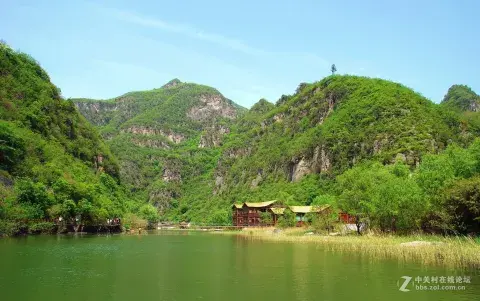
Qingtian River Scenic Area consists of three small scenic areas (the Ancient Path, Daquan Lake, Yueshan Temple, Phoenix Ridge, and Stone Buddha Bench) and 108 scenic spots with an area of 45.2 square kilometers. In the scenic area, the springs and ravines are deep and limpid; the silver waterfalls are pouring down flying; the running water is gurgling; the springs are rolling. You can see different sceneries in every five steps and a different atmosphere in every ten steps, thus it is extremely enchanting. The Ancient Path is a traffic fortification in Henan Province and Shanxi Province, and is regarded as one of “the Eight Paths in Taihang Area.” When Cao Pi (Emperor Wen of Kingdom of Wei from 220A.D to 280A.D. ) went north to make war with Gaogan and passed here, he wrote down the famous poem Traveling in Cold Season. Daquan Lake is the most attracting one in Qingtian River Scenic Area. The total length is 7.5 kilometers. When you boat on it, you may feel that you are boating on the Three Gorges and traveling on Li River. Yueshan Temple is one of three ancient temples in Henan Province, and enjoys the same popularity as Shaolin Temple and White Horse Temple. It is also the birthplace of Bajiquan, one of the three most famous Quan in China.

Mount Songshan

Mount Songshan, one of the Five Sacred Mountains of China, is of great historical and cultural significance. It was long being an important venue for the ancient Chinese emperors, kings and ministers to hold grand ceremony of worship of heaven to pray and say...

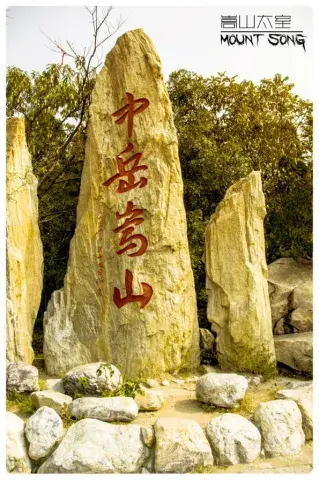
Mount Songshan, one of the Five Sacred Mountains of China, is of great historical and cultural significance. It was long being an important venue for the ancient Chinese emperors, kings and ministers to hold grand ceremony of worship of heaven to pray and say thanks for peace and prosperity. Also, poets, men of letters came here to propagate doctrines of the ancient sages; princes, dukes, ministers came here to deliver a sermon; Chinese and foreign tourists have been coming to admire the wonderful views.

Emperor Wu of the Han Dynasty visited Songshan in the year of 110 B.C and gave an order to the 300 families to make up of the Songgao County; in the year of 682 A.D, emperor Tanggaozong ordered to build Fengtian Palace on the south of Songshan in order to visit the Songshan often. And then he ordered to set up Songyang County. In 696 A.D, Empress Wu Zetian of the Tang Dynasty climbed onto the ridge of Taishi to do homage to heaven, and did homage to the earth on the top of Shaoshi. She changed the name of Songyang County to Dengfeng County, which in Chinese means "climbing and paying homage"; and changed Yangcheng County to Gaocheng County, which in Chinese means "succeed".

Since the reform and open policy, the Songshan scenery spot has greatly been improved. Eight scenery spots have formed here, including the Shaolin Temple, the Songyang Academy, Taishi Mount, the Fawang Temple, the Zhongyue Temple, Luya waterfall, the star observation platform, and the Shaoshi Mount.

In recent years, there are many new tour activities, such as, mountaineering, Wushu, archaeological studies, religion tour, astronomy tour, geological tour, forest tour, and customs tour, forming a comprehensive tourist system and the Songshan scenery spot has become a good place for sightseeing, mountaineering, adventure, research and recreation.