Museum of Ancient Tombs

An interesting old saying goes that Suzhou and Hangzhou are good places to live, while Luoyang is a good place to die. Many of the ancient emperors, princes, generals and other public celebrities took this advice and left orders that they were to be buried in Luoyang after their death. There are ...

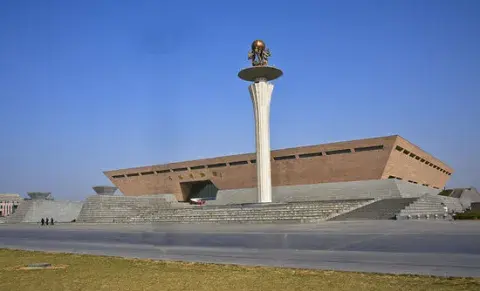
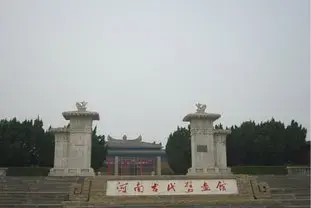
An interesting old saying goes that Suzhou and Hangzhou are good places to live, while Luoyang is a good place to die. Many of the ancient emperors, princes, generals and other public celebrities took this advice and left orders that they were to be buried in Luoyang after their death. There are over 20 ancient tombs dating from the Han Dynasty to the North Song Dynasty. A museum was built at the site where many ancient tombs were excavated.

The museum is at the Mang Hill in the north suburb of the city, about 8 kilometers from the city center. Covering an area of around 3 hectare, it has two parts: the underground and above ground parts. The above ground part contains a Han-style gate, some halls. Tomb models from the Stone Age to the Han Dynasty, restored funerary objects and funeral rituals are displayed in the eastern hall.

The underground section is a tomb groups site which is about 7 meters underground. There are North and South Song Dynasties Hall, Wei and Jin Dynasties Hall, Tang and Song Dynasties Hall and a hall for refined items excavated from the tombs. Many of the vividly painted  murals, valuable relics and a number of pottery figures are on display here. Visitors can also find the models of ancient tombs. 22 ancient tombs restored to their original styles are displayed here.

Luoyang Museum

Luoyang Museum demonstrates the colorful culture of the ancient capital, Luoyang city. Over 1,000 exhibits ranging from prehistoric times to the Sui and Tang Dynasty periods are displayed there. In term of exhibits, the museum puts an emphasis on the elephant fossil from 50,000 years ago, faience...

Luoyang Museum demonstrates the colorful culture of the ancient capital, Luoyang city. Over 1,000 exhibits ranging from prehistoric times to the Sui and Tang Dynasty periods are displayed there. In term of exhibits, the museum puts an emphasis on the elephant fossil from 50,000 years ago, faiences during the Neolithic Age, bronzes from the Shang and Xia Dynasty periods, painted potteries from the Han and Wei Dynasty periods, as well as tri-colored glazed potteries from the Tang Dynasty. Moreover, Cuo Jinyintong Ding , which is an ancient cooking vessel with two looped handles and three or four legs, a clay sculpture from the Wei Dynasty, and tri-colored lights and horses from the Tang Dynasty, are the treasures of China. Meanwhile, the museum is combined with a modern technique, giving new vitality to the exhibits and making it more exquisite and elegant.

Treasure Hall
luoyang museumTri-colored glazed pottery of a scram camel
The Treasure Hall is situated on the second floor. This hall mainly exhibits previous dynasties' relics which are extremely fine and exquisite, including the Double-dragon Bottle in blue glaze and a tri-colored glazed pottery of a scram camel . Every exhibit is a national treasure.

Han and Tang Dynasty Potteries' Hall
This exhibition is divided into four parts, in order of time: the Han Dynasty, the western Jin Dynasty, the northern Dynasties, and the Sui and Tang Dynasties. Through more than 400 clay sculptures, the museum displays the basic outline of ancient clay sculpture art development. This is a vivid textbook about clay sculptures.

Tri-colored Glazed Pottery of the Tang Dynasty Hall
Luoyang was the main producer of tri-colored glazed pottery during the Tang Dynasty. This hall displays a civilian tomb figure, a lady's tomb figure, a maid's tomb figure, and an animal's tomb figure, to name a few.
Guanlin Temple

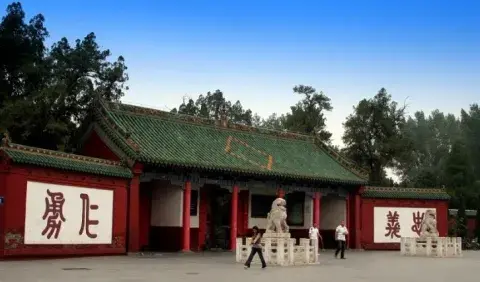
Guanlin Temple was built to commemorate the great General Guan Yu of the State of Shu during the Three Kingdoms Period. It is said that the head of General Guan Yu was buried here. Furthermore, it is the only complex combining a forest with a temple in China.

The structure is now comprise...

Guanlin Temple was built to commemorate the great General Guan Yu of the State of Shu during the Three Kingdoms Period. It is said that the head of General Guan Yu was buried here. Furthermore, it is the only complex combining a forest with a temple in China.

The structure is now comprised of halls, temples, pavilions and Guan Yu's tomb. Valuable stone tablets with elegant calligraphies can also be found here. The place is very popular among the locals who worship the valorous general by burning sticks of incense.

In the "Romance of the Three Kingdoms", the Shu general, Guan Yu, was defeated, captured and executed by Sunquan, the ruler of the State of Wu. Fearing revenge from Guan Yu's blood brother, Liubei, who was the ruler of the State of Shu, Sunquan ordered that Guan Yu’s head be sent to Cao Cao, ruler of Wei, in an attempt to deflect responsibility for the death. Cao Cao, however, was an admirer of Guan's loyalty and bravery. He ordered a wooden body to be carved to accompany the head before Guan Yu was buried.

Very little is known about when the temple was first built. The complex was developed during the Ming Dynasty and underwent several renovations and expansions during the succeeding Qing Dynasty.

White Horse Temple

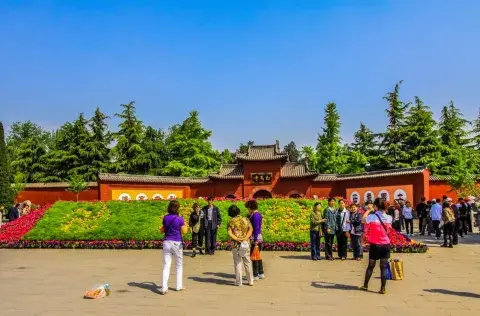
Located 12 kilometers east of Luoyang city, the White Horse Temple is one of the oldest Buddhist temples in China and is renowned as the cradle of Chinese Buddhism. This temple, with a large number of Buddhist items housed there, is well worth a visit.

The main halls in the White...

Located 12 kilometers east of Luoyang city, the White Horse Temple is one of the oldest Buddhist temples in China and is renowned as the cradle of Chinese Buddhism. This temple, with a large number of Buddhist items housed there, is well worth a visit.

The main halls in the White Horse Temple are the Hall of Heavenly Kings, the Great Buddha Hall, the Mahavira Hall, the Ambassador Hall and the Qiyun Pagoda. Not only can travelers appreciate the vivid Buddha statues and solemn architecture, but they can also listen to the historical stories and feel the spiritual world of Buddhism in the White Horse Temple.

There are two new temples which have been built in recent years, which are the Indian Temple and the Thailand Temple. The materials of the temples were brought from the two countries. The Indian Temple has been completed while the Thailand Temple is under construction. The styles of these two temples are exotic, each with strong features of India and Thailand.

The architecture in the White Horse Temple is magnificent and grand. Many of the large halls consecrating figures of Buddha are old-fashioned. Many travelers come here to pray for happiness every year. In addition, there are also a great number of experts and scholars who study the history here.