Beijing Ancient City Wall
In ancient China, few cities existed without a city wall. The city wall and the city gate have a close relationship with the city's establishment. The city wall, surrounding the residential area, is the most basic constituent of a city. Beijing's city wall is a masterpiece owing to its grand verv...
In ancient China, few cities existed without a city wall. The city wall and the city gate have a close relationship with the city's establishment. The city wall, surrounding the residential area, is the most basic constituent of a city. Beijing's city wall is a masterpiece owing to its grand verve and spirit. It is not only the brick deposit for defense, but also a great ancient project embodying the beautiful physique of Beijing. It is a symbol of the time when humanity made a step towards civilization. The city wall of Beijing was a fortification built around 1435. It was 23.5 km long. The thickness at ground level was 20m and the top 12m. The wall was 15m high, and it had nine gates. This wall stood for nearly 530 years, but in 1965 it was removed to give way to 2nd Ring Road and the loop line subway of Beijing. Only in the southeast, just south of Beijing Railway Station, stands one part of the wall. Beijing was the capital city of the last three dynasties (the Yuan, Ming and Qing) as well as two northern dynasties (the Liao and Jin) in the history of China, as such, Beijing is often referred to as an "ancient capital of Five dynasties". It had an extensive fortification system, consisting of the Palace city, the Imperial city, the inner city and the outer city. Specifically including the many gate towers, gates, archways, watchtowers, barbicans, barbican towers, barbican gates, barbican archways, sluice gates, sluice gate towers, enemy sighting towers, corner guard towers and moat. It had the most extensive defense system in Imperial China. After the collapse of the Qing Dynasty in 1911, Beijing's fortifications were dismantled one by one, the Palace city has remained largely intact, becoming the Palace Museum; the Imperial city's fortifications has Tian'anmen and several sections of imperial city wall remaining intact; the inner city with Zhengyangmen's gate tower and watchtower, Deshengmen's watchtower, the southeastern corner guard tower, and a section of the inner city wall near Chongwenmen remaining intact; and nothing of the outer city remaining intact, with Yongdingmen completely reconstructed in 2004. During the Ming and Qing dynasties, the protection and renovation of the wall and moat systems of Beijing were extensive. No holes may be drilled, no arches made, and if any section has been damaged, even if missing just a single brick, were swiftly reported to the authorities and subsequently repaired. The Inner city walls of Beijing had the city walls of Yuan's Dadu as a foundation. In the first year of the Hongwu era, after the Ming troops entered Dadu, General Xu Da directed Hua Jilong to build an additional city wall of rammed earth south of the original Dadu's northern city walls. Later it was covered with stones and bricks, forming a second defense to the Dadu original. In the 4th year of the Hongwu era, Dadu's northern city walls were completely abandoned, dismantled and its materials used to reinforce (heighten and widen) the new northern wall a few kilometres south. Moreover, he ordered Zhang Huan to measure the original Yuan Dadu Imperial city's perimeter, which amounted to 1.206 zhang (approximately 4.020 metres); he also ordered Ye Guozhen to measure the southern city's perimeter which amounted to 5.328 zhang (approximately 17.760 metres), the southern city was the remnants from the Jin Dynasty's capital Zhongdu. The old Beijing's city gate and city wall, basically rebuilt in the Ming Dynasty (1368-1644), was composed of four cities including the Forbidden City as the core, the palace wall in the periphery, the inner city and the outer city. The inner city has nine city gates (in turn from east to west: Dongbian Gate, Guangqu Gate, Zuo'an Gate, Yongding Gate, You'an Gate and Guang'an Gate), whereas the outer city has seven city gates (Xuanwu Gate, Fucheng Gate, Xizhi Gate, Desheng Gate, Anding Gate, Dongzhi Gate, Chaoyang Gate and Chongwen Gate). Each city gate has a different function. For instance, Chaoyangmen is used for grain to pass through, Chongwenmen is for wine, Xuanwumen is for the prisoner van, Fuchengmen is for coal and so on. The main function of the city wall is military defense, and it played an extremely vital role in guarding the stable city life and promoting city development. The city wall in the capital is not merely a fortification, but also a symbol of a dominant centre, dignity and heavenliness, a political, economical and cultural center and the link reuniting the regional culture. These all give the cultural connotation of the city wall and city gate in Beijing. Many city walls in Beijing have been torn down in the process of urban construction after the founding of the People's Republic of China. Only a few vestiges are available for people to visit so that they can recall their Chinese cultural heritage. Therefore, it is all the more significant to visit the city wall and city gate during a Beijing trip.
Beijing Zoo
Beijing Zoo is the biggest and oldest zoo in China.
It is located in the Western District in Beijing. There are more than 450 kinds of animals and more than 500 kinds of sea animals in the Oceanarium.
Panda is our National treasure. When the tourist come to visit Beiji...
Beijing Zoo is the biggest and oldest zoo in China.
It is located in the Western District in Beijing. There are more than 450 kinds of animals and more than 500 kinds of sea animals in the Oceanarium.
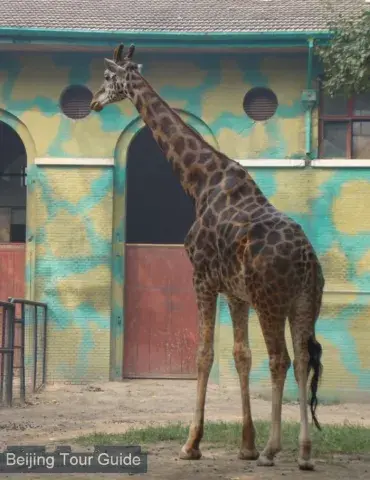
Panda is our National treasure. When the tourist come to visit Beijing, it's worthwhile to go to see the pandas in the zoo. Except the pandas, there are many other rare aninals, like Golden monkey, Asian elephant, giraffe, spotted deer, antelope and etc.
The Beijing Zoo was first built in 1907 in the late Qing Dynasty. Empress Dowager Cixi came twice for visiting. It was named " Western Suburb Garden" at the beginning of the new China. At that time , there were only 13 macaques in the whole garden. Later, the government set up international animal exchange system. We exchanged the animals with Russia, Germany, Korea, India, Burma, Viet Nam and etc. Now, Beijing Zoo is the biggest zoo in China.
Take Bus: No.7, No.15, No.19, No.102, No.103, No.105, No.107, No111 Take Subway: Line 4
Summer Palace
Summer Palace -- General Introduction
Situated in the Haidian District northwest of Beijing City, the Summer Palace is 15 kilometers (9.3 miles) from central Beijing. Being the largest and most well-preserved royal park in China, it greatly influences Chinese horticulture and landscape wi...
Summer Palace -- General Introduction
Situated in the Haidian District northwest of Beijing City, the Summer Palace is 15 kilometers (9.3 miles) from central Beijing. Being the largest and most well-preserved royal park in China, it greatly influences Chinese horticulture and landscape with its famous natural views and cultural interests, which also has long since been recognized as 'The Museum of Royal Gardens'.
The construction of the Summer Palace started in 1750 as a luxurious royal garden for royal families to rest and entertain. It later became the main residence of royal members in the end of the Qing Dynasty. However, like most of the gardens of Beijing, it could not elude the rampages of the Anglo-French Allied Force and was destroyed by fire. According to historical documents, with original name as 'Qingyi Garden' (Garden of Clear Ripples), the Summer Palace (Yiheyuan) was renamed after its first reconstruction in 1888. It was also recorded that Empress Dowager Cixi embezzled navy funds to reconstruct it as a resort in which to spend the rest of her life. In 1900, the Summer Palace suffered another hit by the Eight-Power Allied Force and was repaired in the next two years. In 1924, the Summer Palace was open to the public. It ranked amongst the World Heritage Sites by UNESCO in 1998, as well as one of the first national AAAAA tourist spots in China.

Badaling Great wall
Badaling Great Wall is situated in Yanqing County, over 70 kilometres (43 miles) north of Beijing. In 1988, it was enlisted in the World Cultural Heritage Directory by UNESCO. It gained the worldwide reputation once again: it was listed among the New Seven Wonders of the World On...
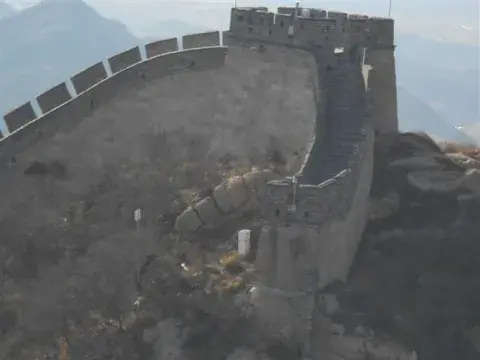
Badaling Great Wall is situated in Yanqing County, over 70 kilometres (43 miles) north of Beijing. In 1988, it was enlisted in the World Cultural Heritage Directory by UNESCO. It gained the worldwide reputation once again: it was listed among the New Seven Wonders of the World On July 7, 2007.
Badaling Great Wall is the most important section and earliest section opened to public of the Great Wall.

Huanghuacheng Great Wall
This part of the Great wall is located in Huairou county,northwest of Beijing, 55 kms away from downtown. The wall was built 600-400 years ago, and was renovated recently. Still very good view and very few tourists. No cable car get you to the top, you should walk, and crossing the filds of farms...
This part of the Great wall is located in Huairou county,northwest of Beijing, 55 kms away from downtown. The wall was built 600-400 years ago, and was renovated recently. Still very good view and very few tourists. No cable car get you to the top, you should walk, and crossing the filds of farms, they charge 2 yuan for going up and 2 yuan for going down.
Annie arranges trip to this part of the Great Wall.

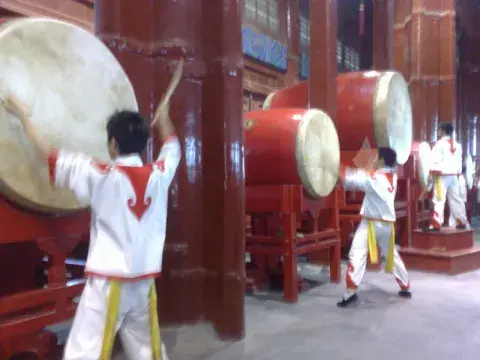
Drum Tower and Bell Tower
Take bus No. 107、815、734、834、60、5、124 to get there.

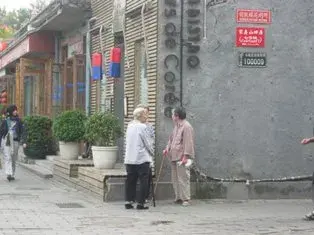
Back Lake Hutong Area
Surrounded by ancient palaces, temples, bell tower and drum tower, Shishahai Lake area is one of the most beautiful among Hundreds of historical scenic spots in old Beijing city.
The hundred-year-old Hutongs and quadrangles which really reflect on local people's life especially make a sha...
Surrounded by ancient palaces, temples, bell tower and drum tower, Shishahai Lake area is one of the most beautiful among Hundreds of historical scenic spots in old Beijing city.
The hundred-year-old Hutongs and quadrangles which really reflect on local people's life especially make a sharp contrast with the Forbidden City and the Summer Palace which reflect on Emperors's life.

The Thirteen Ming Tombs
|
Changling (长陵)
(010) 60761334
Apr 1 – Oct 31: 45 yuan. Nov 1 – Mar 31: 30 yuan
The tomb of Emperor Yongle (1360-1424) and his empress, Xushi, is the largest of the three tombs. It is the first tomb visitors will reach in the valley if entering from the Spirit Way. It was also the first Ming tomb to be built at this site.
The tomb layout is identical to that of the first Ming Tomb in Nanjing although on a grander scale and with the bottom of the burial mound at the top of the wall rather than the bottom. The imperial architecture resembles that of the Forbidden City in Beijing which was also built during the reign of Yongle.
|
![]() |
|
Zhaoling (昭陵)
(010) 60761435
Apr 1 – Oct 31: 30 yuan, Nov 1 – Mar 31: 20 yuan
Zhaoling, the tomb of the twelfth emperor Muzong, (1537-1572) and his three empresses, is the smallest of the three tombs as well as the least visited.
|
![]() |
40 yuan per person

Forbidden City (Palace Museum)
Forbidden City -- General introduction
Lying at the center of Beijing, the Forbidden City, called Gu Gong in Chinese, was the imperial palace for twenty-four emperors during the Ming and Qing dynasties. It was first built throughout 14 years during the reign of Emperor Chengzu ...
Forbidden City -- General introduction
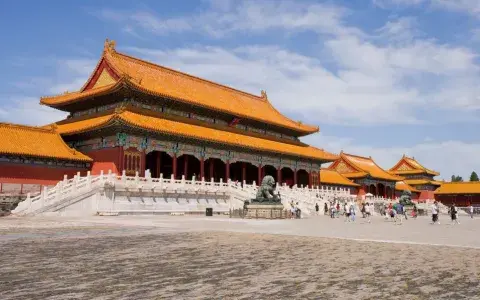
Lying at the center of Beijing, the Forbidden City, called Gu Gong in Chinese, was the imperial palace for twenty-four emperors during the Ming and Qing dynasties. It was first built throughout 14 years during the reign of Emperor Chengzu in the Ming Dynasty (1368-1644). Ancient Chinese Astronomers believed that the Purple Star (Polaris) was in the center of heaven and the Heavenly Emperor lived in the Purple Palace. The Palace for the emperor on earth was so called the Purple City. It was forbidden to enter without special permission of the empeor. Hence its name 'The Purple Forbidden City', usually 'The Forbidden City'.
Now known as the Palace Museum, it is to the north of Tiananmen Square. Rectangular in shape, it is the world's largest palace complex and covers 74 hectares. Surrounded by a 52-meter-wide moat and a 10-meter-high wall are more than 8,700 rooms. The wall has a gate on each side. Opposite the Tiananmen Gate, to the north is the Gate of Divine Might (Shenwumen), which faces Jingshan Park. The distance between these two gates is 960 meters, while the distance between the east and west gates is 750 meters. There are unique and delicately structured towers on each of the four corners of the curtain wall. These afford views over both the palace and the city outside.
The Forbidden City is divided into two parts. The southern section, or the Outer Court was where the emperor exercised his supreme power over the nation. The northern section, or the Inner Court was where he lived with his royal family. Until 1924 when the last emperor of China was driven from the Inner Court, fourteen emperors of the Ming dynasty and ten emperors of the Qing dynasty had reigned here. Having been the imperial palace for some five centuries, it houses numerous rare treasures and curiosities. Listed by UNESCO as a World Cultural Heritage Site in 1987, the Palace Museum is now one of the most popular tourist attractions world-wide.
Construction of the palace complex began in 1407, the 5th year of the Yongle reign of the third emperor (Emperor Chengzu, Zhu Di) of the Ming dynasty. It was completed fourteen years later in 1420, and then the capital city was moved from Nanjing to Beijing the next year. It was said that a million workers including one hundred thousand artisans were driven into the long-term hard labor. Stone needed was quarried from Fangshan, a suburb of Beijing. It was said a well was dug every fifty meters along the road in order to pour water onto the road in winter to slide huge stones on ice into the city. Huge amounts of timber and other materials were freighted from faraway provinces.