
Mutianyu Great Wall of Beijing

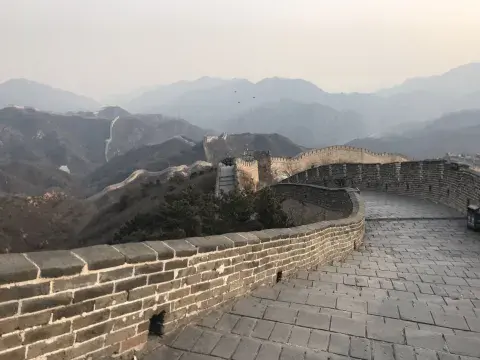
In 1368 AD, Mutianyu Great Wall was built by Xu Da who is the main general for Zhuyuanzhang in the Great Wall ruins of Northern Qi Dynasty. Linked to Gubeikou in the east and Juyongguan in the west,the section of the Great Wall is the military hub defensing of the capitalsince ancient times. Ther...

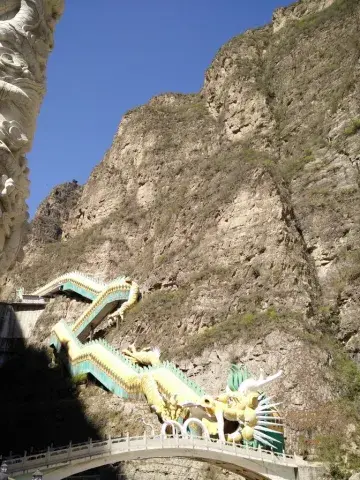
In 1368 AD, Mutianyu Great Wall was built by Xu Da who is the main general for Zhuyuanzhang in the Great Wall ruins of Northern Qi Dynasty. Linked to Gubeikou in the east and Juyongguan in the west,the section of the Great Wall is the military hub defensing of the capitalsince ancient times. There are several famous watchtowers such as Zhengguantai, Dajiaolou, Yingfeidaoyang,Jiankou and Beijingjie, which has profound historical and cultural values. Surrounded by the mountains, the Greening rate of the Great Wall reaches 98%, and its scenery is beautiful. Known for its gorgeous scenery, Mutianyu is one of the essence in the Great Wall of Ming Dynasty. Mutianyuhas the characteristics of the fresh air, sided embrasure, peculiar guards, intensive watchtowers, the strong feeling of three-dimensional and the existing of the inside and outside branch. The Closed Tram, Speed slide, the China dream stone sity, the Great Wall hotel, Yisonglou restaurant are constructed inthe tourist area, so its facilities and function are perfect.The tourist area was added to the national 5A scenic spot list by the National Tourism Administration of China in 2011. In June 28, 2014,the Mutianyu Great Wallintegrated tourism service area put into use. The integrated tourism service area, having service functions including a visitor center, the Great Wall Culture Exhibition Center, and catering and tourism souvenirs street,covers an area of 20 acres.In this way, Mutianyu Great Wall will provide a better travel experience for visitors.

Ming tombs

50 kilometers northwest from Beijing City lies the Ming Tombs - the general name given to the mausoleums of 13 emperors of the Ming Dynasty (1368 - 1644). The mausoleums have been perfectly preserved, as has the necropolis of each of the many emperors. Because of its long history, palatial and in...

50 kilometers northwest from Beijing City lies the Ming Tombs - the general name given to the mausoleums of 13 emperors of the Ming Dynasty (1368 - 1644). The mausoleums have been perfectly preserved, as has the necropolis of each of the many emperors. Because of its long history, palatial and integrated architecture, the site has a high cultural and historic value. The layout and arrangement of all thirteen mausoleums are very similar but vary in size as well as in the complexity of their structures.
It was originally built only as Changling, the tomb of Emperor Zhu Di and his empresses. This is the most magnificent of the tombs. The succeeding twelve emperors had their tombs built around Changling.
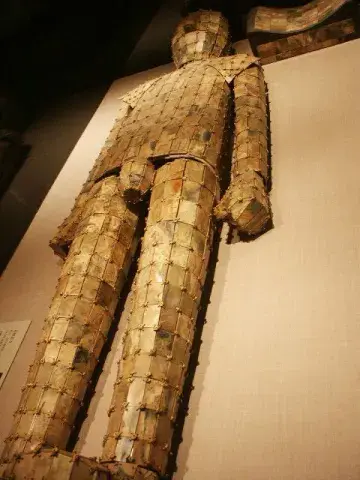
Only the Changling and Dingling tombs are open to the public. Changling, the chief of the Ming Tombs, is the largest in scale and is completely preserved. The total internal area of the main building is 1956 square meters. There are 32 huge posts, and the largest measures about 14 meters in height.It inhumes Emperor Zhudi, the fourth son of Emperor Zhu Yuanzhang. I recommends the Ling'en Palace in its second yard as really deserving a visit. This is unique as it is the only huge palace made of camphor wood. It covers about 1956 square meters. The ceiling is colorfully painted and supported by sixteen solid camphor posts. The floor was decorated with gold bricks.