Capital Museum

 The plan for the Capital Museum, located in the Confucius Temple, was prepared in 1953. The museum formally opened in 1981.
    As a major cultural construction project in Beijing in the “10th Five-Year Plan”, the new Capital Museum, approved by Beijin...

 The plan for the Capital Museum, located in the Confucius Temple, was prepared in 1953. The museum formally opened in 1981.
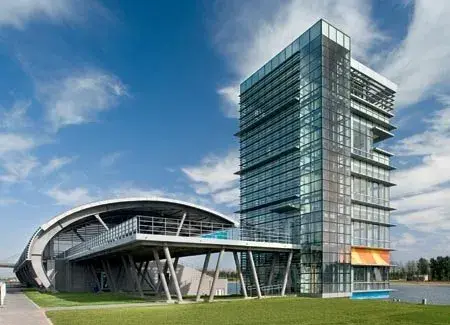
    As a major cultural construction project in Beijing in the “10th Five-Year Plan”, the new Capital Museum, approved by Beijing Municipal Government in 1999, further approved by the State Council after being submitted by the National Development and Reform Commission in 2001, finally commenced its construction in December 2001.
    Under the concern and guidance of Beijing Municipal Government, after four years of hard work, the museum finally makes its debut along the western extension of Chang’an Street, the First Street of China. With its magnificent architecture, abundant exhibitions, advanced technology and complete functions, the Capital Museum, large and modern, makes its contribution to the titles such as “famous historical and cultural city”, “cultural center” and “international metropolis” of Beijing and ranks among the first class museums both at home and abroad.

Subway: Muxidi Station, Line 1
Buses:
Bus No. 1, No. 4, No. 52 and No. 37 to the stop “Gonghuidalou” (Labor Union Building)
No. 937, No. 727, No. 717, No. 650, No. 708, No. 26, No. 319 to the stop Baiyun Rd.
Special Bus No. 1 to the stop “Muxidi”
 

Ditan Park

The Temple of the Earth, or Dìtán in Beijing, China, is located in the norther...

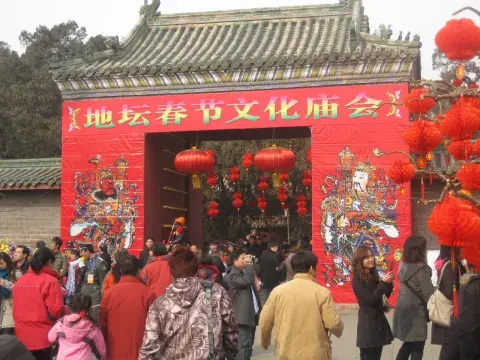
The Temple of the Earth, or Dìtán in Beijing, China, is located in the northern part of central Beijing, around the Andingmen area and just outside of Beijing's second ring road. It is also located just a few hundred yards north of Yonghe Temple. At 42.7 hectares, it is the second largest of the four Temples of Beijing behind only the Temple of Heaven.


It was built in 1530 during the Ming dynasty. Emperors of the Ming and Qing dynasty dynasties would attend the annual summer solstice ritual of offerings to the heaven.


Since the 1980s, traditional temple fairs have been held regularly during the Chinese lunar new year.

Liu Yin Park

LiuyinPark

Liuyin Park...

LiuyinPark

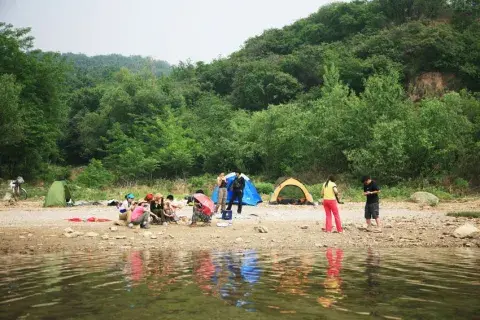
Liuyin Park is located on the west side of Andingmen Waidajie. It can be easily reached from Andingmen subway station at a 10 minute walk, or using bus no. 108, 104, etc. to Jiangzhaikou station. The park covers a total area of 17 hectares, including 7 hectares of water. It is the only one that shows rural scenery in the central downtown area of Beijing. Decorated by bamboo, willows, flowers, fruit trees and thatched pavilions, the park resembles the countryside. Well designed stone walls add a unique charm. Farming fields and tile roofed farming houses, sheltered in green woods look very harmonious with the natural surroundings.

In early spring, when the ice on the lake begins to thaw, flocks of wild ducks come to the park and build their nests on the Yeyadao (wild duck island) in the centre of the lake. The ducks enjoy the natural scenery and live in harmony with nightingales, magpies and squirrels. In summer the lotus flowers dance in the wind together with the swaying of the willow trees.

Bamboo Branch Songs

By Liu Yuxi

Between the green willows the river flows along;
My gallant in a boat is heard to sing a song.

The west is veiled in rain, the east enjoys sunshine,

My gallant is as deep in love as the day is fine.

It offers a perfect place for a summer resort. In autumn, the yellow reeds wave in the wind. It composes a beautiful picture featuring the landscape of the region of rivers and lakes along the lower reaches of the Yangzi river. In this noisy metropolis, the rare green park has long been called “Village Garden” by local Beijing residents. After visiting the park the Santosa Tea House, being nearby offers high class afternoon tea, or even a delicious southeast Asian dinner.


A special event takes place on Saturday mornings in the park, when everyone goes to the park to join into classical dancing. Don’t forget to bring your evening gown.


Metro station: Andingmen, Bus lines no. 108, 104
The Ancient Observatory

After a while in Beijing the contrast of historic sites and ancient temples against the backdrop of a modern skyline becomes all too familiar. The Ancient Observatory, or Exhibition Hall of Ancient Astronomical Instruments as it is officially known, is typical of the Bei...
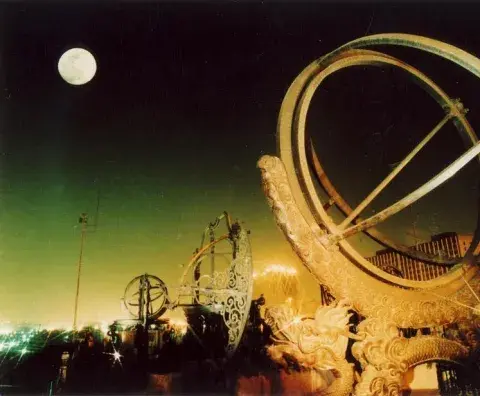
After a while in Beijing the contrast of historic sites and ancient temples against the backdrop of a modern skyline becomes all too familiar. The Ancient Observatory, or Exhibition Hall of Ancient Astronomical Instruments as it is officially known, is typical of the Beijing landscape in this regard. That is, upon reaching the top of the tower to view the ancient astronomical instruments, visitors are then afforded and impressive view of the surrounding city and its imposing high-rises.
 
By blocking out the surrounding city view for just a moment, it is easy to get the sense that the eight bronzed instruments, among which are a celestial globe and an ecliptical armilla, are indeed ancient. Located in a former watchtower, the Observatory was built in 1442(allegedly by Jesuit missionaries), making it one of the oldest observatories in the world and therefore a place of great interest for astronomers. 
 
For those with little to no interest in astronomy, one hour should be ample time to comfortably visit the Ancient Observatory.  Simply observe the ancient instruments and visit the exhibition hall in the adjacent building.
 
The Ancient Observatory is conveniently located directly behind Jianguomen subway station.
 
How to get there:
 
Take subway line 2 to Jianguomen subway stop and take Exit C. Once outside the subway station, turn immediately right, then right again. You can’t miss the tower which will be right in front of you.
 
Link:
 

Local bus routes: 1、4、9、10、20、29、37、39、52、120、122、403、420、728、729、802、938, get off at the Beijing Dong Zhan(北京东站).