The Confucius Temple
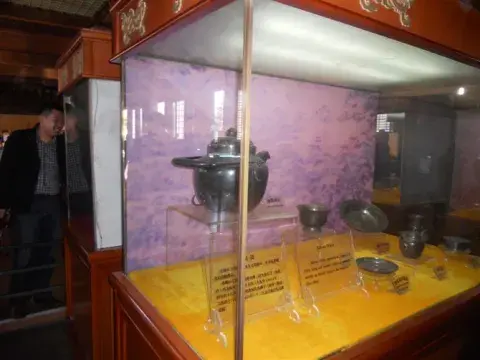
Normally visitors can comfortably combine a visit to the Confucius Temple with a visit to the Lama Temple, as they’re almost neighbours. Currently however, the Confucius Temple is underg...
Normally visitors can comfortably combine a visit to the Confucius Temple with a visit to the Lama Temple, as they’re almost neighbours. Currently however, the Confucius Temple is undergoing major renovations (apparently much needed as the temple was in a state of disrepair). Although visitors are still allowed access, and are charged the 10 yuan entrance fee, it largely resembles a dusty, construction site. Apparently the renovations will take up to a year and hopefully by then the temple will be restored to its peaceful self.
Also on Guozilin Jie is a small cafe with wireless internet access and a vegetarian restaurant.
Update: Confucius Temple was last checked May 2007 and it is still under renovations.
It`s open now. (2008)
How to Get There: Take subway line 2 to Yahegong Station (雅和宫站). Walk South on Yahegong Dajie then turn right (west) on Guozijian Jie (国子监街) and walk straight for a couple minutes.
.jpg)

Simatai Section of the Great Wall
Built during the Ming Dynasty, Simatai hasn’t been renovated in recent history. It is known for being a harder climb than some of the other sections. Steep inclines and high winds test visitors on the hike from one watchtower to the next.
On the east side, t...
Built during the Ming Dynasty, Simatai hasn’t been renovated in recent history. It is known for being a harder climb than some of the other sections. Steep inclines and high winds test visitors on the hike from one watchtower to the next.
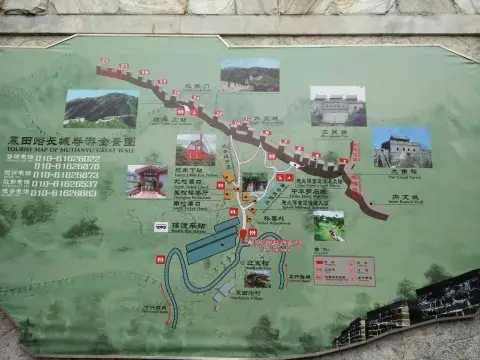
On the east side, there are 12 towers which are open to visitors. Walking to the end of this stretch of the wall and back should take about two hours. A cable car, which operates between 8:00am and 4:30pm as long as it’s not too windy or cold, takes visitors up to the 8th tower.
To the west, it’s possible to walk all the way to the Jinshanling (金山岭) and Gubeikou (古北口) sections of The Great Wall. At a brisk pace, this takes about 4 to 5 hours.
As is the case for many major tourist attractions, the hawkers at Simatai can be incredibly persistent. While walking up the path that leads to the wall, they attach themselves to visitors like burrs on cloth. Don’t forget that they are there to do business and they will use whatever means they have to earn money.
Staying Overnight:
For those that want to see the wall at sunset or sunrise, there are several places to stay nearby. If you’re looking for a cheap place to stay try Simatai Great Wall International Youth Hostel. It’s just a walk across the parking lot from the ticket booth.
How to Get There:
It’s about a 3 hour drive from Beijing to Simatai.
Tourist Buses leave from Xuanwumen (玄武门) at 8:00am on holidays and weekends and arrive back at about 6:00pm. 95 yuan includes the ride there and back and the entrance tickets. If you’re lucky, the tour guide will speak a little English. Check the "tourist buses" article for more information.
A cab ride reportedly costs about 400 to 500 yuan one way.
Many hotels and hostels offer a tour that will drop you off at Jin Shan Ling and pick you up at Simatai. These sections of the wall are excellent, as there are not too many tourists, the wall is original, but in good condition, and the views are amazing. Take note that the hike from Jin Shan Ling to Simatai is quite exhausting, especially in the heat of the summer. It takes about 4-5 hours, and is almost entirely uphill. Thankfully, if you’re feeling a bit ill, there is a shortcut that will cut about two hours off the hike. The tours cost around 150 yuan per person, not including the entrance tickets, which are another 90. Try to find one of the "no shopping" tours that are designed for foreigners, as the many Chinese tours will make useless stops at tea factories, shopping malls, etc.


Photos by Ethan Olson, June 2007
Yuan Ming Yuan (Old Summer Palace)
Yuan Ming Yuan (otherwise known as the Old Summer Palace) is situated between Qinghua University and the Yi He Yuan (New Summer Palace). It was constructed between 1709 and 1859, although there had been imperial gardens and summer palaces in the area since at least the Liao dynasty (~1125AD). I...
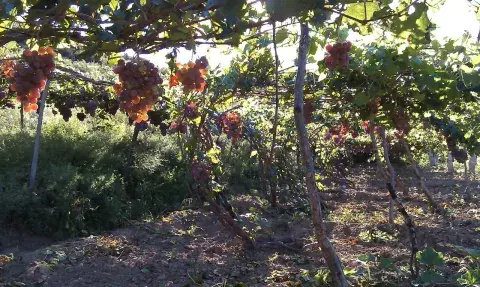
Yuan Ming Yuan (otherwise known as the Old Summer Palace) is situated between Qinghua University and the Yi He Yuan (New Summer Palace). It was constructed between 1709 and 1859, although there had been imperial gardens and summer palaces in the area since at least the Liao dynasty (~1125AD). In 1709 the Qing dynasty Emperor Kangxi started the development of the Yuan Ming Yuan, and also gave it its name, which means Garden of Perfect Brightness.
In its heyday Yuan Ming Yuan was a treasure house of Chinese art and literature. The interiors were packed with antiques, jade articles, paintings, books, jewelry, famous porcelain and handcrafts of all kinds. The library held a copy of Four Complete Volumes of Chinese Classics which had 79,003 volumes and 853,453 pages, making it the largest book in world history. The largest lake, the “Sea of Fortune”, had an area of 28 hectares and was surrounded by more than 60 scenic places. Unfortunately it was looted and burned by Anglo French forces in 1860 on the orders of the eighth Lord Elgin (son of Elgin of the marbles).
There have been several plans to rebuild Yuanmingyuan, but the task would be impossibly expensive. What remains now is a vast, sprawling and almost empty park, with none of the scenic spots and brightly painted buildings which attract crowds of tourists to the New Summer Palace. It has, however, for those who can feel it, an eerie sense of history and is a convenient and easily accessible open space for residents of the university district to go for a quiet stroll. Some kind of further development will probably occur on the site, and in recent years more than 200 looted artifacts have been returned by the local population in response to a government appeal. In 2003 a group of animal heads from the fountain was sold at auction in New York for over 3 million US dollars to a company in Beijing who were eager to repatriate the pieces.
Admission is 10 Yuan, but between the 1st and the 5th of every month you can buy a monthly season ticket for only 15 Yuan (you need a passport photo for the first one)
The official website of the Old Summer Palace (Chinese only)
Transportation: Take Bus No.331, 333, 810, 814 or Special Bus No.6 and get off at Yuan Ming Yuan

Beijing Central Business District
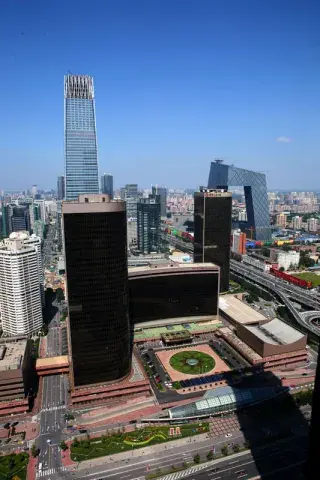
The BeijingCentral Business District, or Beijing CBD (simplified Chinese: 北京商务中心区; traditional Chinese: 北京商務中心區; pinyin: Běijīng Shāngwù Zhōngxīn Qū), is the primary area of finance, media, and business services in Beijing, China. Beijing CBD occupies 3.99 km2 of the Chaoyang District on the east side of the city. Geographically situated to the east of the city center, sandwiched between the 3rd Ring Road and the 4th Ring Road, the Beijing CBD is currently undergoing large-scale development.
As Beijing is becoming one of the most important international financial centers in China, Beijing CBD was recently positioned as the secondary core area in Beijing's International Financial Center Development strategic plan published in May, 2008. Beijing CBD is also emerging as China's media center as Beijing Television Station (BTV) just moved in its new headquarters (Beijing TV Centre) in this area and the new CCTV Headquarters is soon to be completed by the end of 2008.
In the eight years since the government decided to speed up construction of the district, the Beijing CBD has attracted 117 Fortune 500 businesses in the financial, media, information technology, consulting and service industries. More than 60 percent of overseas-funded companies in Beijing are in the CBD. A majority of foreign embassies in Beijing - the No 1, No 2 and No 3 embassy districts are now concentrated in the Beijing CBD and its neighboring areas.
The Beijing CBD Administrative Committee, established in 2001, is in charge of planning and management and aims to facilitate investments and improve the work environment for professionals. The committee provides information to investors on laws, taxes and state policies as well as a one-stop service, which has simplified approval procedures and raised efficiency.
The establishment of the Beijing CBD Chamber of Finance, the Beijing CBD Chamber of Media Industry and Beijing CBD Association of Property Management & Real Estate Development has facilitated communication and cooperation between the government and enterprises. The Beijing CBD International Business Festival and Beijing CBD International Forum have put the Beijing CBD on the map worldwide.
Skyscrapers in the Beijing CBD
- China World Trade Center Tower 3
- Beijing Yintai Centre
- Beijing TV Centre
- Fortune Plaza
- CCTV Headquarters
- Jing Guang Centre
- China World Trade Center
See also
- Economy of Beijing
- Beijing Financial Street
- List of economic and technological development zones in Beijing