
Mt.Siguniang( four girls)

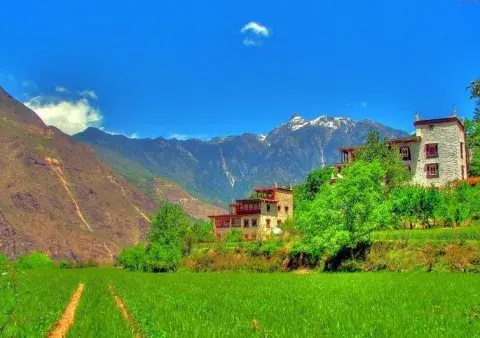
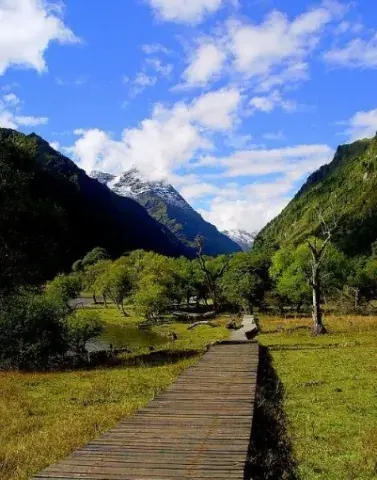
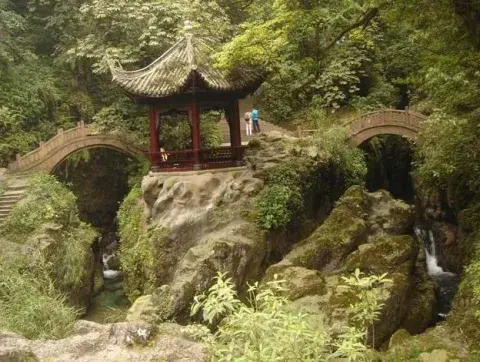
Mt. Siguniang( Four Maidens Mountain) is situated  in the middle of Mt.Qionglai Range in the buffer zone between the west Sichuan Plateau and the mountainous area on the rim of Sichuan Basin, where Xiaojin County and Wenchuan County of Aba Tibetan and Qiang Autonomous Prefecture in Sichuan P...

Mt. Siguniang( Four Maidens Mountain) is situated  in the middle of Mt.Qionglai Range in the buffer zone between the west Sichuan Plateau and the mountainous area on the rim of Sichuan Basin, where Xiaojin County and Wenchuan County of Aba Tibetan and Qiang Autonomous Prefecture in Sichuan Province meet. The whole scenic area covers 2,000 square kilometers.

The name of Siguniang( four maidens , means the guardian deity of mountains in the Jiarong dialect of Tibetan language. In fact, the mountain is comprised of four peaks standing side by side like four girls. The peak of the Fourth Sister, with a summit elevation of 6,250 meters above sealevel, is the highest of Mt.Qionglai Range. Of all the mountains in Sichuan, it ranks second only to Mt.Gonga, “King of Mountains in Sichuan”, which is 7,556 meters above sea level. Its reputation is “Queen of Mountains in Sichuan”. The other three peaks, Mt. Third Sister, Mt.Second Sister, and Mt. Elder Sister, are 5,664, 5,454, and 5,355 meters above sea level.

As a region inhabited by the Tibetan, Qiang, Hui, Yi and Han People, with the Tibetans as the major ethnic group, Mt. Siguniang also nurthres and cherishes the old and simple folk customs of the ethnic minorities.

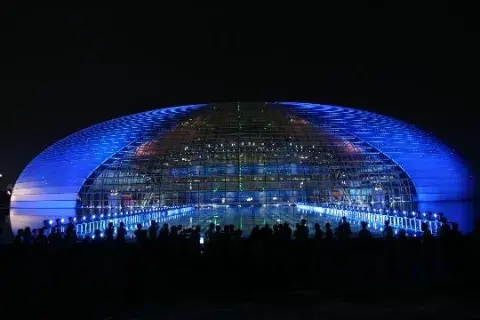
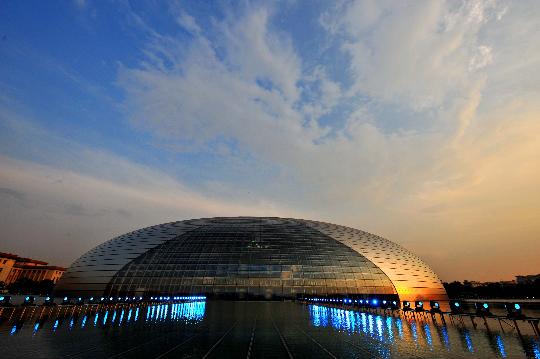
Beijing National Theatre(National Centre for the Performing Arts)

Beijing National Theatre, formerly known as the National Grand Theatre, the nickname The Egg, is situated on the west of Tiananmen Square and the Great Hall of the People in Xicheng District.

It is an ellipsoid dome of titanium and glass surrounded by an artificial lake.

Occupying...

Beijing National Theatre, formerly known as the National Grand Theatre, the nickname The Egg, is situated on the west of Tiananmen Square and the Great Hall of the People in Xicheng District.

It is an ellipsoid dome of titanium and glass surrounded by an artificial lake.

Occupying an area of 200,000 square meters, it can seat 6,500 people in three halls.

It was designed by French architect Paul Andreu. Construction started in December 2001.

The theatre's futuristic design created considerable controversy.

Paul Audreu said that although there is indeed value in ancient traditional Chinese architecture, Beijing must also include modern architecture, as the capital of the country and an international city of great importance.

To melt into the surroundings, the large open space, water, trees, are specially designed to complement the red walls of ancient buildings and the Great Hall of the People, opposed to standing out against them.

The building, a titanium accented glass dome surrounded by the man-made lake, look like an egg floating on water. It was designed as an iconic feature like the Sydney Opera House.

The dome measures 212 meters in east-west direction, 144 meters in north-south direction, and is 46 meters high. The main entrance is at the north side.

Guests arrive in the building after walking through a hallway that goes underneath the lake.


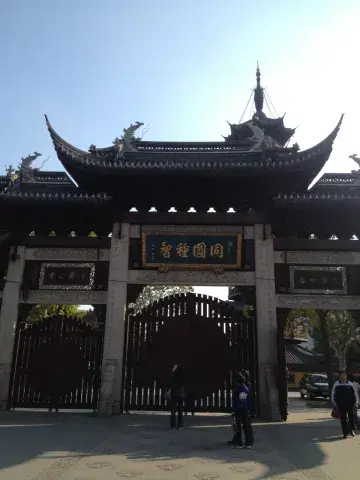
Longhua Temple and Pagoda

 
Longhua Temple and Pagoda was originally built in 247 AD, making it more than 1700 years old and counting. The temple has since been reconstructed time and again as a result of damage caused by many wars. St...
 
Longhua Temple and Pagoda was originally built in 247 AD, making it more than 1700 years old and counting. The temple has since been reconstructed time and again as a result of damage caused by many wars. Still, classic Song dynasty stylistic architectural elements remain well preserved. The temple, covering an area of five acres, is the largest in Shanghai, but receives few visitors due to its location on the south side of the city.
 
However, at certain times each year, the temple teems with tourists and locals alike who make the trip down to witness annual ceremonies.
 
One notable ceremony takes place on the eve of the Chinese New Year when 108 monks climb the drum tower in the park to usher in the new year. Herds of Chinese Buddhists flock to the temple to burn joss sticks with the hope of bringing luck for the coming year.
 
A few weeks later, when the park’s beautiful cherry blossom trees begin to bloom, the annual temple fair is held. The event usually begins in early March depending on the lunar calendar. The temple’s grounds come alive as pilgrims, tourists and locals arrive to pay their respects. A normally quiet area suddenly bustles with activity.
 
Regardless of the time of year, Longhua Temple is worth a visit. For just 10RMB, visitors are treated to  a special combination of Buddhist style courtyards, hexagonal windows with classic Chinese elements of beauty. As an added bonus, the temple also boasts its own vegetarian canteen offering delicious fare at a very reasonable price. Longhua Park is just next door to the temple, while the Shanghai Botanical Gardens are down the road. This area of Shanghai makes for a relaxing alternative day trip to the chaos of downtown. For those with little ones, a makeshift amusement park complete with fairground games, wraps itself around the Pagoda juxtaposing new and old China side by side!

Either take a taxi to Longhua Lu/Longshui Bei Lu or metro line 3 to Longcao Lu. From the metro station follow tourist maps for the five minute walk to the temple.

Local bus routes: No. 41, 44, 56, 73, 104, 803, 864.


Nanjing Union Theological Seminary

Established in 1952, Nanjing Union Theological Seminary was designated the national seminary of the Church of China. Originally it represented a union of twelve seminaries in eastern China until the Beijing Yanjing Seminary joined it in 1962.

Nanjing Union The...
Established in 1952, Nanjing Union Theological Seminary was designated the national seminary of the Church of China. Originally it represented a union of twelve seminaries in eastern China until the Beijing Yanjing Seminary joined it in 1962.

Nanjing Union Theological Seminary has, since its beginning, focused on training pastoral workers, teachers, and researchers. In order to promote overall development of the students in both spirit and theological knowledge, the Seminary emphasizes "spirit, virtue, knowledge, health, and community".

As the only national seminary in China, the structure of Nanjing Union Theological Seminary is similar to that of universities and colleges in secular society. It has two regular programs: the four year Bachelor Degree of Theology and the three year post graduate Master Degree of Theology. In addition, it has a three year correspondance education program. All students are nominated by their regional church and must pass a written test and interview before being admitted to the Seminary.

Nanjing Seminary is on a new campus in Jiangning District. The original campus will continue to be used as a research center. The new campus lies in the center of Jiangning University City and covers an area of approximately 33 acres (125,000 square meters) with an aim of accommodating 500 students. The current design of the new campus includes the following functional areas: worship area (the campus church), teaching and administrative areas, sports facilities, student residence area, and a front garden.

Offical Website (Chinese only)