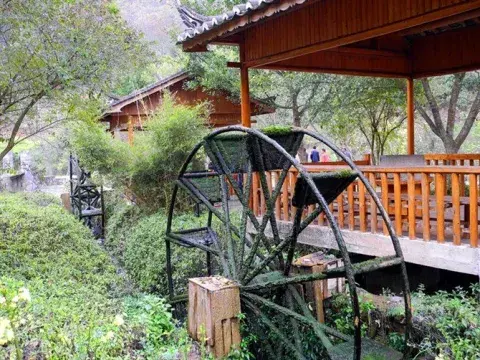

Xuanwu Lake Park
Close to the city center and featuring 368 hectares of water and 104 hectares of land, Xuanwu Lake Park is a favourite getaway for locals. Well before the sunrise and even after sunset, the park is bustling with visitors. Some come to walk, jog, or fly kites, others to practice Ta...
Close to the city center and featuring 368 hectares of water and 104 hectares of land, Xuanwu Lake Park is a favourite getaway for locals. Well before the sunrise and even after sunset, the park is bustling with visitors. Some come to walk, jog, or fly kites, others to practice Tai Chi, and many more just want to enjoy the scenery
To the east of Xuanwu Lake is Purple Mountain, to the north is Nanjing Train Station, and to the west and south Nanjing’s skyscrapers stretch high above the City Wall that was built during the Ming Dynasty. Paved paths circle the entire perimeter of the lake and several forested islands within the lake that are linked by causeways.
The best time to visit Xuanwu Lake Park is during May and June. By visiting the park in late Spring, Nanjing city will not have the opportunity to show you why it is famed as one of the three furnaces of China.

Activities
Taking a walk along the edge of Xuanwu Lake is an activity in itself, but if you seek something more specific read on.
Jogging
For the serious jogger, Xuanwu Lake is a suitable place to jog year round. There are still a few cars on the road, but compared with the busy city streets, it is far superior and safer. The roads and street lamps were upgraded in 2006, so the park is an excellent place to jog after sunset.
During the summer, the best times to go for exercise are in the early morning and late evening, because that is when temperatures are the coolest. In fact, in the middle of the summer the morning is noticeably cooler than the evening.
See more about Nanjing’s climate
Paddle Boats
Four person paddle boats cost 25 yuan per hour and require a 50 yuan deposit. Paddle boats can be rented to the east and west of Nanjing Train Station or to the north of the Xuanwu Gate.
Walk, Relax, Etc.
Xuanwu Lake Park is a popular place to take a romantic walk. In the evening Chinese couples fill up the benches overlooking Xuanwu Lake. Some more adventurous couples park their cars (which include tinted windows, wink, wink) or set up tents.
Cycling
The roads along Xuanwu Lake form the ideal setting for a ride around Nanjing. Unfortunately it seems that cycling is not allowed as the guards often try to prevent people from taking bicycles within the park. However, if a visitor is persistent, makes an excuse, or enters through a nearby gate, the guards usually let it slide.
The entire northeast side of the lake is not actually part of the park. This means that there is no gate to go through if you just want to bike in that area, but it also means that if you want to bike around the entire lake, you may be hassled by guards twice (once to enter and once to re-enter).
|
Fireworks During Chinese New Years Festival, hundreds, if not thousands of people flock to Xuanwu Lake to set off fireworks – some bring boxes of fireworks the size of refrigerators. Be warned, setting off fireworks is far from safe. In many countries, fireworks of this caliber are only legally used by professionals. Fishing A popular fishing spot in Xuanwu Lake is on the north side, just to the east of Nanjing Train Station. However, people can be seen fishing at many places around the outside of the lake and inside the inner islands. |
 |
The Inner Isles of Xuanwu Lake
Open 7:00am-9:00pm
Entrance Fee: 20 Yuan.
Inside Xuanwu Lake are 5 isles that are suitable for a scenic walk and contain many small tourist attractions such as Lama Temple, small amusement park rides and the "Temple of Xuanwu Lake God."
How to Get There
Xuanwu Lake takes up a very large area and there are several places from which to enter the park. Here’s a list of the busier entrances in clockwise order.
Xuanwu Gate
Xuanwu Gate (Xuanwu Men, 玄武门) is next to the Xuanwu Gate subway station at the intersection of Hunan Lu (湖南路) and Central Road (Zhonyang Lu, 中央路). From the subway station, the park entrance is just a three minute walk east, passing by the convention center (南京市规划建设展览馆). Xuanwu Gate’s appearance is also the biggest and most impressive.
North and East Sides
The official park does not stretch around the north and east edges of the lake. Still, there are several other places that allow you to reach the edge of the lake including Nanjing Train Station and Lovers Garden. The southeast corner features Taiping Gate while Peace Gate is just to the west of Nanjing Station. Neither gate’s appearance is particularly significant.

View of Xuanwu Lake from the Nanjing Train Station
Jiefang Gate
Jiefang Men (解放门) is a couple blocks North of Beijing Dong Lu (北京东路) and the municipal government building. You can get to the top of the city wall from this gate.

Xuanwu Lake is a popular spot to light fireworks during the Chinese New Years Festival.
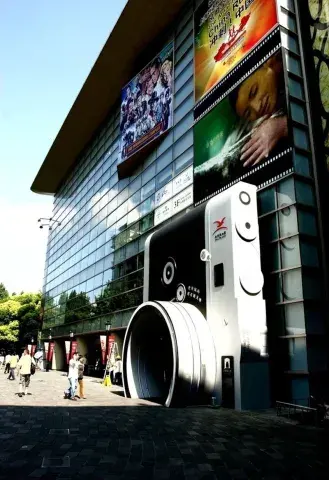
Xin Tian Di
Xintiandi is….erm….well…rather difficult to describe, but I will give it my best shot. Xintiandi is located downtown nestled between the towering skyscrapers. It is without question, one of the busiest urban tourist attractions in Shanghai. Covering an area of 60,000 square m...
Xintiandi is….erm….well…rather difficult to describe, but I will give it my best shot. Xintiandi is located downtown nestled between the towering skyscrapers. It is without question, one of the busiest urban tourist attractions in Shanghai. Covering an area of 60,000 square meters, Xintiandi contains a plethora of specialist outlets ranging from retail, entertainment, cultural, recreational, commercial and residential facilities…
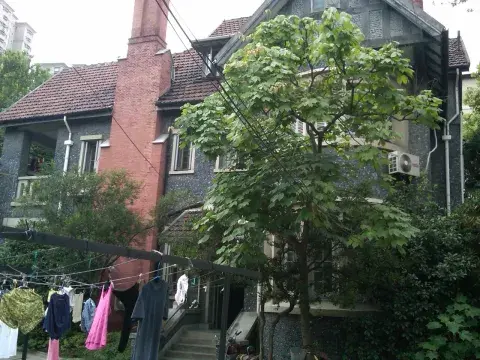
Okay bugger it. Xintiandi is basically a big area of old Shanghai style houses called “Shikumen” that house shops, museums, restaurants, offices, hairdressers, etc. The shops here stock high quality knick knacks, gifts and things for the home but they come at a High Quality price. That was so much easier!! Phew…
Xintiandi is also home to Kabb, one of my favorite restaurants. There is also a Toni & Guy hair salon for those in need of a trim (a bit pricey, but well worth it). Xintiandi is basically the Harrods of Shanghai; great if it is to your taste. If not, give it a miss.
One certain plus for Xintiandi is a mall with a large screen cinema showing movies in English on the back side of the complex.
Some notable locales at Xintiandi:
Kabb (see review in restaurant section)
Simply Thai (see review in restaurant section)
Starbucks - Need I say more? For a great alternative check out The Coffee Bean & Tea Leaf which plays host to expat coffee meetings every Sunday at noon.
Toni & Guy Hair Salon
CJW Xintiandi - A smaller venue of their jazz franchise, Tel: 6385 6677
Rendevous - Bar & restaurant, Tel: 6336 5383
La Maison - Restaurant, dance hall, and bar
ARK livehouse - Live music venue, Tel: 6326 8008
UME international Complex, Tel: 6384-1122, ext 807 for English
One last note: If you are feeling peckish, but just want to snack, go into the basement of the mall (the metro station is in the basement of a mall). Then look for Kawasaki, a fabulous bread and desert shop, but don’t dare leaving without trying their strawberry Danish or coconut and raisin cake.
The complex is located on Huang Pi Nan Lu (near Huaihai Zhong Lu) and Xingye Lu, but have no fear... all taxi drivers know Xintiandi! Alternatively take metro line 1 to Huang Pi Nan Lu station and follow the English signs from there. If you do get lost, it is basically behind the metro station.
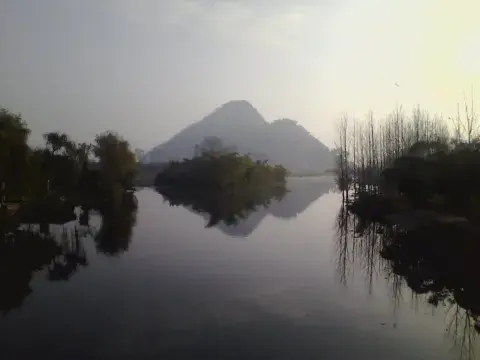
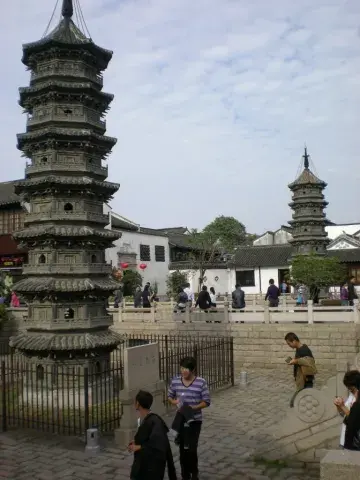

The Thirteen Ming Tombs
13 of the 16 Ming emperors are buried in a valley next to Tianshou Mountain (天寿山), just northwest of Beijing. The first emperor is buried in Nanjing, the burial site of the second empe...
13 of the 16 Ming emperors are buried in a valley next to Tianshou Mountain (天寿山), just northwest of Beijing. The first emperor is buried in Nanjing, the burial site of the second emperor remains unknown, and the seventh emperor was buried at the Summer Palace in an ordinary tomb. The Thirteen Ming Tombs are the largest single dynastic collection of tombs. There are 3 tombs that are available for viewing.
Spirit Way (Shendao, 神道)
Apr 1 – Oct 31: 30 yuan, Nov 1 – Mar 31: 20 yuan
The seven kilometer long Spirit Way leads up to the tomb site. It was built in the same fashion as the "Sacred Path" in Nanjing with pairs of stone animals on either side of the path. Even past emperors would have to dismount from their horses when passing through Spirit Way and visiting the tomb grounds. Many tours do not go here, skipping ahead to the tombs instead.
|
Changling (长陵)
(010) 60761334
Apr 1 – Oct 31: 45 yuan. Nov 1 – Mar 31: 30 yuan
The tomb of Emperor Yongle (1360-1424) and his empress, Xushi, is the largest of the three tombs. It is the first tomb visitors will reach in the valley if entering from the Spirit Way. It was also the first Ming tomb to be built at this site.
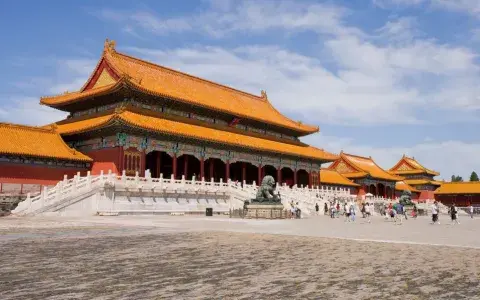
The tomb layout is identical to that of the first Ming Tomb in Nanjing although on a grander scale and with the bottom of the burial mound at the top of the wall rather than the bottom. The imperial architecture resembles that of the Forbidden City in Beijing which was also built during the reign of Yongle.
|
 |
Dingling (定陵)
(010) 60761156
Apr 1 – Oct 31: 60 yuan, Nov 1 – Mar 31: 40yuan.
The highlight of Dingling is the underground palace that was excavated in 1956. Dingling is the only tomb to be completely excavated. It is the burial place of the Emperor Wanli (1563-1620), his wife, and one of his concubines. There are also some displays about the Ming Tombs located inside the Dingling tomb area.
|
Zhaoling (昭陵)
(010) 60761435
Apr 1 – Oct 31: 30 yuan, Nov 1 – Mar 31: 20 yuan
Zhaoling, the tomb of the twelfth emperor Muzong, (1537-1572) and his three empresses, is the smallest of the three tombs as well as the least visited.
|
 |
13 Tombs Waxworks Palace of Ming Dynasty (十三陵明皇宫)
(010) 69748706
40 yuan per person
40 yuan per person
The "Waxworks Palace" is surely not a must-see destination on it’s own, but if you are heading to the Ming Tombs this museum makes for an entertaining introduction on the history of the Ming Dynasty. It is located 27 kilometers from the Badaling (八达岭) section of the Great Wall and only 2 kilometers from the Thirteen Ming Tombs.
Getting To, From and Around the Tombs
Tours
The easiest method of seeing the tombs is to get on a tour with your hostel or hotel. 100 to 150 yuan for transportation there and back is a reasonable price. Many tours combine a trip to the 13 tombs with a trip to the Great Wall at Badaling.
Beijing Tourist Buses
There are Beijing tourist bus routes that include a visit to Dingling (定陵) along with a visit to The Great Wall. This would be a cheap and reliable way to see the one tomb.
Taxis
Private taxis run from Deshengmen (德胜门) bus station and should cost around 100 yuan. A taxi from the Juyongguan (居庸关) section of the Great wall should cost about 50 yuan. Each tomb is located a couple kilometers away from the other tombs so it should cost about 10 yuan to get a taxi from one tomb to another. All the prices just listed are estimates. Supply and demand of taxis, as well as a tourist’s bargaining skills, language skills, and appearance are all factors that may affect these prices.
Public Transportation (last updated May 2006)
Public Transportation is cheap, yet it can be quite a hassle for those that don’t speak Chinese. The first step to get to any of these location is to get to Changping. From Desehengmen (德胜门) bus station take Bus #345 支(zhi) to Changping Dongguan (昌平东关). From Changping:
- take bus #314 which stops at Dingling and Changling.
- take bus #22 which stops 200 meters away from Zhaoling.
- take bus #947 to the “Waxworks Palace."
Unfortunately these buses do not run very frequently. It may take a half hour before it is possible to hop on a bus back into the city. There are other possible bus routes, some of which only run during special occasions.