Chengdu Attractions
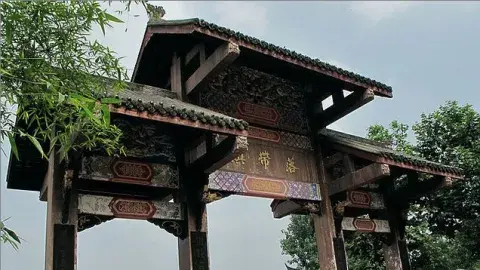
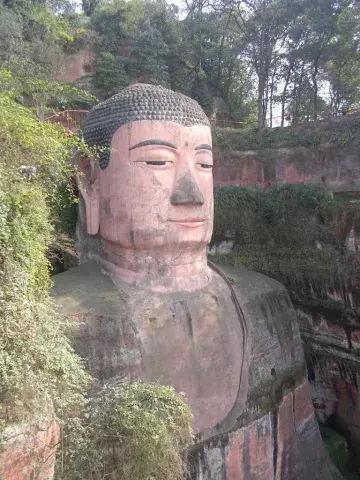
Sichuan University
Locally known as 'Chuan Da' (川大), Sichuan University is one of China's top centers of higher learning. There are Chinese language and literature courses available for foreign students. Foreign students have the option of full semester, summer term, and short term courses. See the university'...
Locally known as 'Chuan Da' (川大), Sichuan University is one of China's top centers of higher learning. There are Chinese language and literature courses available for foreign students. Foreign students have the option of full semester, summer term, and short term courses. See the university's website below for more information.
Wenshu Monastery
In 1691 it was believed that the monk Ci Du reached such a state of enlightenment that he reportedly shook the ground and radiated light. Local officials concluded he must be the reincarnation of Manjusri and the monastery was renamed Wenshu (Manjusri). The Zen Buddhist monastery w...
In 1691 it was believed that the monk Ci Du reached such a state of enlightenment that he reportedly shook the ground and radiated light. Local officials concluded he must be the reincarnation of Manjusri and the monastery was renamed Wenshu (Manjusri). The Zen Buddhist monastery was originally built between 605-617 during the Tang Dynasty.
The Wenshu temple itself is easily the best-preserved temple in Chengdu. It is an imposing three story building as each story has a high ceiling. Three large paintings on the first floor should not be missed as each painting weaves an intricate tale about Buddhism in China or India. The paintings are filled with Buddhist symbolism set on a background of Indian and Chinese natural wonders and landmarks. If you speak Chinese, the monks will be more than happy to tell you about the paintings.
|
|
The monastery is a shady, quiet place to stroll about. Rugged rock gardens and bonsai trees bring a peaceful setting to a monastery crammed into urban China. Different buidlings around the complex contain nearly 1000 calligraphic works done by famous calligraphers from China, and suprisingly Japan. The inclusion of Japanese works is a testament to the shared religious friendship that transcends two nations historically at odds. |

Next to the Wenshu Temple, the Peace Pagoda of a Thousand Buddhas is a new addition to the monastery at 22 meters in height. The tallest iron cast pagoda in China features six bells at its top which chime with the wind. Naturally the monastery also has a large teahouse on the east side. If you visit the monastery, definitely have a meal at the vegetarian restaurant next to the teahouse. Dishes range from Y4-75, and they are excellent. Don’t be worried by the words "pork" and "beef" all over the bilingual menu, they use fake substitutes for meat. Also, don’t be scared away by dishes which the menu says are spicy. Compared to hotpot, they aren’t really spicy at all.
Recently a pleasant tourist neighborhood was built just to the east of the entrance. There are plenty of dining and shopping options if you are craving either after a stroll at the monastery.
Directions: The Wenshu Monastery is just off of the east side of Renmin Zhonglu down an alley called XiZhuShi Jie. If you take the 16 or 99 bus north along Renmin Lu, listen carefully, because the driver will call out "Wenshu Yuan" when you reach that stop. If you take a taxi, the fare should be Y10 or less from Tianfu Square.

Chengdu Metro
The project of the 9-line metro system started at 2005, but so far, only Line 1 is operating, Line 2 is under construction,and will be completed by the end of 2012. Construction of Line 3 is just going to start.
Tourists may have little chance to use the metro when trave...
The project of the 9-line metro system started at 2005, but so far, only Line 1 is operating, Line 2 is under construction,and will be completed by the end of 2012. Construction of Line 3 is just going to start.
Tourists may have little chance to use the metro when travelling in Chengdu,due to its incomplete metro system.
Stops alone the Line 1(from north to south)
升仙湖(Shengxianhu)-火车北站(North Railway Station)-人民北路(Renmin Road North)-文殊院(Wenshu Monastery)-骡马市(Luomashi)-天府广场(Tianfu Square)-锦江宾馆(JinjiangHotel)-华西坝(Huaxiba)-省体育馆(Sichuan gymnasium)-倪家桥(Nijiaqiao)-桐梓林(Tongzilin)-火车南站(South Railway Station)-高新(Hi-tech Zone)-金融城(Finantial District)-孵化园(Incubation Center)-世纪城(Centry City)
Chengdu Articles
Paradise for Eaters
Talking about foods in Chengdu, as a local girl, I feel extremely proud. Chengdu has a got a fame for all kinds of delicious foods. For me, I’d like to divide them into three parts----local dishes, local snacks and hotpot....
Talking about foods in Chengdu, as a local girl, I feel extremely proud. Chengdu has a got a fame for all kinds of delicious foods. For me, I’d like to divide them into three parts----local dishes, local snacks and hotpot.
There is no doubt about the popularity of Sichuan foods around this world, and to many people, when they think about Sichuan foods, they will also think about the endless spicy flavor and their burning tongue. Spicy, this should be the most typical impression left to many visitors, as a local girl, I have to say, yeah, because of the humid and wet climate, people of Chengdu like to eat spicy foods, but it is not always the same case. In Chengdu, we have countless delicious foods, even though some of them are quite spicy but still, there are a lot of foods, dishes, snacks, hotpots that are totally not spicy, so don’t be afraid of trying them.
Talking about local dishes, I think it is the best way to see how careful but also how picky our Chengdu people are when we make our dishes. Foods in Sichuan are famous for its various sources, I have met a lot of lovely foreign people, sometimes when we go to a local dish restaurant, they will feel so confused when the waiter brings the dishes, because almost half of the dish is all kinds of sources and they don’t know which part they should eat. To tell a cook is qualified or not, it is very easy to tell from the taste of the dishes he makes. As long as he is careful enough to make all the sources in a balanced way, then he is a good cook for our Sichuan dishes. Now that you come to Sichuan, why not just be picky and try our exquisitely cooked local dishes?
One thing you must try when you are in Sichuan is our local snacks. Most of them have a long long history, perhaps even as long as hundreds of years. Chengdu has a history of more than 2700 years, together with the long history is our various local snacks. Almost each snack has its own story, they can be spicy, sour, sweet, salty; they can be also cute, round, slippery, colorful even surprising. Once you are in Chengdu, go to the time-honored snacks’ restaurant, order a collection of the local snacks, just give your stomach a great enjoyment!
Hotpot is a must-try when you are in Chengdu. Many eaters know that the original place for hotpots was Chongqing, another city next to Chengdu, however, the flavors of the hotpots in Chengdu are never worse than Chongqing. Not all the hotpots are spicy, we have two most common hotpots, one is the traditional flavor, can be spicy, but not too bad, the other one is not spicy at all, you can even drink the soup from it, which can be quite tasty and nutritious. But remember, never try the soup from another pot, unless, you have an iron tongue and stomach!
Sichuan foods are so famous for its reasons----almost all kinds of people can find something they like among our foods. When you are in Chengdu, just be a local people, forget how busy you are, how much you need to earn, just follow our local belief, live and be happy for the moment in your hand! Enjoy the most of your present life!
Ear massage / ear cleaning
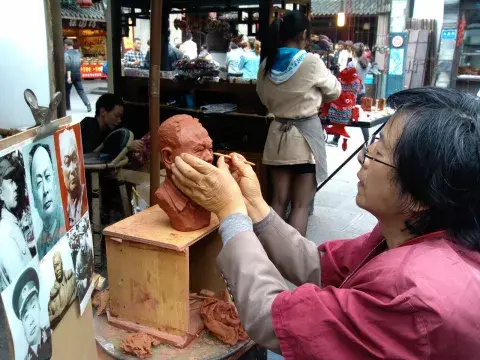
In Chengdu tea houses,or the famous Jinli street or Kuanzhai Lane , you will see someone sitting on a bamboo chair, tilted his head, eyes closed, mouth revealing a trace from time to time issued by the inner pleasure expression, beside him stood a man staring at his ears, holding a heap tool...
In Chengdu tea houses,or the famous Jinli street or Kuanzhai Lane , you will see someone sitting on a bamboo chair, tilted his head, eyes closed, mouth revealing a trace from time to time issued by the inner pleasure expression, beside him stood a man staring at his ears, holding a heap tool salvage the dig, digging, as if looking for some treasure, this is for ear massage / or ear cleaning
When you sit in Chengdu teahouse chatting with friends, or leisurely walking in the street, you may hear the ringing "clatter" burst of trembling voice, heard this unique, trademark, exclusive trembling voice , those who are familiar with Chengdu, would know that the ear master signal at you
Chengdu is very relaxing, there are many tea houses.
pedicures, massage and acupuncture are national, I mean you can find these in other parts of China,but Ear Cleaning( or Ear massage) is unique to Chengdu, "a cup of tea, ear massage( ear cleaning) " has become a habit, a culture, a phenomenon in Chengdu.
how ear massage( ear cleaning) comes from?
According to legend, during the Tang Dynasty, Sichuan drought, the emperor visited the drought in Sichuan. Once the emperor wanted to inspect the situation along the river, the emperor sitting in the boat, the boat trackers were pulling on the bank. wind blows the sand to the emperor's mouth, nose, ears and nose.so they have to invite a master from barber shop to help pull out the sand from the ears. the master used a bamboo stick to dig the emperor's ears, and goose feather to sweep the ears. the emperor felt so comfortable and enjoyable, he rewarded the master.
are you still watching? just have a try of the fantastic ear massage
San Sheng Xiang
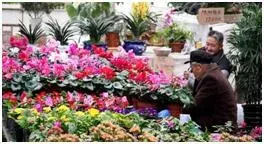
San Sheng Xiang (三圣乡), one of our favorite ten place in chengdu , is a flower growing village just outside of the Third Ring Road about 30 minutes from the center...
San Sheng Xiang (三圣乡), one of our favorite ten place in chengdu , is a flower growing village just outside of the Third Ring Road about 30 minutes from the center of Chengdu. The development, dubbed Flower Town by locals and foreigners, is intended to link the urban and rural areas of Chengdu and provide jobs and income for local farmers. For us, it’s a great place to spend an afternoon outside of the city, basking in the sunlight and lush surroundings away from crowded streets and honking car horns.
The project envisioned a flower manufacturing base with foreign cooperation that could sell to residents of the city of Chengdu and also export to other Chinese cities and abroad. Local farmers were encouraged to invest money in the project as well as switch traditional crops for flowers. The idea has worked inasmuch as local farmers have gained a new source of income and have managed, for the most part, to upgrade their standard of living.
The flower base also developed into a bed and breakfast phenomenon on the weekends, as local farmers opened up their doors to throngs of city-slickers wanting to get away from the urban chaos, buy some flowers for their homes and eat home-style meals.
Many of the locals also rent their homes out long term to artists, musicians and foreigners who are eager to live in a cleaner, greener environment. There have been some hiccups, as real estate developers and local government officials buy and develop land owned by local farmers, but the overall goal of enriching the countryside, bringing development to the suburban areas and giving city residents a place to enjoy themselves has been reached.
We recently visited San Sheng Xiang and took some pictures on a busy weekend. If you are in need of some flowers, some homestyle cooking or just a day of walking around in a less urban setting, then hop on the number 56 (or 343) bus heading east and get off at the main gate of San Sheng Xiang. The gate on your left is a large brown structure with four A’s proudly written across the top to signify that Flower Town has been designated a Class 4-A tourist destination by the local government.
Once you reach the main gate, the best thing to do is pick a direction and walk. There are bed and breakfast’s (known as Nong Jia Le’s) off of the main street and the main flower warehouse is right across from the main gate. There are also people selling flowers up and down the main highway leading to Flower Town and in the development itself.
Top Chengdu Tours
$200 Per Day
CHENGDU, A PANDA CITY, A GOURMET CITY, A TEA CITY, LOOKING FOWARD TO YOUR ARRIVAL
Chengdu, with an area of 12,400 square kilometers and a polulation of about 14,170,000 is not just the biggest provincial capital in west China, but also the only city in the history of China whose name has reminded the same for 3,000 years since its establishment. In Chinese, "Cheng" means "success or successful" and "Du" means "big city or capital". This "Successful City" boasts a long history. It is believed that everything about Chengdu has their origin from "Sanxingdui Ruins", from where you can deeply discover the history story of Chengdu.
...Read moreChengdu, with an area of 12,400 square kilometers and a polulation of about 14,170,000 is not just the biggest provincial capital in west China, but also the only city in the history of China whose name has reminded the same for 3,000 years since its establishment. In Chinese, "Cheng" means "success or successful" and "Du" means "big city or capital". This "Successful City" boasts a long history. It is believed that everything about Chengdu has their origin from "Sanxingdui Ruins", from where you can deeply discover the history story of Chengdu.
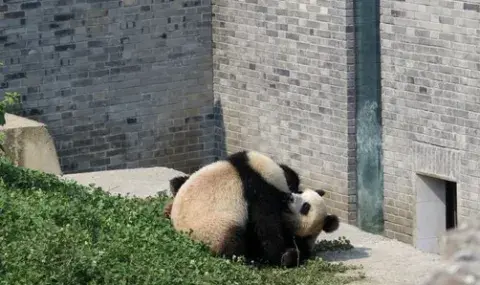
Giant pandas definitely are the best calling card and trademark of Chengdu. Every year, million of people are attracted by giant pandas to spend their holidays here, go sightseeing here, make investment here and even settle here permanently. The reason is that for people around the world, the charm of giant pandas cannot be replaced by anything else.
Various kinds of wonderful food shall be another reason attracting you to visit Chengdu. Of the four most famous schools of culinery art in China (Beijing cuisine, Sichuan cuisine, Jiangsu cuisine, Guangdong cuisine), Sichuan cuisine boasts tongue-numbing, hot, delicate and fresh taste and a variety of flavors, as "each dish has its unique taste and no two dishes have the same flavor." Such spcial flavors as fish-flavored, gongbao (with peanuts), and water-boiled are incomparable at home and abroad.
"The teahouses in Sichuan top the world, and those in Chengdu Top Sichuan." This widespread saying not only points out the status of Chengdu's teahouses but also the inseverable ties between Chengdu culture and tea. Like bars in Paris and cafes in Vienna, teahouse add a touch of refinement and leisureliness to Chengdu, an ancient yet modern metropolis. The practice of driking tea prevailed in Sichuan as earlt as prior to the Qin and Han Dynasties.
Wish you can have a nice trip in Chengdu. You will love it.
$1 Per Day
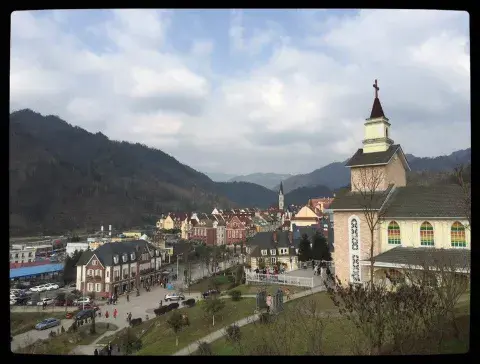
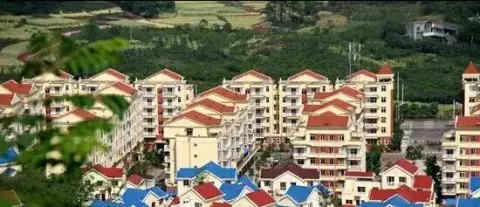
One town sleep under the mouantain
One biggest surprise on the high-speed way.
Pool , lake, grass, trees and more interesting things make this little town like one fairy tale.
The colors of these buildings are cute,green、 red、 blue, all the colors make this place looks like are the one line with the sky .
Some kind of farms here, wehn strawberry grown up , you can also pick the up , you get more closer here, more surprises for you.
Good place for pleasure.

$2000 Per Day
Western Sichuan Highland and Tibet Area Tour 2016
Western Sichuan Highland and Tibet Area Tour 2016 (Mid Oct is the best color)
Day 0: October 13
Day 12: October 25
Day 0: arrive in Chengdu
Western Sichuan Highland and Tibet Area Tour 2016 (Mid Oct is the best color)
Day 0: October 13
Day 12: October 25
Day 0: arrive in Chengdu
Day 1: Start workshop, drive from Chengdu to Hailuogou
(341km – 5 hours!)
Day 2: Hailuogou
Day 3: Hailuogou to Kangding
(70km – 2 hours!)
Where do we stay that night Kangding or Mugecuo?
we stay in Kangding
Day 4: Mugecuo to Yajiang
(100km – 2 hours!)
Day 5: Yajiang to Litang
134km -3.30 Hours
Day 6: Litang to Yading Daocheng to Riwa town(Yading)
this drive 434km- How long 8H,
We drive 12 hours, this area is beautiful, we stop many times for photography, we stay in Daocheng, Daocheng to Riwa town(Yading) 100 km, Riwa town is the entrance to the main scenic spot, (Litang is a county on the way, we can’t stay there over night, bed condition)
Day 7: Yading
Day 8: Yading
Day 9 : Yading to Litang this ride is the most beautitul area in the trip
(264km – 5-6 hours)
Day 10: Litang to Xinlong to Bai Gangzi
(260km – 8 hours!)
Day 11:Gangzi to Serta
(152km – 4 hours!)
Day 12: Serta
Day 13: Sera to Luhuo
(156km – 3 hours!)
Day 14: Luhuo to Danba
(234km – 6 hours)
Day 15: Danba to
Rilong Balang to Chengdu
(416km – 8 hours!)
Day16: Chengdu, conclusion of the tour.