Chengdu Attractions



Chengdu Articles

The complete way to do Dujiangyan Irrigation System
No doubt,three most interesting things to do around Chengdu are, Panda,Dujiangyan Irrigation System and Leshan Buddha.
Unfortunatelly, 90% tourists couldn't able to find out the right way to do these amazing places.
...No doubt,three most interesting things to do around Chengdu are, Panda,Dujiangyan Irrigation System and Leshan Buddha.
Unfortunatelly, 90% tourists couldn't able to find out the right way to do these amazing places.
Of the 3 attractions, Dujiangyan is the one least known despit it's the prettest place around Chengdu. So far, very few international tourists
visit this area, complete information about Dujiangyan is difficult to get.
90% tourists do the Dujiangyan in incomplete way like this, Front Entrance-Baopingkou-Feishayan-Yuzui-Anlan Bridge-Return back to Front Entrance,3km in total,2 hours.
However, the most beautiful sceneries are all at the opposite site of the river especially along the mountain Yulei.
A complete itinerary of the Dujiangyan should be like this
1, Start from the Entrance of the Yulei Mountain
2, Climb up through the Shidian(Ten Hall), visit Chenghuang Temple (Temple of the Town God), which is the National Heritage Site.
3, Following the Songmaogudao(Chinese松茂古道, ancient trail to Songpan,part of the Tea and Horse Road), visit the West Pass. Do climb up the West Pass to the Rhino-Fighting Platorm, it provides a perfect bird-eyes view of the whole irrigation system as well as the beautiful mountain range of Qingcheng.
4. You can walk uphill from West Pass to Yulei Pavillion(originally it was a military watching tower to defense Sichuan from Tibetan built 500Years ago) along the City Wall, but the steps are very steep. If you are not confident for the hike, skip it.
Keeping walking along the Songmaogudao to Yulei Pass, which is listed as one of the 100 best place for photography by Chinese National Geography.
5. Visit the Erwang Temple on the Yulei Mountain. The largest and most important Taoist Temple with the most beautiful Chinese traditional architectures in the region. A large number of Taoist Gods are worshiped there.
6. Walk cross the Anlan Cable Bridge to Yuzui.
7.Walk from Yuzui to Feishayan Spillway then to Fulong Temple, from where you will see how the river water is diverted to Baopingkou then to man made canal.
8. Don’t miss the Lidui Park(Qingxiyuan Bonsai Garden), home for numerous old bonsai trees, the oldest one is 1300 Years old.
9. Cross the Nanqiao Bridge, walk around the Guankou Old Town(West Street),where you can find some delicious Sichuan foods.
10. 250 meters down stream from Nanqiao is the Langqiao Bridge where the Canal first splits, very impressive to see how the canal splits into 3 channels.
It is about 8KM walk to do all the 10 steps,takes 4-6 hours in general, you see all sorts of things typical in Sichuan Province, making it as the best day trip from Chengdu.
Chengdu, an Ancient and Modern City (III)
Liu Bei Sets Up Shu kingdom
...Liu Bei Sets Up Shu kingdom
Towards the end of the Eastern Han Dynasty, the Yellow Turbans Uprising broke out, the warlords’ tangled warfare occurred one after another and the Central Plains turned to be a place like a huge slaughterhouse. Liu Bei and Sun Quan allied to launch a battle in Chi Bi area (red cliffs) against Cao Cao and his troops. Finally, the allied army gloriously defeated Cao Cao’s troops, and the consequence of the battle brought forth a trisection pattern of which the three kingdoms came into being. In A.D. 221, Liu Bei ascended the throne in Chengdu. He used Zhang Wu to be his kingdom’s title, and in history this regime is called Shu Han Kingdom. In Chengdu Zhuge Liang, the premier of the kingdom assisted Liu Bei in governing the kingdom, carried out strict and impartial laws and policies, developed agriculture and maintained the kingdom stable. After Liu Bei died, Liu Shan ascended the throne. Zhuge Liang continued to assist the new emperor and spared no effort in the performance of his duty. Kingdom Shu Han lasted 43 years and was finally destroyed by the Wei Kingdom.
Li Xiong's Rule
In the Western Jin Dynasty, political corruptions were serious and war chaos was frequent. Li Te of the Di nationality united refugees, fighting all the way into Chengdu from Chou Chi of Gansu. In 303 A.D. he established his regime by the name of “Cheng” and used “Jian Chu to be his reign title. After his death, his son Li Xiong proclaimed himself emperor in Chengdu in 304 A.D. He used “Jian Xin” to be his reign title and kept “Cheng” as his regime’s name. Under Li Xiong’s leadership, a bumper grain harvest happened every year; the poverty-stricken or helpless people came far and near to Shu and sought refuge; and ethnic nationalities around gradually submitted to his authority. Being in power for 30 years, Li Te built schools and hunted for men of wisdom and valor. Meanwhile, the taxes he collected were the lowest, compared with that in other places across the country; there were very few forced labors from non-governmental circles; there were almost no convicts in prisons. At that time when turmoil and war chaos frequently occurred elsewhere in the country, the situation in Chengdu remained peaceful and everything was in good order. After Li Xiong's death, Li Shou succeeded to the throne. He changed his reign title to Han, and so his regime is called “Cheng Han” in history. This regime lasted for 41 years before it was destroyed by Hen Wen from the Eastern Jin Dynasty.
Two Emperors Take Refuge in Chengdu
In 755 A.D. in the Tang Dynasty, An Lushan staged an armed rebellion and the capital was in imminent danger. Premier Yang Guozhong suggested that Tang Emperor Xuanzong come and take refuge in Chengdu. Yang Guozhong was the highest-ranking imperial concubine Lady Yang's male cousin, and he himself also served as the military commander in charge of western Sichuan. In the following spring, the emperor arrived in Chengdu with the escort of 24 maids from the imperial palace and over 1300 soldiers. The emperor lived in Chengdu at all times, and he didn’t return to the capital Chang’an until the winter of the following year.
In the winter of A.D 880, the insurrectionary army led by Huang Chao closed in on the capital of Chang’an. Tang Emperor Xi Zong fled in panic. Cheng Jinxuan, the military commander in charge of western Sichuan, met the emperor and escorted him to Chengdu for refuge. In the spring of the following year, Emperor Xi Zong arrived in Chengdu. The emperor remained in Chengdu and didn’t depart for Chang’an until the first month of the first year of the Tian Qi Period in 885 A.D.
Madam Huan Hhua Defends Chengdu
In 768 A.D during the Tang Dynasty, Cui Lin who served as Chengdu magistrate and the military commander in charge of western Sichuan left for Chang’an to have an audience with the emperor. Yang Zilin, the Luzhou military commander, took the advantage of Cui Lin's absence to make a raid upon Chengdu. Madam Huan Hua, Cui Lin's wife, made a courageous decision. She donated her family properties to recruit strong-bodied men, and with the help of torrential rain Madam Huan Hua herself led the recruited men and defeated Yang Zilin's troops. Her success guaranteed the safety of people and their families in the city. Accordingly the royal court conferred on her the title of Ji Guo Madam; local people in Chengdu deified her as a guardian goddess and built a Madam Huan Hua Temple by the Huan Hua River. Her birthday occurred on April 19 of the Chinese lunar calendar. On that day each year officials and common people would go to the temple where they would burn incense and pay their respect to Madam Huan Hua. This activity continued in the Song Dynasty and it turned to be a grand massive “roaming” activity, which is called “the massive swimming in the river” in history.
Former Shu and Later Shu
In A.D 908, Wang Jian proclaimed himself emperor in Chengdu after he was informed that Zhu Wen had taken by force the power of the Tang Dynasty. Wang Jian changed his reign title to Yuan Wu, and his regime is called Former Shu in history. In the war chaos period of the Five Dynasties, Wang Jian carried out the policy of protecting his region’s territory and bringing peace and stability to people. Exiled gentry and eunuchs of the former Tang Court constantly came to Chengdu for shelter. This made Former Shu became a cultural oasis. After Wang Jian’s death, the successor was Wang Yan who lived a life devoted chiefly to the pursuit of pleasure. As a result, his regime collapsed at the first blow by the army from the Later Tang. So the Former Shu that lasted 17 years disappeared from the political arena.
In less than ten years, Meng Zhixiang, who was assigned by the Later Tang to serve as Chengdu military commander in charge of western Sichuan, proclaimed himself emperor in 934. He changed his reign title to Ming De, and his regime is called Later Shu in history. Meng died of illness in the second year after his proclamation. His son Meng Chang succeeded to the throne. He continued adhering to the policy of protecting his region’s territory and bringing peace and stability to people. Meanwhile, he promoted culture and attached importance to education. Under the situation of which the traditional literature had been devastated, the Later Shu government consumed eight years in carving ten classics on steles. Historically this standard carved edition is called “The Meng Shu Stone Classics,” and the carving has created a splendid page in the history of Chinese culture. The Later Shu lasted for 31 years before it was destroyed by the Song Dynasty.
An Uprising by Wang Xiaobo and Li Shun
In 993 during the Song Dynasty, a peasant uprising led by Wang Xiaobo and Li Shun broke out in Yi Zhou area (present-day Chengdu). After Wang Xiaobo’s death, Li Shun led the insurrectionary army, captured Chengdu for a time and established a regime. Li Shun used Da Shu to be his regime’s official name and Ying Yun to be his reign title. The uprising was finally suppressed by the Song troops, but it remains brilliant in history for it clearly put forward for the first time the slogan of average fortune between the rich and the poor.
Ming Yuzhen Occupies Chengdu
Towards the end of the Yuan Dynasty, the Red Turban Peasant Uprising occurred. One of the army branches, led by Ming Yuzhen, came to attack Sichuan. In1360, Ming Yuzhen dispatched troops to seize Chengdu by surprise. In May,1362, he conquered Chengdu and proclaimed himself Long Shu King, and later he proclaimed himself emperor in Chongqing. He used Da Xia (Grand Xia) to be his regime’s official name and Tian Tong (heaven unity) to mark the first year of his reign. Chengdu became Ming Yuzhen’s second capita.
Zhang Xianzhong Occupies Chengdu
In November, 1644, Zhang Xianzhong and his peasant insurrectionary army conquered Chengdu where he soon founded the Da Xi Regime. He proclaimed himself emperor and named his reign title Da Shun(grand smooth). However, he hadn’t done many practical things that could bring peace and stability to people. Two years later, the Qing army entered Sichuan. Zhang Xianzhong decided to abandon Chengdu and moved his troops northwards. When he withdrew, he turned the Chengdu territory into a scorched land.
The Foundation of Zun Jing Academy
In 1874 in the Qing Dynasty, with a suggestion presented by Xue Huan and 15 gentries, Zhang Zidong, the head of Sichuan Department of Education, founded the Zun Jing Academy (a school of classical Learning) at the former site of the Shi Xi Monastery located in the western section of Chengdu’s Wen Miao Street. Within fewer than three decades, the academy had trained a large number of personages who later exerted a far-reaching influence in the history of modern China. Meanwhile, the academy promoted the cultural development and its vigorous growth in modern Sichuan. In 1903, the academy was renamed as Sichuan Higher Education School, the predecessor of Sichuan University.
The Foundation of Sichuan Machinery Bureau
In 1877 in the Qing Dynasty, Din Baozhen, Sichuan governor-general, founded Sichuan Machine Bureau to make arms, and the bureau was located in the area across the Gong Bei Bridge and Xia lian Pond. This indicated the beginning of the foreign-style factories to be built in Chengdu, and Chengdu's economy in the late Qing Dynasty was moving towards modern times. In 1905, Xi Liang, Sichuan governor-general, built another arsenal outside the Eastern Gate. It was called Sichuan Munitions Factory, which was the largest machinery factory in the first half of 20th century and the predecessor of the present-day Nan Guan Machinery Factory.
The Movement of Protecting the Railway Ownership in Sichuan
On the Late stage of the Qing Dynasty, the ownership of the Sichuan-Hankou Railway belonged to businessmen. However, in 1911, the Qing government announced the state-run railway policy and at the same time signed a “loan contract” with bank groups from the four countries that were Britain, the United States, France and Germany. The Qing government transactions totally exposed his conspiracy of taking away the railway fund and selling the railway ownership. In June gentries and merchants in Chengdu set up the Railway Protection Comrade Committee. They pledged their lives to “break the contract and protect the railway ownership.” The railway protection movement expanded rapidly from Chengdu to the whole province. In September, Zhao Erfeng, Sichuan governor-general, arrested Pu Dianjun, Luo Lun, Zhang Lan and other committee members. Meanwhile, he ordered to massacre petition people and made the “Chengdu Murder Case.” The Railway Protection Comrade army near Chengdu rose in rebellion and besieged Chengdu. All the Chinese Revolutionary League members in Sichuan took this opportunity to launch an armed uprising, which turned to the blasting fuse of the Revolution of 1911.
The Base of the Revival of Nationhood
During the War of Resistance Against Japan, the total number of soldiers, who were sent from Sichuan to battlefields or to the supply of the Chinese army, reached 3,400,000 persons. Of them, more than 640,000 persons were killed, wounded, or gone missing, and this number accounted for 20% of the national total officers and soldiers’ casualties. Many of them were the relatives of local people in Chengdu, including Wang Mingzhang, Li Jiayu and Xu Guozhang from Chengdu. The three men were military generals who scarified themselves in battlefields. Chengdu suffered heavy losses from more than 480 Japanese aircraft bombings. Under such a situation, people in Chengdu still spared no effort to provide sources of troops, labor force and finance for the purpose of airport constructions and support of front-line battles. All these activities have been recorded in history for these made Chengdu become a world-renowned important rear base during the War of Resistance Against Japan. Meanwhile, Chengdu was honored as “The Base of the Revival of Nationhood.”
Liberation of Chengdu
After the victory of the War of Resistance against Japan, the KMT and CPC held a “Peace Talk,” but it soon broke down, and then the Third Revolutionary Civil War broke out. In the winter of 1949, the People's Liberation Army marched into Southwest China. On December 9, Xikang and Yunnan provinces declared their uprisings. The next day after the declaration, Chiang Kai-shek, who was in Chengdu disposing a “West Sichuan Decisive Battle,” flew in a rush to Taiwan. Immediately two corps under the PLA Second Field Army marched forward towards Chengdu and started the Chengdu Battle. On December 27, the battle ended and Chengdu was liberated. The PLA corps wiped out part of 300,000 Kuomintang regular troops positioned in Chengdu while the greater part of them started an uprising. On December 30, the PLA army held a grand Chengdu-city-entry ceremony.
The foundation of people's government
On January 5, 1950, with the approval of the central government, Chengdu People's Government declared its establishment. Its location was in the Du Yuan Street. The first appointed mayor was Zhou Shidi, and vice mayors included Yian Xiufeng and Li Zonglin. In July, 1950, the Central Government Administrative Council appointed Li Zonglin as the city mayor. Vice mayors were Mi Jianshu and Li Jieren.
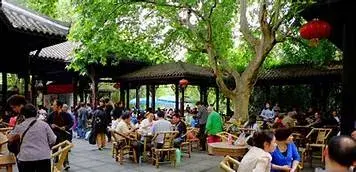
Chengdu, an Ancient and Modern City (II)
The Land Ocean Tian Fu
...The Land Ocean Tian Fu
The History of Huayang State · Shu Chronicles carries out a compliment about Chengdu. The compliment, which dates from the Han and Jin dynasties, says, “The fertile fields extend a thousand li and look like a land ocean.” People in ancient times thought that the ocean contained everything, and Chengdu was just like an ocean on land. The same book also presents the records quoted from the document dating from the Qin and Han dynasties. It says, “Because human beings control floods and droughts, people have no taste of famine, and no lean year occurs. This saying generally refers to Tian Fu.” Originally Tian Fu is the Heaven storehouse in which there are piles of numerous rare treasures.
Chengdu has been crowned with the laurel of Tian fu zhi guo (the land of abundance or the state of Tian Fu). However, during the Warring States Period the land of Tian Fu covered both Hanzhong plains and Bashu area. By the Eastern Han Dynasty, the Tian Fu referred to Shu area, and Hanzhong plains was called Jin Shu (Near Shu) instead. The Long Zhong Plan written by Zhu Geliang specially referred Shu, for the first time, to the state of Tian Fu. In 2007, Chinese National Geography held a nation-wide appraisal activity to choose the top ten “New Tian Fu,” which made an exciting stir. As a result, the Chengdu Plains came in first again through the appraisal.
Fine Food and Leisure City
At the beginning of 21st century Chengdu is turning to be more open now. As tourists at home and abroad make tour of Chengdu, they couldn’t help making varied compliments in the state of their pleasant tour intoxication. One of the compliments says “the city that once you have visited you never want to leave.” Sichuan food in Chengdu has been well-known for a long time. In addition, the tea culture is prevailing and local daily life is leisurely relaxed. Peasant Household Entertainment and Sightseeing originally started in Chengdu, thus number of Chengdu’s new titles came into being like “a fine food city,” “a leisure city” and so on.
The Mysterious City
The cultural relics, unearthed at San Xing Dui Ruins, have triggered varied issues about the civilization of the ancient Shu kingdoms. In 2002, the “Sun Bird,” made in gold foil, and other cultural objects were excavated from the Jin Sha Ruins, the northwest of Chengdu. Because the art of these objects is of a very high level, it has further initiated a deep and sacred respect for the civilization of the ancient Shu kingdom. Moreover, the Chengdu plains happen to be at latitude 30º N where the world’s four major ancient civilized countries, including China, India, ancient Babylon and Egypt, burst out the splendor of civilizations in the earliest ancient times. It is also at latitude 30º N where some mysterious objects and phenomena emerged. These include groups of Pyramids of ancient Egypt, the Sphinx, the frescos of “fire god and seed” in the driest Sahara Desert of North Africa, Bermuda Triangle in the Caribbean Sea, and the “garden in the sky” of ancient Babylon. For this reason Chengdu has another name called the Mysterious City at Latitude 30º N.
Major Historical Events
Well-Known City in the Country
Based on archaeologically unearthed relics and other ancient documents, scholars have confirmed that the roots of Chengdu’s civilization can be traced back over 4,500 years, the location of the city has remained unchanged for more than 3,000 years and it has been recognized as a city for around 2,300 years. In the Han Dynasty Chengdu was one of the five largest commercial cities in the whole country. In the Tang and Song dynasties the city was known as “Yi Zhou (Chengdu) Second Only to the City of Yang Zhou,” and “the First Famous City in China.” In the Han and Tang dynasties Chengdu remained as one of the top cities in the whole country.
Five Dynasties of Ancient Shu Kingdoms
The Chengdu Plains were the place where the ancient Shu culture grew, ancient Shu cities and towns developed, and ancient Shu states emerged. According to legend, there were five Shu kings by the names of Can Cong, Bo Guan, Yu Fu, Du Yu and Kai Ming who came to the throne in succession. Actually they were five major tribes that relied on different economical means. They existed respectively from the fishing and hunting era to the period of agro-farming and residence on the plains. The Can Cong tribe lived in “stone caves on the Mount Min Shan.” The Bo Guan and Yu Fu tribes arrived on Chengdu Plains. They traveled far and wide, looking for their final settlement. Gradually the migrating tribes took up their residence, and the places where they lived turned to be villages, and furthermore, these villages developed to be towns or even cities. By the Du Yu Period, the tribes turned to be a large state, with its territory that covered the land of Shu area. When the fifth King of the Kai Ming Dynasty (or the ninth King of the same Dynasty) came into power, he established a capital on the present base of Chengdu urban district.
King Kai Ming Moves His Capital to Chengdu
According to legend, the fifth King of the Kai Ming Dynasty (or the ninth King of the same Dynasty) removed his capital to Chengdu because of his dream in which his city wall moved away. Based on archaeological excavation, the period of the unearthed 3,000-years-old Jin Sha Ruins occurred after the San Xing Dui Ruins. This discovery has provided with real evidence confirming the legendary removal of the capital to Chengdu. In 2000 a large-scale boat-shaped coffin graveyard was discovered in the Shang Ye Street of Chengdu. This graveyard belonged to the Kai Ming royal families at that time in the early Warring States Period. It indicates that the Kai Ming capital had been already located on the present base of Chengdu urban district. The Kai Ming Dynasty continued through 12 kinghood generations before it was destroyed by the Qin State.
The Qin State Conquered Ancient Shu Kingdom
In 316 B.C internal disorders occurred in the Shu Kingdom. The Shu king sent his troops to go on a punitive expedition against Marquis Ju. Ju fled to the Ba Kingdom. Then the Shu king sent his troops to attack the Ba Kingdom. The latter asked the Qin State for help. So King Hui of the Qin made use of this opportunity. He sent two generals, Zhang Yi and Shi Macuo, to attack the Shu Kingdom that died out and disappeared from then on. The kingdom’s descendants moved southward and established a state by the name of Wen Lang in the present north of Vietnam and the state king was called King An Yang.
Zhang Yi Builds Walls
Five years after the Qin State destroyed the Shu Kingdom in 33 B.C., Zhang Yi and Zhang Ruo began building walls around Chengdu. According to accurate records, it is considered as the beginning of Chengdu city construction, and as a city it has lasted for around 2,300 years. In addition, Zhang Yi and Zhang Ruo built another two towns in Pi Cheng and Lin Qiong. The towns were slightly small in scale and were in a triangle position with Chengdu.
Gong Sunshu Proclaims Himself Emperor
After Wang Mang usurped the Liu family’s throne and established a new dynasty, Gong Sunshu, an official who garrisoned Western Shu area, proclaimed himself emperor in 25 B.C. and started setting up a feudal separatist rule in Chengdu. He used “Long Xing” (the revitalization of the dragon) to be his reign title and “Cheng” to be his national name. The regime lasted for 12 years and then it was defeated by Emperor Guang Wu of the Han Dynasty.
Top Chengdu Tours
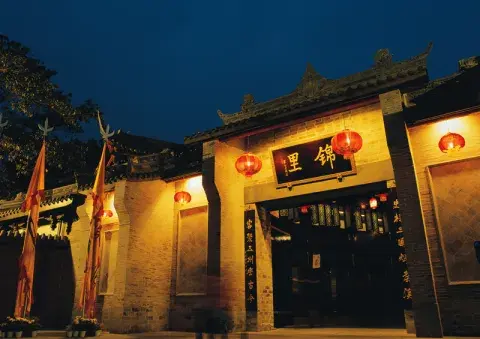
$200 Per Day
CHENGDU, A PANDA CITY, A GOURMET CITY, A TEA CITY, LOOKING FOWARD TO YOUR ARRIVAL
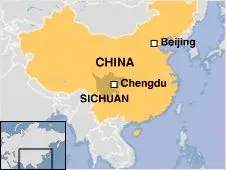
Chengdu, with an area of 12,400 square kilometers and a polulation of about 14,170,000 is not just the biggest provincial capital in west China, but also the only city in the history of China whose name has reminded the same for 3,000 years since its establishment. In Chinese, "Cheng" means "success or successful" and "Du" means "big city or capital". This "Successful City" boasts a long history. It is believed that everything about Chengdu has their origin from "Sanxingdui Ruins", from where you can deeply discover the history story of Chengdu.
...Read moreChengdu, with an area of 12,400 square kilometers and a polulation of about 14,170,000 is not just the biggest provincial capital in west China, but also the only city in the history of China whose name has reminded the same for 3,000 years since its establishment. In Chinese, "Cheng" means "success or successful" and "Du" means "big city or capital". This "Successful City" boasts a long history. It is believed that everything about Chengdu has their origin from "Sanxingdui Ruins", from where you can deeply discover the history story of Chengdu.
Giant pandas definitely are the best calling card and trademark of Chengdu. Every year, million of people are attracted by giant pandas to spend their holidays here, go sightseeing here, make investment here and even settle here permanently. The reason is that for people around the world, the charm of giant pandas cannot be replaced by anything else.
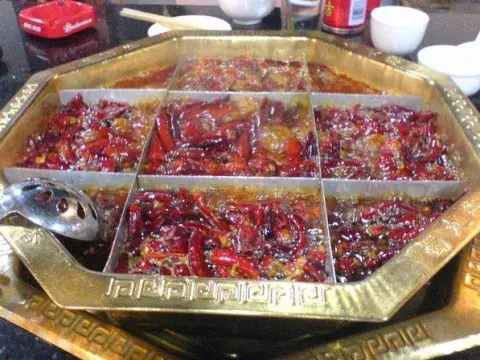
Various kinds of wonderful food shall be another reason attracting you to visit Chengdu. Of the four most famous schools of culinery art in China (Beijing cuisine, Sichuan cuisine, Jiangsu cuisine, Guangdong cuisine), Sichuan cuisine boasts tongue-numbing, hot, delicate and fresh taste and a variety of flavors, as "each dish has its unique taste and no two dishes have the same flavor." Such spcial flavors as fish-flavored, gongbao (with peanuts), and water-boiled are incomparable at home and abroad.
"The teahouses in Sichuan top the world, and those in Chengdu Top Sichuan." This widespread saying not only points out the status of Chengdu's teahouses but also the inseverable ties between Chengdu culture and tea. Like bars in Paris and cafes in Vienna, teahouse add a touch of refinement and leisureliness to Chengdu, an ancient yet modern metropolis. The practice of driking tea prevailed in Sichuan as earlt as prior to the Qin and Han Dynasties.
Wish you can have a nice trip in Chengdu. You will love it.
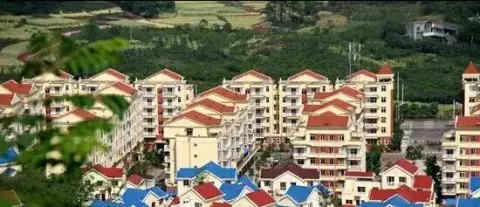
$1 Per Day
One town sleep under the mouantain
One biggest surprise on the high-speed way.
Pool , lake, grass, trees and more interesting things make this little town like one fairy tale.
The colors of these buildings are cute,green、 red、 blue, all the colors make this place looks like are the one line with the sky .
Some kind of farms here, wehn strawberry grown up , you can also pick the up , you get more closer here, more surprises for you.
Good place for pleasure.

$2000 Per Day
Western Sichuan Highland and Tibet Area Tour 2016
Western Sichuan Highland and Tibet Area Tour 2016 (Mid Oct is the best color)
Day 0: October 13
Day 12: October 25
Day 0: arrive in Chengdu
Western Sichuan Highland and Tibet Area Tour 2016 (Mid Oct is the best color)
Day 0: October 13
Day 12: October 25
Day 0: arrive in Chengdu
Day 1: Start workshop, drive from Chengdu to Hailuogou
(341km – 5 hours!)
Day 2: Hailuogou
Day 3: Hailuogou to Kangding
(70km – 2 hours!)
Where do we stay that night Kangding or Mugecuo?
we stay in Kangding
Day 4: Mugecuo to Yajiang
(100km – 2 hours!)
Day 5: Yajiang to Litang
134km -3.30 Hours
Day 6: Litang to Yading Daocheng to Riwa town(Yading)
this drive 434km- How long 8H,
We drive 12 hours, this area is beautiful, we stop many times for photography, we stay in Daocheng, Daocheng to Riwa town(Yading) 100 km, Riwa town is the entrance to the main scenic spot, (Litang is a county on the way, we can’t stay there over night, bed condition)
Day 7: Yading
Day 8: Yading
Day 9 : Yading to Litang this ride is the most beautitul area in the trip
(264km – 5-6 hours)
Day 10: Litang to Xinlong to Bai Gangzi
(260km – 8 hours!)
Day 11:Gangzi to Serta
(152km – 4 hours!)
Day 12: Serta
Day 13: Sera to Luhuo
(156km – 3 hours!)
Day 14: Luhuo to Danba
(234km – 6 hours)
Day 15: Danba to
Rilong Balang to Chengdu
(416km – 8 hours!)
Day16: Chengdu, conclusion of the tour.