Chengdu Attractions
Tailor & Costume Street
By now I hope you have guessed that Tailor & Costume Street in Chengdu is a great spot for tailor-made clothing and fun costume shopping. The rumor of the ability to buy cheap, but good quality suits, formal wear, etc in China is in fact true. Even travelers who don't speak a word of Chinese ...
By now I hope you have guessed that Tailor & Costume Street in Chengdu is a great spot for tailor-made clothing and fun costume shopping. The rumor of the ability to buy cheap, but good quality suits, formal wear, etc in China is in fact true. Even travelers who don't speak a word of Chinese should not be worried about the language barrier. You will find that the language of clothing is not a confusing one. There are many tailors along Shanxi Jie (陕西街) as well as a few costume shops which are fun to browse. Positive reports have come in from people who paid around 800-1200 RMB for a suit.
How to get there: Shanxi Jie is the first street just south of Tianfu Square (天府广场) in the center of town. Walk south along Renmin Lu (人民路) from the square and make the first right onto Shanxi Jie. The tailor and costume shops are a few hundred meters down the street.
Arhat Vegetarian
Arhat is an excellent vegetarian restaurant on the north side of Chengdu in the Wenshu Monastery neighborhood. The main differences between Arhat and the vegetarian restaurant inside the Wenshu Temple is ...
Arhat is an excellent vegetarian restaurant on the north side of Chengdu in the Wenshu Monastery neighborhood. The main differences between Arhat and the vegetarian restaurant inside the Wenshu Temple is that Arhat is more expensive, but is also cleaner and more creative. Guests also do not need to pay the small Y5 entrance fee to the temple in order to eat at the vegetarian restaurant within.
Arhat boasts a very neat and pleasant setting on the second floor of the busy (and somewhat touristy) Wenshu Temple neighborhood. I recently went to Arhat with a group of four, and all of the vegetarians in the party were duly impressed. Chengdu's legendary Ma Po Tofu was quite soft and certainly well above average in Chengdu. A tasty fried eggplant dish was well complimented by fried potato strings around the edge of the dish.
Our most interesting dish was a rabbit stew with a bean curd and bamboo mixture substituted for the rabbit meat. The creativity of the dish alone made it worthwhile. All of the dishes included excellent presentation, and were greeted with a few 'oohs' and 'aahs'. The entire menu is in Chinese and English and there are countless unusual and exotic dishes available.
I recommend that all guests be a bit brave at Arhat, and choose a dish or two that might normally appear or sound too risky or 'over-the-top'. The staff can also speak English. Dishes range from 10-50 Yuan. Our meal cost 100 Yuan. That might seem a bit expensive for vegetarian fare in China, but we all felt Arhat was very worthwhile.
How to get there: Arhat is in the recently renovated-for-tourism neighborhood outside the Wenshu Temple. From the entrance to the temple, walk a couple hundred meters east, away from Renmin Lu. Turn right on Baiyunsi Jie and look for signs for Arhat on the second floor on the right side. Be sure to write down the name or bring the address information and phone number. If you can't find it, all the people in the neighborhood know it and can help direct you there.
Northeast Dumplings
Even the most passionate lovers of Sichuan cuisine need to take a break from the fiery, numbing spices of Hotpot, Shao Kao (barbecue), Chuan Chuan, and so forth. That is what northeastern Chinese dumplings are for. You can make your own personal mix of vinegar, soy, garlic, salt, MSG, and h...
Even the most passionate lovers of Sichuan cuisine need to take a break from the fiery, numbing spices of Hotpot, Shao Kao (barbecue), Chuan Chuan, and so forth. That is what northeastern Chinese dumplings are for. You can make your own personal mix of vinegar, soy, garlic, salt, MSG, and hot pepper to accompany the filling dumplings. This allows much more freedom than the onslaught of spice normally found in local Sichuan cuisine. The best place to get northeastern style dumplings is near the Wuhou Shrine (武侯祠) on Wuhouci Dajie (武侯祠大街). The simply decorated dumpling joint offers a large variety of dumplings and best of all includes an English menu. The staff doesn’t really speak English, but a very painless pointing charade will get the ordering job done. One unit of dumplings, known as a ’liang’ (两) includes 6 dumplings. There are many choices with beef, lamb, pork, shrimp, and vegetarian options such as egg with spring onion.
How to get there: The Haerbin Northeast Dumpling Restaurant is a couple hundred meters south of the Wuhou Shrine and Jinli Promenade on Wuhouci Dajie. It is very close to the back gate of the Chengdu Sports College on the west side of the street. It is also quite close to the junction of Wuhouci Dajie and the south 1st ring road. The 334, 335, 1, 26, and 94 buses are just a few of the buses that will pass by the restaurant.
River Viewing Pavillion Park
River Viewing Pavillion Park is much more peaceful and interesting than its bland name suggests. The park features a four-story Qing dynasty pagoda built between 1886 and 1889. It provides a fantastic unobstructed view of a large portion of the Brocade river as well as the Chengdu skyli...
River Viewing Pavillion Park is much more peaceful and interesting than its bland name suggests. The park features a four-story Qing dynasty pagoda built between 1886 and 1889. It provides a fantastic unobstructed view of a large portion of the Brocade river as well as the Chengdu skyline. Entrance to the park itself is free. Like everywhere else in Chengdu, tea drinking, card slamming, and Mahjong foursomes leave you wondering, "When do these people actually work?"
The river-viewing pagoda is known as the Tower of Magnificence. It is included in a confined section of the park that is also dedicated to the Tang Dynasty poetess Xue Tao. Entrance to this area is Y20, but the fee is worth it. If you speak Chinese, but do not have student ID, tell them you are a student. If they ask for your ID, just say, "If I am not a student, then how am I speaking Chinese?" (At least this worked for me!) The student price is only Y10.
Very few travellers have the time to come here, and since the park isn’t very centrally located, even many expats aren’t familiar with it. Obviously locals aren’t interested in paying Y20 either. By putting up the entrance fee, you have the opportunity to relax in one of the quietest hideouts in urban Chengdu. The gardens in this section are extremely diverse, serene, and well-kept and finding a shady spot is not a problem. Climb the pagoda and bring a book. The opportunity to enjoy a moment as quiet as this one in a Chinese urban setting is very rare.
Xue Tao was born in Shaanxi province, and wrote her first poem at age 6. She came to Chengdu with no money after her parents died when she was 16 years old. She was quickly able to make a living for herself as a poet. She apparently loved bamboo, so this section of the park includes a bamboo garden featuring over 200 species of bamboo from all over Asia (according to one Chengdu resident). The Xue Tao commemorative hall includes beautiful murals with vibrant neon colors not often seen in China.
The park is open everyday from 6:00 am until 9:00 pm. The Xue Tao Shrine and Tower of Magnificence are open from 8:00 am until 6:00 pm everyday.
Directions: The park is located southeast of the city center adjacent to Sichuan University. You can catch the no. 35 bus which runs on the north side of the river along Binjiang Lu by walking south on Renmin Lu from Tianfu Square. When you see the park, get off the bus, and walk along the river to the next bridge that allows you to reach the park’s southwest gate. A taxi from downtown should not cost more than Y10-12.
Take bus No. 19, 335, 35, 3 to get there.



Chengdu Articles
Chengdu, an Ancient and Modern City (I)
The Origin of Chengdu City
...The Origin of Chengdu City
On the Chengdu Plains the ancient city remains of the Bao Dun culture, being traced back over 4,500 years, is considered as the origin of Chengdu city. 3,000 years ago, in the era of the San Xing, Jin Sha and Shi Er Qiao Ruins, a largest and earliest ancient city emerged on the inner Chengdu Plains. From then on, the city never changed its location for 3,000 years and more. During the early Warring States Period Chengdu’s urban district turned to be the settlement of the Kai Ming Dynasty. Down to the late Warring States Period, King Hui Wen of the Qin State conquered Shu in 316 B.C. Afterwards Chengdu turned to be the seat of the local government of Shu prefecture, and at the same time Chengdu County had been established.
Evolution of Administrative Systems
For a span of over 2,000 years from the Qin Dynasty to the Qing Dynasty, Chengdu remained as the seat of administrative divisions by the names of xian (county), jun ( prefecture), zhou (The name of jun had been replaced by zhou or fu during the Sui and Tang dynasties.), fu, lu (The regional size of each lu is almost the same as the one of a province), dao (In the Qing Dynasty, the dao had more administrative power than the prefecture “zhou,” but it was still held under control by the province.) and sheng (province). At intervals Chengdu turned to be the capital of separatist regimes that included Cheng Han, Shu Han, Da Cheng, Former Shu, Later Shu, and Da Xi. During the period of the Republic of China, Chengdu was still a provincial seat. In 1922, the Municipal Administration Office was established. In 1928, Chengdu Municipal Government was founded, and the city itself was under the jurisdiction of the provincial government. After the foundation of the People's Republic of China, the Western Sichuan Administration Office was established, and Chengdu became its seat. In 1952, when the provincial system was brought back, Chengdu turned to be the capital of Sichuan, and it remains in the same position ever since.
Chengdu’s Previous Names
The Origin of Its Name
The name of cheng du has remained unchanged for almost 2,500 years. Below are some explanations for the origin of it's name.
1. According to Around the World, an ancient Chinese geographic book published in the Song Dynasty, cheng du originated in the saying “it took a year to assemble and live in a compact community; the second year to become a county center; the third year to turn into a metropolis.” Literally it means, “Becoming a capital.” This is a most popular saying about its origin.
2. According to some modern scholars, there is another explanation to the origin. Cheng du came from the dialect of a Shu nationality. Cheng is a term of a nationality, while du refers to the place where the Cheng nationality lived.
3. In addition, modern scholars believe that Chengdu gains its name after chao ju. The character “cheng” is the image of chao ju, which refers to a mode of human beings’ inhabitation in remote ancient times; the character “du” is the place where people gather together; cheng du is a seat where the chao ju clan resided. In short, Chengdu’s historical characteristics are quite uncommon in the world, with its location and its name that have remained unchanged for 3,000 years and for 2,500 years respectively.
Name-Carved Cultural Relics
The carving or typecasting of the Chinese characters “Chengdu” on cultural relics appeared as early as the Spring and Autumn Period and the Warring States Period. In Qing Chuan and Yin Jin counties archeologists unearthed lacquerwares, which had marked brands or seals in the shape of “成”(cheng), “成屮”(cheng 屮) and “成亭”(cheng ting). These characters suggested the places where the products were manufactured. Also the surface of a copper lance, unearthed in Yin Jin County, has Chinese characters “Chengdu.” In Qing Chuan County a copper dagger-axe was unearthed. It was produced by Shu Dong Gong Weapon Workshop in 277 BC, and “Chengdu,” the carved characters were on its surface.
The Elegant Names of Chengdu
During the period from the Qin to the Han dynasties Shu brocade was well-known all over the country. The brocade fabrics became very bright after these were rinsed in a river. Accordingly the river was called “Brocade-Rinsing River or “Brocade River” for short. In the Han Dynasty Jin Guan (brocade administration office) was set up near a city bridge for the purpose of taking charge of brocade workshops. Therefore, Chengdu was called “Jin Guan City” or “Jin City (brocade city)” for short.
The climate in Chengdu is suitable for the growth of flowers and trees. The hibiscus is the variety that local people love, and its flowers appear all over the city when the hibiscus blossoms. Du Fu, a poet of the Tang Dynasty, said in one of his lost poems, “I ponder upon my bygone trips as if I were in dreams / Beyond the City of Hibiscus, water remains around and boundless.” Evidently even in the Tang Dynasty Chengdu did obtain a good name called Rong Cheng, the City of Hibiscus. Later, Meng Chang, the king of the Later Shu, had people plant hibiscus all over the city. By then, the good name really matched its reality.
Other Names of Chengdu
In 311B.C. the city wall around Chengdu officially began its construction. According to The Biography of Shu Kings and Emperors, in those days city walls often collapsed after its construction was completed. One day a big tortoise unexpectedly arrived. He circled around the city until he reached the southeast corner where he died of fatigue. So people restarted the city-wall construction along the route the big turtle passed by, and the newly built wall was a success. From then on Chengdu picked up another name “the City Where the Tortoise Reincarnates” or “the City of Tortoises” in its abbreviated form.
The Old Urban Districts of Chengdu
The Big City and the Mini City
The Mini City was the urban area emerged in the earliest period in Chengdu. It was called Shao because of its small size and early founding. The city was also the earliest market place or business section. The Big City was another section that came out after the Mini City. So it was called “Da” or “big.” In 311 B.C. Zhang Yi began building walls around Chengdu, which started to have a type of regular walls and street layout, similar to the urban planning and design of Xian Yang, capital of State of Qin. In terms of its initial function, the urban area fell into two parts, the west part being the Mini City business section and the east one being the Big City official administrative and residential area. The two cities co-existed until the Ming Dynasty. Afterwards another pattern of three-city co-existence emerged and it remained through the Ming to the Qing dynasties. The pattern of the two-city and then three-city co-existence remains a great characteristic of the city layout in Chengdu.
Two Rivers Surround The City
During the late Warring States Period, around 256 B.C, Li Bing, the governor of Shu Prefecture, constructed the Due Jiang Yan Irrigation System, which led the water of the Ming Jiang River down to the Chengdu Plains. This system includes two main inlet Canals, one being the Pi Jiang River and the other the Liu Jiang River. According to The History of Huayang State, the Pi Jiang River and the Liu Jiang River flowed through separate cannels, moved along the city’s southwest corner and then continued their flow eastwards, side by side until they reached Chengdu. At that time the two rivers were named “Chengdu Twin Rivers,” and this canal system existed more than one thousand years. In the late Tang Dynasty, the Nan Zhao Kingdom often invaded Chengdu, frequently leaving the local residents disturbed. In 876 Gao Pin, the newly appointed western Sichuan military commander, built another city called Luo City. His purpose was to consolidate the city defense. Originally the Pi Jiang River Canal extended towards the south of Chengdu. However, due to the new city’ construction, its river course was changed. Instead the river was diverged to flow around the north and the east of the city before it converged at He Jiang Ting Pavilion with the Liu Jiang River that flowed around the south of the city. As a result, the rivers flowed around Luo City, forming a river course pattern of “two rivers surrounding the city,” which still exist today.
The Zi Cheng City, the Luo Cheng City and the Yang Ma Cheng City
The Zi Cheng City (son city) was another name of the Big City in the Sui and Tang dynasties. The Luo Cheng City was the result of the expansion of the Zi Cheng City in the late Tang Dynasty when Gao Pin changed the water courses of the two rivers. The character luo refers to “hold with a net,” and therefore any city with a pair of walls is usually called “Luo Cheng City.” Meng Zhixiang of the Late Shu State again expanded the area lying beyond Luo Cheng City and constructed a larger and wider city wall. The third newly city was named Yang Ma Cheng City (sheep and horse city). However, the new wall construction project started so hurriedly that the quality assurance failed. Consequently the newly built wall soon collapsed and disappeared
The Imperial City
In 1390, Emperor Zhu Yuanzhang assigned his thirteenth son Zhu Chuan to the Shu King’s post. Afterwards Zhu Chuan came to Chengdu and lived here. The Shu King’s residence that began to be built as early as 5 years ago was completed at the moment when Zhu Chuan arrived. The construction appeared mighty and had a grand exterior. Therefore, common people named it Imperial City. Its brick wall around the residence was 5 m. in height; its perimeter was 4,500 m. in length; the wall itself was called Screen Wall. The site of the present-day Tian Fu Square and Hou Zi Gate area used to be the center of the Shu King’s Residence that year.
Good reputations of Chengdu in ancient and modern times
No Daily Life Worries
The Book of the Earlier Han Dynasty · Geography Chronicles evaluates the Shu prefecture as it records the prefecture’s facts and events. It says, “People eat rice and fish. There is no crop failure year and no daily life worries.” The irrigation system ensures the Chengdu Plains to keep away floods and droughts so that people neither have the taste of famine-year hunger nor worries in their daily life.
144-hour Transit Visa Exemption Policy for Foreign Travelers from Designated Countries at Chengdu Entry Port
成都口岸实施144小时过境免签政策
144-hour Transit Visa Exemption Policy for Foreign Travelers from Designated Countries at Chengdu Entry Port
...成都口岸实施144小时过境免签政策
144-hour Transit Visa Exemption Policy for Foreign Travelers from Designated Countries at Chengdu Entry Port
经国务院批准,自2019年1月1日起,成都开始实施部分国家外国人144小时过境免签政策,来自53个国家的外国人,持有效国际旅行证件和144小时内确定日期、座位前往第三国(地区)联程客票,可以从成都航空口岸免签入境,在成都市免签停留144小时。届时,成都口岸部分国家外国人过境免签时限将由原来的72小时延长至144小时,进一步便利外国人过境转机并来蓉进行旅游和商务活动。
With the approval of the State Council, since January 1, 2019, Chengdu will implement the 144-hour visa-free transit policy. Foreigners from 53 countries, who hold valid international travel documents and a connecting flight ticket bound for a third country (region) with a fixed seat and a fixed date within 144 hours, can enter via Chengdu Airport and stay in Chengdu for 144 hours, visa free. The extension from 72 to 144 hours will further facilitate foreigners' transit and transfer and their traveling and business in Chengdu.
一、什么是144小时过境免签政策?
What is the 144-hour visa-free transit policy?
144小时过境免签政策是指:来自53个国家的外国人,持有效国际旅行证件和144小时内确定日期、座位前往第三国(地区)联程客票,可以从成都航空口岸免签入境,在成都市免签停留144小时。
According to 144-hour visa-free transit policy, foreigners from 53 countries, who holdvalid international travel documents and a connecting flight ticket bound for athird country (region) with a fixed seat and a fixed date within 144 hours, canenter via Chengdu air ports and stay in Chengdu for 144 hours, visa free.
二、适用144小时过境免签政策的国家名单
List of Countries Applicable for 144-hour Visa-free Transit Policy
1、欧洲申根签证协议国家(25个)
European Countries under Schengen Visa Agreement (25)
奥地利、比利时、捷克、丹麦、爱沙尼亚、芬兰、法国、德国、希腊、匈牙利、冰岛、意大利、拉脱维亚、立陶宛、卢森堡、马耳他、荷兰、波兰、葡萄牙、斯洛伐克、斯洛文尼亚、西班牙、瑞典、瑞士、摩纳哥。
Austria, Belgium, Czech, Denmark, Estonia, Finland, France, Germany, Greece, Hungary, Iceland, Italy, Latvia, Lithuania, Luxembourg, Malta, Netherlands, Poland, Portugal, Slovakia, Slovenia, Spain, Sweden, Switzerland, and Monaco.
2、欧洲其他国家(14个)
Other EuropeanCountries (14)
俄罗斯、英国、爱尔兰、塞浦路斯、保加利亚、罗马尼亚、乌克兰、塞尔维亚、克罗地亚、波黑、黑山、马其顿、阿尔巴尼亚、白俄罗斯。
Russia,UK,Ireland,Cyprus,Bulgaria,Romania,Ukraine,Serbia,Croatia,Bosnia and Herzegovina,Montenegro, Macedonia,Albania,and Belarus.
3、美洲国家(6个)
Countries of Americas (6)
美国、加拿大、巴西、墨西哥、阿根廷、智利。
U.S., Canada, Brazil, Mexico, Argentina, and Chile.
4、大洋洲国家(2个)
Oceania Countries (2)
澳大利亚、新西兰。
Australia and New Zealand.
5、亚洲国家(6个)
Asian Countries (6)
韩国、日本、新加坡、文莱、阿联酋、卡塔尔。
Korea, Japan, Singapore, Brunei, The United Arab Emirates, and Qatar.
三、办理要求
How to apply
外国人申请过境免签政策应当具备以下条件:
Foreigners who apply for 144-hour visa-free transit status should meet the following requirements:
1、符合规定范围国家的公民(目前包括53个国家),并持有本人能证明其国籍身份的有效国际旅行证件
They must be citizens from one of the 53 eligible countries specified. They must hold valid international travel documents certifying their nationality and identity.
2、持有144小时内已确定日期、座位的前往第三国或地区的联程客票或者相关证明
They must have a valid airplane passenger ticket for connecting travel to a third country or region. The ticket for travel must specify the traveler has a confirmed seat and that the departure time is within 144 hours.
3、入出口岸:成都航空口岸
Port of entry and exit: Chengdu Airport.
四、双语咨询服务热线
Bilingual hotline
成都市公安局出入境管理局开通了24小时中英双语咨询服务热线:18030695002,提供144小时过境免签政策的相关业务咨询服务。
Exit and Entry Administration Division of Chengdu Public Security Bureau has set up a hotline in both Chinese and English to provide 24-hour consultation—18030695002.
五、注意事项
Notices
1、停留144小时自入境次日0时起计算
144-hours stay begins from 00:00 on the next day of entry.
2、成都市行政区域内停留
Stay in the administrative districts of Chengdu only.
值得注意的是,享受144小时过境免签政策的部分国家外国人,从成都航空口岸入境后,停留范围仅限于成都市行政区域。
It is worth noting that the foreigners under the 144-hour visa-free transit policy shall only be allowed to stay in the administrative districts of Chengdu after their entering via Chengdu Airport.
3、出发国A→成都B→第三国C
Departure Country A→Chengdu B→Third Country C
享受144小时过境免签政策的部分国家外国人,从成都航空口岸入境,离开时需从成都航空口岸出境,飞往第三国(地区)。出发国A和第三国C必须为不同的国家或地区。
The foreigners under this policy who enter via Chengdu Airport shall fly to a third country (region) via the same airport. Departure country A and the third country C shall not be the same one.
六、配套服务
Supporting Service
为了让过境免签外国人在成都期间享受更多优质服务,目前,成都已做好144小时过境免签政策实施的有关准备工作。四川省边防总队将推行配套政策、便利通关、精细服务“三个靠前”举措,对过境免签外国人提供优质、便捷、高效的出入境通关服务。成都双流国际机场将推进智慧中转平台建设,为过境免签外国人提供丰富多样的中转增值服务。成都市口岸物流办将结合“14+48+30”的国际航线网络总体规划,协调启动国际航站楼优化改造工程,提升国际旅客通关效率和服务水平。成都市旅游局开展了主题宣传活动,对144小时过境免签政策进行宣传,并将联手携程推出精品旅游线路向全球发布。成都文旅集团将推出“古蜀文化”等系列主题产品及成都旅游PASS卡,实现“一卡在手、玩转成都”。成都市商务委将推进标识性消费场景建设,优化商业消费环境,满足国内外游客多样化、多层次消费需求。
To provide the above mentioned foreigners with better service during their stay in Chengdu, So far, Chengdu is ready for the implementation of the 144-hour visa-free transit policy. Border Defense General Squad of Sichuan is taking three preparatory measures of matching policies, clearance facilitation and targeted service to provide quality, convenient and efficient service for foreigners under this policy. Chengdu Shuangliu International Airport is promoting the construction of a smart transit platform to provide rich and varied value-added services for visa-free foreigners. Basing on the "14+48+30" general plan for international airline network, Chengdu Port Logistics Office is coordinating and launching the upgrading project on international terminal building to enhance the clearance efficiency and to provide better service for cross-border travelers. Chengdu Tourism Bureau is launching a theme promotion campaign to publicize the 144-hour visa-free transit policy, and will promote jointly with Ctrip boutique travel routes to the world. Chengdu Culture and Tourism Group is promoting a series of theme products such as "Ancient Shu Culture” and Chengdu Travel PASS Card which covers all major scenic spots in Chengdu. City Municipal Commission of Commerce is promoting the construction of model consumption scenarios to optimize the consumption environment and meet the diverse and multi-level consumption needs of domestic and foreign tourists.
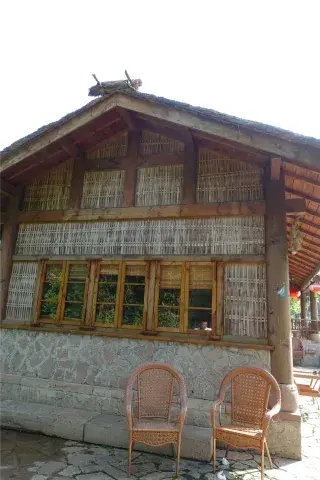
A small but big ancient town!
Wu Feng Xi Ancient Town, also called as the Wu Feng Town, was already important and well-known as the wharf to send goods from west of Sichuan to Chengdu in Tang Dynasty, about 1100 years ago.
...Wu Feng Xi Ancient Town, also called as the Wu Feng Town, was already important and well-known as the wharf to send goods from west of Sichuan to Chengdu in Tang Dynasty, about 1100 years ago.
Now most of the streets left were built in Qing Dynasty. This town is not big in size, but it is big in its heart, as a mixed-culture-migration town,here you can see different provincial halls standing on different parts, each one has a local and special design,and taoism, as a original Chinese relion, has developed its influence here, a grand Guan Di Gong (A palace for Guan Yu, who was a general in ancient time and regards as god in both buddhism and taoism) stands in the town, everyday with people coming here to make wishes and ask for future fortune . Though Sichuan had suffered a lot of wars, however, this town has been isolated and well-kept, that is why even today, when you go there, you can still feel the leisure and peace from the local.
Top Chengdu Tours
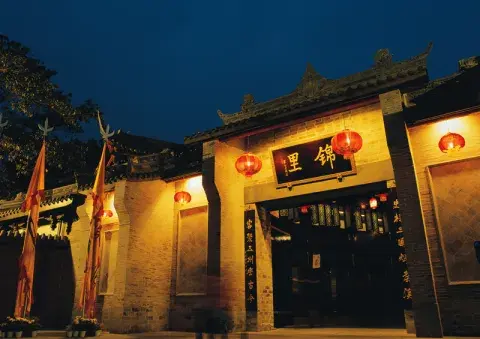
$200 Per Day
CHENGDU, A PANDA CITY, A GOURMET CITY, A TEA CITY, LOOKING FOWARD TO YOUR ARRIVAL
Chengdu, with an area of 12,400 square kilometers and a polulation of about 14,170,000 is not just the biggest provincial capital in west China, but also the only city in the history of China whose name has reminded the same for 3,000 years since its establishment. In Chinese, "Cheng" means "success or successful" and "Du" means "big city or capital". This "Successful City" boasts a long history. It is believed that everything about Chengdu has their origin from "Sanxingdui Ruins", from where you can deeply discover the history story of Chengdu.
...Read moreChengdu, with an area of 12,400 square kilometers and a polulation of about 14,170,000 is not just the biggest provincial capital in west China, but also the only city in the history of China whose name has reminded the same for 3,000 years since its establishment. In Chinese, "Cheng" means "success or successful" and "Du" means "big city or capital". This "Successful City" boasts a long history. It is believed that everything about Chengdu has their origin from "Sanxingdui Ruins", from where you can deeply discover the history story of Chengdu.
Giant pandas definitely are the best calling card and trademark of Chengdu. Every year, million of people are attracted by giant pandas to spend their holidays here, go sightseeing here, make investment here and even settle here permanently. The reason is that for people around the world, the charm of giant pandas cannot be replaced by anything else.
Various kinds of wonderful food shall be another reason attracting you to visit Chengdu. Of the four most famous schools of culinery art in China (Beijing cuisine, Sichuan cuisine, Jiangsu cuisine, Guangdong cuisine), Sichuan cuisine boasts tongue-numbing, hot, delicate and fresh taste and a variety of flavors, as "each dish has its unique taste and no two dishes have the same flavor." Such spcial flavors as fish-flavored, gongbao (with peanuts), and water-boiled are incomparable at home and abroad.
"The teahouses in Sichuan top the world, and those in Chengdu Top Sichuan." This widespread saying not only points out the status of Chengdu's teahouses but also the inseverable ties between Chengdu culture and tea. Like bars in Paris and cafes in Vienna, teahouse add a touch of refinement and leisureliness to Chengdu, an ancient yet modern metropolis. The practice of driking tea prevailed in Sichuan as earlt as prior to the Qin and Han Dynasties.
Wish you can have a nice trip in Chengdu. You will love it.

$300 Per Day
10 Days from Lijiang to Shangrila Daocheng Yading and Chengdu
Day1from lijiang to shangrila on the way see the first bend of Yangtze River and tiger leaping gorge then continue to Shangrila Day2 Shangri La – Xiang Cheng
Day3Xiang Cheng – Yading
Day4look around Yading
Day5 Yading – Daocheng – Litang
Day6 Litang – Yajiang – Xinduqiao
Day7 Xinduqiao – Tagong – Bamei – Danba
Day8look around Danba
Day9 Danba - Ya’an
Day10 Ya’an – Bifengxia – Chengdu
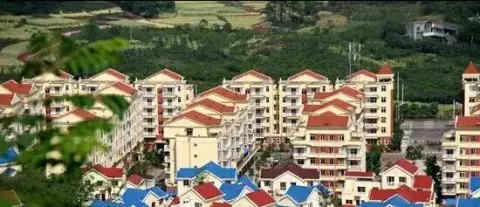
$1 Per Day
One town sleep under the mouantain
One biggest surprise on the high-speed way.
Pool , lake, grass, trees and more interesting things make this little town like one fairy tale.
The colors of these buildings are cute,green、 red、 blue, all the colors make this place looks like are the one line with the sky .
Some kind of farms here, wehn strawberry grown up , you can also pick the up , you get more closer here, more surprises for you.
Good place for pleasure.