Beijing Attractions
The Lama Temple (Yong He Gong)
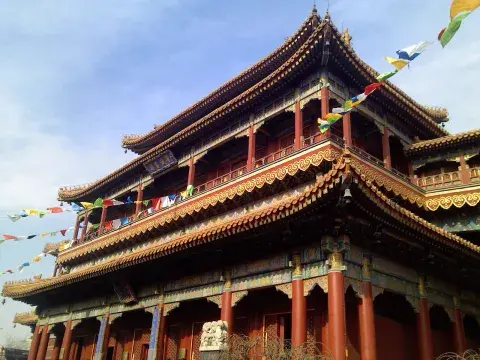
Yonghegong (‘Palace of Eternal Harmony’) is a Tibetan Buddhist temple belonging to the Yellow Hat sect of Lamaism. The temple, which was built in 1694, is one of the most well-known Tibetan Buddhist temples in China (outside of Tibet itself). Before being converted to a temple...
Yonghegong (‘Palace of Eternal Harmony’) is a Tibetan Buddhist temple belonging to the Yellow Hat sect of Lamaism. The temple, which was built in 1694, is one of the most well-known Tibetan Buddhist temples in China (outside of Tibet itself). Before being converted to a temple, it served as a palace for the son of Emperor Kangxi until he ascended the throne. The monastery was closed during the Cultural Revolution and many of the monks were sent away to work as labourers in rural areas. It reopened in the early 80s. Although the living quarters of approximately 70 monks at the monastery are not open to the public, you are likely to catch a glimpse of some of them wandering around the halls or courtyards.
The monastery has five halls, or pavilions, which are connected by five interleading courtyards, each of which houses a statue of the Buddha as well as a treasury of Buddhist art and statues. The smell of incense pervades and a trail of incense smoke lingers, as the courtyards have large incense burners where worshippers can be seen offering incense sticks.
The Pavilion of Ten Thousand Fortunes, the final hall located at the rear of the monastery, houses a 25 metre high upright Buddha statue which is carved from a single piece of Tibetan sandalwood. Despite its size, this giant Buddha in no way feels imposing, and is instead friendly and welcoming. It is truly a spectacular sight.
It is not permitted to take photographs in many of the halls.
Link: The Confucius Temple is just a 5 minute walk from Yonghegong.
Wangfujing Shopping Street
Beijing is not generally a pedestrian friendly city. However, the famous Wangfujing shopping street, just minutes from Tiananmen Square, is certainly the exception to the rule. The area has an eclectic mix of high end fashion boutiques and much more affordable shops. There a...
Beijing is not generally a pedestrian friendly city. However, the famous Wangfujing shopping street, just minutes from Tiananmen Square, is certainly the exception to the rule. The area has an eclectic mix of high end fashion boutiques and much more affordable shops. There are many restaurants in the area, but even if you’re not there to eat or shop, it is still a great place to people watch or just to wander and enjoy the crowds. Whilst all the action seems to be in the main steet, be sure to browse the interesting places tucked away in the side steets and alleys.
On the south end of Wangfujing is the Oriental Plaza. The Plaza is a huge shopping mall that contains a movie theatre, plenty of restaurants, and countless clothing stores, including many designer outlets, which, judging by the prices, are the real deal. Shopping in the Oriental Plaza is a very different experience to trawling the markets of Beijing; if it’s bargains you are looking for you are in the wrong place. This is a glitzy and upmarket mall.
Wangfujing is also a good place to go hunting for books, as the Foreign Languages Bookstore is a very good resource for English speaking travelers or expats in the city.
Also See: Wangfujing Food Street.


Beijing Articles
How to get a new passport if you unluckily lost it in China
Suggestions to help you get a new Passport and Visa
...Suggestions to help you get a new Passport and Visa
1, Here I want to tell you that keep your passport safely, and make a copy of all the useful pages in the passport before you lose it, generally the first page(name page) and Visa page, just incase you lose it in China;
The copies can help you get hotels, actually not all the hotels in China are brave enough to let you in when you only have copies of your passport left.
2, If you lose it in some middle or small size cities, report to the local police and get a formal Passport Losing Paper with the stamp of local Exit and Entry Administration on it, this may take about 3 days or even longer. I once helped one foreigner who lost passport in a small county, it caused a lot trouble. The local police asked for a "foreigner temporary living registration form " from the hotel where you stayed. This is necessary for you to get the new Passport and China Visa.
3. Go to the Ambassador of your country and get a new Visa, one my customer got his USA temporary Passport in 2 hours after talking to the officer in American Embassy, before go to the Embassy you need to download and fill some forms from the Embassy website and book a time to talk to the officer.
4. Get a China bank saving account and save some money in it, the sum of money must be enough to support your stay in China, in Beijing it needs 20000 RMB, but all depends if you plane leaves just several days later, maybe you just save several hundreds of USD.
5. About the China Visa, My suggestion is that directly go to Beijing or Shanghai or other top-big cities in China to get your visa, in other cities the police there have no idea how to deal with this, one my USA friend wasted 5 days(including weekends) but got nothing done, just running around to get all useless papers like monkey. Finally we went to Exit&Entry Administration in Beijing, (it is in Dongcheng district, close to Yonghe Temple/Palace). Generally it takes about 3-5 days. But in emergency you can tell the police and let them hurry up, then you may get it in 2 days.
Also you need to get a "Foreigner Temporary Living Registration Form" from a local hotel, with no real Visa, my American friend and I went to 3 hotels in Beijing finally found one small hotel to let us live in and agreed to give us the "Foreigner Temporary Living Registration Form". Then the police in Beijing can think now they have right to take charge of your case.
So all you need to take with you is:
1. new passport
2. Foreigner Temporary Living Registration Form
3. Losing Passport Provement from the Exit&Entry Administration police.
4. Money Savings provement from a China Bank(suggest Bank of China), in Beijing it may need 20,000 RMB.
5. A copy of your driving license or ID from your country.
Tip: make a copy of your passport and visa pagewhen you have it in hand, the copy can help you get hotel, train ticket.....
What are Chinese airports like?
Travelling in China?
What to expect of airports:
generally, Chinese airports are quite new, but some might not be up to international standards.
...Travelling in China?
What to expect of airports:
generally, Chinese airports are quite new, but some might not be up to international standards.
So you might not always be able to easily navigate around an airport, particularly if there are few signs in English and you can't find an English-speaking helper.
The good news is that most airports seem to have the same layout and design: large halls for check-in, arrivals on one floor, departures usually upstairs.
In the larger airports you can basically queue up by airline, in smaller places there might be one line for the flight you are on.
Just present your passport and give your destination.
Increased security means you have your ticket and passport checked, then go through airport security, which includes a scan, a pat-down, and sometimes a bag check. You can't take liquids on the flight, but if you purchase a drink air-side, you can usually take the bottle with you.

Travel Tips of Great Wall
Hi everyone, I'm a professional tour guide in Beijing. I saw many articles about the Great Wall but I find that most of them exaggerate things to attract or scare tourists....
Hi everyone, I'm a professional tour guide in Beijing. I saw many articles about the Great Wall but I find that most of them exaggerate things to attract or scare tourists. My clients would ask me questions according to those articles and I felt the need the clarify things about the Great Wall. Hope to be of some help to you.
1. How many Great Walls do we have?
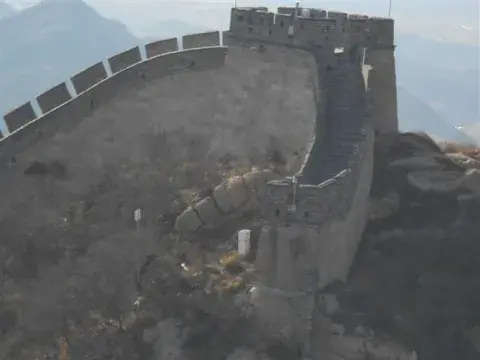
- Most sections of the Great Wall in Beijing area are part of the Ming Great Wall, which is 600 km long. Among which the most famous Great Wall areas are: Badaling Great Wall, Mutianyu Great Wall, Simatai Great Wall, Jinshanling Great Wall and Juyongguan Great Wall. Badaling: You surely will see how many people we have from here. Simatai: The most ruined section I've ever seen. I must admit that I do not find its wildness a feast for the eyes. Someone would call it the original beauty but that's certainly not what the Great Wall used to look like. Jinshanling:The real Great Wall. Beautiful and historic. Juyongguan: Very beautiful shape. Prepare your camera.
2. When to go?
- Different season, different scenery. Just make sure there is no rain or snow. Hike when the wall is dry. By the way, the best travel season in BJ is autumn.
3. Dangerous?
- The stairs of the Great Wall can be rather steep and rocky with loose stones at times. But if you are not wearing high heels and you're not planning to try any closed sections, you'll be just fine. I don't label people by their ages but you should know how long you can cover. Besides, there are cable cars available.
4. What to Wear?
- Dress for hiking and dress for the weather. Choose comfortable footwear with good grip and support for the feet. Wear/bring sun protection in the summer and dress for sub zero temperatures in the winter. Actually, common sportswear will do just fine.
5. What to Bring?
- Umbrellas shouldn’t be used here where the ascents and descents are difficult, and will be inconvenient in strong winds. There is a lot of wind. Bring snacks and water if you want to walk a long portion of the wall. There are also mineral water sold on the Great Wall except that the price is 5 times more.
So far, that'll all I have to add. But if you have any further questions, you can find my information in Synotrip or contact me at [email protected] directly. I'll try to help you as much as possible. Wish you a happy journey!
Top Beijing Tours
$300 Per Day
Shicha Hai
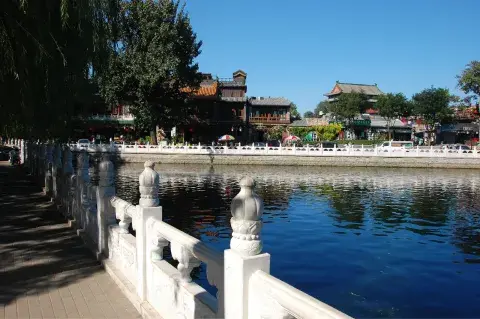
Shichahai is a famous scenic area that includes three lakes (Qian Hai, meaning Front Sea; Hou Hai, meaning Back Sea and Xi Hai, meaning Western Sea), surrounding places of historic interest and scenic beauty, and remnants of old-style Beijing residences, Hutong and Courtyard. It is located in the northwest part of Beijing, and covers a large area of 146.7 hectares (about 363 acres). We can take a walk along the lake and have a cup of hot coffee after some strolling.
...Read moreShichahai is a famous scenic area that includes three lakes (Qian Hai, meaning Front Sea; Hou Hai, meaning Back Sea and Xi Hai, meaning Western Sea), surrounding places of historic interest and scenic beauty, and remnants of old-style Beijing residences, Hutong and Courtyard. It is located in the northwest part of Beijing, and covers a large area of 146.7 hectares (about 363 acres). We can take a walk along the lake and have a cup of hot coffee after some strolling.
The greatest point of interest in Shichahai today is its residences, Hutong and Courtyard. In and around Beijing City, Shichahai is one of the best places to view well-preserved Hutongs and courtyards.
Hope you can enjoy!!
$200 Per Day
Private Beijing Antique Shopping Tour with Lunch
Start your private tour with pickup from your central Beijing hotel, and meet your private guide.
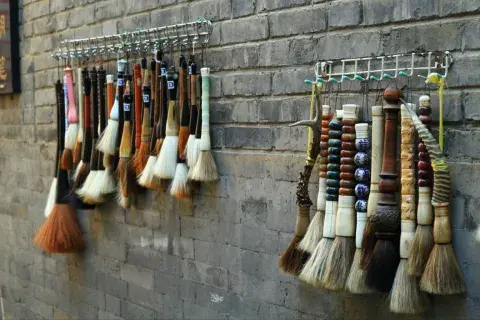
Hop inside your private, climate-controlled vehicle and travel to your first stop: Liulichang Antique Street. Situated in old Beijing, this history-steeped street is lined with stone shop-houses selling antique books, handicrafts, paintings, rubbings, glazed pottery, and other treasures.
Hear about Liulichang’s history, and get advice from your guide as to the best shopping opportunities....Read more
Start your private tour with pickup from your central Beijing hotel, and meet your private guide.
Hop inside your private, climate-controlled vehicle and travel to your first stop: Liulichang Antique Street. Situated in old Beijing, this history-steeped street is lined with stone shop-houses selling antique books, handicrafts, paintings, rubbings, glazed pottery, and other treasures.
Hear about Liulichang’s history, and get advice from your guide as to the best shopping opportunities. Sift through the traditional shops and stands, and explore the side lanes (hutongs), where the shops still bear original Ming and Qing architectural features like ornately carved doors and upswept roofs.
Next, drive to Panjiayuan Market, a so-called ‘weekend market’ that’s open daily. Weave through the throng of stands, perusing the huge array of antiques, curios, ceramics, Tibetan rugs, calligraphy, and other finds.
After shopping here, refuel with lunch at a Chinese restaurant, and continue to Baoguosi Cultural Market, set around an old temple. Scour the courtyards of vendors hawking stamps, books, coins and jade, and get tips on scouting out and clinching the best deals from your guide.
If time allows, squeeze in a visit to Hongqiao Market, a mall known for its pearl traders, and electronics, art, clothes, and accessories shops. Trawl for bargains, and haggle over pearls and other precious gems as perfect keepsakes of your time in Beijing.
After seven hours, your tour concludes with a hotel drop-off.
$50 Per Day
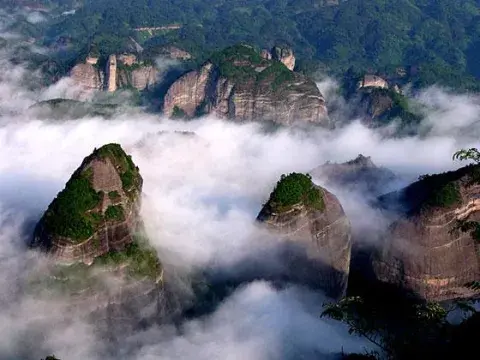
One day tirp to Bajiao Zhai, a noticeable Danxia Landform.
This is a tailor-made trip for nature-lovers and fans of photography. Danxia rock formation in the inland basin is a red rock debris, and later uplift due to the movement of the earth-crust, erosion of rocks by the water and weathering, which was dominant in the hillside to collapse back, kept down the rocks to form the red mountain block. This area was listed in the Natural Heritage of the world in 2009 by UNESCO. Bajiao Zhai Village is a combination of strategic place, steepy mountian, elegant scenery and secluded remote....Read more
This is a tailor-made trip for nature-lovers and fans of photography. Danxia rock formation in the inland basin is a red rock debris, and later uplift due to the movement of the earth-crust, erosion of rocks by the water and weathering, which was dominant in the hillside to collapse back, kept down the rocks to form the red mountain block. This area was listed in the Natural Heritage of the world in 2009 by UNESCO. Bajiao Zhai Village is a combination of strategic place, steepy mountian, elegant scenery and secluded remote. It is reputed as the "Soul of Danxia Landform". Here you can enjoy the sunrise or sunset and the sea-cloud. 1. I'll pick you up at 8:00 am in your hotel, and transfer to Bajiao Zhai Village by our private van. On the way, you can enjoy some terraced fields, bamboo groves and the wooden residences of the natives.(3.5 hours by ride) 2. First, we'll visit the village and have lunch in the village, and then we'll hike the mountains, the scenery including the group of snails looking up the sky, the ancient trail, Eye-stone, Joss stick of dragon's head and the Treasured sword Peak.(4 hours by hike) 3. After appreciating the sunset, after dinner in Ziyuan county, we'll take the bus back to your hotel around 10:00 pm.