Yunnan Province Attractions
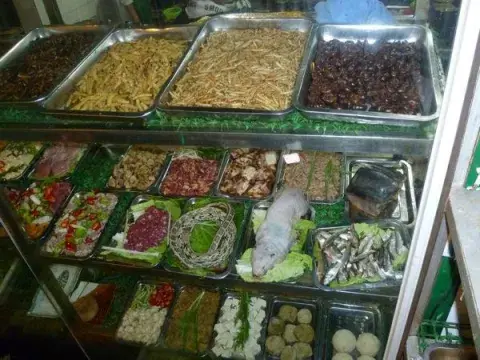
Jiayan Restaurant
Categories: Chinese
Courtyard style upscale Chinese restaurant. Prices ranging from 50-100 yuan per person.
Went there last week for the second time and was again impressed with both the food – we had six dishes that all left nothing to complain about – and the way the...
Categories: Chinese
Courtyard style upscale Chinese restaurant. Prices ranging from 50-100 yuan per person.
Went there last week for the second time and was again impressed with both the food – we had six dishes that all left nothing to complain about – and the way they have kept the place in such a great state. Good to see old style houses to be maintained so well.
One of my new favourite Chinese restaurants in town.
Airuochun
The Yunnan courtyard-style restaurants like Laofangzi, Deyiju, etc are generally up to the task for a solid meal at a somewhat higher-than-average price.
Airuochun is yet another of these options, but perhaps a little ahead of the pack, especially for its tasty pork and pigeon offerings....
The Yunnan courtyard-style restaurants like Laofangzi, Deyiju, etc are generally up to the task for a solid meal at a somewhat higher-than-average price.
Airuochun is yet another of these options, but perhaps a little ahead of the pack, especially for its tasty pork and pigeon offerings.

Yunnan Province Articles
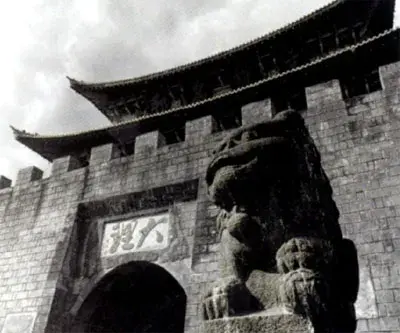
Nanzhao Kingdom and Dali Kingdom
Nanzhao Kingdom:
...Nanzhao Kingdom:
During Tang dynsty and Song dynasty, Yunnan was not part of their territory. However, it was not a land without king. The birth of Nanzhao kingdom should to some extent owe the credit to Tang court. During Tang dynasty, From the Sui to the early Tang Dynasty, there were mang tribes living around the Erhai Lake region, which were existing in parallel. There were six most powerful ones. In the early Tang Dynasty, this region became a strategic area, because it was caught in the middle of Tang power and Tubo power, the relationship between them were highly strained. In order to pin dowm/contain the Tubo power, Tang court decided to foster a dominator over the chaotic area. The tribe iin the south county of Weishan called Mengshe, also called South tribe won the favor of Tang. With the help of Tang court as well as its facorable geological location, Nanzhao defeated the other five tribes and unifed the Lake Erhai region.
The establishment of Nanzhao regime was actually a strategy employed by the Tang Court to draw over Nanzhao kingdom to its side so as to contain Tupo regime. However, being only a tributary was never Nanzhao's intention, what they truly wanted was an independent and powerful kingdom. When Nanzhao kingdom was attempting to expand its territory by eradicating the powerful Cuan family and take over its land, Tang court smelt its ambition. As a result, the central court established a resident office in Yaoan county to control their military movement. Before, conflicts became too intense to be ignored and wars broke out between Tang and Nanzhao.
As a small kingdom, Nanzhao was to weak to counter Tang, so they allied with Tang's rival Tubo power from Tibetan Plateau. Tang court suffered a crushing defeat for twice. Under such circumstance, Tang court found it a wiser solution to draw Nanzhao over back to its side. The rebuilt alliance between Tang court and Nanzhao greatly weakened Tubo's power. After the Tang court and Nanzhao regime buried the hatchet, Tang court offered the chance for Nanzhao people to study for free in Chengdu, which greatly boosted the cultural development in Yunnan. The Nanzhao kingdom was perished due the usurpation by powerful officers.
The Nanzhao Kingdom lasted for 253 years, and was ruled by 13 kings, almost the similar life span to the Tang Dynasty in Chinese history. The capital of Nanzhao Kingdom was in the nowadays Dali Ancient Town.
Dali Kingdom:
After the perish of Nanzhao kingdom, Dali kingdom was not established immediately. Instead, three short-lived regimes appeared one after another. Their life were as short as 36 years. After 36 years of unrest and turmoil, Dali kingdom was eventually established by Duan Siping who ended the brief turmoil.
The Dali kingdom coexisted with Song dynasty and had pretty much similar life span. Unlike the harmonious relationship between Tang court and Nanzhao regime, the Song court was reluctant to accept Dali kingdom as its tributary. Partly because Song court was not as powerful as Tang court and they perceived Dali kingdom as potential threat. Emperor Huizong of Song Dynasty even drew a line over the Dadu 大渡River, saying that the area beyond the line did not belong to my territory. Thus, excluding Dali Kingdom. After years of request, Song dynasty finally accepted Dali kingdom as its vassal state. Even so, their vigilance towards Dali kingdom did not decrease. When Dali kingdom was paying tribute to Song court, they only accepted horses but turned down elephants. Because elephants stand for subordination to Song.
The Dali kingdom lasted for 315 years with 22 successive kings., 9 of them abdicated the throne and became monks in CHongsheng temple. Such phenomenon is absolutely one of its kind, from which we can discern the prevalence of Buddhism back then. It's capital was also in Dali.
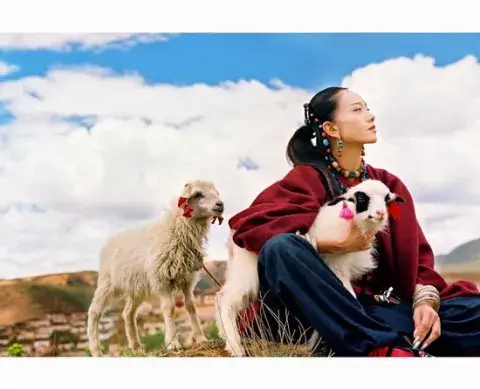
The Peacock Princess-Yang Liping
YANG LIPING
...YANG LIPING
Bai people is never short of famous celebrities. The most remarkable and well-known Bai woman is sure to be Yang Liping. Unlike singers and film stars who make their appearance on TV frequently, Yang only shows up on grand occassions such as The Spring Festival Gala Evening. However, her name is known by all chinese people. If you ask a CHinese people about Yang Liping, their first response is very much likely to be "oh, the peacock princess". This is because Yang was first known by people in her dance Peacock Princess. Since peacock dance is a famous Dai dancing, therefore, most people mistake her as Dai. But she is actually a authentic Bai woman from Dali.
Today's Yang has accomplished both success and fame. However, she was not born with a silver spoon in her mouth. Yang was born in a poor and ordianry peasant family. Her father abandoned them during the culture revolution due to the unbearable pressure. As a result, the heavy burden of raising up her little brother and sister fell on her and her mother. Yang was a sensible child and also a capable helper to her mother. She was adept at rice transplanting, wheat harvesting, poultry feeding as well as firewood cutting. She was competent for all kinds of housework.
Later, her family moved to Xishuangbanna. One day, the chairman of Xishuangbanna Song and Dance Troupe noticed her when she was doing radio exercise on the playground. Since then, she became one of them.
Yang Liping, a celebrated dancer-choreographer of Bai ethnicity, has made it her mission to preserve things that seem out of date and has founded a school to that end. Chen Nan reports in Beijing.
Dancer and choreographer Yang Liping, from the Bai ethnic group, made a fashion statement at a Ferrari auto show in Yunnan province's capital Kunming. Instead of a regular, or designer purse, she was seen carrying a bamboo basket, an accessory favored by Bai women.Once, by chance, she was chosen to be the leading role in a stage show called Peacock Princess. Her excellent performance won great populartion for her and seized the opportunity to join Central Nationalities Song and Dance Ensemble in BJ for her. Her dream of going to BJ was eventually realized. However, the training in BJ was quite different from what expected. As a folk dancer, Yang believed that folk dancers should follow the rhythm of the nature, in other words, their dance movements should be natural and flexible. However, the training she received was more of ballet, which is a fixed pattern of movements. Yang refused to participate in such training because she believe such training would deprive her of the natural instincts in her and made her body frigid. As a result, Yang was isolated by both classmates and teachers. However, she confined herself in her dorm during the day, either sleeping or watching myriads of dancing video types to absord the essence of other dancers, in the nights, she came to the empty dancing classroom to practice.
In the national Dancing Competition, the underdog amazed the entire hall with her dancing Spirit of Peacock. She took on everything including choreography, costume making, music and all the others. She even sold her precious watch in order to pay for the costume. Siince then, she was invited to perform in the Spring Festival Gala Party for several years in a roll.
However, Yang has more in mind. She wanted to put on a show presenting the diversified dancing and singing of ethnic groups in YN. She wanted to pass along the essence of folk dancing. As a local born and bred, Yang knows about YN more than anyone else and decided to search for talented dancers from different ethnic groups in remote villages. Some young men were farming in the field before they were chosen. The result was satisfying, she had chosen 60 dancers and brought to KM. It might be hard to believe but most of them had never been to big city like KM before, let alone formal training.
The creation of the show was not smooth. They came across all kinds of obstables, such as funding shortfall, epidemic SARS which forbide gathering, doubt about the popularity of the show by the goverment and so on. She sold out her house in Dali, turn to friends for funding, and even broke her bottomline of not shooting advertisement. The entire troupe persevered in pracitcing despite the poor living condition.
In 2003, the show eventually made their debut and had won great popularity. It's called Dynamic YN. Every day, thousands of audience rush to YN Art Theater to watch the show. It presents the anthentic and genuine folk dance of various ingenous ethinic groups in YN.
Now, Yang has retired from the performance. As a 54-year-old woman, she remained beautiful and enegertic. People are curious about how she keep herself in such perfect shape. SHe exposed her strict diet, morning:one bottle of salt water, three cups of Puer tea, lunch: two pieces of beef, dinner: two apples at night and one piece of beef.
Now she remained single but she did have a happy marriage with a Taiwan businessman. However, her marriage ended when she made to make the choice between the baby and her career. The doctor told her that she need more fat to sustain the pregnancy, however, this contradicts with her dancing career.
Yang, 54, wore a tight blue top and loose red pants, made from a quilt cover. Her waist-length hair was tied up in a ponytail.
Yang says she never consciously dresses up like a fashionista, whatever the occasion. She is amused when people call her a fashion icon.
"I just love everything from the village where I come from. Some people might say that my preference for rural things, including clothes and living habits, are very tu (out of date). But in my eyes, they are treasures," she says.
The show, Dynamic Yunnan, which has been performed more than 3,000 times around the world, turned Yang into an iconic figure of Yunnan province and an internationally acclaimed dancer-choreographer. Experts say Yang has not only developed a highly personal style, but has played a significant role in popularizing Yunnan's folk dances as well.
Her niece, Cai Qi, is regarded as her successor. The slender girl, who wears her hair long, much like Yang, has been dancing with her mentor since she learned to walk.
Cai Qi, who has danced in Dynamic Yunnan and Mysterious Tibet, will play major roles in Peacock.
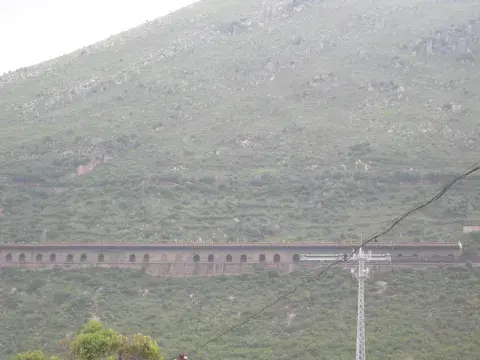
Yunnan-Vietnam Railway
Among the 18 oddities about Yunnan, there is one oddity which goes that "trains run to other countries but not in the country". Well, this is obviously no longer true, but the railway that gave rise to this oddity is still in existence....
Among the 18 oddities about Yunnan, there is one oddity which goes that "trains run to other countries but not in the country". Well, this is obviously no longer true, but the railway that gave rise to this oddity is still in existence. That is the railway we can see now, it's called Yunnan-Vietnam Railway or Sino-Vienamese Railway. On the way to Stone Forest, you can see two railways lying beside the express road, the one relatively narrower is the one we are talking about. Since the part in Vietnam was constructed first with the width of one meter, the part in Yunnan used the same standard in order to connect them perfectly. Therefore, it got the name meter-gage railway, which means it is one meter in width. Speaking of this railway, we have to mention the history behind it.
Historical Background of the Railway
In the early 20th century, France succeeded colonizing Vietnam and switched their target to China. The corrupted and incompetent Qing Court signed an agreement with France that if China consider building railways, France should take charge." As a result, the very first international railway in China, namely, this Sino-Vietnamese Railway was in the charge of France.
Why were French people so obesessed with the construction of the railway?
- To begin with, Yunnan was rich in mineral resources. The railway can make it easier for them loot transport to its colony vietnam. In order to maximize their interest, they even deliberately made detours through the mineral-rich areas.
- Yunnan is the back door of China, which, at that time, the most attractive source of raw materials and market for their commodities.
- The third reason is that Yunnan is close neighbor to rich Sichuan Province.
- The last reason is because of the mild climate here. They were hoping to turn it into a backyard garden for its people.
The Importance of the Sino-Vietnam Railway
Despite the fact that this railway was constructed against our will, we have to admit that we did benefit from it in certain way.
Since Yunnan is a mountainous province, transportation was really inconvenient, which was accomplished mostly by human and animals. Thanks to this railway, Yunnan was greatly opened and even became the window to the southwest.
In 1910, the very first hydropower station Shi Long Ba Hydropower station was built in Kunming, the engine of which was transported here by this railway.
The national protection movement also benefited from it.
During the anti-Japanese war, the railway brought a large number of intellectuals to Yunnan. With the establishment of the Southwest Associated Univeristy, Yunnan was turned into one of the most influencial culture centers in China.
Nowadays, oriental planes /platan everywhere was introduced by French people at that time.
Someone conducted a comparison between the pace of life of Kunming people to that of the Shanghai people, and they found that Kunming people was generally one hour and a half slower.
Top Yunnan Province Tours
$200 Per Day
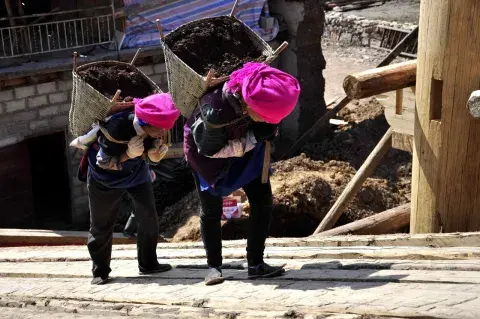
Tibetan village visit- see the real life of Tibetan
location: Napa lake of Shangri-la city
Tibetan village visit.
To see the real life of Tibetan.
They doing the farm work, building new house, and feed the yak.
they are very kinds, some one ask us come in they house have look.
The master made the yak butter tea for us.
every Tibetan buddhist faith.
Every family has his oratory
$300 Per Day
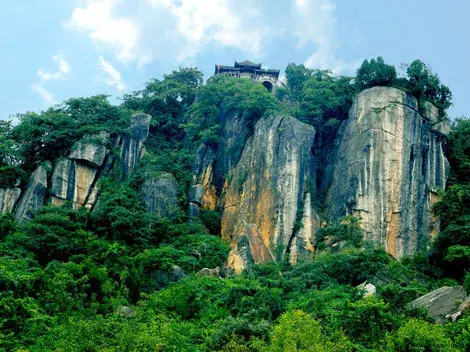
12-Day Famous Daoism Mountain Adventure Tour in China
In this adventure tour, you will visit the China’s four Daoism Mountain!
In this tour, you will visit Mt.Luofou in Guangdong, Mt.Longhu in Jiangxi, Mt.Qincheng in Sichuan, and Mt.Wudang in Hubei, the four mountains are regarded as the Four Famous Daoism Mountains of China.
Including: Guangzhou, Chengdu, Wuhan, Nanchang & Shanghai
Day 1 Guangzhou
Arrive in Guangzhou, the metropolis in south China and transfer to the hotel.
Day 2 Guangzhou...Read more
In this adventure tour, you will visit the China’s four Daoism Mountain!
In this tour, you will visit Mt.Luofou in Guangdong, Mt.Longhu in Jiangxi, Mt.Qincheng in Sichuan, and Mt.Wudang in Hubei, the four mountains are regarded as the Four Famous Daoism Mountains of China.
Including: Guangzhou, Chengdu, Wuhan, Nanchang & Shanghai
Day 1 Guangzhou
Arrive in Guangzhou, the metropolis in south China and transfer to the hotel.
Day 2 Guangzhou
Drive half day to Mount.Luofu, afternoon visit the mountain, including the Chong Xu Guan and the Zhu Ming Cave.
- Mount Luofu: Luofu Mountain, one of the 10 most famous mountains of China, is situated to the northwest of Boluo County, Guangdong Province. The mountain is actually part of a range of 432 peaks, and with over 900 waterfalls, 18 caves, and 72 cliffs. To Daoists, the mountain is known as the Grotto Heaven of Vermillion Brightness and Shining Perfection. Luofu Shan (shan means mountain) is best known as the place where the renowned Daoist Ge Hong (281-341 A.D.) once refined elixirs.
Day 3 Guangzhou
Morning continue visit the mountain, including the Huang Long Guan, Jiu Tian Guan, Shu Miu Guan. In the afternoon, drive back to Guangzhou.
Day 4 Chengdu
Take a morning flight from Guangzhou to Chengdu, meet at Chengdu airport, and transfer to visit the Qing Yang Gong Daoism Palace, and the Giant Panda Breeding Center.
- Qingyang Daoism Palace:Qingyang Temple is one of the most famous Taoist temples in China. It is conveniently located in the northwest part of Chengdu, in the Sichuan Province.The temple was originally built in the Tang Dynasty (618-907), a period when Taoism was flourishing. Most of the parts of the temple that remain in existence are restorations from the Qing Dynasty (1644-1911), including Sanqing Hall, Doulao Hall, Hunyuan Palace, the Eight Trigrams Pavilion, and Wuji Palace.
Day 5 Chengdu
Drive to visit Mt.Qincheng, including the Jian Fu Gong, Chang Dao Guan, Tian Si Cave, Shang Qin Gong, etc. In the late afternoon, drive back to Chengdu.
- Mt.Qincheng: Located east to Chengdu and Dujiangyan with a distance of 68 kilometers and 10-odd kilometers respectively, Mount Qingcheng dominates the Chengdu plain. It is one of the most famous Taoist holy lands in China and listed together with the neighboring Dujiangyan as the World Heritage site. Mount Qingcheng abounds with historic sites and cultural relics as well as natural beauties.
Day 6 Wuhan
Take a morning flight from Chengdu to Wuhan, meet at airport, and transfer to visit the Chang Chun Guan, after dinner, board a night train on soft sleeper from Wuhan to Shi Yian.
- Changchun Taoist Temple:Located south of Shuangfeng Mountain, at Da Dong Men, Wuchang District, Wuhan City, Changchun Taoist Temple is the largest and most well-preserved Taoist Temple in Wuhan. Renowned as a blessed place in the south of Yangtze River for generations, it was listed as a key national Taoist temple by the State Council in 1983.
Day 7 Shiyan
Your train will arrive in Shi Yian in early morning, meet at train station, and drive to visit Mt.Wudang, including Zi Xiao Gong, Tai He Gong, and the Golden Temple.
- Mt.Wudang:The Wudang Mountains are a small mountain range in the Hubei province of China, just to the south of the manufacturing city of Shiyan.In years past, the mountains of Wudang were known for the many Taoist monasteries to be found there, monasteries which became known as an academic centre for the research, teaching and practise of meditation, Chinese martial arts, traditional Chinese medicine, Taoist agriculture practises and related arts.
Day 8 Wuhan
Take a train on soft sleeper from Shi Yian back to Wuhan, meet at Wuhan train station.
Day 9 Yingtang
Take a morning flight from Wuhan to Nanchang, meet at Nanchang airport, and transfer to Ying Tang. Stay at the foot of Mt.Longhu.
- Mt.Longhu:Originally called "Yunjin Mountain", Longhushan Mountain is located in Yingtan City of Jiangxi Province. It is the birthplace of Chinese Taoism. The well-established Taoist culture, green rivers and red mountains of unique beauty and cliff tombs with unraveled mysteries are the "three marvelous features" of Longhushan Mountain.
Day 10 Mt.Longhu
Visit Mt.Longhu, including the Tian Si Fu, Shang Qin Gong, afternoon take a bamboo raft down the Luxi river, enjoy the pretty scenery of the Xian Shui Yian.
Day 11 Nanchang
Drive back to Nanchang, then take an afternoon flight from Nanchang to Beijing, meet at Beijing airport.
Day 12 Beijing
Morning visit Bai Yun Guan in Beijing, after lunch, transfer to airport for your departure flight.
- Baiyun Guan:Beijing Baiyun Guan, meaning the White Cloud Taoist Temple, this is one of the largest and oldest Taoist temples in China, and is home to the Taoist Association of China. Baiyun Guan holds an important position for numerous Taoists.
$1100 Per Day
The Ethnic Discovery of Yunnan
Duration: 8 days/ 7 nights
Destinations: Kunming, Dali, Lijiang, Shangri-La
Highlights: There are so many extraordinary places waiting for you to discover in Yunnan. In 8 days, you can feast your eyes on the wonderful natural beauty as well as the historic and cultural heritages in Kunming, Dali, Lijiang and Shangri-La. The Stone Forest, Three Pagodas, Lijiang Old Town, Tiger Leaping Gorge, Ganden Songzanlin Monastery and Nixi Village of Tibetan will highlight your trip.
• Day 1 Kunming
Arrival in Kunming, meet your guide at airport and transfer to hotel.
The capital of Yunnan Province, Kunming is one of China’s noted historical and cultural cities. The city is located in central Yunnan at the elevation of 1894 meters above sea level and is praised as the city of eternal spring.
Rest of the day at leisure
Accommodation:
Kunming Grand Park Hotel
• Day 2 Kunming
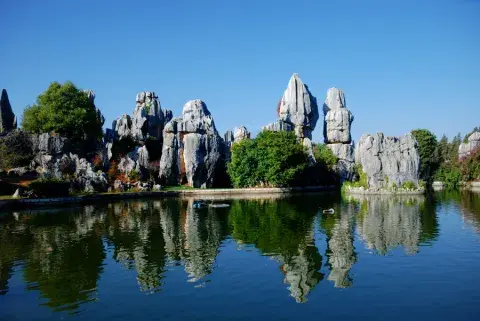
Drive along the new express way to the Stone Forest. Stone Forest is 75 kilometers from Kunming and is accessible by a bus ride of 70 minutes. The Stone forest belongs to the typical Karst geomorphology, it consists of innumerable bizarre-shaped ancient limestone cliffs and peaks created by wind and water erosion some 200 million years ago, and this area is praised as the “First Wonder Under Heaven”. It’s inscribed as Nature Heritage by UNESCO.
Drive back to Kunming by the old road, visit a village en route.
Visit the Green Lake Park in the afternoon. Attractions in the neighborhood of Green Lake Park include the former Yunnan Army Academy, believed to be the biggest quadrangle building of China, and people in Kunming enjoying their leisure life in the afternoon.
• Day 3 Kunming - Dali (by public express bus)
Overland drive with seat in public bus from Kunming to Dali, 360 kilometers, or about 4.5 hours.
Standing against the Cangshan Mountains in the west and adjoining the Erhai Lake in the east, embraced by undulating hills around, Dali was the capital of Nanzhao and Dali Kingdom as early as 1,300 years ago. It is home to Bai minority.
Upon arrival in Dali, proceed to visit the Three Pagodas, followed by a guided stroll in Dali old town.
Standing in a way of a tripod on the outskirts of old town, the Three Pagodas were constructed in about 850 and 1050 following the model of the Small Wild Goose Pagoda in Xi’an. For centuries, they are considered landmark of the region.
The Dali Old Town of weathered gray granite stands at 2,100 meters on a long, narrow rice plain between the Cangshan Mountains and the Erhai Lake, a natural configuration that seems specially designed for a good, bountiful life. Format of the old town is like a chessboard with four gates guarding in the directions of east, south, west and north, a design that was adopted by most towns in ancient China.
Accommodation:
Dali Landscape Hotel
• Day 4 Dali - Lijiang (by automobile)
In the morning, overland drive of 180 kilometers, or 3.5 hours, along the new road on private vehicles to Lijiang.
Visit the Bai minority village Xizhou on the way.
23 kilometers north of Dali, Xizhou village has a more mixed population and cosmopolitan background. It grew and flourished in the Ming Dynasty (1368-1644) along with the fortunes of Dali’s renowned tea merchants that traded to Tibet. Family Yan’s courtyard is a good example of traditional Bai houses. And each morning, villagers in Bai dresses gather in a small market to buy and sell their produce and daily wares.
Then continue driving to Shaping. Shaping Market is a local market on every Monday. The local people come to the market from surrounding villages to exchange their daily wares, farming products, traditional clothes, or simply foods and vegetables.
Upon arrival in Lijiang, check in at hotel. Afternoon will be free for your first visit of the old town.
A gathering place of rugged mountain people with the Naxi forming the majority, Lijiang is a small mountain town of stone and tile, laced with swift canals, which was enlisted as an UNESCO World Cultural Heritage in 1999.
Old town of Lijiang is a big area with its center, or Si Fang Jie (Square Street) in the form of an official ink stone, hence its name Dayan (ink stone) Town. It enjoys a long history of over 800 years and unlike most of the old towns in China, there is no city walls due to a superstitious belief of the local ruler whose family name is Mu (tree), when encircled by walls, would be Kun (besieged). Wooden structures, mountains, small rivers and lanes integrate harmoniously in this mountain town.
Accommodation:
Hexi Hotel Lijiang (or similar)
• Day 5 Lijiang
In the morning visit the Black Dragon Pond with Dongba Museum. The Pond provides you opportunity of taking great pictures of the crystal clear pond with backdrop of snow mountains in a distance.
Then, drive out to the Naxi minority villages at the foot of Jade Dragon Snow Mountains.
Visit the Yuhu Village, a simple village of Naxi minority with the Former Residence of Dr. Joseph Rock. Dr. Rock, an Austro-American botanist and explorer who lived here off and on from 1922-1949, is best remembered for the introduction of innumerable plant species to the West and his rigorous works on Naxi ethnology.
Transfer back to your hotel after lunch. Rest of the day for your own discorvery in the Old Town.
Lunch at local Chinese restaurant, dinner at leisure.
• Day 6 Lijiang - Shangri-La (by automobile)
We drive to Shangri-La with stops and visits to the First Bend of the Yangzi River and the Tiger Leaping Gorge on the way.
The village of Stone Drum stands at the First Bend of the Yangzi River, some 70 kilometers west of Lijiang. Approaching to Stone Drum offers a dramatic view of the Yangzi's near-180-degree turn, where the wide, swift waters perform a miraculous about-face. For nearly 20 kilometers the river, first flowing south, then north, runs parallel to itself. Locals say if it were not for their village standing guard at the bend, China would lose the water of the Yangzi to Southeast Asia, like that of the adjacent Mekong and Salween Rivers.
The Tiger Leaping Gorge, or Hutiaoxia in Chinese, is the Yangzi's best-known gorge after the Three Gorges in Sichuan and Hubei. Wedged tightly between titanic cliffs, the river is so narrow here, as legend tells us, that a hunted tiger made his escape to the other side in a single bound. Here, the Jade Dragon Snow Mountains and the Haba Snow Mountains lean close to each other and a large volume of torrent moving between them cutting deeper and deeper into the bottom of the gorge. In some places there is a drop of 3,000 meters to the water.
Arrive Shangri-La in the late afternoon, check in at hotel.
Shangri-La lies in a landscape of rolling hills, snow-capped peaks, virgin forests of spruce, pine and meadow dotted with wild flowers and tranquil lakes. The old town, still entirely in local Tibetan style, is to the south of Shangri-La.
Accommodation:
Shangri-La Moonlight City Hotel (or similar)
• Day 7 Shangri-La
Visit Ganden Songzanlin Monastery in the morning.The Ganden Songzanlin Monastery was founded in the 17th century during the reign of the Great Fifth Dalai Lama only 2 kilometers to the north of county proper. Being one of the thirteen Tibetan monasteries in the Kangba Region, where Tibet, Yunnan and Sichuan join, Ganden Songzanglin Monastery is nicknamed by local the Lesser Potala Palace. Holding about 700 monks and one living Buddha, the monastery is a must-go in the region.
Then make an excursion to Tukawa Village to visit a Tibetan family where the Tibetan builds their houses by wood with big sitting room and Buddhism hall.
Late afternoon at leisure for your own visit of the old town and local market in Shangri-La.
• Day 8 Shangri-La
Free at leisure and departure transfer to airport for next flight.
Service ends.
Tour excludes:
-- Arrival flight to Kunming and airport tax;
-- Departure flight from Shangri-La and airport tax;
-- All dinners, other meals, drinks and personal expenses;
-- Tips to the guide and driver;
-- Any program other than mentioned in our program.