Yunnan Province Attractions

Yunnan Province Articles
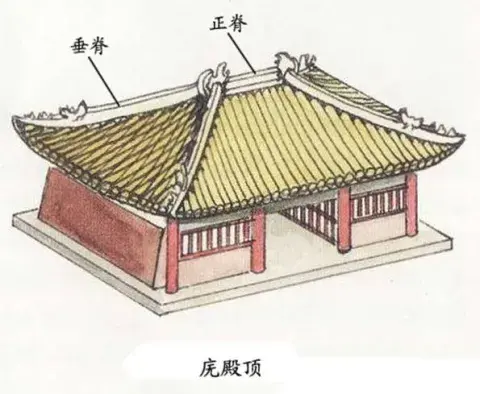
Types of Roofs on traditional Chinese Architecture
Types of Roofs on traditional Chinese Architecture
...
Types of Roofs on traditional Chinese Architecture
When visiting Chinese traditional architecture, do you feel perplexed by the "almost-the-same" architecture? You have no idea what the difference is between all these buildings. Here I will introduce you several types of roofs which is the most direct part to know about the social status of its owner.
1. Hip/Hipped Roof (Wudian Roof)
See the 1st picture below
Hipped Roof is of the highest level in traditional Chinese architecture. Only the royal family and Confucius had the privilege to use such style of roof. Such roof has five ridges and four sides, all in the form of gentle slope.
2. Eastern Asia Hip and Gable Roof (Xieshan Roof)
See the 2nd picture below
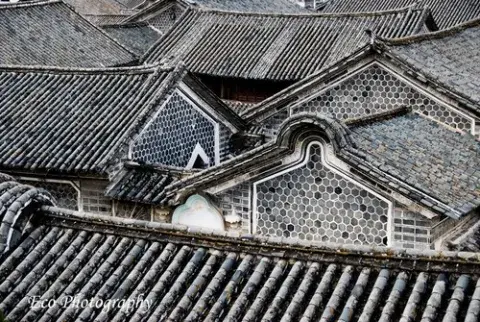
The roof on the building in front of us is called Eastern Asia Hip and Gable Roof. Let's count how many hips it has. Okay, the horizontal one on the top, called main ridge; connecting the main ridge, there are four other ones, called vertical ridges and after a stop, there are four more, called diagonal ridge. To sum up, nine ridges in total. Therefore, such roof is also called "Nine-Ridge roof". In Chinese, the roof has a interesting name, literally meaning a mountain taking a break.
Such kind of roof is only next to hipped roof in terms of social position. Now let's look at the side of the roof. Does it look like a mountain? Yes, therefore, this side is called pediment/gable.
3.Suspended Roof (Xuanshan Roof)
See the 3rd picture below
The roof we can see now is called suspended roof. It's hard to tell where is it suspended from. Well, to understand the name, it requires a little bit imagination. Look at the side of the roof, it formed a triangle. Does it remind you of a small mountain? Yes. And the roof on top of it does not stop at the edge,instead, it stretches out and looks like it is suspended on the mountain.Therefore, it is called "suspended roof".
Speaking of the social ranking, such roof is not of high level. It is the most common type and could be used by ordinary people or used as side hall in palace and temple.
4."Hard mountain Roof" or "Ying Shan Roof".
See the 4th picture below
Since we have covered the "suspended roof", let's talk about it's sister "Hard mountain Roof" or "Ying Shan Roof". The major difference between the two sisters lies in whether the roof goes beyond the pediment. If it does, then it is the suspended roof, if it doesn't, then it is the "hard mountain" roof. Sometimes, the pediment can even goes beyond the roof. Such roof style is called“fire-sealing gable". And you can tell from the name that such style is helpful for preventing the fire from going wild. In fact, not only the "fire-sealing gable" but all "hard-mountain roofs" are helpful for limiting the fire. Why is it? Because unlike the other styles whose wooden structure are partly exposed, such style constructed the ends of the purlin into the pediment. Looking from outside, it reminded the ancient Chinese people of solid and hard mountain, thus came the name.
In contrast, the suspended roof is helpful for preventing the rain from wetting the room. Since the south part of China is raining, therefore, it is widely used in the south, while the hard-mountain roof is commonly used in the north.
5.Pavillion Roof
See the 5th picture below
Pavillion Roof is commonly used on pavilions, pagodas and so on. It looks like a big cone.
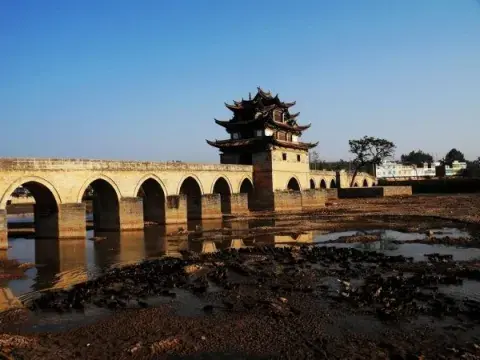
Shuanglong(Double Dragon) Bridge
Shuanglong (Double Dragon) Bridge
...Shuanglong (Double Dragon) Bridge
Shuanglong(Double Dragon) Bridge is 5 km far from Jianshui city,was first built in Qing dynasty,built onLujiang river and Tachonghe River,because two rivers like two dragons,so call the Double Dragon Bridge.it is 148 metres long,3-5metres wide,it is one of biggest old bridge in China.
The First Bend Of Yangsze River
The First Bend Of Yangsze River
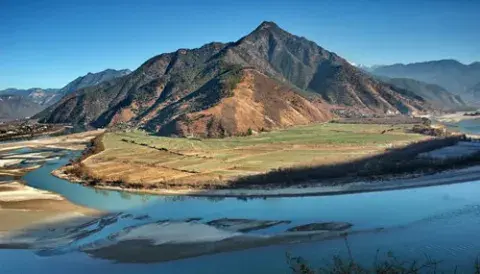
The First Bend Of yangsze River is located on the north side of the highway leading from Dali to Lijiang ,about 70KM far from Lijiang city.
...The First Bend Of Yangsze River
The First Bend Of yangsze River is located on the north side of the highway leading from Dali to Lijiang ,about 70KM far from Lijiang city.
According to historical accounts,The jinshajiang River in olden times flowed southward along the Hengduan Mountain ranges and was forced to the turn to north because of the Alpine movement which caused changes in the earth's physiognomy,When the river reaches Shigu township,it makes an abrupt tunr and flows further northward,forming the marvelous view reputed as The First Bend of Yangsze River.
On the hill as the river bend stands the small Shigu(stone drum)Township.it is so called because of existence of a drum-like stone tablet.It is1.5m in diametre,70mm.in thickness,being the memorial tablet making the victory of teritorrial expansion of Lijiang's local ruler Baichun,surnamed Mu,in the 27th to 40th year of the Jiaqing era of the Ming Dynasty(1548-1561).It is one of the earliest stone tablets hitherto found at Lijiang.
The river is broadened at the bend and flows slowly.The famous historical event,such as"Zhuge Liang"s crossing the Lushui River in the Fifth Month",Kublai Khan's "crossing the River on Leather rafts" all chose this place as a ferry>In May 1936,the Red Army Leaders Helong,Ren Bishi and Guan Xianying led the second Route red Army to march north ,crossing the river also at this plase.At present,a slendid memorial tablet marking the victorious crossing is erected here.
Top Yunnan Province Tours

$300 Per Day
13 Days, Yunnan: Trekking around Mt. Kawagebo
Daocheng is located in southwest corner of Sichuan province, it is well-known for the 3 holy peaks named by the 5th Dalai Lama, Shiannairi Peak(6032 m high), Xianuoduoji Peak(5898 m high), Yangmaiyong Peak(5898 m high). Every year, there are many people trek around the 3 holy peaks for increasing their merits and virtues. Lugu Lake is located in northwest part of Yunnan province, it covers 58 square kms, the water is very clear. The unique matriarchal Mosuo people live by the lake, which earned this area another name: the Mysterious Queendom....Read more
Daocheng is located in southwest corner of Sichuan province, it is well-known for the 3 holy peaks named by the 5th Dalai Lama, Shiannairi Peak(6032 m high), Xianuoduoji Peak(5898 m high), Yangmaiyong Peak(5898 m high). Every year, there are many people trek around the 3 holy peaks for increasing their merits and virtues. Lugu Lake is located in northwest part of Yunnan province, it covers 58 square kms, the water is very clear. The unique matriarchal Mosuo people live by the lake, which earned this area another name: the Mysterious Queendom. Trekking from Daocheng to Lugu Lake is surely one of the best trekking route in China.
ITINERARY
D1
Chengdu/Kangding
We will meet you at the airport and begin our journey to Kangding directly. Kangding, a former outpost on the trade route to Tibet, is a fairly large city tucked within a river valley. The sidewalks of Kangding are crowded with Hui, Chinese Muslims, and Tibetans who have come down from the highlands to sell wild mushrooms, vegetables, yak skins and various paraphernalia. Today's drive will take approximately 6 hours (360km).
D2
Kangding/ Litang
We'll have an early start today so we can have more time to explore this picturesque remote Tibetan town. At an altitude of just over 4000m, this is one of the highest towns in the world (Lhasa is 3700m). Situated high on a grassy plateau, Litang has the feel of a rough and tumble 'Wild West' town. Khampas - dressed in yak skin coats, bedecked in colorful necklaces and hair ornaments, long daggers hanging from their belts - from the surrounding areas amble into town to stock up on food and supplies, play pool on the streets and hang out in the local teahouses. This small town is great for people watching and just strolling around. We will also visit the famous Chang-Qing-Chun-Ke'er-Si monastery and pay homage to the living Buddha with a personal interview. The monastery here is now home to 1400 Yellow Hat sect monks. Once a hotbed of Tibetan dissent, this monastery was destroyed in the 1950s but has since been completely rebuilt. Today's journey from Kangding to Litang will take us approximately 5 hours (306km).
D3
Litang/Daocheng/Yading
Today we will reach the highlight of this journey - Yading nature reserve, home of three sacred Tibetan mountains - Chenresig (Avalokitesvara, 6032m), Jambeyang (Manjusri, 5958m), and Chanadorje (Vajrapani, 5958m). Tibetan Buddhists believe that making a kora (pilgrimage) around these mountains brings great merit, and that the three mountains represent compassion, wisdom and energy - attributes one must cultivate on the path to enlightenment. The scenery here easily rivals that of national parks of the west such as Yellowstone and Yosemite in terms of spectacular, pristine mountain scenery. The drive from Litang to Daocheng will take approximately 4 hours (180km), and the trip from Daocheng to Yading (60km) will take approximately 3 hours as much of the road to the park is dirt track. We will spend the night in tent hotel.
D4
Yading/Kars Yak Ranch
Start your trekking tour with horses, first, trek 1 hour to Chongguo Monastery(3800m) which is in fact a ruin, then trek up to visit the Pearl Lake, then continue trek to the Luorong Yak Ranch(4200m), then trek along the Milk Lake shore up to a mountain pass(4681m), then trek down to the Kars Yak Ranch. Camping.
D5
Kars village
Trek from Kars Yak Ranch down to the Kars Hell Valley, then trek through the valley, on the way, you will see several waterfalls, (the valley is named Hell, but in fact it is as beautiful as Paradise), at the end of the valley, you will cross a narrow wood bridge, walk in the Kars Village. Stay in a local villager house or camping.
D6
Kars Village to Seku Village
Take a tractor for 39 km from Kars Village to Dongyi Village via Geka Village, then change to a minibus, drive another 18 km from Dongyi Village to Eryatong Village via Wangzi Village. Here is the end of the dust road, you have to start your trekking tour again. You will trek 6 km from Eryatong Village to Emei Village, on the way, you will see the U-shape Bend of the Dongyi River, you will also see some ruined castles on the way. (these castles are related with the war between the Naxi people in Lijiang and the Tibetan people living in this area in Ming Dynasty). Then continue trek from Emei Village to Seku Village(3500m, most villagers are Mongolian people). Stay in a local villager house or camping.
D7
Seku Village/Kawa Village
Trek from Seku Village to Eryada Village, then continue trek to Keku Village (most villagers are Pumi people), then continue trek to Kawa Village(3500m, most villagers are Naxi people and Mongolian people), on the way, you will see many cactus as big as trees, you will also see a 100m-high waterfall. Stay in a local villager house or camping.
D8 Kawa Village/Hadi Village
Trek along the Dongyi River and the Tongtian River from Kawa Village to Yiji Village, on the way, you will pass the Hadi Village (most villagers are Naxi people). Stay in a local villager house or camping.
D9 Yongning Hot Spring Village
Trek up a mountain pass (the Yiejiliangzi, about 4000m), then trek down to Yongning Hot Spring Village. Enjoy a hot spring bath. Stay in a local guesthouse.
D10 Yongning Town/Lugu Lake
Trek to Yongning town, here is the end of your trekking tour. Then drive 1 hour to Lugu Lake, take a small wood boat cruise on the lake, visit the Mosuo villages. Stay in the 2 star Daba Hotel by the lake.
D11 Lugu/Lijiang
Drive 6 hours from Lugu Lake to Lijiang, check in a 4 star hotel and rest.
D12 Lijiang
Visit Lijiang Old Town which is a World Cultural Heritage site, including the Square Market, the Mu Family Palace which is like a little Forbidden City, and the Black Dragon Pond where is the ideal place to view the snow mountain. Stay in the 4 star hotel.
D13 Lijiang/Kunming
Take a morning flight from Lijiang back to Kunming, then connect your departure flight back home.
$300 Per Day
13days-kunming-dali-street-meili-snow-mountain-then-back-lijiang
Day 1 - pick up from airport in Kunming - overnight Kunming
Day 2 - Dongchuan Red Lands - overnight Dongchuan
Day 3 - Dongchuan back to Kunming - overnight Kunming
Day 4 - Kunming to Dali - overnight Dali
Day 5 - Dali - overnight Dali
Day 6 - Dali to Lijang - overnight Lijang
Day 7- Lijang to Tiger Leaping Gorge - overnight Tea Horse GH, sister overnight middle gorge
Day 8 - middle gorge - overnight middle gorge
Day 9- Middle gorge to Shangrila -overnight Shangrila...Read more
Day 1 - pick up from airport in Kunming - overnight Kunming
Day 2 - Dongchuan Red Lands - overnight Dongchuan
Day 3 - Dongchuan back to Kunming - overnight Kunming
Day 4 - Kunming to Dali - overnight Dali
Day 5 - Dali - overnight Dali
Day 6 - Dali to Lijang - overnight Lijang
Day 7- Lijang to Tiger Leaping Gorge - overnight Tea Horse GH, sister overnight middle gorge
Day 8 - middle gorge - overnight middle gorge
Day 9- Middle gorge to Shangrila -overnight Shangrila
Day 10 - Shangrila to Feilaishi - overnight Feilaishi
Day 11 - Drive to Mingyong - overnight Feilaishi
Day 12 - Feilaishi to Shangrila - overnight Shangrila
Day 13 - Flight back to Kunming.
$300 Per Day
12 Days Shangri-la Featured Ethnic Culture Tour
Day 01 Arrive in Kunming
Arrive in Kunming. Be met at the airport then transferred to your hotel. Free at leisure for the rest of the day.
Day 02 Kunming
Sightseeing: West Hill and Dragon Gate / Grand View Pavilion
...Read moreDay 01 Arrive in Kunming
Arrive in Kunming. Be met at the airport then transferred to your hotel. Free at leisure for the rest of the day.
Day 02 Kunming
Sightseeing: West Hill and Dragon Gate / Grand View Pavilion
Depart from your hotel in the morning to visit the West Hill and Dragon Gate, which is totally cut on a natural precipice, with an elevation of 2,500 meters, 8 kilometers west of Kunming city. The Dragon Gate is the highest temple on the West Hill. It is famous for its spectacular view. Climbing up the winding old stone stairs leading to the natural cliff-top platform, passing through an archway on which is inscribed "Longmen" (Dragon s Gate), many inscriptions and stiles are found here and there. You will have a birds-eye-view of Kunming city and the Dianchi Lake.
After having lunch at a nice local restaurant, we will visit the Grand View Tower, which located 7 kilometers west of Kunming, at the lakeshore of Dianchi Lake. The Grand View Pavilion was built in 1682, by a Buddhist monk named Qianyin. But it had been in disarray, destroyed and restored several times because of the dynastic changes and the civil wars. Decorated with flying eaves and splendid paintings, the present-day pavilion is a square, three-storied pavilion established in 1883. It is famous for the longest antithetical couplet in China, this couplet of 180 characters is one of the most valued cultural treasures in Yunnan Province. It provides a spectacular view across sparkling Dtanchi Lake to the distant Western Hills.
Day 03 Kunming Dali
Sightseeing: Three Pagodas / Butterfly Spring / Xizhou Village / Ancient Dali town
Depart from your hotel after breakfast. Take the morning flight to Dali. Then visit the Three Pagodas. The Three Pagodas consist of one big pagoda and two small ones. They arise on the Mt. Cangshan slope overlooking the Erhai Lake, known as Chongsheng San Ta in Chinese, meaning the Three Pagodas of Saintly Worship. These outstanding landmarks of the region were once part of the greatest temple complex on the Dali plain. Pagodas are among the most ubiquitous structures throughout the Buddhist world. They are representation of the ancient architectural and cultural arts of the Bai Ethnic Group.
Then visit the Butterfly Spring, which situated at the foot of Yunlong Peak of the Cangshan Mountain, 27 km south of the Dali Old Town. Butterfly Spring is surrounded by ancient camphor trees. In spring when the trees put forth fragrant flowers, thousands of different types of butterflies flutter among the branches and over the spring water forming a dazzling "Kingdom of Butterflies". The phenomenon dates back to the Ming Dynasty (1368-1644 A.D).
After having lunch, visit the Xizhou Village. Xizhou Village locates 18 kilometers north of Dali, faces Erhai on the east.It grew and flourished in the Ming Dynasty (1368-1644) along with the fortunes of Dali renowned tea merchants that traded to Tibet. It is not only a historically famous city but also a typical commercial center of Bai Ethnic Nationality. It is now a "must" for the travelers. You can enjoy lovely ethical clothes, fairylike programs, decorative architectures, gifted garden parties and wonderful handicrafts there.
Finally, visit Ancient Dali town, which Located at the foot of the Cangshan Mountain and the west side of the Erhai Lake. Ancient Dali town was set up in 1382 A.D during the Ming Dynasty as the capital of the Dali kingdom. At present, only the south and north gate towers remain standing. There are well-preserved traditional houses of the Bai Ethnic Group people. Walking in the city, you will enjoy many historical relics, ancient buildings and rich minority customs, such as the "Foreigners Street", the ancient Yuxi School, tea houses, antique shops, Chinese and Western restaurants.
Day 04 Dali-Lijiang via van
Sightseeing: Lijiang ancient town / Black Dragon Pool
Be met at your hotel and transferred to Lijiang. Arrive in Lijiang, visit Lijiang ancient town. With a history of more than 800 years, covering an area of 3.8 square kilometers, Lijiang ancient town, also named Dayan (Big Ink Slab) Town, is a well-preserved old city. As a result of the combination of the multinational brilliant culture and the progress of Naxi ethnic minority, the buildings in the town incorporate the best parts of the architectural traits of Han, Bai, and Tibet into a unique Naxi style. In 1997, this old town was put on the list of the world cultural heritages.
After lunch at a local restaurant, visit Black Dragon Pool. The pool is listed in the Collections of Famous Pools of China because of its beauty.
Day 05 Lijiang
Sightseeing: Yak Meadow / Yufeng Temple / Baisha Frescos
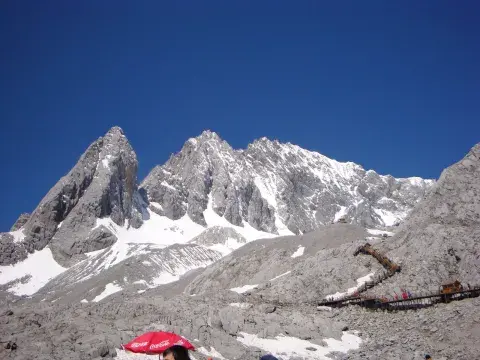
Today will be your full day tour in Lijiang. Depart from your hotel after breakfast. Visit Yak Plateau (Maoniuping). With an area of 16.6 square kilometers, the Yak Plateau is located at the middle of Jade Dragon Snow Mountains. The beautiful natural scenery there is an important part of the mountain. Looking around the snow mountain, you would feel your soul is distilled with those white clouds high above the blue sky. You will not only see many yaks on the plateau, but also horses and donkeys.
Then visit Yufeng Temple, which was built in the Qing Dynasty and famous for camellias in the temple.
After that, visit Baisha Frescoes. There are some invaluable frescoes stored and preserved and displayed in some venerable temples located in Lijiang old Town. Among of that, the Baisha Frescoes are the best. Most of the frescoes were created from early Ming Dynasty (1368-1644 A.D) to the early Qing Dynasty (1644-1911A.D) when those beautiful temples were built. These fresco paintings are very special and reflect the different religious cultures and artistic forms of Buddhism, Lamaism, Taoism and the Naxi Dongba religion. They are the artistic representations of economic development, mutual acculturation of multinational culture, and the growth of religions.
Day 06 Lijiang - Shangrila via van
Sightseeing: Tiger Leaping Gorge / Stone Drum / First Bend of the Yangtze River
After an early breakfast, we set off for Tiger Leaping Gorge. With a drop of 3,000 meters, Tiger Leaping Gorge is believed to be one of the world´s deepest canyons. The torrential Jinsha River, roaring and crashing over grotesque shaped rocks, produces a thrilling and stirring sight here. According to local legend, the gorge acquired its name because, at its narrowest point (90 feet), a tiger once leaped over the swirling waters.
We will then head to The First Bend of the Yangtze River. About 70 kilometers (44miles) from Lijiang city, on the north side of the highway leading from Dali to Lijiang, locates the ancient town named Stone Drum Town. It is here, the Yangtze River to make a sudden V-shaped bend and flow to the northeast. This extraordinary turn, nearly180-degrees, creates beautiful and marvelous views that startle the imagination. This bend is called the First Bend of the Yangtze River. It has been of strategic importance since ancient times. Many famous historical events happened here.
Today we take bus to Shangrila. Upon your arrival in Shangrila, our tour guide will help you to check in the hotel.
Day 07 Shangrila
Sightseeing: Bita Sea, Napa Sea, Songzanlin Lamasery and Tibetan family
We will spend the day touring around the city, including visits to Bita Sea, Napa Sea, Songzanlin Lamasery and Tibetan family.
-Bita Sea is situated about 32 kilometers (about 19.9 miles) away from Shangri-La County (Shangrila) and covers an area of 166 hectares. It is an intact natural attraction with various species of flora and fauna and picturesque landscapes.
-Napa Sea, also called Yila Prairie, is a lake in rain season, while grassland in other season. In the autumn, thousands of sheep, horses and yaks scatters on the grasslands. It just likes a necklace broken on the lawn. It is the habitat of about 150 black neck cranes. The total number of black neck cranes is around 1000 in the whole world.
-Songzanlin Lamasery or "Little Potala" as it is affectionately known, is a spiritual hub for people to discover the mystery and traditions of Tibetan Buddhism. Located at the foot of Mt. Foping, faces a vast grassland that used to be smothered by a lake, the Songzanlin Monastery is the largest and the most important Lamasery of Tibetan Buddhism in Yunnan province, as well as one of the 13 large lamaseries in the joint area of Tibet, Sichuan and Yunnan.
In the afternoon, you will visit Tibetan families, to see the daily life of Tibetan, and to taste Tibetan Tea with snacks. Then you will be transferred back to your hotel and feel free at leisure for the rest of the day.
Day 08 Shangrila Kunming
Sightseeing: Stone Forest
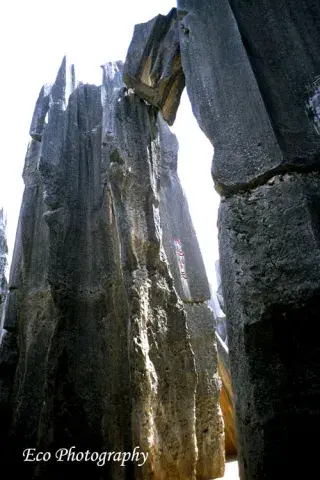
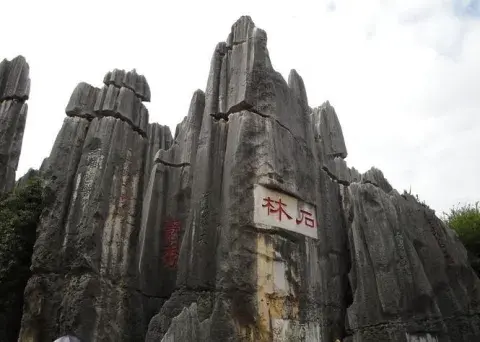
Depart from your after your breakfast. Take morning flight back to Kunming. Then take full day tour to Stone Forest. The Stone Forest is in Lunan Yi Nationality Autonomous County, which is about 120 kilometers (75 miles) from Kunming. It covers an area of 400 square kilometers (96,000 acres). It has long been one of the most famous scenic spots in China, at least since the Ming Dynasty, 1368-1644 A.D. The Stone Forest is divided into several scenic areas with names like Greater Stone Forest, Lesser Stone forest, Outer Stone Forest, Underground Stone Forest, Stone Forest Lake, and Da Dieshui Fall. The Stone Forest was formed by karst two million to thirty million years ago. It contains peaks, pillars, stalagmites, depressions, underground rivers, and caves. The fantastic stone pinnacles rising abruptly from the ground resemble a huge, dense forest.
Day 09 Kunming Gulin
Sightseeing: Guilin- Elephant Trunk Hill / Reed Flute Cave
Free at leisure until to be transferred to the airport for your flight to Gulin. Upon Arriving at Guilin, be met and transferred to your hotel with private vehicle and tour guide. After checking in the hotel, have private city tours to the Reed Flute Cave, which known as "the Palace of Natural Arts" where you can see beautiful stalactites & stalagmites,learn how they are formed. Then visit Elephant Trunk Hill. The hill located at the conjunction of the Li River & the Peach Blossom River, the whole hill looks very much like a giant elephant with a long trunk, it is the symbol of Guilin city.
Day 10 Gulin
Sightseeing: Li River Cruise
Depart from your hotel in the morning and be transferred to the Zhujiang Pier (about 1 hour drive) for a 4.5 hours wonderful Li River Cruise. You will enjoy the picturesque mountains, peaceful green fields, farms and villages with water buffaloes, cows wondering around on both sides of the river bank. You will have lunch aboard. Disembark at the one-thousand-year-old town Yangshuo in the afternoon.
Free at leisure to explore the old town after check in the hotel in Yangshuo.
Day 11 Yangshuo
Sightseeing: Ancient Banyan tree Park / Moon Hill
In the morning, we start early this morning (or biking via country road) through the countryside with rice paddies to visit the Ancient Banyan tree Park and the Moon Hill, you may also climb 890 steps up to the moon hill to see the beautiful scenery.
Day 12 Depart Gulin for next city
Be transferred back to Guilin or to the airport straightly in the afternoon.