Day 01 Arrive in Kunming
Arrive in Kunming. Be met at the airport then transferred to your hotel. Free at leisure for the rest of the day.
Day 02 Kunming
Sightseeing: West Hill and Dragon Gate / Grand View Pavilion
Depart from your hotel in the morning to visit the West Hill and Dragon Gate, which is totally cut on a natural precipice, with an elevation of 2,500 meters, 8 kilometers west of Kunming city. The Dragon Gate is the highest temple on the West Hill. It is famous for its spectacular view. Climbing up the winding old stone stairs leading to the natural cliff-top platform, passing through an archway on which is inscribed "Longmen" (Dragon s Gate), many inscriptions and stiles are found here and there. You will have a birds-eye-view of Kunming city and the Dianchi Lake.
After having lunch at a nice local restaurant, we will visit the Grand View Tower, which located 7 kilometers west of Kunming, at the lakeshore of Dianchi Lake. The Grand View Pavilion was built in 1682, by a Buddhist monk named Qianyin. But it had been in disarray, destroyed and restored several times because of the dynastic changes and the civil wars. Decorated with flying eaves and splendid paintings, the present-day pavilion is a square, three-storied pavilion established in 1883. It is famous for the longest antithetical couplet in China, this couplet of 180 characters is one of the most valued cultural treasures in Yunnan Province. It provides a spectacular view across sparkling Dtanchi Lake to the distant Western Hills.
Day 03 Kunming Dali
Sightseeing: Three Pagodas / Butterfly Spring / Xizhou Village / Ancient Dali town
Depart from your hotel after breakfast. Take the morning flight to Dali. Then visit the Three Pagodas. The Three Pagodas consist of one big pagoda and two small ones. They arise on the Mt. Cangshan slope overlooking the Erhai Lake, known as Chongsheng San Ta in Chinese, meaning the Three Pagodas of Saintly Worship. These outstanding landmarks of the region were once part of the greatest temple complex on the Dali plain. Pagodas are among the most ubiquitous structures throughout the Buddhist world. They are representation of the ancient architectural and cultural arts of the Bai Ethnic Group.
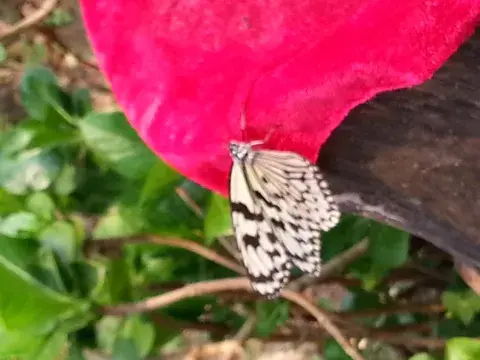
Then visit the Butterfly Spring, which situated at the foot of Yunlong Peak of the Cangshan Mountain, 27 km south of the Dali Old Town. Butterfly Spring is surrounded by ancient camphor trees. In spring when the trees put forth fragrant flowers, thousands of different types of butterflies flutter among the branches and over the spring water forming a dazzling "Kingdom of Butterflies". The phenomenon dates back to the Ming Dynasty (1368-1644 A.D).
After having lunch, visit the Xizhou Village. Xizhou Village locates 18 kilometers north of Dali, faces Erhai on the east.It grew and flourished in the Ming Dynasty (1368-1644) along with the fortunes of Dali renowned tea merchants that traded to Tibet. It is not only a historically famous city but also a typical commercial center of Bai Ethnic Nationality. It is now a "must" for the travelers. You can enjoy lovely ethical clothes, fairylike programs, decorative architectures, gifted garden parties and wonderful handicrafts there.
Finally, visit Ancient Dali town, which Located at the foot of the Cangshan Mountain and the west side of the Erhai Lake. Ancient Dali town was set up in 1382 A.D during the Ming Dynasty as the capital of the Dali kingdom. At present, only the south and north gate towers remain standing. There are well-preserved traditional houses of the Bai Ethnic Group people. Walking in the city, you will enjoy many historical relics, ancient buildings and rich minority customs, such as the "Foreigners Street", the ancient Yuxi School, tea houses, antique shops, Chinese and Western restaurants.
Day 04 Dali-Lijiang via van
Sightseeing: Lijiang ancient town / Black Dragon Pool
Be met at your hotel and transferred to Lijiang. Arrive in Lijiang, visit Lijiang ancient town. With a history of more than 800 years, covering an area of 3.8 square kilometers, Lijiang ancient town, also named Dayan (Big Ink Slab) Town, is a well-preserved old city. As a result of the combination of the multinational brilliant culture and the progress of Naxi ethnic minority, the buildings in the town incorporate the best parts of the architectural traits of Han, Bai, and Tibet into a unique Naxi style. In 1997, this old town was put on the list of the world cultural heritages.
After lunch at a local restaurant, visit Black Dragon Pool. The pool is listed in the Collections of Famous Pools of China because of its beauty.
Day 05 Lijiang
Sightseeing: Yak Meadow / Yufeng Temple / Baisha Frescos
Today will be your full day tour in Lijiang. Depart from your hotel after breakfast. Visit Yak Plateau (Maoniuping). With an area of 16.6 square kilometers, the Yak Plateau is located at the middle of Jade Dragon Snow Mountains. The beautiful natural scenery there is an important part of the mountain. Looking around the snow mountain, you would feel your soul is distilled with those white clouds high above the blue sky. You will not only see many yaks on the plateau, but also horses and donkeys.
Then visit Yufeng Temple, which was built in the Qing Dynasty and famous for camellias in the temple.
After that, visit Baisha Frescoes. There are some invaluable frescoes stored and preserved and displayed in some venerable temples located in Lijiang old Town. Among of that, the Baisha Frescoes are the best. Most of the frescoes were created from early Ming Dynasty (1368-1644 A.D) to the early Qing Dynasty (1644-1911A.D) when those beautiful temples were built. These fresco paintings are very special and reflect the different religious cultures and artistic forms of Buddhism, Lamaism, Taoism and the Naxi Dongba religion. They are the artistic representations of economic development, mutual acculturation of multinational culture, and the growth of religions.
Day 06 Lijiang - Shangrila via van
Sightseeing: Tiger Leaping Gorge / Stone Drum / First Bend of the Yangtze River
After an early breakfast, we set off for Tiger Leaping Gorge. With a drop of 3,000 meters, Tiger Leaping Gorge is believed to be one of the world´s deepest canyons. The torrential Jinsha River, roaring and crashing over grotesque shaped rocks, produces a thrilling and stirring sight here. According to local legend, the gorge acquired its name because, at its narrowest point (90 feet), a tiger once leaped over the swirling waters.
We will then head to The First Bend of the Yangtze River. About 70 kilometers (44miles) from Lijiang city, on the north side of the highway leading from Dali to Lijiang, locates the ancient town named Stone Drum Town. It is here, the Yangtze River to make a sudden V-shaped bend and flow to the northeast. This extraordinary turn, nearly180-degrees, creates beautiful and marvelous views that startle the imagination. This bend is called the First Bend of the Yangtze River. It has been of strategic importance since ancient times. Many famous historical events happened here.
Today we take bus to Shangrila. Upon your arrival in Shangrila, our tour guide will help you to check in the hotel.
Day 07 Shangrila
Sightseeing: Bita Sea, Napa Sea, Songzanlin Lamasery and Tibetan family
We will spend the day touring around the city, including visits to Bita Sea, Napa Sea, Songzanlin Lamasery and Tibetan family.
-Bita Sea is situated about 32 kilometers (about 19.9 miles) away from Shangri-La County (Shangrila) and covers an area of 166 hectares. It is an intact natural attraction with various species of flora and fauna and picturesque landscapes.
-Napa Sea, also called Yila Prairie, is a lake in rain season, while grassland in other season. In the autumn, thousands of sheep, horses and yaks scatters on the grasslands. It just likes a necklace broken on the lawn. It is the habitat of about 150 black neck cranes. The total number of black neck cranes is around 1000 in the whole world.
-Songzanlin Lamasery or "Little Potala" as it is affectionately known, is a spiritual hub for people to discover the mystery and traditions of Tibetan Buddhism. Located at the foot of Mt. Foping, faces a vast grassland that used to be smothered by a lake, the Songzanlin Monastery is the largest and the most important Lamasery of Tibetan Buddhism in Yunnan province, as well as one of the 13 large lamaseries in the joint area of Tibet, Sichuan and Yunnan.
In the afternoon, you will visit Tibetan families, to see the daily life of Tibetan, and to taste Tibetan Tea with snacks. Then you will be transferred back to your hotel and feel free at leisure for the rest of the day.
Day 08 Shangrila Kunming
Sightseeing: Stone Forest
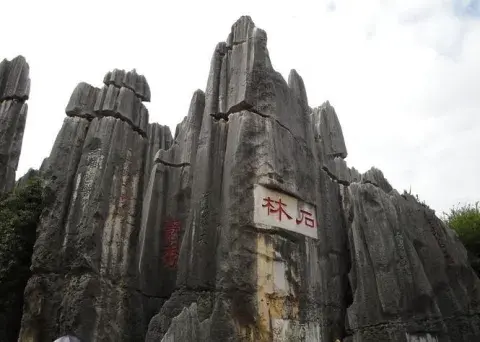
Depart from your after your breakfast. Take morning flight back to Kunming. Then take full day tour to Stone Forest. The Stone Forest is in Lunan Yi Nationality Autonomous County, which is about 120 kilometers (75 miles) from Kunming. It covers an area of 400 square kilometers (96,000 acres). It has long been one of the most famous scenic spots in China, at least since the Ming Dynasty, 1368-1644 A.D. The Stone Forest is divided into several scenic areas with names like Greater Stone Forest, Lesser Stone forest, Outer Stone Forest, Underground Stone Forest, Stone Forest Lake, and Da Dieshui Fall. The Stone Forest was formed by karst two million to thirty million years ago. It contains peaks, pillars, stalagmites, depressions, underground rivers, and caves. The fantastic stone pinnacles rising abruptly from the ground resemble a huge, dense forest.
Day 09 Kunming Gulin
Sightseeing: Guilin- Elephant Trunk Hill / Reed Flute Cave
Free at leisure until to be transferred to the airport for your flight to Gulin. Upon Arriving at Guilin, be met and transferred to your hotel with private vehicle and tour guide. After checking in the hotel, have private city tours to the Reed Flute Cave, which known as "the Palace of Natural Arts" where you can see beautiful stalactites & stalagmites,learn how they are formed. Then visit Elephant Trunk Hill. The hill located at the conjunction of the Li River & the Peach Blossom River, the whole hill looks very much like a giant elephant with a long trunk, it is the symbol of Guilin city.
Day 10 Gulin
Sightseeing: Li River Cruise
Depart from your hotel in the morning and be transferred to the Zhujiang Pier (about 1 hour drive) for a 4.5 hours wonderful Li River Cruise. You will enjoy the picturesque mountains, peaceful green fields, farms and villages with water buffaloes, cows wondering around on both sides of the river bank. You will have lunch aboard. Disembark at the one-thousand-year-old town Yangshuo in the afternoon.
Free at leisure to explore the old town after check in the hotel in Yangshuo.
Day 11 Yangshuo
Sightseeing: Ancient Banyan tree Park / Moon Hill
In the morning, we start early this morning (or biking via country road) through the countryside with rice paddies to visit the Ancient Banyan tree Park and the Moon Hill, you may also climb 890 steps up to the moon hill to see the beautiful scenery.
Day 12 Depart Gulin for next city
Be transferred back to Guilin or to the airport straightly in the afternoon.