Vietnam Attractions
Vietnam Articles
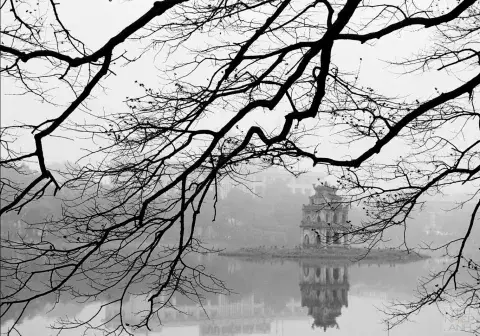
HANOI IN WINTER
These days, Hanoians feel a coming cold winter, with the average temperature of 17 degree Celsius, but it is not so harsh as Japan, Korea and China....
These days, Hanoians feel a coming cold winter, with the average temperature of 17 degree Celsius, but it is not so harsh as Japan, Korea and China. However, the winter temperature in Hanoi is extremely low from January to March, so some places in the north of Vietnam such as Sapa (Lao Cai Province) and Mau Son (Lang Son Province) sometimes appear snow. Hanoi’s winter is charming with cold atmosphere, colorful coats and sometimes warm sunlight which warm you up in chilly day.
Tourists visiting Hanoi can feel the cold weather not like other areas in the world. Because the sky in winter often dark and gloomy, it often brings a sad feeling. In contrast, with Hanoi’s winter, you can see its busiest days, crowed streets during working days. Especially, Hanoi’s winter is also famous for many delicious street foods like hotpot or grilled corn, tourists can favor these warm dishes which bring indescribable feelings.
In addition, spend several days visiting Sapa, Mau Son and Ha Giang to watch very beautiful snowflakes with a wide range of shapes and immerse in mysterious and thick fog.
Remember to bring some warm clothes to sure that you will not get a cold when visiting these places in Vietnam.
Tips for travellers!!
Hi guys,
Have you planned your trip?
Will Vietnam be your next destination?
Welcome to my beautiful city Ho Chi Minh!
If you are adventurous and you would like to explore here by yourself, that's great! I share with you some tips!!!
...Hi guys,
Have you planned your trip?
Will Vietnam be your next destination?
Welcome to my beautiful city Ho Chi Minh!
If you are adventurous and you would like to explore here by yourself, that's great! I share with you some tips!!!
- Airport taxi to district 1 (where most tourist should stay), the fare for the distance is around 8$ to 10$ maximum. Turn on the left from the entrance of airport (I mean international), look for the lady in traditional costume (if you come late night then maybe she's not there) . Remember to take the card from her or the person in uniform. It shows taxi number (the one in charge on driving you), it's for your safety, you can claim any lost or bad driver to the taxi company.
- Mai Linh and Vinasun taxi are recommended when you go around the city.
- Your doctor normally advise not to take the ice in Vietnam, however, if you are ice lover, I share with you some tips, if they serve you the ice in round shape (like a pipe cut into small pieces), it's safe to take, won't cause you stomach pain.
- there are so many men with green uniform on the street (look like police), NO, they are security guards who are assigned by govt that will help you when you in need such as cross the street, directions, report problems, etc.
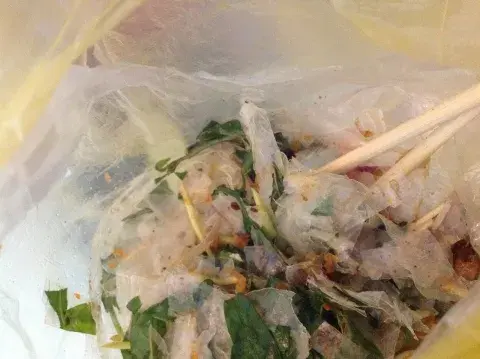
- Street food? Try our " Banh Trang Tron" it's rice paper which usually use to make spring roll but this food we cut it into small and mix with green mango, dried shrimp, dried pork, chili sate', peanuts, etc. Very nice taste with 50 cents.
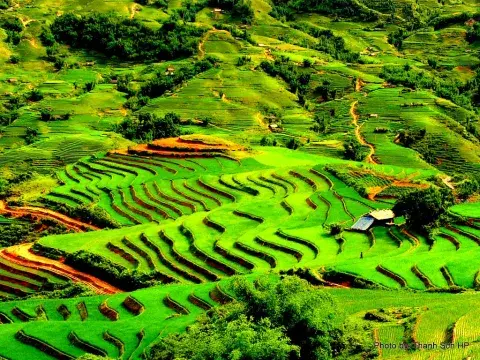
PLACES and FOOD in SAPA, VIETNAM MUST-GO and MUST-EAT
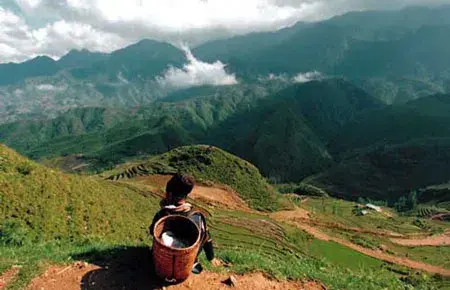
If you like trekking, hiking and camping tour, why don’t you spend some days visiting the spectacular natural scenery in the Northern Vietnam such as Moc Chau or Sapa.
...If you like trekking, hiking and camping tour, why don’t you spend some days visiting the spectacular natural scenery in the Northern Vietnam such as Moc Chau or Sapa.
• Weather in Sapa: The best time to visit Sapa, Vietnam is from March to May and from September to November. However, if you like the cold of Vietnam and prefer wonderful activities in winter which is different from one of Korea, China and the EU countries, visit Sapa in this time.
You can feel the Sapa’s cold is very different and you will have the chance to watch the sunrise over the valley in the morning, go to the Love Market in the evening, travel to the picturesque town and see quite a romance scene.
• Trekking: Sapa is the ideal place for trekking lovers with mountainous picturesque districts and numerous of wonderful attractions. This is a must-thing to do when you visit Sapa, Vietnam. There are a number of trails of difficulty levels, so it is not suitable for those who have no experience in hiking.
• Culture: Travelling to Sapa in which many ethnic groups are living like Dao, Hmong, Tay, and Thai; visitors can have the chance to combine some sort of cultural travel tours with their trekking. You will listen to stories of their life and history Northern Vietnam in the war.
• Foods: You must not forget a 5-star breakfast but some tasty local food such as:
Thang Co (Thắng Cố): the traditional food of H’Mong People. It is a type of soup made of horsemeat, horse’s viscera and bone.
Sapa Cap Nach Pork (Thịt heo cặp nách Sapa): a specialty of this mountainous region.
And Pau Play Day Cake, Salmon Sour Hotpot, Bamboo sticky rice (Cơm lam), etc.
• Others in Sapa: You can visit Cat Cat waterfall which provides you with some spectacular views of the mountains around the town, among them Phan Xi Pan, Vietnam's highest mountain (3143m).
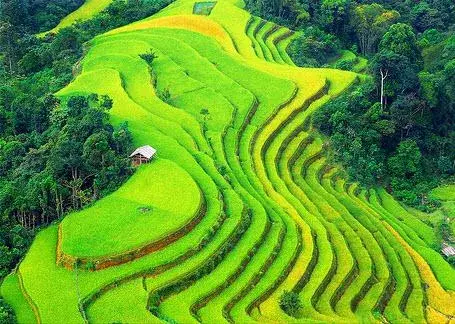
Besides, some spectacular places such as Muong Hoa Valley, Terraced Rice Fields in Shin Chai Village, Ta Phin Village, Thac Bac Waterfall (Silver Falls), Ham Rong Mountain and Sapa Market are your must-go attractions.
Why don’t you spend 2 days and 1 night with us – VIETNAM TRAVEL CONSULTANT visiting all above places and savoring all local foods in Sapa?
Top Vietnam Tours
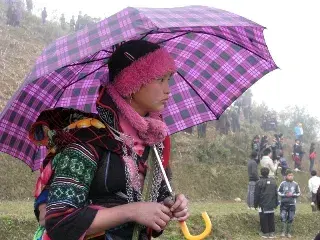
$60 Per Day
Sapa Tour, 2 Days 3 Nights
Sapa Trekking Tour (2 Days/ 3 Nights)
...Read moreSapa Trekking Tour (2 Days/ 3 Nights)
Sapa is imagined as a small paradise, unspoiled yet incredibly brilliant site nestling among greenery mountainous region of the Northwest Vietnam. Visitors traveling to Sapa are not only impressed by the fresh air, the beauty of natural scenery and the famous tourist spots here, but also by rich cultures of various ethnic minorities such as Hmong, Dao, Tay, Day and Xa Pho.
Visitor to Sapa in summer can feel the climate of four seasons in one day. In the morning and afternoon, it is cool like the weather of spring and autumn. At noon, it is as sunny and cloudless as the weather of summer. And it is cold in the evening. With no advance warning of a thunderstorm short and heavy rains may come at noon on any summer day. Subsequently, a rainbow appears, transforming Sapa into a magic land, which for years has been a constant source of poetic inspiration, lights up the whole region.
The first thing you notice when approaching the resort town are some detached wooden mansions and villas perched on a hill top or hillside, behind thick pine forests and almost invisible on this foggy morning. Old and new villas with red roofs now appear and now disappear in the green rows of pomu trees, bringing the town the beauty of European towns.
Sapa tour Vietnam
The best time to witness the scenic beauty of Sapa is in April and May. Before that period, the weather might be cold and foggy; after that period is the rainy season. In April and May, Sapa is blooming with flowers and green pastures. The clouds that settle in the valley in early morning quickly disappear into thin air.
Sapa has many natural sites such as Ham Rong Mountain, Silver Waterfall, Rattan Bridge, Bamboo Forest and Ta Phin Cave.Sapa is also the starting point for many climbers and scientists who want to reach the top of Fansipan Mountain, the highest mountain in Vietnam at 3,143m. Hoang Lien Mountain Range is also called the Alps of the North Sea area since Fansipan Mountain is not only the highest peak in Vietnam, but also in the Indochina Peninsula. The pyramid-shaped mountain is covered with clouds all year round and temperatures often drop below zero, especially at high elevations.
Sapa is home to various families of flowers of captivating colours, which can be found nowhere else in the country. When Tet, the Lunar New Year Festival, comes, the whole township of Sapa is filled with the pink colour of peach blossom brought from the vast forests of peach just outside the town. Sapa is regarded as the kingdom of orchids. Here, orchid lovers are even amazed by the choice, when trekking in the forest filled with several hundred kinds of orchids of brilliant colours and fantastic shapes, such as Orchid Princess, Orchid of My Fair Lady's Shoe. Some orchids are named after lovely singing birds such as the canary, salangane's nest, and more.
Sapa is most beautiful in spring. Apricot, plum and cherry flowers are splendidly beautiful. Markets are crowded and merry, and are especially attractive to visitors. Minority groups come here to exchange and trade goods and products. Market sessions are also a chance for locals to promenade and young men and women in colorful costumes to meet, date or seek sweethearts. Visitors to Sapa will have opportunities to discover the unique customs of the local residents.
Itinerary
Night 1: Hanoi – Night train to Sapa
VTC’s bus and staff pick you up at your hotel or VTC’s office at around 19:30-20:00 then transfer to Hanoi Railway Station for the night train to Sapa. Overnight on the train.
Day 1: Lao Cai – Cat Cat Village - Sapa (B/L/D)
05:30-06:00 Arrive at Lao Cai railway station early in the morning then transfer to Sapa hour), home to numerous colorful hill tribes (Black H'mong, Flower H'mong, Red Dao) and to Vietnam’s highest peak: Mount Fansipan.
After breakfast, relax at the hotel till 09:00 – 9:30. Our guide pick up you to the villages of the H’mong called Cat Cat. Cat Cat Village possesses many imposing waterfalls and also is home to the water hydropower construction built under French rule. Return to Sapa and have lunch in restaurant. Discover the charming Sapa Town, Sapa market and Ham Rong at your own program in the afternoon. Dinner in warmly atmosphere of your hotel. Stay overnight in three-star hotel.
Day 2: Sapa – Lao Chai Village - Ta Van Village - Night train to Hanoi (B/L/D)
09:00-09:30 We embark on a lovely walking tour to the hill tribe villages of Lao Chai and Ta Van, home of the H'Mong and Dzay hill tribe minority people. As we walk to the villages nestled in the valley below Sapa we will meet some of the local minority people on their way to and from Sapa. Here we have the opportunity to share cultural experiences with families that live in the area. Have lunch en route or at a local family
14:00 Travel back to Sapa Town. Free at your own program untill 16:00
16:30-17:00 Transfer to Lao Cai train station. Have dinner in Hai Nhi restaurant near the train station before getting on the night train back to Ha Noi. End of services!
Inclusion:
- Transportation upon itinerary.
- English speaking guide.
- Sightseeing fee.
- Meals as mentioned in itinerary.
- Homestay for 01 night.
Exclusion:
- Round-trip train ticket Hanoi - Laocai.
- Drinks during meals.
- Personal spendings.
- Insurance. Tip.
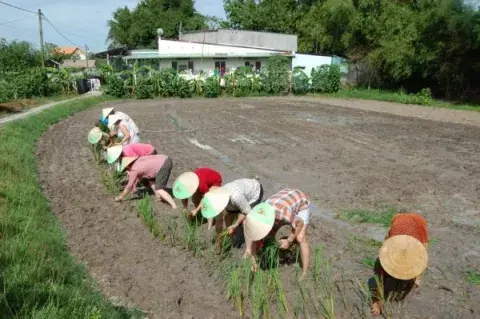
$65 Per Day
memories Farm Trip with Cu Chi Tunnels Tour
Amazing Farming with Cu Chi Tunnels Trip is amazing program for Person who Love the Countryside ,Love Agriculture ,Love History to discover and Understand clearly about Vietnamese Agriculture and History with Great Vietnamese Cuisine from Our Master Chef Explaining and Many recipes provide after Finish Trip
Starting in Hotel in Ho Chi Minh City at 8:00am to HCM Agricultural Villages - HCM Cooking School at 9: 00am
Visiting HCM Agricultural Villages 9:00am - 10:00am
- Visiting Buffallo ,Cows ,fish ,prawn areas...Read more
Amazing Farming with Cu Chi Tunnels Trip is amazing program for Person who Love the Countryside ,Love Agriculture ,Love History to discover and Understand clearly about Vietnamese Agriculture and History with Great Vietnamese Cuisine from Our Master Chef Explaining and Many recipes provide after Finish Trip
Starting in Hotel in Ho Chi Minh City at 8:00am to HCM Agricultural Villages - HCM Cooking School at 9: 00am
Visiting HCM Agricultural Villages 9:00am - 10:00am
- Visiting Buffallo ,Cows ,fish ,prawn areas
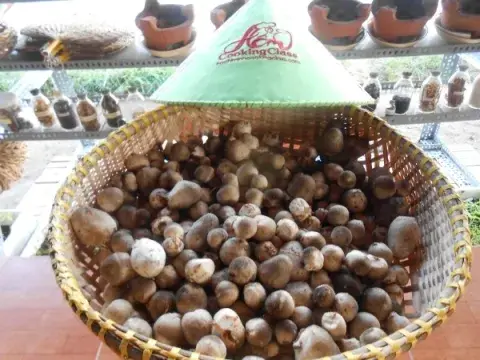
- Visiting Mushrooms Areas and Understanding how to make Mushrooms and Benefit of Mushrooms bring for economic and Health
- Visiting Herbs ,Spices and vegetables areas and Understanding what they use for cooking and Medicine
Being The Farmer on 10:00am -11:00am
Hands to Make Rice fields or growing up the garden ( give us the details which one you like and Which ingredients do you wnat to grow up if you have somne specific ? )
Lunch Time : 11:00am -1:00pm
Watching Our Master Chef doing cooking show on front of You and Enjoy what you see ( Special Menu offer if you have )
Cow Milks Time: 1:00pm -1:30pm
Visiting Cow Milks areas and Get hands to make milk from the Cow and make the cooffe Milk by Your labour
Rice Paper Villages - Rubber Tree forest 1:30pm -2:30pm
- Visiting Rice Papers Villages and Understanding how to make rice papers and what is main ingredients to make rice papers .You will be surprise to get the answer
- Visiting the Rubber Tree forest and understanding how to get the Latex and What benefit of rubber tree use for?
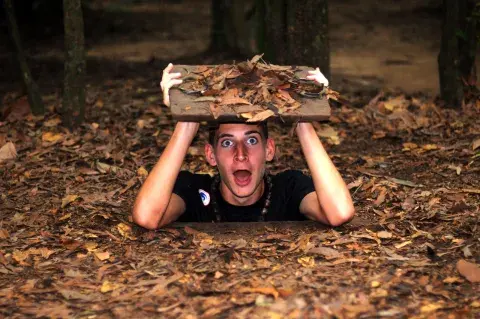
Exploring Cu Chi Tunnel 2:30pm -4:00pm
- Watching a presentation video
- Getting to see the tunnels and discover how these tunnels were constructed and how its habitants combat two forces: the invading troops and the tunnels itself.
- Visiting Hoang Cam's smoke-less store, secret hide-outs, fighting bunkers, and many dangerous booby traps.
- Trying gun shooting with real bullets (fees not included)
- Tasting boiled tapioca, drinking hot tea
The Trip will be The end about 5:00pm on your Hotel
Enjoy Amazing Uniques experience about Vietnamese Agriculture - Cusine - Culture - History
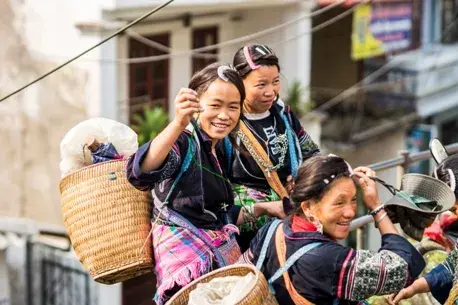
$110 Per Day
Glimpse Of Sapa 3 nights/ 2 days by sleeping train
Private sightseeing tour Introduction:...Read more
Private sightseeing tour Introduction:
Sapa is home to various families of flowers of captivating colours, which can be found nowhere else in the country. When Tet, the Lunar New Year Festival, comes, the whole township of Sapa is filled with the pink colour of peach blossom brought from the vast forests of peach just outside the town. Sapa is regarded as the kingdom of orchids. Here, orchid lovers are even amazed by the choice, when trekking in the forest filled with several hundred kinds of orchids of brilliant colours and fantastic shapes, such as Orchid Princess, Orchid of My Fair Lady's Shoe. Some orchids are named after lovely singing birds such as the canary, salangane's nest, and more.
Tour Duration: 2 Days
Maximum Number of People: 15
Tour Type: Transport Based
Tour Price: Price Per Group USD $110.00
Tour Highlights:
Detail Itinerary Hanoi - Sapa Trekking tour 2 days 3 nights:
Night 1:
The night before 8.00 pm, we pick you up at your hotel and take you to Hanoi Train Station for night train to Sapa. You take overnight on soft lay down cabin. (If you prefer to take soft sleeper in wooden 4berth sharing cabin*, pls advise in advance)
Day 1: LaoCai – Sapa trekking (B, L, D)
06.00: You arrival Lao Cai Station. Our guide meets you at Lao Cai train station and departs for Sapa by car. Arriving in Sapa mid – morning, you’ll check in the hotel. Breakfast.
13.00: After lunch, our guide takes you to visit two Black H’mong villages and a waterfall. There you’ll have a chance to see the hydroelectric power station built be the French. Then we’ll be back to Sapa for dinner. In the evening, you’re free to do as you wish, you can explore the town of Sapa and we highly recommend a stop at the Love Market (only on Saturday night).
Cooking and enjoy dinner with Local Family. Overnight in Sapa.
Day 2: Sapa trekking – night train to Hanoi (B, L, D)
07.00: After breakfast, our guide takes you to the villages populated by H’mong and Dzao people, respectively called Lao Chai and Ta Van
11.00: You’ll have lunch either with an ethnic minority family or on the way back to Lao Cai to catch a night train back to Hanoi.
We arrive in Hanoi the next morning at 5.00 am. End of services.
Tour Inclusions:
Transfer from the hotel to Hanoi Railway station
Roundtrip transfer in Sapa
Return train tickets Hanoi – Lao Cai – Hanoi (Soft sleeper with A/C – 4 persons in one cabin)
1 night at hotel
Meals as stated above
English speaking guide
Entrance fees
Tour Exclusions:
Travel insurance
Drink
Extra food and beverages
Phone and laundry
Tips and personal expense