xishuangbanna wild elephants valley
·Located in the south of Mengyang Natural Reserve, 48 kilometers from Jinghong City and 115 kilometers from Pu’er City in Xishuangbanna, the Wild Elephants Valley is the most fascinating forest park known for primeval tropical rainforest and flocks of Asia wild elephants. The Wild El...
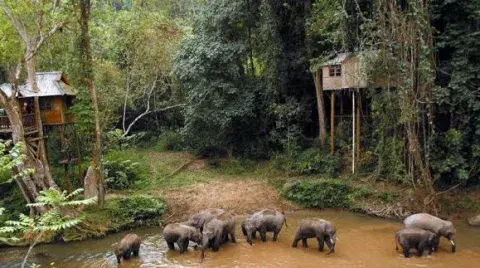
·Located in the south of Mengyang Natural Reserve, 48 kilometers from Jinghong City and 115 kilometers from Pu’er City in Xishuangbanna, the Wild Elephants Valley is the most fascinating forest park known for primeval tropical rainforest and flocks of Asia wild elephants. The Wild Elephant Valley Rainforest Scenic Area is also called Sanchahe Forest Park. It is said that currently about 130 wild elephants frequently appear in the Wild Elephant Valley. In China, Asia elephants can only be seen in the rainforests of Xishuangbanna while the Wild Elephant Valley is the sole place where wild elephants frequently show up .
Originally, People found lots of wild elephants and other animals bathing or drinking water in the "elephant pond" of the Wild Elephant Valley. Since 1980s, subordinate of National Nature Reserve Bureau has been throwing salt at the bank of the pond to entice wild elephants. Flocks of wild elephants were frequently attracted to lick the salt since then. In 1991, the Nature Reserve Bureau of Xishuangbanna established an observation tower in the park. In the following years, The Wild Elephant Valley was developed into a forest park equipped with air corridor, cableway, houses built on crotches of tress, pedestrian path and other facilities.
The Wild Elephant Valley covers a total area of 3.7 square kilometers, a water area of 8000 kilometers with an elevation of 747-1055 meters. Apart from the most eye catching rainforest and wild elephants to view, the park has been established with several scenic zones to serve tourists, such as Tree houses, Butterfly Park, Snake Park, Orchid Garden and the Bainiao Garden (where a hundred of rare birds perch in).
·

dali three pagodas
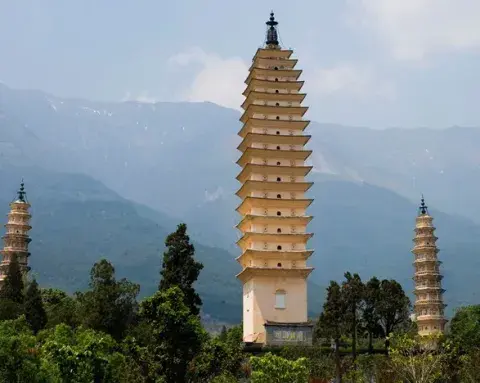
three pagoda are the ancient landmarks in yunnan province.now they are the symbol of dali too.it s the oldest Buddist architecture in south china and south Asia too. Simultaneously, it is cultural relic under national protecton.the three pagodas are the sole building that show...
three pagoda are the ancient landmarks in yunnan province.now they are the symbol of dali too.it s the oldest Buddist architecture in south china and south Asia too. Simultaneously, it is cultural relic under national protecton.the three pagodas are the sole building that shows the tradition and ancient prosperity of old dali.every year it attracts many visitors throughout the world.

Bang Bang Festival - 15th of Chinese New Year
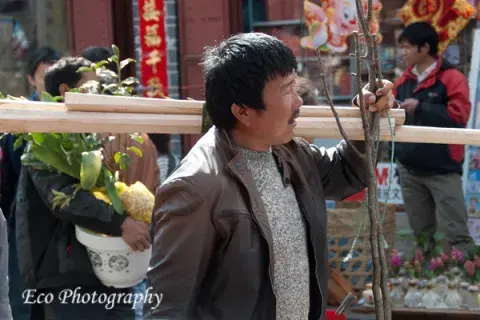
Bang Bang Festival starts on 15th of Chinese New Year in Lijiang. The festival is a market place of Naxi minority to buy wood made pieces, flowers, hand made works with bamboo, food, clothes etc. People dress in their traditional custom. The market las...
Bang Bang Festival starts on 15th of Chinese New Year in Lijiang. The festival is a market place of Naxi minority to buy wood made pieces, flowers, hand made works with bamboo, food, clothes etc. People dress in their traditional custom. The market last for one week. A very interesting place to visit.

Yunnan Provincial Museum
Yunnan is one of China’s most ethnically diverse provinces, home to over one-third of China’s ethnic minorities. The Yunnan Provincial Museum emphasizes this local minority culture in its exhibits, featuring art from the Dali Kingdom as well as other periods in Yunnan’s hi...
Yunnan is one of China’s most ethnically diverse provinces, home to over one-third of China’s ethnic minorities. The Yunnan Provincial Museum emphasizes this local minority culture in its exhibits, featuring art from the Dali Kingdom as well as other periods in Yunnan’s history. The museum has spent the last 50 years amassing over 150,000 pieces of folk art, handicrafts, bronze, ceramics, ancient books, and more, including over a 1,000 pieces that are recognized as "first-class national treasures." A visit to the Yunnan Provincial Museum is worth it if one has the time.
How to get there: The Yunnan Provincial Museum is located on Wuyi Lu just south of Dong Feng Xi Lu near the tunnel under the city center and the southwest entrance to the Bird and Flower Market. Bus number 98 will take you there.
Find it on the map
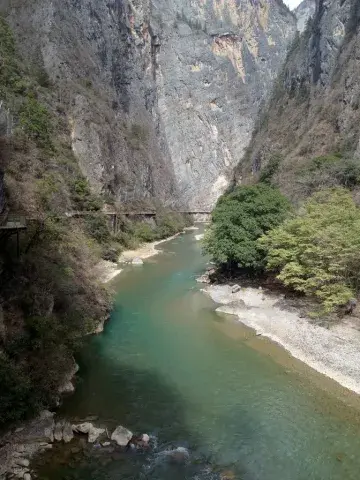
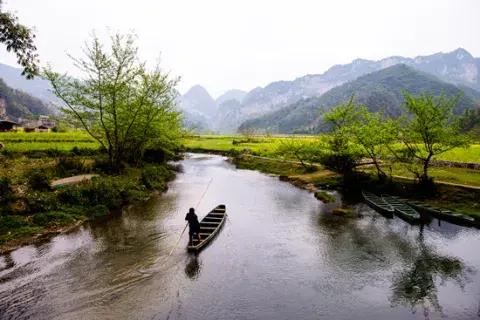
Balagezong Scenic Region
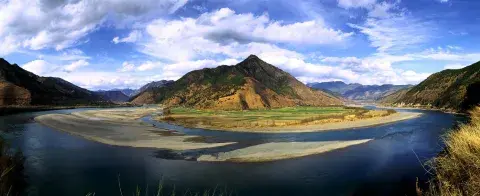
This is a majestic and magnificent land, with snow capped mountains, ever green forest, gentle and soothing river. and the Tibetan villagers and their ever-sincere spirit.
This is the lost Shangri-La. Stepping into this pure, bright nature land, you're immediately soaked by th...
This is a majestic and magnificent land, with snow capped mountains, ever green forest, gentle and soothing river. and the Tibetan villagers and their ever-sincere spirit.
This is the lost Shangri-La. Stepping into this pure, bright nature land, you're immediately soaked by the nurturing of the Nature.
This is the place where your soul is calling you to go.
This is a magical and magnificent land, total at 176 square kilometers. Here towering snow-capped mountains, majestic, rugged steep bottom side see; Jennifer Wood hurried Yu, lush plants, evergreen, storied dye; water gurgling, crystal clear, fish dive deep, leisurely; meadow green, vitality cattle and sheep flocks, foraging comfortable; this is a natural scenery of snow-capped mountains, glaciers, valleys, forests, meadows, lakes and pure air of the Festival ground, is beautiful, clear, safe, leisurely, contentment, serenity, harmony and all of mankind's most beautiful ideal destination. Balaguer cases are isolated paradise, where there is no hatred, no war, is a tolerant, peaceful, peaceful Pure Land; is a magical, with unparalleled natural beauty of the original paradise, life here is transparent and clear, it is far hustle and bustle of city life.
Enter Balaguer were able to feel the strong atmosphere of Tibetan Buddhism. For thousands of years, religion has been deeply in the hearts of Tibetans took root.
At the Moonlight Square, at the foot of the Turtle Mountain, in Shangrila Old Tpwn, their sale office will arrange you to go. They have daily buses going from May to October. Normally the bus sets off at 9:00am.

Bamei village
Baimei Village is situated in Guangnan County. Surrounded by mountains around and without available roads, the village can be only accessed by waterways in two Karst caves in the back and front of it respectively. you need to take boat for 3 times for the whole journey , a 15-min...
Baimei Village is situated in Guangnan County. Surrounded by mountains around and without available roads, the village can be only accessed by waterways in two Karst caves in the back and front of it respectively. you need to take boat for 3 times for the whole journey , a 15-minute journey along the winding River would lead you to unveil the hidden village.
Situated in remote areas and isolated from the outside world due to the inconvenient traffic conditions, Bamei is seldom known to people as a pastoral Zhuang ethnic village shrouded among mountains. The Zhuang ethnic members in the village have kept the orthodox traditions of their own, such as the March 3rd Festival, the Dragon Sacrificial Ceremonies, the Ancestral Worship Ceremony,the Colored Rice Festival, etc.

Xizhou Old town
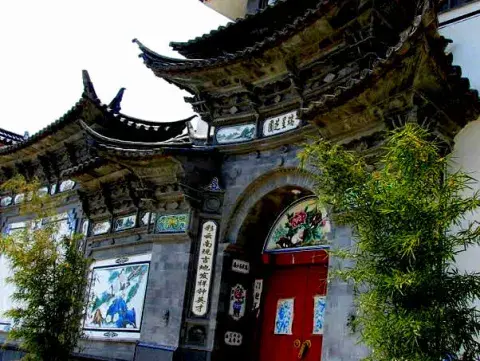
Xizhou town is Located at the northern end of the Dali, 32 kilometers from the downtown of Xiaguang. it is the home of the famous movie" five golden flowers ", It is also a famous historical and cultural town in yunnan province with a total population of 63275 people, 85% of them are ...
Xizhou town is Located at the northern end of the Dali, 32 kilometers from the downtown of Xiaguang. it is the home of the famous movie" five golden flowers ", It is also a famous historical and cultural town in yunnan province with a total population of 63275 people, 85% of them are Bai people. the town is on the foot of cangshan mountain, the forest area size is about 12480 acres, including Chinese fir trees and other varieties. in the gentle slope of cangshan moutain ,the climate is suitable for growing different kinds of tea.
Xizhou is famous both in culture and architecture, It has a long history of the handicraft is and commodity trade. xizhou town was the center of Politic, economy, culture of Bai people in the ancient time,It is the cradle of Bai commercial and industrial development. early in Qing dynasty of Guangxu years(AD1875-AD1908), "xizhou business group" was formed, so Xizhou was one of the birthplace of Bai people's national capitalism. there are many national, provincial, municipal cultural relics protection units. the local-style dwelling houses building is unique, and xizhou town has very unique architecture construction: a large number ancient architecture of Ming and qing dynasty and the republic of China . all of them has a very high historical and cultural value which has been published by the state council as the national key cultural relics protection units, it attracts many tourists at home and abroad.
So if tourists want to know more about Bai people and their culture, they have to start with the understanding of Xizhou town.

Weibaoshan Mountain
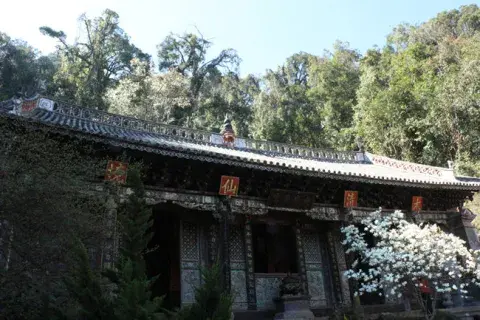
Weibaoshan mountain national forest park is 11km southeast WeiShan county , total size 19 square kilometers, the main peak is 2569 meters above sea level.
Weibaoshan mountain was listed as national forest park in 1992. since the tang dynasty Taoist te...
Weibaoshan mountain national forest park is 11km southeast WeiShan county , total size 19 square kilometers, the main peak is 2569 meters above sea level.
Weibaoshan mountain was listed as national forest park in 1992. since the tang dynasty Taoist temple architecture was firstly built in Tang dynasty, more taoist temple was built in Ming and Qing dynasty. it is known as the fmous Taoist mountains of Yunnan province, one of the four famous Taosim mountains in China.
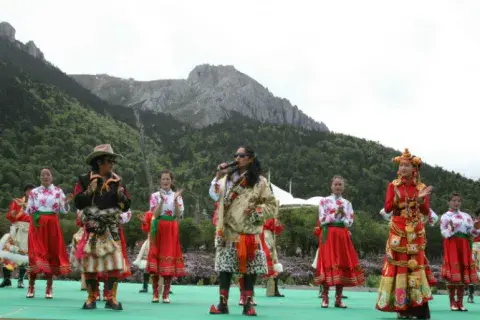
The mountain worshipping festival is 2ed to 15th of Feb in chinese lunar calendor, people of all nationaliites in the countryside is wearing their new costumes, participate in the festival with a joyful mood. The lunar February 13 to 14, it is annual singing festival also known as the carnival of young men and women of Yi minority.