Vung Tau Beach

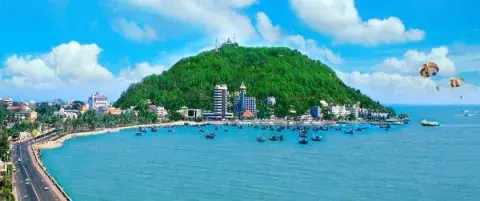
Vung Tau has The name means ‘anchorage’ as during the 14th and 15th centuries, Vung Tau was a swamp which European trading ships visited regularly.

Vung Tau, one of the most beautiful destination in Vietnam, not only very popular with people in Ho Chi Minh City and neighboring province...

Vung Tau has The name means ‘anchorage’ as during the 14th and 15th centuries, Vung Tau was a swamp which European trading ships visited regularly.

Vung Tau, one of the most beautiful destination in Vietnam, not only very popular with people in Ho Chi Minh City and neighboring provinces due to the convenience of roads (many times a day trip is enough) but also popular to international visitors to chill out in their holiday. However, going to Vung Tau just bathing in the sea is not enough because there are many things waiting for you to discover. If you love beach atmosphere and you also love to see Vietnamese people's lifestyle but you only have a day or one day one night to spend then Vung Tau will be the best option. Located 2 hours away from Ho Chi Minh city, my car will bring you to Vung Tau beach safely and comfortably on the Highway straight toward Vung Tau city. 

There are many ideal destinations that the nature has given to Vung Tau such as Front Beach, Back Beach, Pineapple Beach, Mulberry Beach. Vung Tau beach has been remarkable not only by beautiful beaches, entertaining area, but also many special festivals such as Dinh Co Festival, Thang Tam Festival, Feast of Mary and Mother of God.

For more information about my Private Tour, please visit my website: https://www.missaigontour.com/

Email: [email protected]

Hotline: +84 938 244 097 (Whatsapp, Kakaotalk, Wechat, iMessage)

Le Chan Statue

Le Chan was born in Ven village (nowadays Dong Trieu District, Quang Ninh Province).  Her father is Le Dao, the famous doctor.  Her mother is Tran Thi Chau, the happy woman.  Le Chan is very beautiful and characteristic woman.  The Chinese ruler asked her for his concubine.&nb...

Le Chan was born in Ven village (nowadays Dong Trieu District, Quang Ninh Province).  Her father is Le Dao, the famous doctor.  Her mother is Tran Thi Chau, the happy woman.  Le Chan is very beautiful and characteristic woman.  The Chinese ruler asked her for his concubine.  Mr Le Dao absolutely refused, and brought her to the coastal area of An Duong.  The evil ruler killed her father.  She decided to revenge, recruited forces, set up base in new area, preparing foods while training forces, waiting for the right time.  When Trung Trac uprised in Me Linh, Le Chan together with An Bien Army timely responsed.  The uprising succeeded, Trung Trac became Queen, called Trung Vuong, was stationed in Me Linh.  Le Chan was assigned as “Hai Tan Phong Thu” (as Coastal defend) and also reforce the military.  In year 43, Chinese king sent his army, lead by Ma Vien to fight.  Le Chan commanded to block the enermy, causing them much damage.  But due to the difference in force, she had to withdraw to protect Me Linh.  After Trung sisters committed suicide, Le Chan withdrawed troops into the mountains of Lat Son (Ha Nam nowadays), set up base against the enemy.  Ma Vien sent the troops around the base, blocking food suppliers.  At the end, she had to commit suicide to preserve the honour.

When An Bien people knew her sacrifice, they made for her the temple – it is Nghe Temple nowadays.  According to the traditional beliefs, we celebrated the festival on 8th day of the second lunar month as her birthday and on 25th day of the twelfth lunar month as her death.

To honour her contribution, Hai Phong named a district named Le Chan and built the statue near city centre.  The statue was casted in bronze on 30th Nov 1999, and completed on 31st Dec 2000 with 7,5 meter height and 19 tons weight.

In addition, 10 typical women will receive the Le Chan rewards every year for their contributions for Hai Phong city.

Thanh Toan Bridge

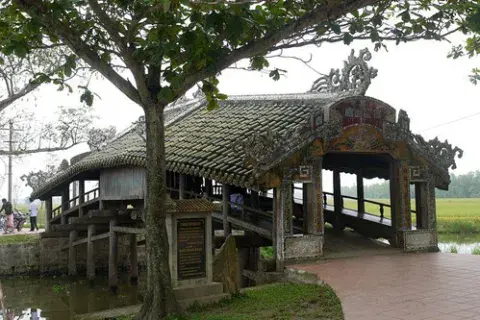
The Thanh Toan tile-roofed Bridge crosses a canal flowing from the beginning to the end of Thanh Toan village, Thuy Thanh Commune, Huong Thuy district at present. The village is about 8 km from Hue city on the eastward.

Thanh Thuy village was established in the 16th century. Among the emi...

The Thanh Toan tile-roofed Bridge crosses a canal flowing from the beginning to the end of Thanh Toan village, Thuy Thanh Commune, Huong Thuy district at present. The village is about 8 km from Hue city on the eastward.

Thanh Thuy village was established in the 16th century. Among the emigrants from Thanh Hoa following Lord Nguyen Hoang to Thuan Hoa, there were 12 family heads who settled down there to be the 12 initial families of the village. One niece of the sixth generation of the Tran family - Mrs Tran Thi Dao - offered the fund to the village to build a wooden bridge so that the villagers on both sides of the canal could transport conveniently and benighted travellers could rest on their way. Mrs Tran Thi Dao was a childless wife of a high-rank mandarin in Le Hien Tong reign. She wanted to used her money for charity. In Canh Hung 37th year, Emperor Le Hien Tong granted the village a document to praise Mrs Tran Thi Dao and exempted the villagers from many taxes for them to remember her and to live after her example. In 1925, Emperor Khai Dinh also granted a document to bestow her "Duc Bao, Trung Hung Linh Pho" and to order the villagers to set up an altar on the bridge to worship her.

The tile-roofed Thanh Toan is an arched wooden bridge, 17m long and 4m wide. On both sides of the bridge length are 2 rows of wooden flatforms and parapets for people to lean their backs. The bridge is roofed with tubes. A researcher into Vietnamese ancient aesthetics - Louis Bezacier - classified Thanh Toan a rare and the most aesthetically valuable bridge among those of Vietnam. In the first half of the 20th century, there were the two most famous bridges of this style Phuc Toai and Phu Khe in the north, Thanh Toan in Hue and Nhat Ban (i.e. Lai Vien Kieu, also called Chua Cau) in Hoi An. The roofs of the bridges in the north are made of flat tiles, in the centre are made of tube tiles.

The tile-roofed Thanh Toan bridge is not only an ancient architectural remain with highly historic and cultural values but also a tourist attraction. The bridge was built over 2 centuries ago and damaged many times by storms, floods and wars. However, after the bridge was destroyed, the villagers always contributed to repair, renovate and preserve it. The Thanh Toan bridge with its tile-roof has entered into the moods and aspirations of many generations as well as inspired the poetic souls of the local people and travellers, their contents are still handed down among the people or engraved right on the bridge.

In September 1991, the bridge was greatly renovated according to the old design and officially accepted by the Cultural Ministry as a national remains, a rare and appreciated beauty-spot of the whole country.

XQ Embroidery Nha Trang

XQ EMBROIDERY NHA TRANG


Starting from motive power of self seeking, self mediation, and return to origin of national character, married couple artist, artisan Vo Van Quan and Hoang Le Xuan researched, drew out new trend of embroidery aimed to restore tradit...

XQ EMBROIDERY NHA TRANG


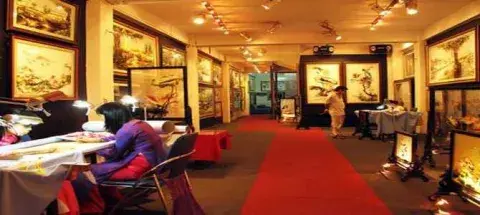
Starting from motive power of self seeking, self mediation, and return to origin of national character, married couple artist, artisan Vo Van Quan and Hoang Le Xuan researched, drew out new trend of embroidery aimed to restore traditional career falling into oblivion.

Mrs.Hoang Le Xuan was descended from Hue family inherited all of high precise skill of embroidery. Mr.Vo Van Quan, an artist with creative brain and patient attempt already together with Mrs.Xuan drew new trend for career, combined between embroidery art and painting art to create new color for Vietnamese embroidery.

From 1990-1992 both of them invented embroidered works with subject: “Refer to a country, refer to a human life” very Vietnamese character.

End of 1992 they came to Da Lat to open career class and trained embroiderer , to raise new embroidery art universalized folk .

Early 1994 established XQ Da lat silk embroidery cooperative team with total 10 artisans.

Date 30 January 1996 officially established XQ Da Lat limited with some achievements as follows:

Highly evaluated by Central High graded leadership: “Restore traditional career of nation”.
To be granted certificate, certificate of merit, golden medal for product.
To be praised by writers and artists circle.
To be loved by customers in domestic and in abroad, and evaluated highly about fine arts value.
Together with desire of popularizing to develop more traditional national career, we established branches on every where.
Date 20 april 1994 established XQ Co Do Silk embroidery Center.
Early 1995 XQ Saigon silk embroidery Center was established.
Date 27 November 1997 established XQ Nha Trang silk embroidery Center.
Date 01 April 1999 established XQ Nha Trang silk embroidery Center.
December 2003 established XQ Ha Noi silk embroidery Center.
·Especially date 29 December 2001 XQ Historical Village was opened officially, created a square for XQ artists , embroiderers created meanwhile kept and developed more about a career, a national culture characters.

Oceanographic Institute Nha Trang

OCEANOGRAPHIC INSTITUTE NHA TRANG


History and location
________________________________________
Located at 1 Cau Da St., about 5km from Nha Trang City Center, at the foot of the outcrop where Bao Dai Village is constructed, ...

OCEANOGRAPHIC INSTITUTE NHA TRANG


History and location
________________________________________
Located at 1 Cau Da St., about 5km from Nha Trang City Center, at the foot of the outcrop where Bao Dai Village is constructed, is a grand French-colonial building which houses the National Oceanographic Museum of Vietnam. It is an interesting aquarium in which you can gain the exact image of Nha Trang marine environment. Opened to the public on September 14th, 1922, today it is still a popular destination for both domestic and foreign tourist.

What to see
________________________________________
Nowhere can people expect to see a more extensive collection of living beings from the Eastern Sea like in this museum, particularly in areas like the bays of Thailand, archipelagoes of Paracel (Hoang Sa) and Spratly (Truong Sa), shore regions of Vietnam and the gulf of the Vat Bô.
The collection of this museum spreads out over two floors. The ground floor is home to fish tanks of varying sizes that house all manner of marine life. All kinds of fish you would find in the sea area of Khanh Hoa Province are presented there: reef sharks, turtles, living coral, anemones, puffers, lionfish, clownfish, sea horses, and a whole array of colorful reef species, some of which can be found in no other place in the world. Each of them has a label indicating their name, origin and characteristics in Vietnamese and in English.
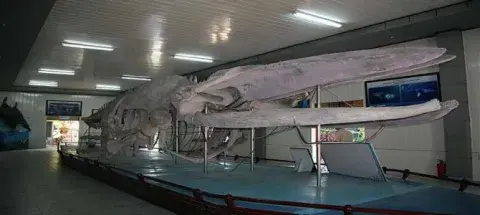
The upstair floor is for exhibiting specimens, local boats and fishing artifacts, plus an 18 metre long whale skeleton. Over its long history, this museum has been holding more than 20000 specimens of tropical marine creatures. Apart from the real fishes, there are also rare species’ skeletons or bodies preserved in formaldehyde solution. There are even finds of endemic species from Kampuchean Vietnamese seas and from other nearby countries, some of which are extremely rare, like the dugong or sea cow. Kids are often very excited to visit the big tropical turtles and crocodiles.
Apart from the museum aquariums, there are also many of the theme rooms in the National Oceanographic Museum of Vietnam which focus on marine science featuring the history of its research equipment and technology such as: “From Light to Life” (features algae and phytoplankton), “Life in a Drop of Water” (microscopic aquatic organisms), or rooms illustrating coastal natural disasters, sacred legends, traditions and culture of Vietnam fishing.

Hon Mun Island

HON MUN ISLAND NHA TRANG


In the south east of the island, there are many high rise cliffs with dangerous wattles forming caves and grottoes, in particular the stone here is black as ebony. So that people call it as Hon Mun. Beside, Hon Mun Island is conside...

HON MUN ISLAND NHA TRANG


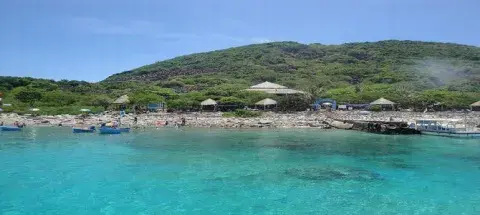
In the south east of the island, there are many high rise cliffs with dangerous wattles forming caves and grottoes, in particular the stone here is black as ebony. So that people call it as Hon Mun. Beside, Hon Mun Island is considered as a biggest and richest aquarium of Southeast Asia Sea. Having a total area of 160 square kilometer, in which 122 km2 is the sea area, and the rest is the area of all island. In the black stone caves of Hon Mun, this is the home of swallow. Moreover, the location of island is near to the the hot sea currents from the equator, so given a advantages to the corals and various type of tropical sea creatures are growing.  Thus, Hon Mun is very well-known by a stunning coral ecosystem this is a first marine conservation of Vietnam.

Today, this place is approved as the area most marine biodiversity in Vietnam by the World Wildlife Fun (WWF). At a depth of 10m of the sea, it is the home to an abundant and diverse group of marine species. According to statistics, there are about 2.000 marine species in which 1.500 was found in Hon Mun. Over the depth of 18m of sea bed, there is a big surprise with many caves and grottos where some species are gathering.

Coming here, visitors can not miss activities such as: Bar floating on the sea, diving to explore coral reefs, glass bottom boat … admire the color coral and sea creatures. Hon Mun and area for scuba diving are protected area, so the protection of the environment here is a serious problem. The marine species are becoming a living museum, so that the fishing and violating them are absolutely banned. Furthermore, there is a regulation for visitor during their trip is not drink beer, alcohol and throw garbage into the sea.

Nowadays, Hon Mun is becoming the attraction for who love diving and discover the sea life.