Village of the First Generation of Sun Yat-sen

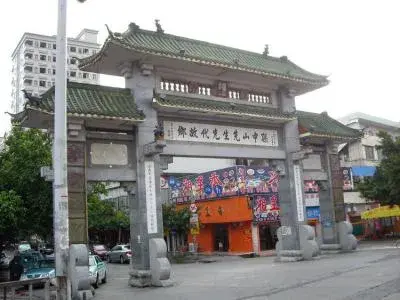
Sun Yat-sen first generation of former residence village, the ancient name is called Changsha, also known as Shaxi. Ancestors ancestral home because of the location of life is in the area along the beach in Changsha, just so named.

1, Sun's ancestral hall

Is located in the town of Cha...

Sun Yat-sen first generation of former residence village, the ancient name is called Changsha, also known as Shaxi. Ancestors ancestral home because of the location of life is in the area along the beach in Changsha, just so named.

1, Sun's ancestral hall

Is located in the town of Chang'an town of Sun's ancestral hall, was built in the middle of the Ming Dynasty, Qing Tongzhi early years, Xiangshan (Zhongshan City) left step head clan sponsor to build an ancestral hall, just to make the temple appear towering spectacular, shape Such as squat general, and in the ancestral hall of the date of the gift couplets, narrative Sun Department of the source, meaning simple to teach future generations do not forget ancestors Ende. Couplets cloud: Shen Zi surname in his hometown, the wood of this, the water is active, the five generations of Kei Qiu opened the ridge; to take the first spirit in the temple, Zongneng Gong, Zu Rende, three room Zhudou Xiangshan. In the autumn of 1986, at the 120th anniversary of the birth of Sun Yat-sen, Sun Yat-sen's history research room was held in conjunction with the CPPCC and the Cultural Affairs Bureau of Dongguan City. In the town of Chang'an, Sun Yat-sen's symposium was held. meeting. Participants with a large number of historical data, confirmed Sun Yat-sen on behalf of the village from the village. Guangdong TV station with the shooting of the documentary news: Sun's ancestral hall, on the new village, after the TV screen on the screen, a moment of major events. Hong Kong folks bowed to the victory, this initiative, repair the ancestral hall, the expansion of the school. May 21, 1996 was Changan Town People's Government as the first batch of cultural relics protection units.

2, Sun Yat-sen first generation of ancestral graves

Chang'an town on the village of Zhongshan Road, across the deep road across the foothills, there is a Ming Dynasty tomb, which is Sun Yat-sen first generation of ancestral graves. It is backed by the mountains, facing the lion ocean, is the Qing Tongzhi three years (1864) winter rehabilitation. In the granite tombstone at the top of the carved "Chong Yin Tang" three words, the tombstone in the middle of vertical "Ming granted Deng Shi Lang, was three ancestors Kaifeng Sun Gong's tomb."

This memorial cemetery is not repaired before the original was only a very common grave. Tongzhi three years. Xiangshan Sun's descendants through the rolling river, donated to rebuild the cemetery. They did not think of how feng shui here, only know their ancestors since the source from the sand, they should recognize ancestors, to not forget the first generation of origin. Drinking water source, for the filial piety drive to rebuild the cemetery. Can be said that the meaning of this tomb is not feng shui how is the dragon? The But fully proved a fact: Zhongshan City, Tsui Hang Village Sun Yat-sen first generation from the town of Chang'an town. 3, Zhongshan Park

Zhongshan Park, located in the Guangzhou-Shenzhen Highway on the road next to the village. Is the Changan people to cherish the memory of Mr. Sun Yat-sen's great achievements, learning for the Chinese people struggle for the spirit of life and carefully built. When you enter the main entrance of Zhongshan Park, a Mr. Sun Yat-sen relief as high as standing in front of the eyes, could not help people heart reverence. Along the park cement road slowly forward, on both sides of the road is green grass, flowers; clear river Liu Si water, clear water ripples; foothills on the Li tree trees, bamboo ... ... in the litchi shade, there is a Ming Dynasty Tomb, which is Sun Yat-sen first generation of ancestral graves, it is backed by the triangular flag-shaped Castle Peak, facing the lion ocean, is the feng shui scenery superb treasure. In the first year of the Qingming, rejuvenation, Sun's descendants are far from the Pearl River to worship, to express the descendants of the ancestors did not forget the origin of virtue, fully embodies the traditional Chinese sense of loyalty and filial piety ... ... Zhongshan Park is not only beautiful scenery and pleasant environment , Has also become a reminiscent of Mr. Zhongshan high quality, keep in mind the ancestors of the origin, improve their own character of the solemn cultivation.

by car

FushenGang Park in Dongguan

Fushengang Park is located in the northeastern part of Houjie Town, Dongguan City, Guangdong Province. The northwest corner of Guangshen Expressway Houjie entrance is made up of Wai Wan Expressway, Hexia Road, Flying Road and Fukang Road. Ha Tsuen Choi Yuen Road and Houjie Avenue, between the gen...

Fushengang Park is located in the northeastern part of Houjie Town, Dongguan City, Guangdong Province. The northwest corner of Guangshen Expressway Houjie entrance is made up of Wai Wan Expressway, Hexia Road, Flying Road and Fukang Road. Ha Tsuen Choi Yuen Road and Houjie Avenue, between the general road. The east side of the hospital is also planning to build municipal plaza and supporting ecological leisure park, the south side of the junction of Houjie Town, east and west of the traffic trunk road Fukang Road and is planning the construction of the new gymnasium, the north side of the Houjie landmark attractions Fukang Kong Park The

Chinese name Fukuoka park climate type subtropical monsoon climate covers an area of ​​654 acres of open time as early as 10 pm - night 21:00 ticket prices free tickets famous attractions Wanfu Court

table of Contents

1 landscape

Citizens and tourists can be in the area of ​​the gymnasium, library, golf course, opera house, group art museum and other venues to see concerts, play, watching the game, leisure and so on. It is a good place to relax and unwind, relax and relax.

Landscape editor

More than 300 kinds of plants in the garden; 4 million trees, 150 million shrubs, tens of thousands of grass vines to provide fresh oxygen, like exposure to natural oxygen bar, sitting to enjoy the natural slow life. At the same time the park has built a artificial lake, green water in the water, can be zero distance feeling the most beautiful, out of the park four seasons.

By car/metro

Meizhou Bay of Putian City in Fujian Province

Meizhou Bay is located in the west of the Taiwan Strait, the central coast of Fujian Province, Quanzhou City and Putian City rendezvous, specifically for Putian City Xianyou County, Chengyu District, Xiuyu District and Quanzhou Huian County, Quangang District Interchange, which Quanzhou Port Xiao...

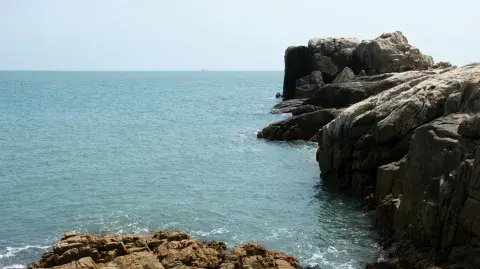
Meizhou Bay is located in the west of the Taiwan Strait, the central coast of Fujian Province, Quanzhou City and Putian City rendezvous, specifically for Putian City Xianyou County, Chengyu District, Xiuyu District and Quanzhou Huian County, Quangang District Interchange, which Quanzhou Port Xiao Chuang and Douwei Hong Kong is the "rare in China, the world is not much" multi-berth natural deep-water port [1]. Meizhou Bay on both sides of the mountains, Meizhou Island across the bay; to the Gulf 5 sea, the island, Dazhuyu, small bamboo, small frost, etc. were northeast - southwest arrangement; and then 7 miles, And the universe of the universe, the formation of three barriers, shelter and excellent conditions. Meizhou Bay deep inland about 18 nautical miles, the channel is long and wide. Meizhou Bay Coastal Port is divided into: Dongwu Port, Xiuyu Port, Xiaocu Hong Kong, Douwei Port and other four port.

As early as 2008 Meizhou Bay has begun to integrate. In August 2008, the Standing Committee of the Fujian Provincial Committee and the Governor's Office discussed the Mekong Bay Port System Integration Project, and the Mekong Bay Port System Reform process was launched. June 4, 2009, Fujian Provincial Committee formally approved the establishment of Fujian Province, Meizhou Bay Port Authority. According to the minutes of the Provincial People's Government of the People's Government of Fujian Province on the 17th of 2008, No. 97, 2009, Fujian Provincial People's Government "on the study of Meizhou Bay port integration work summary" and the Fujian Provincial Organization Committee "on the establishment of Fujian The province of Meizhou Bay Port Authority and the relevant institutions of the issue of approval "(Fujian Committee prepared [2009] 97), Fujian Provincial Department of Transportation was ordered to announce: since August 3, 2009, Fujian Province, Meizhou Bay, Quanzhou City Port Authority under the jurisdiction of the Xiao house, bucket tail port area. And Putian City Port Authority under the jurisdiction of Xiuyu, Soochow Port merged to form a new Meizhou Bay, the establishment of Fujian Meizhou Bay Port Authority. The newly formed ports of Meizhou Bay in Fujian Province are collectively referred to as Xiuyu Port, Meizhou Bay Port, Meizhou Bay Port Wuhu District, Meizhou Bay Port Xiao Chu Kuang Port, Meizhou Bay Harbor Harbor Terminal Area. Meizhou Bay confined to various historical factors, leading to two ports belong to Quanzhou and Putian City jurisdiction, the formation of "one Bay two systems" embarrassing situation, as Meizhou Bay overall development obstacles. Fujian Meizhou Bay Port Authority in Quanzhou.

On the morning of August 2, 2009, Fujian Meizhou Bay Port Administration Bureau and Fujian Meizhou Bay Port Development Co., Ltd. were formally established, marking the key step of Meizhou Bay port integration. At this point, Fujian Province, Xiamen Port, Fuzhou Port and Meizhou Bay Port three port pattern was formally formed [2]. Has 3752 km coastline of 125 harbors in Fujian Province, the early years there is no hub of a large port. With the construction of the economic zone on the west side of the Straits, Fujian Province to promote the re-integration of port resources. The newly established Meizhou Bay Port Authority will be unified management of the original subordinate to Quanzhou and Putian four port area. From the port of Meizhou Bay area will be unified name. This is Fujian Province in 2006 after the successful integration of Xiamen Bay within the Xiamen, Zhangzhou two port area after the promotion of inter-city administrative division of port resources integration is another major initiative. The 2012 New Announcement of "Meizhou Bay" is based on the integration of ports in the Meizhou Bay area in 2009, expanding and expanding the Quanzhou Bay, Quanhu Bay, Wai Tau Wan Port and Quanzhou Bay Putian port Xinghua Bay port area, in the original four port expansion for the eight port area. Meizhou Bay port will coordinate the development of bulk bulk cargo and domestic container transport, and strive to "second five" at the end of the annual capacity of 200 million tons of the main hub port [3].

by car

Black Dragon Pond

The Black Dragon Pond is a popular summer resort located in Miyun District. It is about 93 kilometers northeast of Beijing.

The resort’s entire landmass covers an area of 9 acres. The scenic spot is a four-kilometer-long deep valley with a drop in elevation of 220 meters. Peaks on the South...

The Black Dragon Pond is a popular summer resort located in Miyun District. It is about 93 kilometers northeast of Beijing.

The resort’s entire landmass covers an area of 9 acres. The scenic spot is a four-kilometer-long deep valley with a drop in elevation of 220 meters. Peaks on the South and north sides often rise from 300 to 500 meters. However, the bottom of the valley is as deep as 150 to 370 meters. The valley itself is narrow and is beset in a spiraling like structure, with precipitous cliffs towering on the both sides. The area is home to 18 lagoons and three waterfalls, which are like shining pearl pillars erected in the valley.

Major views include the Tongtian Waterfall, which sits above a sheer cliff and bears a height of 50 meters. There is also the Miren Cave, which serves as a passageway to the top of the Tongtian Waterfall, the Luoyan Pond, the Suspending Pond, the Sinking Pond and the Bottomless Pond. The masterpiece is, of course, the Black Dragon Pond. It is quite often referred to as the deepest pond in Beijing. Every summer, visitors from around the city visit the pond in order to escape the bustling city scene. During the winter, varied waterfalls and icicles surround the lagoons, offering a more poetic overtone to the views.

Featured Attractions: With charming views, the Black Dragon Pond has a beautiful legend. It is said that once upon a time there were two brother dragons. When they grew up and had to part, the virtuous black dragon gave their home--the Bailong (White Dragon) Pond--to the white dragon, and went to reside in grassless and waterless Heilong (Black Dragon) Pond. He strove hard to build a new home, causing a god to present him with 18 pearls. The black dragon sprayed the pearls, hence the 18 ponds. Many of the ponds were named from the dragon and the legend, for instance, Dragon Paddle Pond, Pearl Bunch, and Residential Pond of the Black Dragon etc.

Beijing Huanghuacheng Lakeside Great Wall

Beijing Huanghuacheng Lakeside Great Wall is a tourist resort famous for its uniqueness, characterized by its beauty and integration of mountains, clear waters and an ancient stretch of the Great Wall . There are flowers in season for three of the seasons and great scenery can be seen all year ro...

Beijing Huanghuacheng Lakeside Great Wall is a tourist resort famous for its uniqueness, characterized by its beauty and integration of mountains, clear waters and an ancient stretch of the Great Wall . There are flowers in season for three of the seasons and great scenery can be seen all year round, These sceneries are made magical with clear mountains, beautiful waters, bird song and fragrance of flowers.

Visitors to the site surrounded by mountains and exuberant green forests, are treated to a gorgeous botanical sights whichever season they visit. You can enjoy both the beautiful lake and mountains and view the graceful beauty of the Great Wall simultaneously whilst being surrounded by the verdant trees and red flowers bringing you back to nature. Cross wooden bridges, wade creeks, stride strange stones, ascend the the ancient paths and you can reach Heilong Pond.

There are so many natural scenes for you to see that it will be difficult to tear yourself away, these places include Longwei Cave, Zicui Peak, Zuinv Hill, Shilang Valley, Sweetheart Peak and Three-Pearl Pond. The Heilong Pond, located at the westernmost end of the resort, is surrounded by mountains and its waters are green, clear and deep. Spring water gushes out from the bottom of the pond and the water is crystal clear and cold. In summer when the weather is too hot to bear, it’s pleasantly cool in the pond. The cruise terminal is located on the west side of the central peninsula and hand-rowed boats and pedaloes are the types of boats widely available. Tourists can not only row a boat on the lake, but also take a rest in the cool and enjoy the beautiful view.

Ancient Badaling Great Wall

The Ancient Badaling Great Wall is located in Donggou Village, Badaling Town of Yanqing County. It is about 65 kilometers (40 miles) from Beijing. This section of the Great Wall is about 5 kilometers (3 miles) from the famous Badaling, and is nearby the western gate of the military defense system...

The Ancient Badaling Great Wall is located in Donggou Village, Badaling Town of Yanqing County. It is about 65 kilometers (40 miles) from Beijing. This section of the Great Wall is about 5 kilometers (3 miles) from the famous Badaling, and is nearby the western gate of the military defense system on the Badaling Great Wall.

Seen from a distance, the Ancient Badaling Great Wall resembles a dragon winding its way along the mountain peaks. With lofty ridges and towering mountains, the deep trenches and high embarkments all contribute to the strength of this strategically crucial section of the Great Wall. Surviving the vicissitudes of nearly 2,000 years, the walls dominate the scene with an indelible mark made by history. The remnant wall, with its ubiquitous broken body, conveys a peculiar glamour.

This section of the Great Wall is in its original form, and replicates the character of the Ming Dynasty’s Great Wall. The whole section is 2,000 meters long, but only about 100 meters are open to tourists. Two routes are easily accessible to tourists that plan to enjoy the splendid panorama of the Great Wall at their leisure.

Take Bus No. 919, and get off at Xibozi Stop (西拨子站) which is the next stop after Badaling.

Gubeikou Great Wall

Gubeikou has long been a town of military significance and an important pass to Beijing. The Yanshan Range winds from east to west and is cut off at Gubeikou, forming a natural narrow pass here. To the west of the pass are the Chaohe River and the Wohu Mountain, and to the east is the Panlong Mou...

Gubeikou has long been a town of military significance and an important pass to Beijing. The Yanshan Range winds from east to west and is cut off at Gubeikou, forming a natural narrow pass here. To the west of the pass are the Chaohe River and the Wohu Mountain, and to the east is the Panlong Mountain. From ancient times, Gubeikou has served as a route of strategic importance, linking the southern and northern areas of the Yanshan Range. As early as 2,500 years ago, a fortification was built here and repeatedly reinforced throughout the following dynasties.

The main part of today's Gubeikou Wall was constructed under the supervision of Xu Da, a well-known general in the Ming Dynasty. This part of the Great Wall runs for more than 20 km and consists of four sections: Wohushan, Panlongshan, Jinshanling and Simatai. It has 143 beacon towers, each positioned at an average interval of 156 meters. The nearest two are only 30 meters apart. The inside of these towers varies in design. While some have a flat ceiling, others either have an arched ceiling and a domed ceiling, or an octagonal, painted ceiling. Each tower has two floors, six archways and ten arched doors, allowing garrisoned soldiers to advance and retreat freely. The towers are also different in size. The largest one can accommodate a garrison of 100 soldiers and the smallest one a garrison of 10 soldiers. The towers commonly have one to six portholes.

Features:

Gubeikou Great Wall was built along the precipitous mountain ranges, rising and falling at various sections. Simatai, built on a cliff, is extremely steep. A famous Great Wall specialist said: "The Great Wall is the best of Chinese architecture and Simatai is the best of the Great Wall."

There are plenty of legends about the Gubeikou Wall, especially the Simatai section, as well as historical relics. At night, from the Beijing Watchtower, 986 meters above sea level, one can see the lights shimmering in downtown Beijing. The west of this tower is the steeply situated Fairy Tower that looks like a slim fairy standing among shrubs and wild flowers.

Wohu Mountain: “Wohu” means “Crouching Tiger” in English, because the mountain looks like two tigers, one lying on its back while the other lies on its stomach. Located in the western section of the Gubeikou Great Wall, its highest peak measures about 665 meters (2,181 feet). A watch tower is erected every 150 meters (492 feet) of the wall, overlooking a deep valley or mounted on a strategically important hilltop. A professor from Peking University compares the wall to a huge cursive script work with the watch towers providing the pausing or transitional strokes. It retains its fascination today as its raw condition is still evident.

Panlong Mountain: West of Wohushan, it is located in the middle section of Gubeikou, where most of the historical wars took place. In ancient times, both warring parties placed emphasis on securing the Panlongshan Great Wall, because each knew that once the wall was captured, the Gubeikou Great Wall would be readily occupied. The whole wall measures about 13 kilometers (3.1 miles). Of its over 40 watch towers, the General Tower is the most famous. It is located at the commanding elevation of Panlongshan Mountain, from where wars were directed. There are four arrow windows on the north and south sides respectively, while each of the east and west sides has three arrow windows. This section is of unique construction: it is made up of earth, stone and brick walls. It is also preserved in its original state.