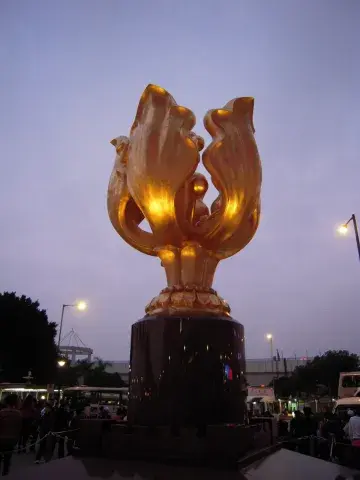
Gu Lang Yu

Ferry: There is no fee for the 10 minute ferry ride to
Public Bus Routes to the Ferry Terminal: 2, 3, 4, 8, 10, 11, 12, 23, 25, 27, 28, 30, 31, 32, 36, 44, 50, 66, 67, 85
The Swallow Rock (Yanzi Ji)
This small scenic area in the northwest part of Nanjing was supposedly named "Swallow Rock" as its shape resembles a swallow. It is not one of Nanjing’s most popular attractions, yet it still provides an excellent and an up-close view ...
This small scenic area in the northwest part of Nanjing was supposedly named "Swallow Rock" as its shape resembles a swallow. It is not one of Nanjing’s most popular attractions, yet it still provides an excellent and an up-close view of the Chang Jiang (长江 - Also called Yangzi River or Yangtze River).
The Swallow Rock is also of minor historical interest for several unrelated events. The famous poet Li Bai once got drunk here and wrote a poem that is now displayed on the rocks. There is also a small monument that marks this as one of the sites where citizens of Nanjing were slaughtered by the Japanese during the Nanjing Massacre.
How to Get There
- Buses 8, 122 and 125 stop at Swallow Rock. From the bus stop walk forward and turn right.
- Take a taxi from the Maigao Qiao subway station.
Other Places to View the Chang Jiang River in Nanjing
Nanjing Chang Jiang Bridge (Nanjing Chang Jiang Daqiao, 南京长江大桥)
Yuejiang Tower (Yuejiang Lou, 阅江楼)
Nanjing 2nd Bridge (南京二桥)
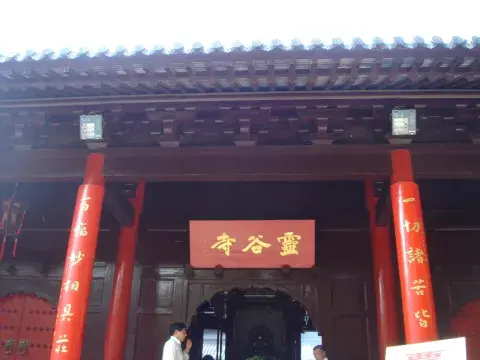


China Liang Zhu Culture Park

Liang Zhu Culture Park is a short distance outside Ningbo. It can be reached by the number 238 bus or by taxi.
The story of the butterfly lovers is known throughout China. Yangshuo, in Guangxi Pr...
Liang Zhu Culture Park is a short distance outside Ningbo. It can be reached by the number 238 bus or by taxi.
The story of the butterfly lovers is known throughout China. Yangshuo, in Guangxi Province, is home to a butterfly cave dedicated to this famous couple, but Ningbo’s Gaoqiao Town stakes its claim as the real home of this moving story. This “Romeo and Juliet” story of China dates back nearly 2000 years. If you do not know the story, then a visit to this cultural park will answer all of your queries.
This beautifully framed print is made from real butterflies

The park is definitely designed for lovers. You can even place an advertisement for yourself where respondents leave butterfly stickers with contact details. Kids will enjoy the park as well.
 |
|

Gaoqiao Town - Take bus 238 (4RMB) from alongside the railway station


Ling Shan Buddha
As a tourist in China, there are a plenty of Buddhist temples and Buddha statues to marvel at. Wuxi boasts the Giant Ling Shan Buddha (or ’Ling Shan Da Fo’).
This one you must see. Not only is it very, very big, but the whole attrac...
As a tourist in China, there are a plenty of Buddhist temples and Buddha statues to marvel at. Wuxi boasts the Giant Ling Shan Buddha (or ’Ling Shan Da Fo’).
This one you must see. Not only is it very, very big, but the whole attraction is meticulously planned and very well presented with something of interest for everyone. Here are some of the treats in store:
- The Fountain Show: This is a water show choreographed to music with commentary (in Chinese). Even if you don’t understand the commentary, the show is quite spectacular. There are shows at 10.30am, 11.30am, 2.30pm and 4.30pm - though the showtimes be altered or even cancelled during quieter times. The first show can be hard to get to on time if you catch a bus from Wuxi, so it's usually best to aim for the 11.30 show. It is also worth checking on the wind direction before choosing a spot to stand, especially if you'd like to protect your camera, as you can get quite damp on the down-wind side.

- The happy Fat Buddha with a hundred playful Buddha babies climbing all over him.

- The Hand.

- The big Buddha himself. Ascending the steps to the feet of the giant standing Buddha is no easy climb.

Entrance fees
These have a way of changing with the season. Recently it cost 80 yuan to enter the grounds. This ticket will give you access to almost everything. Upon last check an extra 15 yuan gets visitors into the museum at the base of the Buddha and right up to touch his feet.
Getting There
The number 88 bus goes from outside the railway station to Ma Shan (马山) where the Buddha is located. Unlike other buses the no. 88 bus allows passengers to pay according to how far they travel. There is a conductor who sells tiny paper tickets. The ride to Ma Shan costs 4 yuan. It is possible to catch the bus at other stops along the route, which goes along the Grand Canal and across the LiangXi bridge. However, the trip is quite long (about an hour, and fairly bumpy), so it's worth trying to get on the beginning in order to get a seat.
As you arrive at the number 88 bus station you will be beset by a number of operators with mini-vans hoping to take you on a guided tour. They usually ask for about 100 yuan. It's your choice. The bus is good value, and you probably don’t really need them to show you around. When you return from your visit, the operators will still be there. You may decide take a ride back with one of them if you can bargain the price down. This return scenario might end up being a little faster and comfortable in exchange for the higher cost.
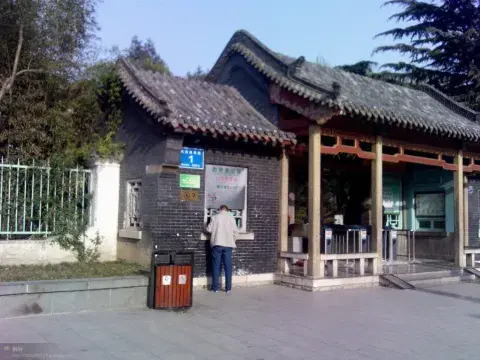
Bao Tu Quan Park (Baotu Spring Park)
Bao Tu Quan Park provided me with the best experience I've ever had in a park in China. It’s as if the soul of Chinese literature itself was breathing throughout the park, with natural springs as its gills. The park was the former home compound of Song Dynasty poetess Li Qing Zhao. The park...
Bao Tu Quan Park provided me with the best experience I've ever had in a park in China. It’s as if the soul of Chinese literature itself was breathing throughout the park, with natural springs as its gills. The park was the former home compound of Song Dynasty poetess Li Qing Zhao. The park contains a full museum devoted to her life and work, with placards in English and Chinese, and wax figures illustrating her childhood, marriage, and later years.
In addition to the poetry and history of Li Qing Zhao, the park is full of courtyards that guide you in and out of one another. Each one is devoted to a natural Chinese icon such as bamboo, plum, peach, crabtree, persimmon, or even the springs themselves. Therefore every courtyard inspires a different feeling, one that was carefully engineered by initiated feng shui masters!

Baotu Spring Park is located across the street from Quan Cheng Square (泉城广场) on Qingnian Xilu (青年西路), north of Luoyuan Da Jie (泺源大街) and south of Heihuquan Xilu.
Chinese Website
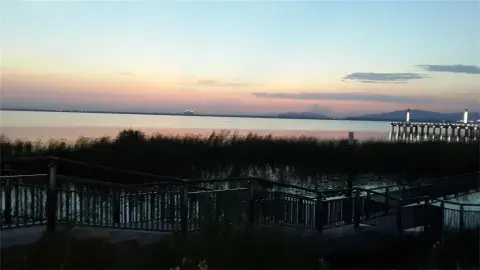
Lotus Lake
Following the quiet canal a few kilometers south from Slender West Lake leads to Lotus Lake (He Hua Chi). There is a pleasant tea house on an island in the lake, and some trails and paths meander throughout the park as well. ...
Following the quiet canal a few kilometers south from Slender West Lake leads to Lotus Lake (He Hua Chi). There is a pleasant tea house on an island in the lake, and some trails and paths meander throughout the park as well. The lake can even be enjoyed without physically entering the park, as the bustling side streets around Lotus Lake are interesting places to explore as well.