Tomb of Qin Shi Huang
Tips
Photography is not allowed in any of the pits and halls.
Neighborhood
Many interesting sights are within easy reach from the city center, including the Xi’an Stone Tablet Forest, the Great and Lesser Wild Goose Pagoda, Xi’an City Wall and H...
Tips
Photography is not allowed in any of the pits and halls.
Neighborhood
Many interesting sights are within easy reach from the city center, including the Xi’an Stone Tablet Forest, the Great and Lesser Wild Goose Pagoda, Xi’an City Wall and Huaqing Pond.
Admission Fee
It costs 80 yuan to see the vaults, 15 yuan for the museum and 40 yuan for a “Circle Vision” documentary on the warriors and their excavation.
Bus No. 306, 307 stops at the Tomb of Qin Shi Huang.
The East Lake
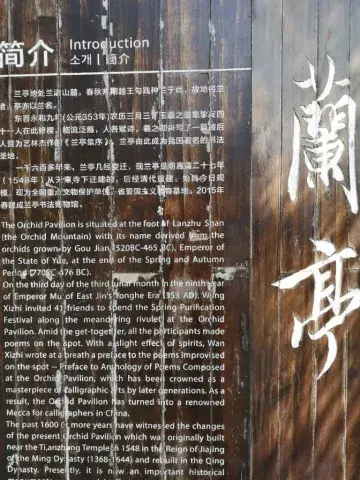
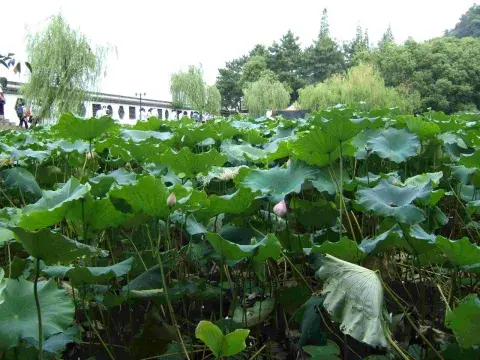
Along with the West Lake in Hangzhou and the South Lake in Jiaxing, Shaoxing’s East Lake make up the three most famous lakes in Zhejiang Province. The East Lake is smaller than its counterparts, but it is regarded as a magical lake by...
Along with the West Lake in Hangzhou and the South Lake in Jiaxing, Shaoxing’s East Lake make up the three most famous lakes in Zhejiang Province. The East Lake is smaller than its counterparts, but it is regarded as a magical lake by the Chinese. The combination of cliffs, grottos, and stone bridges is the reason why the East Lake deserves its magical reputation. Taking a boat ride on the East Lake, you can discover its natural beauty from a variety of viewpoints. You can also take the boat into the caves, and you will be simply awed by the scenery. From the mountain top beside East Lake, you can enjoy another unbeatable view of the "Oriental Venice".
Local bus routes No. 1, 107, 117, 137, 157, 207.
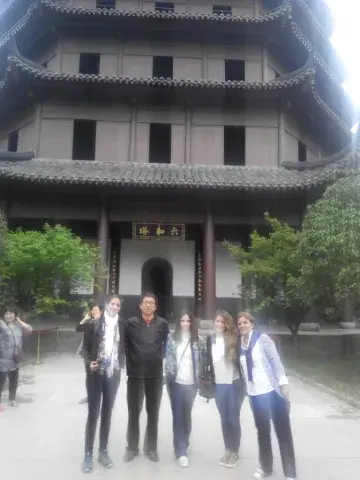
Tiger Beach (Lao Hu Tan)
Tiger Beach had a Legend about it.
Years a ago, one day a a large black tiger come to this fishing village, killed many villagers, and other villagers were so afraid of going out. There`s a young man called Shi Cao he decided to kill this tiger. He found a sward and fight wi...
Tiger Beach had a Legend about it.
Years a ago, one day a a large black tiger come to this fishing village, killed many villagers, and other villagers were so afraid of going out. There`s a young man called Shi Cao he decided to kill this tiger. He found a sward and fight with the tiger a day and night at the beach, he finally killed the tiger but Shi Cao were too tired, fell to the ground and died.
The village in memory of Shi Cao, they named the beach as Tiger beach, and the mountain of the south-east known as Shi Cao Mountain.
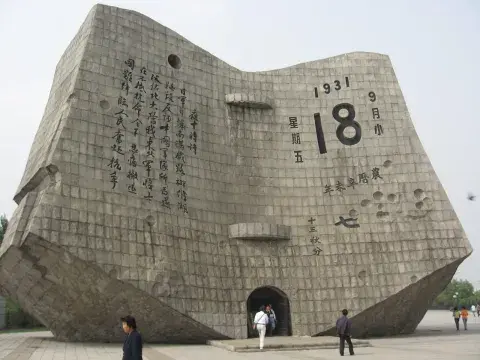
September 18th History Museum

September 18th 1931 is a day that will never be forgotten by the Chinese people, as it was the beginning of the darkest period in China’s modern history....
September 18th 1931 is a day that will never be forgotten by the Chinese people, as it was the beginning of the darkest period in China’s modern history. On this day the Japanese army, which had been occupying part of Manchuria (northeastern China) since the Sino-Japanese War (1894-1895), allegedly bombed a bridge at a Japanese owned and operated railroad crossing. The Japanese then blamed the attack on Chinese rebels. This action, which is now referred to as “the September 18th Incident (九一八事变)” or “the Manchurian Incident” or “the Mukden Incident” (Mukden is the Manchu name for Shenyang), was used as a pretext for the Japanese army to begin its invasion of China.
After the railroad crossing was destroyed, the Japanese launched a full-scale, surprise attack on Shenyang, easily conquering the city. Within a week, the Japanese conquered most of Manchuria, pillaging its cities, and taking the food, and resources for use in Japan. For the next 14 years the Chinese people lived in constant fear and suffered unfathomable atrocities at the hands of the Japanese army.
Shenyang’s 9-18 Museum sits on the exact site of the “9-18 Incident.” The museum is a large, very impressive building, designed to look like an open book. Some exhibits feature hundreds of photographs and documents from the years before the invasion leading all the way up to the war-crimes tribunals of the 1950s. Other exhibits include Chinese and Japanese firearms and artillery, human skeletons found in Shenyang, wax figurines, Japanese torture devices, and concrete sections of the original railroad bridge.
The museum is very well presented, and the dark, somber atmosphere is very suitable to the content of the exhibits. There are some signs in English, but unfortunately most of the information is in Chinese. However, even if you can’t understand the Chinese, the pictures and displays are impressive and moving nonetheless.
Those with an interest in modern history or those studying Chinese should definitely not skip the 9-18 Museum. It’s probably the world’s best collection of memorabilia from this important period of history, which is often overlooked in Western history books. The museum also provides excellent insight into the formation of the current ideas and attitudes of Chinese people, as well as the political relationships between the two East Asian countries. Furthermore, as of 2007, entrance to the museum is free.
For anyone staying in Shenyang, it is certainly worth the time to come here. If you can’t read Chinese, you may want to consider bringing a Chinese friend.
Note: Entry to the museum is free, but it closes at 4:00pm and is closed on Mondays. Plan your time so you can have at least two hours to wander around the museum.
Location: The Museum is to the northeast of the North Train Station, on Wang Hua Nan Jie (望花南街). From Middle Street (中街), it’s about 5km directly north on Xi Shun Cheng Jie (西顺城街). Ask a taxi driver for “jiǔ yī bā bówù guǎn”or take the following buses:
212 from Wu Ai Market
253 from Heping Square
299 from Liaoning University
325 from North Train Station
328 from Ma Lu Wan

Pillar from the Bridge Bombed in the "9-18 Incident"


Photos by Jerry Wang, 2007
Another disaster to China, Nanjing Massacre, in 1937-1938. The Memorial Hall of the Victims of the Nanjing Massacre