Mengdong River Rafting

The Mengdong River Scenic Zone is in Yongshun County, Xiangxi Autonomous Prefecture in Hunan, the birthplace of the Tujia nationality. Rivers flow from west to east and there are scattered lakes in the south and north. This configuration provides good conditions for Drifting tours. There are rapi...

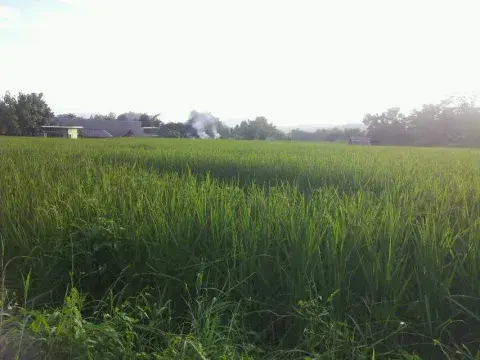
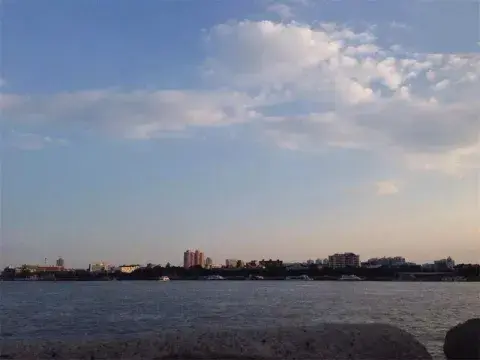
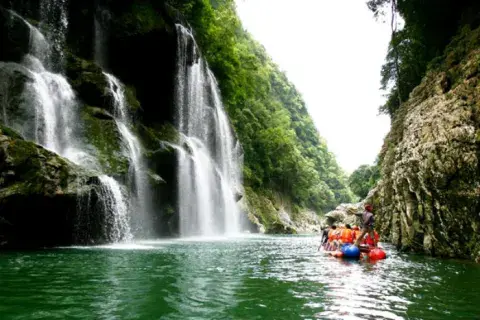
The Mengdong River Scenic Zone is in Yongshun County, Xiangxi Autonomous Prefecture in Hunan, the birthplace of the Tujia nationality. Rivers flow from west to east and there are scattered lakes in the south and north. This configuration provides good conditions for Drifting tours. There are rapid streams, dangerous shoals and calm rivers. The drifting covers about 47km. The river flows through steep country with high cliffs and deep valleys. The waterway is narrow and the flow is rapid which makes the tour exciting.

2 hours drive from Zhangjiajie city, Rafting usually take 3 hours. Wide calm river section take another 3 hours ending at Furong town that's well preserved old town famous for its old streets and stilted houses, it is worth visit. Tourists can see many Tujia style houses which are on stilts in the water at both banks. There are also the Xizhou bronze pillars, important cultural relics under the key protection of the state in the ancient town of Furong on the lower reaches of the river. You'll thrill to the excitement of the major rapids of the Mengdong River; there are a few of the rapids that get your heart pounding. The rapids are interspersed with calm stretches, which give you a chance to enjoy the breathtaking scenery. Gentle rapids carve a pathway through mountains and provide plenty of chance to swim, spot wildlife, take the fried the river fish, and just relax.

On the drifting boat, seeing mountains on both sides passing quickly and the stream rolling on with roars, one feels as if they were dropping to the deep valley from the sky, or jumping to the air from the ground, or galloping on horse backs, or riding clouds and mist. With great admiration, one feels shocked first and then delighted. The drifting is extraordinarily thrilling and one will never forget it!

Below are suggested items you should bring for your trip. You will enjoy your trip more if you are prepared for varying weather conditions.
Always Bring:
Swimsuit shorts wool sweaters or synthetic fleece wool socks windbreaker jacket and pants, footwear that can get wet (plus a dry pair for after your trip) dry clothes and towel. Sun screen sunglasses baseball cap or visor.
Cool weather:synthetic long johns wool hat and glovesWet Suit

Temple of Six Banyan Trees

Having a long history of about 1,400 years, the Temple of the Six Banyan Trees is one of the four best Buddhist temples in Guangzhou and located on the Liurong Road (meaning the Six Banyan Trees Road). It has a rich collection of cultural-relics and is renowned both at home and abroad.
Or...

Having a long history of about 1,400 years, the Temple of the Six Banyan Trees is one of the four best Buddhist temples in Guangzhou and located on the Liurong Road (meaning the Six Banyan Trees Road). It has a rich collection of cultural-relics and is renowned both at home and abroad.
Originally built in 537, it has been rebuilt several times, and the name has also been changed several times from Changshou Temple (meaning Longevity Temple) to Jinghui Temple and finally the current name. It is a name given by the great liiterateur Su Dongpo in the Song Dynasty (960 - 1279). It is said that he visited there while returning to the north. During the visit, he found six banyan trees there particularly striking. The vitality of the trees put him in a good mood and cheered him up. When the abbot of the monastery invited him to suggest a name, Su Dongpo wrote down its present name. Finally, its former name (Jinghui Temple) was changed to the present one, Temple of the Six Banyan Trees. A pagoda inside is known variously as Six Banyan Pagoda or Flowery Pagoda.

After entering by the mountain gate, the Tianwang Hall is the first hall you will see. The Laughing Buddha is there with smile all over his face to welcome visitors. Behind it is the Weituo Hall. According to legend, Weituo was a general who recaptured the Buddhist relics which had been stolen. He keeps a straight face, looking very serious and frightful, in distinct contrast with the Laughing Buddha.

The architecture that catches the visitors' eyes most is the Six Banyan Pagoda. It is a pagoda where Buddhist relics are placed. Its roofs curve upwards and look like dark red flower petals. The tip of the pagoda is like stamens, while the whole construction looks like a huge stigma high in the air. Therefore, people like to call it the Flowery Pagoda. The pagoda not only has a nice appearance, but also provides visitors a good place to overlook enchanting scenery around.