Jokhang Temple

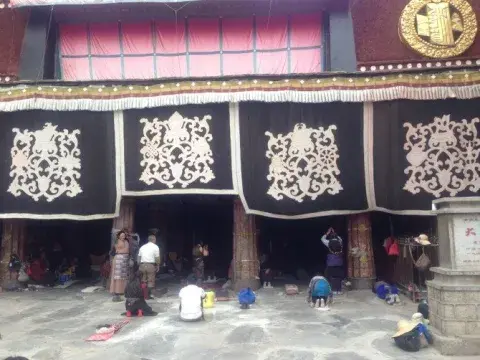
The Jokhang Temple, situated in Barkhor Square, is the noisy and colorful heart of Lhasa.

Jokhang Temple, one of Tibet`s holiest temples. These devout pilgrims wear yak leather gloves and aprons to protect...

The Jokhang Temple, situated in Barkhor Square, is the noisy and colorful heart of Lhasa.

Jokhang Temple, one of Tibet`s holiest temples. These devout pilgrims wear yak leather gloves and aprons to protect their hands as they slide over the rocky ground, their reverent prostrations atoning for bad deeds performed in the past. Prostrating pilgrims journey from all over Tibet to worship here.

Ngong Ping 360

Updates:


...

Updates:


* Just introduced last year, the new Ngong Ping 360 Crystal Cabins come equipped with a glass bottom, offering up uncluttured 360-degree  views of the surrounding environment.

People often criticize the urban planners of Hong Kong for being too focused on the big commercial inner-city money-makers; nit-picking at their preferential treatment of big businesses, the promise of more money, and consumerism. While this is certainly true, there is also a lot of urban planning that revolves around tree-planting and the natural environment as well, but this is just not necessarily evenly balanced to the amount of metropolitan developments that are taking place. Nevertheless, there are some objections to the norm taking place in the form of noteworthy projects which integrate nature and consumerism into account. The Ngong Ping 360 is a prime example of this.

As stated on the website, the motto of the Ngong Ping 360 is to “preserve the natural ecological environment and features of the Ngong Ping area and converge the customs and cultures of the Lantau Island”. While these effects are questionable, the cable car really is not to be missed. The other tied-in attractions are located at the ‘Ngong Ping Village’ at the top terminus and they include souvenir and food shops, a mercantile ‘Ngong Ping Teahouse,’ a ‘Walking with Buddha’ walk-through simulation and a ‘Monkey’s Tale’ theatre, complete with loud kitschy cartoons.       

The focal point is of course the Ngong Ping cable car but take note; this is not really aimed at the vertiginous, much in the same way that the tie-ins aren’t designed for the pessimistic. When you’re in a dangling cable car soaring over 50-feet above a steep mountain valley below, the experience can be somewhat intimidating, but it is undeniably worth it for the panoramic views alone. Likewise, you can get an almost identical feeling in your nerves when you’re in a theatre being squirted with water and showered in visual simulations about inflated myths and folklore - which is what awaits you in the Ngong Ping ‘village’ at the top. The 5.7km journey runs between Tung Chung Town Centre and Ngong Ping on Lantau Island, where the Tian Tan Buddha looms over a small formulated village, complete with Starbucks and the other said attractions.

The experience of the cable car is worth it, because this is easily the most scenic and convenient method of getting up to Hong Kong’s premiere attraction; the Big Buddha. However, make sure you go early in the morning to avoid crowds, and make sure you bring a big dose of forbearing tolerance.  

The Ngong Ping 360 experience is all about enlightenment, and that’s not just the spiritual kind; the experience offers retail enlightenment, it enlightens one about of the sheer size of the Buddha, and one’s mind is truly enlightened about the merit of sightseeing following the whole affair. Just like Siddhartha, one will surely see the light after their encounter with the Ngong Ping 360.

Normal Days


Sundays/Special Days

Journey of Enlightenment Package (round trip on Ngong Ping Cable Car, Walking with Buddha and the Monkey’s Tale Theatre). 

Adults $159

Children $80

Adults $169

Children $86

Ngong Ping Cable Car

(Round Trip).

Adults $96   Children $48

Adults $107  

Children $54

Ngong Ping Cable Car (Single Trip).

Adults $63   Children $30

Adults $74 
Children $38


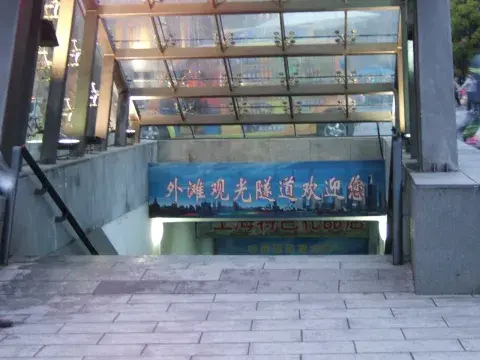
Bund Sightseeing Tunnel

Tourist attraction is a bit of a misnomer, monstrosity might be a bit more appropriate. The tunnel transports you under Huangpu river in a cable car style pod. Unfortunately the gentle pace is by no means re...

Tourist attraction is a bit of a misnomer, monstrosity might be a bit more appropriate. The tunnel transports you under Huangpu river in a cable car style pod. Unfortunately the gentle pace is by no means relaxing as you are constantly visually assaulted with a tacky light show.

The tunnel is divided into several zones such as Meteor Shower and Electrical Storm. Even Heaven and Hell are somehow represented through the medium of different coloured fairy lights. The Tourist tunnel is dazzling in both it’s brightness and pointlessness. It seems to be a by-product of China’s obsession with all things neon. If it’s bright and flashes then it must be good. Sadly in this case it falls short and should be avoided by anyone suffering from epilepsy or lacking a very strong sense of irony.

In saying that it is a relatively convenient way of getting from the Bund to Lujiazui, if you treat it as a bizarre form of transport you may be amused, as an attraction certainly disappointed and possibly slightly confused.

The entrance on Puxi is next to the Henan Middle Road subway stop (河南中路站) on subway line 2.  Buses No. 20, 22, 37 and 55 also stop near here.

The entrance on Pudong is next to the Lujiazui subway stop (陆家嘴站) on subway line 2.  Buses No. 81, 82 and 85 also stop near here.

Wenshu Monastery

In 1691 it was believed that the monk Ci Du reached such a state of enlightenment that he reportedly shook the ground and radiated light. Local officials concluded he must be the reincarnation of Manjusri and the monastery was renamed Wenshu (Manjusri). The Zen Buddhist monastery w...

In 1691 it was believed that the monk Ci Du reached such a state of enlightenment that he reportedly shook the ground and radiated light. Local officials concluded he must be the reincarnation of Manjusri and the monastery was renamed Wenshu (Manjusri). The Zen Buddhist monastery was originally built between 605-617 during the Tang Dynasty.

The Wenshu temple itself is easily the best-preserved temple in Chengdu. It is an imposing three story building as each story has a high ceiling. Three large paintings on the first floor should not be missed as each painting weaves an intricate tale about Buddhism in China or India. The paintings are filled with Buddhist symbolism set on a background of Indian and Chinese natural wonders and landmarks. If you speak Chinese, the monks will be more than happy to tell you about the paintings.

The monastery is a shady, quiet place to stroll about. Rugged rock gardens and bonsai trees bring a peaceful setting to a monastery crammed into urban China. Different buidlings around the complex contain nearly 1000 calligraphic works done by famous calligraphers from China, and suprisingly Japan. The inclusion of Japanese works is a testament to the shared religious friendship that transcends two nations historically at odds.

  
Next to the Wenshu Temple, the Peace Pagoda of a Thousand Buddhas is a new addition to the monastery at 22 meters in height. The tallest iron cast pagoda in China features six bells at its top which chime with the wind. Naturally the monastery also has a large teahouse on the east side. If you visit the monastery, definitely have a meal at the vegetarian restaurant next to the teahouse. Dishes range from Y4-75, and they are excellent. Don’t be worried by the words "pork" and "beef" all over the bilingual menu, they use fake substitutes for meat. Also, don’t be scared away by dishes which the menu says are spicy. Compared to hotpot, they aren’t really spicy at all.

Recently a pleasant tourist neighborhood was built just to the east of the entrance. There are plenty of dining and shopping options if you are craving either after a stroll at the monastery.

Directions: The Wenshu Monastery is just off of the east side of Renmin Zhonglu down an alley called XiZhuShi Jie. If you take the 16 or 99 bus north along Renmin Lu, listen carefully, because the driver will call out "Wenshu Yuan" when you reach that stop. If you take a taxi, the fare should be Y10 or less from Tianfu Square. 

Tea Market

The Tea Market is my new favorite place in Shanghai. Definitely off the beaten track, the market is only mentioned in one of several Shanghai guide books I  own. I had always been interested in visiting the tea market, but w...

The Tea Market is my new favorite place in Shanghai. Definitely off the beaten track, the market is only mentioned in one of several Shanghai guide books I  own. I had always been interested in visiting the tea market, but was never sure exactly what I would find.  I took a taxi, although in retrospect, I  could have taken the metro, as the market is  merely 5 minutes walk from the Main Shanghai Station. The taxi ride was 20RMB from the center of the city. The driver dropped us off pretty close to the market,  but we still had to wander a  bit to find its exact location. 


The market is on one large street with many tea stalls. I let myself believe this was the only section until I stepped into a stall on the left side and happened upon a long alleyway behind the street containing hundreds of more stalls. I bought tea from a few different shops. While one shop did rip me off (by about 10RMB, so I cannot really complain), I eventually found a fantastic shop run by a sweet young man who spoke English very well. He invited me to sit down to taste several different teas while he explained how to make the tea. He taught me quite a bit; did you know that the temperature of the water really makes a big difference?  He combined different flowers and herbs to help me with my ailments. The final product was a hibiscus, sweet chamomile and rose tea that is beautiful and wonderfully sweet.  He also explained that he is the only shop in the market that sells a green tea that can be brewed with cold water, perfect for ice tea in the steaming hot Shanghai summers.
 
The tea market is an experience not to missed by anyone. Even if you do not fancy yourself as a tea lover, trust me – you too will become a believer. I myself am now a convert.
 
Try to visit “Candy” at stall B-26 for some personal attention.  Since the government keeps threatening to move the market, call him at 137-0168-7221 to make sure he is not in a new location. Upon my last visit he promised they would be there through the year. Enjoy!

Metro, any line. Look for DaTong Lu (大同路). The market is only 5 minutes away from the station, but bring a map – the route requires a few funny turns to find it. Otherwise, just take a taxi to the intersection of Datong Lu and Zhongshan Lu (中山路), and then head left on Datong Lu. The market verges to the left, you’ll see the stalls.