Stanley Market Hong Kong

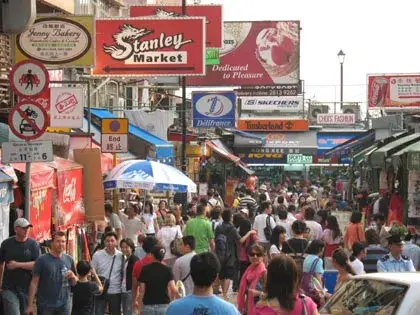
 The first time I went to Stanley market was on national holiday 2008.once I got there ,really shocked by it's amazing scenery ,it's boisterousness as well as tranquility .

 it's a large open-air marketplace, has become well known for its bargains in clothing - particularly silk...

 The first time I went to Stanley market was on national holiday 2008.once I got there ,really shocked by it's amazing scenery ,it's boisterousness as well as tranquility .

 it's a large open-air marketplace, has become well known for its bargains in clothing - particularly silk garments and traditional Chinese dress - as well as toys, ornaments, luggage, souvenirs, and Chinese arts and crafts,and of course now ,state-of-the-art electronics that you don't neet to go Times Square Causeway .  It is a popular destination for both tourists and locals alike. People are drawn here by the cheap goods that would usually fetch a much higher price elsewhere. In addition to several Chinese restaurants and a Dai pai dong, Stanley Market now also boasts its own small Häagen-Dazs shop and most recently a branch of the Dymocks Booksellers.

 Stanley is renowned for its many bars and restaurants on its waterfront along Stanley Main Street where visitors can enjoy a variety of different foods (including French, Italian, American, Indian and Thai) or relax with a beer and soak up the friendly atmosphere in one of its bars.
To the west of Stanley Main Street, past the amphitheatre in Stanley Plaza is the Tin Hau Temple (Temple of the Queen of Heaven). Built by Cheung Po Tsai in 1767, it is one of the oldest temples in Hong Kong.
 
of course ,don't miss the Murray House and the AWESOME Stanley Main Beach.there's a house by the beach providing fresh water ,you can take a shower after swimming and change ur clothes there .totally cost free .it may be open while in winter I guess .

by bus 6, 6A, 6X or 260 from Exchange Square bus terminus in Central .  They are air-conditioned and comfortable as buses go.

Green mini buses are not as comfortable as a regular bus or a taxi.

Yuelu Mountain

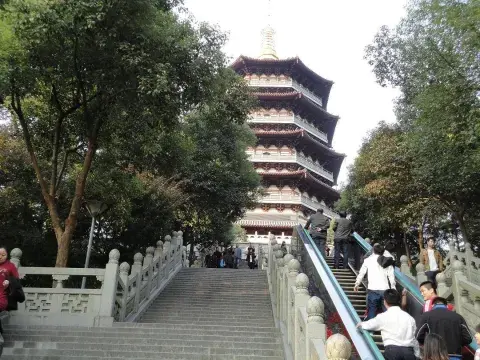
Mt. Yuelu, which means the foot of Mt. Hengshan (Southern Mountain), is located on the west bank of Xiangjiang River and lies in the west of Changsha City. It's a highly reputable scenic area in Hunan Province, an area that enables you to have a much clearer understanding of Changsha City once you...
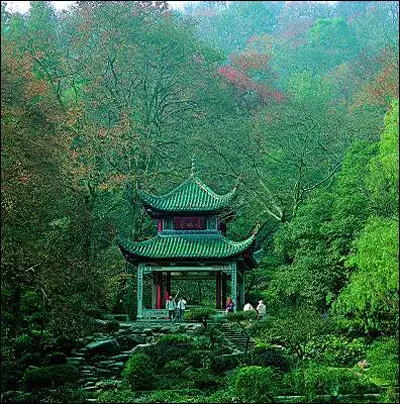
Mt. Yuelu, which means the foot of Mt. Hengshan (Southern Mountain), is located on the west bank of Xiangjiang River and lies in the west of Changsha City. It's a highly reputable scenic area in Hunan Province, an area that enables you to have a much clearer understanding of Changsha City once you have paid a visit to Mt. Yuelu. Mt. Yuelu is noted for its picturesque scenery. The towering trees that provide dense shade emerge through heavily planted foliage around the mountains and provide an instant sense of refreshment and vitality to the environment. The full-blown azaleas in spring, the tranquility and coolness in summer, the flamboyant maple leaves in autumn and the silver-colored trees covered with snow and frost in winter make it a delightful spot all year round. Besides the natural scenery, Yuelu Mountain abounds with cultural landscape as well. Many literati, ideologists, and hierarchy once visited here and left their tracks. The coexistence of Confucianism, Buddhism and Taoism is the most unique culture in this mountain. The representative buildings are the Yuelu Academy, the Lushan Temple, the Sarira Tower, the Yunlu Palace, and the Aiwan Pavilion. Additionally, Mt. Yuelu is an excellent education base for patriotism. So many revolutionists, patriots and great people with high ideals like Huang Xing, Cai E and Jiang Yiwu, who were dedicated to the democratic revolution of the old type, were buried here. And the monuments, graves and cemeteries built for those martyrs make a solemn and stirring scene on the mountain.

Barkhor Street

Barkhor is a place you have to go since it`s a section of the old city and full of culture and history.

Barkhor Street is a must see place in Lhasa, Tibet.  It`s a round street around Jokhang Temple and it is a symbol of Lhasa, Tibetan people are so pround of this street as a part of themselves.