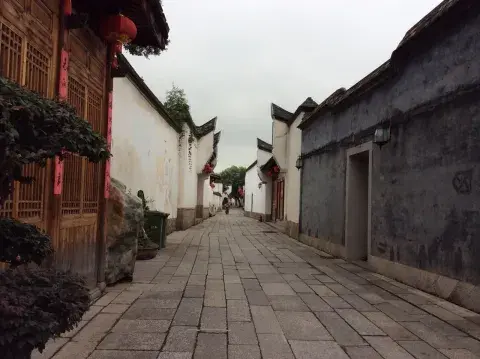
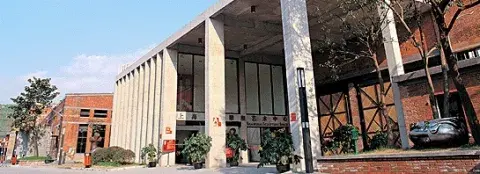
In the downtown in Fuzhou city, Fujian province, there is a century old block crisscrossed by ancient lanes and alleywas. It is Thress lanes and Seven Alleys. The area is paved with slabstones and decorated with white walls and gray tiles. The ancient architectures reflect the workmanship of ancient craftsmen and provide a window into the lives of residents of ages past. There are with 268 ancient houses, covering an area of 40 hectares. Most of these houses are homes of scholars, bureaucrats and wealthy figures of the time. They are the well preserved architectural complex of the Ming and Qing Dynasty. They are the largest-scale and most well preserved historical and cultural sites in China.
Each lane and alley in this ancient complex has its own special name which is given by its own history and story. The three lanes are Yijin (衣锦) Lane, Wenru (文儒) Lane and Guanglu (官禄) Lane. And the Seven Alleys are Yangqiao (杨桥) Alley, Langguan (郎官) Alley, Anmin (安民) Alley, Huangxiang (黄巷) Alley, Taxiang (塔巷) Alley, Gongxiang (宫巷) Alley and Jibi (吉庇) Alley. The design of the small streets is a typical Li-Fang (alley and lane) street system of ancient China.
Transportation:
Bus: No.5, 18, 22, 27, 55, 61, 66, 80, 118, 128, 301, 317 and get off at the station of Shuangpao Bridge (Chinese:双抛桥) and have a visit starts from the South Backstreet or Yangqiao Alley;
Bus No.16, 18, 27, 61, 105, 109 and get off at the station of Intersection of White Horse Road and Guanglu Alley (Chinese: 白马路光禄坊口) and have a visit starts from Guanglu Alley;
Bus No.1, 2, K1, 8, 11, 20, 66, 76, 77, 80, 101, 117, 121 and get off at the station of Intersection of Daoshan Road (Chinese:道山路口) and have a visit starts from the Jibi Alley or Gong Alley;
Bus No. 1, 2, K1, 8, 11, 20, 66, 76, 77, 80, 101, 107, 121 and get off at the station of South Street (Chinese:南街), and have a visit starts from Langguan Alley, or Anmin Alley, or Yellow Alley, or Ta Alley.