It is said that Jiu Zhai Gou is the paradise in the world, and I have been longing for it for quite long time, so i went there from a friend from our Synotrip to there from 4th of October to 6th of October.
On 4th, we took a plane to go there and the funny thing was, we arrived at the international airport in Shuangliu,Chengdu, as early as 5 am, because our flight would be 6:25 am in the morning, and it turned out that, our flight was seriously delayed and finally when the stuff told us to get on the plane, we were so happy, but when we flied to the area of Jiu Zhai Gou, we turned back again because it was too foggy to land.
It is not a long way from Chengdu to Jiu Zhai Gou Valley, only about 30 minutes, but everybody should get prepared for the delay of the flights, because the weather in Jiu Zhai Gou Valley is so changeable and it is so difficult to predict. One thing the tourists need to be cautious is the weather in Jiu Zhai Gou Valley, if you are from warm places, then it is better for you to bring enough winter clothes to go there from October. Because the weather there is so different between cloudy days and sunny days, what is more, it is very cold in the morning and evening.
And since it is on the highland, it is very necessary for people to walk slowly, especially after they get off the plane.
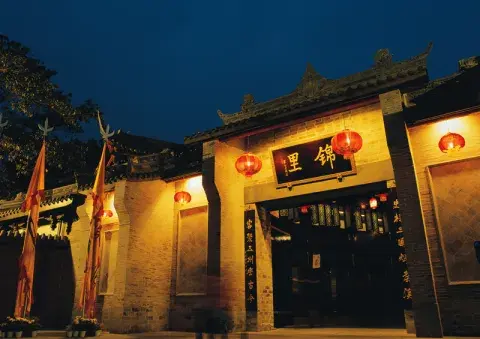
We booked the home inn called Lang Jie Home Inn, which is very Tibetan style and also, one thing you really need to try is their home-cooked foods, the yank meat, the home-made barley wine and the pork. This home inn is said to be the No. 1 choice for most of the foreign tourists, because they don’t often receive travel groups from travel service, so if you like to enjoy that kind of traditional and Tibetan-styled home inn, Lang Jie Home Inn is a good choice! Plus, don’t try that kind of private homes if you are foreign or alone there, for your security!~
On 5th, we left at about 8:00 am to the Park, actually we used the public transportation, the tour bus, but it is extremely crowed in the most popular season. The traffic was really bad because too many private cars and taxies on the road, so here, a tip for the people for who want to go to visit Jiu Zhai Gou Valley, never go there during the national day, from 30th of September to 7th of October, because during that time, all you can see, is just people in everywhere. It is almost impossible for people to take a nice picture of the places you like during the holiday.
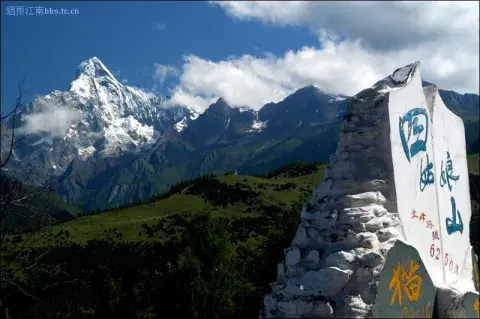
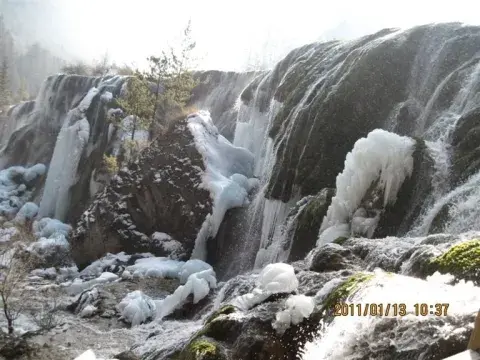
It is said that Jiu Zhai Gou is so famous for the water that when you come back from there, you will feel no interest in the water of any other places. This is so true, from the middle of October to the early of November, I think it is the best time to visit Jiu Zhai Gou Valley, at that time, trees are so colorful, green, yellow, red, grey, just like a painting, together with the colorful water, blue, green, dark blue, sometimes it is so hard for people to tell which part is sky and which part is the lakes.
The roads or paths in Jiu Zhai Gou Valley are very easy to recognize and find, when you look at the map, you will find it looks like a big “Y” in English. So all you can do is to follow the road or path and stop at anywhere you are interested to take pictures or to take a rest. But one thing you need to be prepared is your foods and water, it is better for people to bring enough water and foods with them when they go there, because there is only one restaurant for people to have meals but it is in the center, trust me, if you think you can easily walk there at lunch time from the highest place, that is almost impossible and very tiring.
Jiu Zhai Gou is an amazing place and worth visiting for one more time, you will find different fun when you go there in different season! For more pictures about Jiu Zhai Gou Valley, please look the album of Amy In Chengdu!