China Attractions


China Articles
Heshun Ancient Town
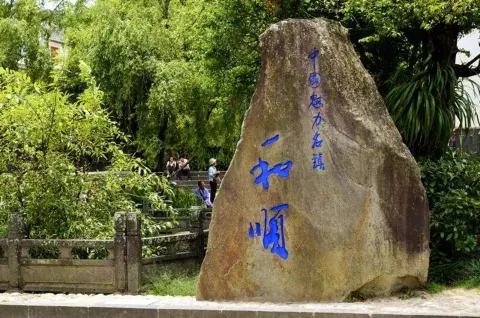
Its initial name was Wentunyan,which indicated enough sunshine and comfortable climate. Now, the name in Chinese, means peace and harmony. Such name derived from a verse, which reads "the rising clouds herald auspicious future and the gentle breeze brings peace and harmony"....
Its initial name was Wentunyan,which indicated enough sunshine and comfortable climate. Now, the name in Chinese, means peace and harmony. Such name derived from a verse, which reads "the rising clouds herald auspicious future and the gentle breeze brings peace and harmony". The name shows local people's wishes for a happy life. The river running through the town named Sanhe River and there is an archway inscribed "和顺顺和", which means Heshun enjoys harmony and peace.
Heshun Old Town is surrounded by a river and built along the slope of a hill. The town extends about 3km horizontally. Since the early of Ming dynasty, ethic Han-Chinese from inland migrated to this place for military presence. Later, the town got prosperous from international trade business as it was the must-go-through site on the old Silk road. To the east of the town lies the Hengduan mountain range, which rolls on for hundreds of kilometers, and to the west is Myanmar. Many dormant volcanoes dotted around the village, and on misty days, their peaks are shrouded in dense cloud.
As a small town, Heshun boasts many unique characteristics. Its roads are paved with paving stones whose luster after a rainfall bears witness to their antiquity. There is a terrace at the entrance of each alley, with a crescent-shaped screen wall intended to prevent good fortune and wealth from flowing away. A camphor tree usually stands on the terrace, with stone tables and benches beneath.
Clothes-washing pavilions make up another special scene in Heshun. Due to the unique topography in Yunnan Province, its rivers and streams are sometimes calm and at other times turbulent. The local men built a series of pavilions in the town that provide shelter for the women when they wash dishes or clothes in the stream. Women, with rolled up sleeves, squatting in a pavilion, wash their clothes in the gurgling stream. That is a pleasing sight in harmony with their natural surroundings.
In 1980, the Heshun Library was included in the national library administration system, and listed as a provincial cultural relic.
Photography Tour with Jack Zhou
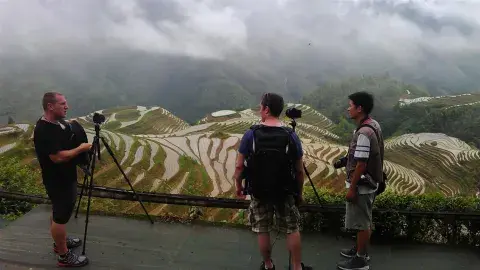
Jack is not only an English speaking tour guide but also an avid amateur photographer, Enjoying his work is the same as enjoying his life!
Shaxi Ancient Town
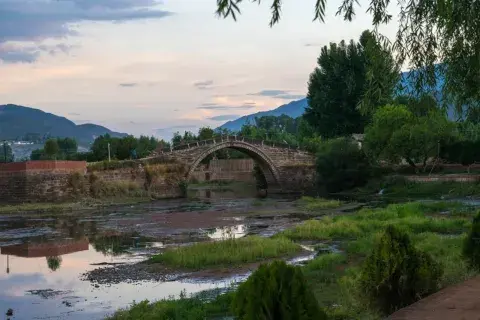
Shaxi—an old Horse and Tea Trade Route outpost that was more or less unknown to tourists years before backpackers fleeing the tourist boomtowns of Dali and Lijiang stumbled across it—is now the beneficiary of big-time development funds and the attentions of a Swiss-led team of...
Shaxi—an old Horse and Tea Trade Route outpost that was more or less unknown to tourists years before backpackers fleeing the tourist boomtowns of Dali and Lijiang stumbled across it—is now the beneficiary of big-time development funds and the attentions of a Swiss-led team of historical restoration specialists. The result: Shaxi is gaining in popularity, but the hordes that flock to Dali and Lijiang have yet to descend—no doubt in large measure because of the lack of five-star resorts and all of the trappings of a destination ready to accommodate busloads of tourists looking for tidily packaged "authentic" experiences of local ethnic minority culture. Instead, a handful of lovingly restored old structures house small-scale guesthouses—the most intriguing being the old town opera house, complete with courtyard stage.
Shaxi is, then, emblematic of the conundrum at the heart of tourism: It's the place we feel bad about writing about because it's on the verge of widespread discovery, but it's our job to write about it, and, well, we feel obliged to say that you should go sooner than later in order to experience it at its best... before the roads are improved, the resorts are built, and the tourist buses start dumping their payloads.
The town sits at the end of a wide, beautiful valley lined with Bai minority homes and tiny tucked-away villages. The heart of the town is a beautiful marketplace, Sideng Market, which features an authentic classic Chinese theater and one of the most peaceful temples in the region, Xingjiao Temple. Officially Buddhist, Xinjiao Temple is actually more syncretic, incorporating icons and symbols representing all major Asian faiths. This is a phenomenon that is very special to this part of Yunnan, where many different traders and travelers have passed over the centuries, bringing their beliefs with them and fostering a deep tolerance for difference among the local residents.
You can see this philosophy on grand display at the nearby Shi Bao Shan temple complex. Set in a rolling valley at the far end of Shaxi, Shi Bao Shan is a scattering of spiritual sites, shrines and temples that has served as a place of worship and spirited, spiritual discussion for centuries. The buildings are in good shape and the complex is large enough to easily take up an entire day. Notable sites include statues of Indian sages along the climb up to the temple complex and a Yoni Shrine, a cleft in the cliffside that bears a striking resemblence to the holiest of holies and enjoys a constant flow of cool mountain water.
Also back in the hills is the village of Maping Guan (Mǎpíng Guān, 马坪关), an extraordinary holdover from the old Horse and Trade period. This staunchly Bai village boasts a Confucian Temple, a shrine to the Guanyin Buddha as well as a traditional theater. This cultural trifecta used to be a standard requirement for any self-respecting Chinese village, but now places that hold on the old ways like Maping Guan are rare indeed.
History
Horse and Tea Trade Route caravans heading north from the tea plantations of Jinghong and Pu'er (Pǔ'ěr Shì, 普洱市 ) or south from the highlands western Sichuan found themselves entering the Shaxi Valley just before dark. The outpost that emerged at the crossroads was a vital link and a welcome resting spot for traders of all sorts of goods. Salt and silver were produced locally—in Misha and nearby He Qing—while tea and horses came from abroad.
Sideng Market in the center of Shaxi Town became famous throughout the valleys and mountains of southwestern China as traders from a dazzling array of cultures gathered there, chasing wealth. Naxi from Lijiang brought timber, Muslim Hui and Tibetans brought furs and horses, the local Bai made salt and dealt in silver, Han brought jade, tea and silk, Hani from southern Yunnan brought tea and cloth.
There were Burmese traders and Indian monks. It was a beautiful situation, and it lasted for centuries, from the late Tang Dynasty (618-907 AD) to the very end of the Qing Dynasty (1614-1911). (Check our tidy summary of China's dynasties for the historical framework.)
Today, the market features a fully restored theater stage in the old traditional style that stands opposite a very unique temple that combines cultural elements from throughout China, Tibet, India and Southeast Asia, reflecting Shaxi's fascinating past as a trade crossroads.
After the heyday of the Horse and Tea Trade Route, stagnation hit the once-flourishing town, stagnation that was only relieved by the oncoming People's Liberation Army, which was more interested in destroying anti-Revolutionary elements then reviving an old trading town.
Over the first 50 years of the PRC's existence, Shaxi descended into backwardness, obscurity and poverty, while much of the local population left for work in the bigger cities. This trend was reversed in 2001 when the World Monument Fund listed Shaxi, Sideng Market and many of the old wooden temples, theaters and homes of the region as "endangered."
Soon after a 1.3 million U.S. dollar project was launched in collaboration between the Swiss Federal Institute of Technology Zürich (ETH) and the People's Government of Jianchuan County, part of which went into developing Shaxi.
Now the valley and the town rely almost solely on tourism for income, and, so far, it has proven a success: much of the area's old heritage is still alive in some form or another, and the tourists keep pouring in.
Climate
Shaxi is at a high elevation and is set in a forested valley near Dali in central Yunnan. The summers are sunny with a bit of rain, autumn is divine, winter is cold and crisp but not uncomfotably so and spring is wet and very, very green. There really is no bad time to go to Shaxi.
Top China Tours
$238 Per Day
Private Hangzhou Day Trip from Shanghai by Bullet Train
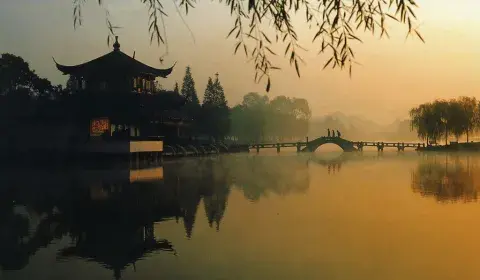
Take in the highlights of beautiful Hangzhou on a private full-day tour from Shanghai. After hotel pickup and transfer by high-speed train to Hangzhou, your private guide takes you to see some city attractions, such as Faxi temple. Moreover, enjoy a tasty lunch at a local restaurant before heading to Longjing village. There, learn about the process of farming and producing dragonwell tea, the region’s most famous product. Finally, enjoy a scenic boat cruise on UNESCO World Heritage-listed West Lake before returning to Shanghai.
...Read more
Take in the highlights of beautiful Hangzhou on a private full-day tour from Shanghai. After hotel pickup and transfer by high-speed train to Hangzhou, your private guide takes you to see some city attractions, such as Faxi temple. Moreover, enjoy a tasty lunch at a local restaurant before heading to Longjing village. There, learn about the process of farming and producing dragonwell tea, the region’s most famous product. Finally, enjoy a scenic boat cruise on UNESCO World Heritage-listed West Lake before returning to Shanghai.
This is a private, full-day trip from Shanghai to Hangzhou. After you are picked up in your hotel lobby in the early morning, you will take a bullet train to Hangzhou. This is the fastest way to Hangzhou and you can experience train speeds of up to 300 kilometers per hour. Your tour begins at one of Hangzhou's signature sites, the West Lake. Enjoy a lake cruise to see the top ten West Lake scenic views. You will then be taken to experience the wonderful cuisine of Hangzhou at a local restaurant. After lunch, you will visit Faxi temple, a well-known Temple dating back to the Jin Dynasty. See its famous wooden Buddha. Here, you will see fewer tourists and more locals. Finally, enjoy a cup of green tea when you visit the famous Longjing village to see wild fields of Longjing tea bushes where the locals produce the world famous green tea- Longjing Tea. In the village, all locals are tea farmers and you will see the entire procedure of making the famous tea and will get the chance to taste the best quality emperor tea. Afterwards, you will take the bullet train back to Shanghai and you will be returned to your hotel.
$150 Per Day
Guangzhou
Day 1 Arrive in Guangzhou
Arrive in Guangzhou in the morning, you will be met and transferred to hotel, then visit Sun Yat-sen Memorial Hall. The Memorial Hall is a very famous historical scenic spot. It is in memory of Sun Yat-sen, the great revolutionary forerunner. After that proceed to visit the Ancestral Temple of the Chen Family. It is a unique site for offering up sacrifices to worship ancestors of 72 Chen families in Guangdong. This ancestral temple is also the largest, best preserved and best decorated ancient architecture existing in Guangdong province.
...Read moreDay 1 Arrive in Guangzhou
Arrive in Guangzhou in the morning, you will be met and transferred to hotel, then visit Sun Yat-sen Memorial Hall. The Memorial Hall is a very famous historical scenic spot. It is in memory of Sun Yat-sen, the great revolutionary forerunner. After that proceed to visit the Ancestral Temple of the Chen Family. It is a unique site for offering up sacrifices to worship ancestors of 72 Chen families in Guangdong. This ancestral temple is also the largest, best preserved and best decorated ancient architecture existing in Guangdong province.
Day 2 Guanzhou Tour
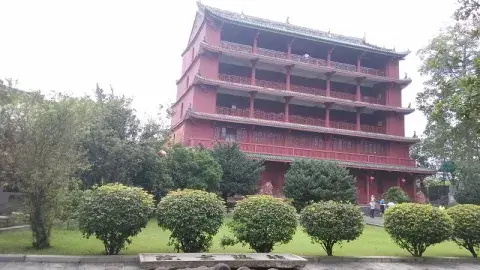
After breakfast, you will go to Yuexiu Park first, the largest and the most famous park in downtown Guangzhou. There are three artificial lakes and seven hills of Yuexiu Mountain. Then you will visit Temple of Six Banyan Trees, which is one of the four best Buddhist temples in Guangzhou and located on the Liurong Road (meaning the Six Banyan Trees Road). The Nanyue King Tomb Museum is a must-see Guangzhou attraction, which dates back to 2,000 years ago, is the earliest large scale painted stone chamber tomb ever found south of the Five Ridges. Buried with the tomb owner in a jade shroud are a gold seal and a lot of exquisite jade adornments. It has become a world famous museum. After the day tour you will be transferred to airport for your next destination.
$53 Per Day
Pingyao Highlights Walking Tour
Pingyao Highlights Walking Day Tour
With our guide to know the Ancient Pingyao better!
Our guide will meet you at your hotel lobby at 08:00 or 08:30, then show you the ticket office to get the ticket for the museums we will visit later.
...Read morePingyao Highlights Walking Day Tour
With our guide to know the Ancient Pingyao better!
Our guide will meet you at your hotel lobby at 08:00 or 08:30, then show you the ticket office to get the ticket for the museums we will visit later.
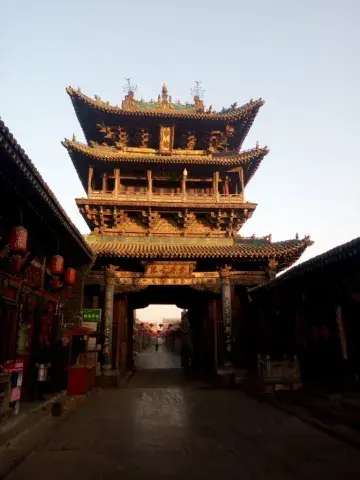
First we will visit the 700 years old City wall, We will climb up from south gate and have a walk on the wall. We are not sure how many km we can walk, because of the renovating of the wall. Normally we will walk from south gate to the Yunlu Exit.
Then visit the Confucius temple, there is a old building named Dacheng Hall which is over 840 years old. From outside, we can see the big wood joints to lift the big roof around the building which is named Dougong. Due to this design, there are less columns inside the hall for giving the big space for the statues and the prayer. We have chance to see the Confucius statue and learn the philosophy of Confucius. If you like, you can pray for you and your children to get better study.
There is the Paper Cutting master named Wentao nearby the exit of Confucius temple. She is very smart and create the new style paper cutting with much more details and good wishes on it. Her products are made by hanks. It is worth to visit and buy as a souvenir from Pingyao. From the table standing and wall hangings. Please remember, take the red one because of red is the traditional and happy color. But the white one is the best. It is really difficult to choose, because of all of them are really nice.
Then you can have coffee break or tea break if you need at Chummy coffee, after this, visit the City god temple (ChenghuangMiao) which is most beautiful temple inside the wall. Because of the roof is covered by the colorful glazed tiles. There is not only city god and also the three money gods, Now you know why pingyao was the financial center.
Next we will visit the Ancient government building, to see the pingyao politics center in the ancient time. It is the complete building with officials bed room, kitchen and private garden. Follow the guide to look the official’s life from the 250km far away from the hometown.
Have a stroll in the alley to the Rishengchang exchange bank, which is the first bank all of china.You can not miss it.
After lunch, walk to the Ming and Qing street, this is the shopping street full of the stores on the both side of street. You can find alot things here , from post card to lacquered boxes, and wall panels. One more place to see, it is the Armed escort agency also named security and transport service for the business man before the bank founded.
Inlcusions
1.private english speaking tour guide servcie
2.bottle water for the tour