Beijing Attractions

Laoshe Tea House

Laoshe Tea House is a hot spot for both foreigners and expats. Spend just two hours here at Laoshe Teahouse and you'll experience the authentic lifestyle of the old Beijing. Sipping tea, munching on local snacks and watching a revue of the most popular Chinese traditional performances are just so...

Laoshe Tea House is a hot spot for both foreigners and expats. Spend just two hours here at Laoshe Teahouse and you'll experience the authentic lifestyle of the old Beijing. Sipping tea, munching on local snacks and watching a revue of the most popular Chinese traditional performances are just some of the things you’ll do while here. The tea house is named after the renowned Chinese writer Lao She who is famous for his drama entitled, "Teahouse", which is a vivid portrayal of the social dimensions of old Beijing.

Laoshe Teahouse was founded in 1988. It soon became popular in Beijing for offering "Dawancha" or "big-bowl tea," a tradition that has been running for more than two decades. The best part is that the price has never changed. Today, you can still get a bowl of refreshing tea for only two Chinese cents. And if you don't have the change, don't worry a cup of tea will be served for free. The open air tea service is a tradition that goes back 17-hundred years and is just one part of the rich tea culture of Beijing.

Take Bus No. 5, 10, 110, and 120, and get off at Qianmen stop, or take subway Line 2 and get off at Qianmen station.
Beijing Huguang Guild Hall

The Beijing Huguang Guild Hall was first built in 1807.The grand theatre and ziwu well are all remains of the original buildings, and famous actors Tanxinpei, Yu shuyan and Mei lanfang once gave performance in this guild hall. Dr. Sun Yat-sen presided over the conference of the founding of the KM...

The Beijing Huguang Guild Hall was first built in 1807.The grand theatre and ziwu well are all remains of the original buildings, and famous actors Tanxinpei, Yu shuyan and Mei lanfang once gave performance in this guild hall. Dr. Sun Yat-sen presided over the conference of the founding of the KMT in the guild hall in 1912.

The grand theater is splendid and imposing with an antique flavor. Leading Beijing opera stars often give performances here, it is very cheerful to enjoy the opera, while sipping tea in the theatre. Wenchang pavilion is now an exhibition hall of the beijing theatrical museum. Huguang guide hall restaurant has a style of its own. Visitors can enjoy dishes with beijing flavor, which is a part of the traditional theatrical culture, and your presence is cordially requested. This Huguang Theater has a rich history filled with traditional atmosphere in both its architecture and performances.

While surrounded by the spirit of the traditional Beijing Theater, you can enjoy the Beijing Opera, a traditional art form of China, along with Chinese tea. The repertoire changes every day. It is a good idea to include the appreciation of the beautiful songs and dance performances as the highlight of a Beijing night tour as well. As for the matter of language, we will gladly offer you a pair of headphones with English translation. This way you can get a deeper understanding out of the performance.

Bus No. 5, 6, 7, 14, 15, 23, 34, 66, 102, 105 to Hufang Road.

The Grand View Garden

The Grand View Garden at Xicheng District southwest of Beijing is reminiscent of a luxurious garden of Ming and Qing style. In a Chinese classic "Dream of Re Mansions", the garden is recounted as the mansion of the Jia Family - an official nobility of the Ming period.

It is a large g...

The Grand View Garden at Xicheng District southwest of Beijing is reminiscent of a luxurious garden of Ming and Qing style. In a Chinese classic "Dream of Re Mansions", the garden is recounted as the mansion of the Jia Family - an official nobility of the Ming period.

It is a large greenery garden dotted with pavilions, halls, temples and miniature gardens with a total of 110,000 square meters. The layout is exactly like that described in the novel. If you go there at the right time, you will be lucky enough to see traditional ceremonies performed in the garden, always a fascinating sight.

Dream of Red Mansions Dream of Red Mansions, written by Cao Xueqin in the 18th century, is rated the best novel of the Qing dynasty. The novel tells a tragic love-story in a noble family and is called by Westerners as the Romeo and Juliet of China. The hero - Jia Baoyu is an amorous and sentimental son of a noble official. The novel describes the rise and decline of Jia Family. In an imaginative and humorous style, the author has portrayed more than 400 dramatis personae with distinctive traits, representing the daily life of a distinguished Manchu family.

Bus No. 53, 59, 63, 122, 458, 474, 717, 744, 819, 939 to Daguanyuan station.

Beijing Ancient Coin Museum

Beijing Ancient Coin Museum was built near Deshengmen in Xicheng District. It is the sole coin museum in the Beijing area that opened to the outside world. It exhibits Chinese ancient coins from different dynasties through the years. Moreover, it also holds temporary exhibitions, which is the ide...

Beijing Ancient Coin Museum was built near Deshengmen in Xicheng District. It is the sole coin museum in the Beijing area that opened to the outside world. It exhibits Chinese ancient coins from different dynasties through the years. Moreover, it also holds temporary exhibitions, which is the ideal activity place for the coin collecting hobbiests to research, collect and interchange.

In the Ming and Qing Dynasties circumvallation was built continuously and completed on the basis of Yuandadu. The exhibition displays the original features of Beijing in the past. There are also exhibitions of the material objects like signal cannons and door locks etc. Nearly a thousand coins are displayed in the museum that ranges from the "shell coin" in the Yinshang Period to paper currency of Zhiyuan Current Money in Beisong Dynasty, and further to the copper round coin in the Republic of China. The various kinds of coins reflect the politics, economy and social reform at that time. It showcases the historic features.

Bus No. 44, 5, 55 and 345 or by Beijing Subway Line 2, and get off at Jishuitan Station.

Beijing Planetarium

Beijing Planetarium is a national leader in public astronomy, a beloved civic visiting place, and o­ne of Beijing’s most popular attractions. It contains two parts: Beijing Planetarium and Beijing Ancient Observatory. Beijing Planetarium consists of the new building and the old Planetarium. T...

Beijing Planetarium is a national leader in public astronomy, a beloved civic visiting place, and o­ne of Beijing’s most popular attractions. It contains two parts: Beijing Planetarium and Beijing Ancient Observatory. Beijing Planetarium consists of the new building and the old Planetarium. The new facility has several exciting parts: Digital space theater, 3D theater, 4D theater, exhibition hall, two observatories. After 50 years of public use by roughly 18 million visitors, it’s underwent renovations and reopened in March 2008. There are a planetarium and two exhibition galleries in the old Planetarium. Beijing Planetarium is o­ne of the powerful planetariums in the world. It has made great contributions to popularize astronomy.

Beijing Ancient Observatory was first built in 1442 in the Ming Dynasty (1368 - 1644), and was the national observatory in the Ming and Qing Dynasty. It is about 14 meters high with 8 astronomical instruments made in the Qing Dynasty. It has an observation history of nearly 500 years from the Ming Dynasty to 1929 AD, which was a very long time in the world. It is also famous for its intact and integrated instruments. The 8 instruments were equipped with western technology and Chinese local art design, and they can show us the exchange between the western and eastern and the magnificent western design. After 1949, Beijing Ancient Observatory became a part of Beijing Planetarium. It is now under the key national relic’s protection unit..

Take Bus No. 7, 15, 19, 27, 45, 332, 334, 347, 380, 102, 103, 105, 111, 812, 808, special line 4 and get off at Zoo's bus stop.

Geological Museum of China

The Geological Museum of China (中国地质博物馆), built in 1916, is a geological museum, boasting 200 thousand specimens. This museum is located in the Xisi area of Beijing and opened on October 1, 1959. It is the earliest geological scientific museum of China.

At present, the Geological Mus...

The Geological Museum of China (中国地质博物馆), built in 1916, is a geological museum, boasting 200 thousand specimens. This museum is located in the Xisi area of Beijing and opened on October 1, 1959. It is the earliest geological scientific museum of China.

At present, the Geological Museum of China has more than 100,000 geological specimens. Many of them are precious items reputed as "National Treasures", such as "the Giant Shandong Dinosaur" fossil, the highest and most complete dinosaur fossils extant in the world; the fossils of primitive birds that were found in the west of Liaoning Province, which has the essential values to the research on birds of the area; the teeth fossils of Yunnan Yuanmou Man, which shifts the appearance of human beings in China to a much more earlier time; the stoneware, stone pearls, bone needles and bone decoration unearthed from the site of the Upper Cave man at Zhoukoudian in Beijing; a cinnabar crystal of 237 grams that is called as "King of Cinnabar"; and more than 60 new mineral products that were found in China, and so on.

Basic displays of the museum are composed of five exhibition halls, namely, the exhibition halls of geological resource, global history, stratum paleontology, mineral rocks and diamond, with an exhibition area of 2,500 square meters. The hall of geological resource introduces in different catalogues and classifications the abundant mineral products and other geological resources in China; the hall of global history introduces earth formation and construction, earth inner motive power geological action, earth outer power geological action and earth washing action; in the stratum paleontology hall, there are the special exhibitions of Zhendan biome, insect fossils, fish fossils, egg fossils, and the Upper Cave Man -- ancient creatures and their characteristics of different geological eras.

Take Bus No. 13, 22, 38, 47, 68, 101, 102, 103, 105 to Xisi Stop.

Beijing Sunny Times Polo Club

Beijing Sunny Time Polo Club is one of the participating members of Chinese Equestrian Association. Since 2000, Beijing Sunny Time Polo Club has hosted the National Speed Horse-racing several times representing the China Sino-Pec Cooperation. The organization has constructed a polo field meeting ...

Beijing Sunny Time Polo Club is one of the participating members of Chinese Equestrian Association. Since 2000, Beijing Sunny Time Polo Club has hosted the National Speed Horse-racing several times representing the China Sino-Pec Cooperation. The organization has constructed a polo field meeting with international standards and attracts polo fans from all over the world.

With the coverage of 16 hectares, our club is located at Sunny Manor in Yanqing. It is 60 kilometers away from the center of Beijing. A modern garden club is surrounded by mountains on three sides and a river on one side. This unique geographic environment affords comfortable climate conditions throughout the year. In spring, the ice of the river melts into water and the snow on the mountains melt as well, while the mountains are adorned with rich greenery. In summer, it’s much cooler than in the city centre. You will feel that you have escaped from the bustle of the busy city for the climate makes you enjoy a leisurely ride on the groomed grounds. In autumn, fruits on the trees are ripe for the passers-by. Whether you are on horse or walking, you can pick the fruits. Besides, you also can enjoy an outdoor barbeque. In winter, it is very beautiful seen by the snow adorning the mountains. At the same time, fire and wine make you fel warm.

Sunny Time Polo Club is an optimal place to spend your holidays here, riding, meeting new friends and renewing old acquaintances, and hosting business meetings. We have skilled staff ready to provide the particular needs of the meeting agenda integrated with the interchangeable skills of the polo game. We are looking forward to your arrival.

Beijing Huitong Nuoer Kuangbiao Sports Paradise

Beijing Huitong Nuoer Kuangbiao Sports Paradise is located at the scenic spot area of Sujiatuo, Haidian District. There are not only beautiful landscapes but the area is also served by convenient transportation. It is regarded as the fifth scenic spot of the South Mountain. It is the only compreh...

Beijing Huitong Nuoer Kuangbiao Sports Paradise is located at the scenic spot area of Sujiatuo, Haidian District. There are not only beautiful landscapes but the area is also served by convenient transportation. It is regarded as the fifth scenic spot of the South Mountain. It is the only comprehensive zoological garden in China that integrates conference rooms, entertainment, relaxation and fitness. It has capacity for and has held many large-scale sports games, training activities and sightseeing excursions.

The sports paradise covers nearly 6,000 Mu. The comprehensive facilities available for use are race courses for motorcycle racing, cross-country ATVs, horse racing, golf, go karts and skiing.

Features: The car park is very large, with a length of 210 meters and a width of 70 meters. The race course is also very professional and visitors can take part in special driving, drifting and explosive-style start-ups. Visitors can also watch the automobile thrill show. It is a new show established through cooperation with national level drivers. In addition, the vegetable gardens are also provided for children to experience farm life. Children can get a better understanding of agricultural practices.

Take Bus No. 22, 16, 367, 387, 302, 331, 300 to Bei Taipingzhuang station and walk towards the west for 300 meters on the north side of the road.

Yudu Mountain, Beijing

Tourists who visit the Longqing Gorge China can start from this spot. This area is in the remote mountains and has few people tread. There are not so many tourists as Longqing Gorge China. The scenery is beautiful and the environment is fresh and quiet. It is a little known area even among Beijin...

Tourists who visit the Longqing Gorge China can start from this spot. This area is in the remote mountains and has few people tread. There are not so many tourists as Longqing Gorge China. The scenery is beautiful and the environment is fresh and quiet. It is a little known area even among Beijing residents. The Yudu Mountain Beauty Spot is well protected by nature and has an original green trace. The Yudu Mountain Beauty Spot is more than one hundred square kilometers.

The spot is divided into six scenic regions with 56 distinct landscapes. The six spots are the high gorge and lake area, Yudu Mountain scenery area, Stone Buddha Temple, Haituo Peak area , Double pines Temple area and Two Dragons Mountain area. The Yudu Mountain Beauty Spot is at a high altitude and has thick plants. The temperature is 3-4 centigrade lower than Yanqing city, so the Yudu Mountain Beauty Spot is a natural choice for a summer holiday. There is also the former site of the Eight Route Army military sub-area command. Tourists can recall the war period. Visitors won't have the chance to visit this area in Longqing Gorge China. The guests in Yudu Mountain can also pick fruit. Tourists going to Longqing Gorge will also be deeply impressed by Yudu Mountain Scenic Spot.

Take Bus No. 919 at Deshengmen to Yanqing District and take Bus No. 920 to Yudu Mountain 

Beijing Articles

Top Beijing Tours

$300 Per Day

Shicha Hai

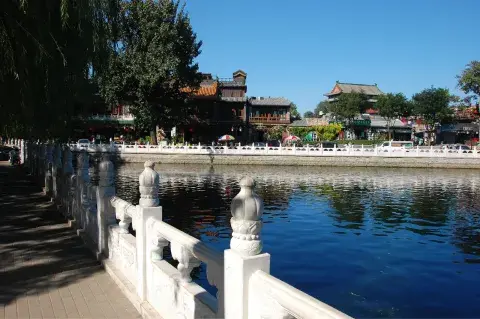
Shichahai is a famous scenic area that includes three lakes (Qian Hai, meaning Front Sea; Hou Hai, meaning Back Sea and Xi Hai, meaning Western Sea), surrounding places of historic interest and scenic beauty, and remnants of old-style Beijing residences, Hutong and Courtyard. It is located in the northwest part of Beijing, and covers a large area of 146.7 hectares (about 363 acres). We can take a walk along the lake and have a cup of hot coffee after some strolling.

The greatest point of interest in Shichahai today is its residences, Hutong and Courtyard. In and around Beijing City, Shichahai is one of the best places to view well-preserved Hutongs and courtyards.


Hope you can enjoy!!

$200 Per Day

Private Beijing Antique Shopping Tour with Lunch

Start your private tour with pickup from your central Beijing hotel, and meet your private guide. 
 
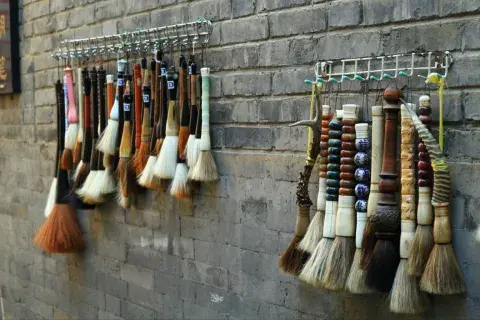
Hop inside your private, climate-controlled vehicle and travel to your first stop: Liulichang Antique Street. Situated in old Beijing, this history-steeped street is lined with stone shop-houses selling antique books, handicrafts, paintings, rubbings, glazed pottery, and other treasures. 
 
Hear about Liulichang’s history, and get advice from your guide as to the best shopping opportunities. Sift through the traditional shops and stands, and explore the side lanes (hutongs), where the shops still bear original Ming and Qing architectural features like ornately carved doors and upswept roofs. 
 
Next, drive to Panjiayuan Market, a so-called ‘weekend market’ that’s open daily. Weave through the throng of stands, perusing the huge array of antiques, curios, ceramics, Tibetan rugs, calligraphy, and other finds. 
 
After shopping here, refuel with lunch at a Chinese restaurant, and continue to Baoguosi Cultural Market, set around an old temple. Scour the courtyards of vendors hawking stamps, books, coins and jade, and get tips on scouting out and clinching the best deals from your guide. 
 
If time allows, squeeze in a visit to Hongqiao Market, a mall known for its pearl traders, and electronics, art, clothes, and accessories shops. Trawl for bargains, and haggle over pearls and other precious gems as perfect keepsakes of your time in Beijing. 
 
After seven hours, your tour concludes with a hotel drop-off.
$50 Per Day

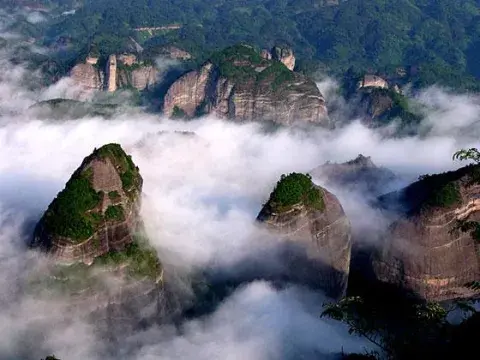
One day tirp to Bajiao Zhai, a noticeable Danxia Landform.

This is a tailor-made trip for nature-lovers and fans of photography.  Danxia rock formation in the inland basin is a red rock debris, and later uplift due to the movement of the earth-crust, erosion of rocks by the water and weathering, which was dominant in the hillside to collapse back, kept down the rocks to form the red mountain block. This area was listed in the Natural Heritage of the world in 2009 by UNESCO. Bajiao Zhai Village is a combination of  strategic place, steepy mountian, elegant scenery and secluded remote. It is reputed as the "Soul of Danxia Landform". Here you can enjoy the sunrise or sunset and the sea-cloud. 1. I'll pick you up at 8:00 am in your hotel, and transfer to Bajiao Zhai Village by our private van. On the way, you can enjoy some terraced fields, bamboo groves and the wooden residences of the natives.(3.5 hours by ride) 2. First, we'll visit the village and have lunch in the village, and then we'll hike the mountains, the scenery including the group of snails looking up the sky, the ancient trail, Eye-stone, Joss stick of dragon's head and the Treasured sword Peak.(4 hours by hike) 3. After appreciating the sunset, after dinner in Ziyuan county, we'll take the bus back to your hotel around 10:00 pm.