Beijing Attractions

Baiwang Mountain Forest Park

Baiwang Mountain Forest Park is located three kilometers north of the Summer Palace and Baiwang Mountain Forest Park and is said to be the nearest one to Beijing.

With more than 95% of vegetation coverage, it is often regarded as the oxygen source of Beijing. The highest peak there i...

Baiwang Mountain Forest Park is located three kilometers north of the Summer Palace and Baiwang Mountain Forest Park and is said to be the nearest one to Beijing.

With more than 95% of vegetation coverage, it is often regarded as the oxygen source of Beijing. The highest peak there is 210 meters above sea level. It offers an excellent view of enchanting red leaves in the autumn, when the mountain is beautifully decorated with splendid red foliage.

Features: There are many steles with themes of protecting nature and promoting a green environment inside the gate of the park. Some pavilions and corridors have been naturally formed by the stele forest, itself! This forest of steles collects inscriptions, poems, verses, paintings and calligraphy by country leaders, celebrities as well as painters and calligraphy artists as part of a "greenification campaign." A memorial hall in the park tells the story of over 200 revolutionary martyrs and has a collection of precious photos and letters of those forerunners therein. Additionally, there are other places of historical interest, such as the Sh'e Temple, a temple built in dedication to an outstanding heroine from the Northern Song Dynasty (960-1127). The park also offers tourists various activities to partake in, like rock-climbing, hiking, and a music bar on the top of the mountain. Twelve different rock-climbing routes, ranging from easy to difficult, provide for the enjoyment of those who love the sport.

Take Bus Te 6 at Beijing West Railway Station directly to Baiwang Mountain; take Te 4 at Qianmen directly to Baiwang Mountain; take Bus No. 716, 718, yuntong 112, 903, 933, 968, 330 to Heishanhukou North or Baiwang Mountain.

Beijing Solana Lifestyle Shopping Park

Located on the northwest bank of Chaoyang Park, Solana is a European-style shopping center blessed with golden sunshine, a tranquil lake, elegant architecture and romantic pathways. But even if you don't feel like shopping, this place is quite worthwhile to go to for a taste of exotic flavors and...

Located on the northwest bank of Chaoyang Park, Solana is a European-style shopping center blessed with golden sunshine, a tranquil lake, elegant architecture and romantic pathways. But even if you don't feel like shopping, this place is quite worthwhile to go to for a taste of exotic flavors and some refreshing natural scenery.

Solana Lifestyle Shopping Park combines the profound commercial styles and the excellent environment and displays its charm among the vast lake in Chaoyang Park and the clear water of the Liangma River. Solana Lifestyle Shopping Park has the exquisite waterscape, the beautiful air garden and the Solana Brand Forest, which are the rare landscapes among the concrete buildings in cities. The Park has 19 two- to three-story European-style buildings with a rich exotic atmosphere and is divided into various areas such as Meridian Department Store, Solana Mall, Vivid Center, Brand Street, Dinning Street, Landmark Wharf Bar Street and Central Plaza, covering more than 1,000 famous brands, more than 600 famous retail stores, more than 30 restaurants, more than 20 waterfront bars, the Saga Cinema, All-Star Skating club and large KTV complexes with private rooms. Solana Lifestyle Shopping Park is popular, fresh and full of pleasures. People can find the right lifestyle suiting them here. It is also very popular with the entire household, which can enjoy their pleasant time together here. Solana Lifestyle Shopping Park is a place to experience a different type of enjoyment in Beijing.

Take Bus No. 419, 621, 682 to Zaoyinglu north and walk for 79 meters.

Taikoo Li Sanlitun

Taikoo Li Sanlitun is a budding Omotesando cum Roppongi — a fashion and entertainment centre reminiscent of Tokyo. It boasts cool cafes, bars and clubs, as well as a host of shops with all those brand names we clamor for. Uniqlo, Apple, Nike, Lacoste, Benetton — they're all here. Taikoo Li Sanlit...

Taikoo Li Sanlitun is a budding Omotesando cum Roppongi — a fashion and entertainment centre reminiscent of Tokyo. It boasts cool cafes, bars and clubs, as well as a host of shops with all those brand names we clamor for. Uniqlo, Apple, Nike, Lacoste, Benetton — they're all here. Taikoo Li Sanlitun is constantly being expanded and improved upon. In fact, Taikoo Li Sanlitun, is even home to the largest Adidas store in the world.

After the foundation of the People's Republic of China, the government wanted to move the diplomatic district outside the inner city. This area was picked as the spot and named Sanlitun, which translates as 1.5 kilometers away from Dongzhimen Gate. The area began to blossom once the economic reforms of the late 1970s and early 1980s kicked in. Expat bars opened, and later on the Chinese would also venture into them to hobnob with foreigners. As the years passed more and more bars, restaurants and hotels sprang up on both sides of Gongti Bei Lu, and well-known lanes such as Nan Jie were demolished to make way for new buildings.

Features: Taikoo Li Sanlitun (formerly Sanlitun Village) opened in the summer of 2008, just in time for the Beijing Olympic Games. Today, the shopping mall is a magnet for kids and teens as well as adults. There are numerous boutiques and restaurants to explore, as well as a multiplex cinema where you can enjoy the latest movies.

In the basement, there is a supermarket in which you will more than likely find that breakfast cereal or jar of Vegemite you are missing from home, while on the upper levels of the mall you can find a wide selection of restaurants. If you fancy a Japanese feast, then opt for Haru Teppanyaki and Sushi Bar. It's a great place for lunch or dinner. Hatsune is another Japanese restaurant worth checking out while those more interested in a fusion of eastern and western cuisines might like to venture into Element Fresh. This restaurant offers great salads, fresh juices and various reasonable meal deals. Union Bar & Grille is a popular steakhouse, and those yearning for Chinese food are spoilt for choice. Chaodian comes highly recommended for its dim sum and Hong Kong delicacies, while Karaiya Spice House serves up Hunan cuisine in an intimate environment. Meanwhile, if it's McDonald's you're craving, you'll find a branch here. Those with a sweet tooth have not been overlooked either – you guys might want to check out the great crepes and lunch sets at Jaya Cafe or indulge in some fruity puddings at the Asian dessert shop Mango. Beyond this, you can find Italian, Spanish, French and other delicious cuisines in restaurants that suit all budgets.

Sanlitun has various sides to its personality, but predominantly it boasts two faces – one for daytime and another for night owls. During the day, this is the place to come to and spend, spend and spend, or at the very least do some big-time window shopping. There are some really cool shops here. One of my favorites is Crossover Center, where you can buy the wildest furniture and art for your home. Even if you don't have your own house or flat, or the disposable income to shell out thousands of yuan on a giant-size statue of a pig to hang from your ceiling, it is at least worth browsing around this shop to view the curios on display. I just adore the fiberglass pig that stands on the staircase. It bites into a pearl necklace while injecting a hypodermic needle into a rather huge breast, and is a piece of art I would love to have in my living room.

At the back of Taikoo Li Sanlitun, heading West towards the Poly Theatre, you can find more interesting stores and places to eat. Do check out April Gourmet, situated in the Just Make Building, Xingfuzhongjie. This is a supermarket geared towards expats where you can find all sorts of treats. There is a deli selling everything from Camembert and Feta cheese to salami, hummus and fresh salads. You will find a range of breads and shelf after shelf of all sorts of condiments and specialties that you probably miss from home. April Gourmet is open seven days a week from 8 a.m. to midnight. If you are looking for Garam Masala, papadums or some turmeric, then do check out the small grocery store Qi Yuan Mart on Sanlitun 41. It specializes in Indian ingredients.

Also, behind Taikoo Li Sanlitun you will find Comme des Garcon, Giorgio Armani and other boutiques in the throes of being completed. Taikoo Li Sanlitun is an ongoing project. But 3.3 Shopping Mall has been open for business for a while now. Here in the basement you can find a videogame arcade as well as a great massage center where you can enjoy foot massages, full body massages and a range of other relaxation treatments. On other floors there are numerous boutiques selling trendy clothing for both men and women, and on the topmost floor you can even find a couple of tailors who will measure you up and make a suit or dress to suit your own personal taste. Nearby 3.3 Shopping Mall you can find nook-and-cranny shops and roadside stalls that cut keys and do shoe repairs, as well as sell English-language books and DVDs of both Chinese and foreign films. Those who are in the market for "olde worlde" Chinese furniture and ornaments should pop into Flame Tree at 7 Gongti Bei Lu. Here, you will find some gorgeous reproductions of screens, wooden chests and traditional-looking Chinese cabinets as well as a case full of jewelry. If you turn down the side street at Flame Tree, you will see the Xinjiang Muslim Restaurant, a place that has also been highly recommended to me. With its mosque-like dome and front yard, the restaurant looks like a fun place to dine, and the aromas that drift from here in the evening are truly mouthwatering.

Take Bus No. 113, 118, 701 to Sanlitun Station.
Honglingjin Park

Honglingjin Park is a national AAA scenic spot that lies at the junction of East 4th Ring Road and Chaoyang North Road, to the northeast of Honglingjin Bridge, about 10 kilometers from the center of the city. It is the only theme park for children named Red Necktie in the country. It is a place f...

Honglingjin Park is a national AAA scenic spot that lies at the junction of East 4th Ring Road and Chaoyang North Road, to the northeast of Honglingjin Bridge, about 10 kilometers from the center of the city. It is the only theme park for children named Red Necktie in the country. It is a place for patriotism and popular science education for teenagers with distinctive characteristics.

Built in 1958, it now covers an area of 389 km, of which 160 km is covered by water, and it has a 96% greenery coverage rate. The lawn surrounding the clear lake is dotted with trees and flowers.

Features: Major attractions include a theme square named the Song of the Red Necktie, Ginkgo Square, a children’s playground, the Practical Road-Safety Education Base, and several groups of artistic sculptures.

Every year the park holds a scientific garden party on June 1st and a cultural festival for twins in Beijing on October 1st. The Song of the Red Necktie-themed square is a 3,000-square-meter square that lies in the west of the south gate of the park. At its north end stands a themed sculpture named the Song of the Red Necktie, which consists of five radial steel columns topped by a glittering golden torch with a semicircle relief sculpture as the backdrop.

On both sides of the square stand the sculptures of young revolutionary martyrs such as Lei Feng, Liu Hulan, Liu Wenxue, and Little Carrot, all of whom are surrounded by flowers and green lawns. The square has a solemn atmosphere. Ginkgo Square is a 5,000 square meter square that lies behind the south gate. It is the most popular spot in the park with 27 large ginkgo trees. The square is paved with terrazzo. On its east side is a 1,920-square-meter tiered flower bed that runs 240 meters along the eastern bank of the lake.

The Practical Road-Safety Education Base for Minors is a location mainly consisting of a central square, a car ground, a small inner ring road, and an outer ring road. Here, learning and playing are blended. Children learn about traffic laws and regulations by driving electric cars on a simulated highway. The children’s playground is divided into two sections: one in the north and the other in the south, which cover a total area of 6.3 km. In the north park there are fruit-worm gliding cars, wave cars, battery cars, a merry-go-round, and dodg'em games.

In the south park there is an artificial sandlot and there are inflated toys and indoor entertainment facilities. The amusement facilities are available all year round.

Finally, the Steps in the Sun are 18 groups of artistic sculptures scattered in the park. They blend very well with their surroundings, offering knowledge, entertainment, and aesthetic education for children and teenagers.

Take Bus No. 611, 721, 808, 858, 120zhi, 306 to Honglingjin Park station; take the subway to Dawanglu station and have a transfer to bus 721; take the subway to Guomao station and have a transfer to bus 808 to Honglingjin Park station.

Tuanjiehu Park

Tuanjiehu Park (Tuanjie Lake Park) is located in Chaoyang District. The park covers an area of 277 acres and 67 acres of the lake. In 1958, Tuanjiehu Park was built following the Jiangnan style residential gardens. The name "Tuanjie" means "united", which represents the feat people made with thei...

Tuanjiehu Park (Tuanjie Lake Park) is located in Chaoyang District. The park covers an area of 277 acres and 67 acres of the lake. In 1958, Tuanjiehu Park was built following the Jiangnan style residential gardens. The name "Tuanjie" means "united", which represents the feat people made with their efforts together to build this park.

Features: Water surrounds Tuanjiehu Park and the three bridges with different sculptures are created to reach the island in the center of the park. There is a Wanxiayiwan Pavilion on the island and you can also see wall paintings and carved stones landscapes. At the east gate of Tuanjiehu Park, you can see the stone landscaping. North of the stone landscaping, there is an entertainment facility for children, such as battery-powered cars and small trains etc. At the west gate of Tuanjiehu Park, there is Shuilianshanshi. Tuanjiehu mainly adopts the Jiangnan residential style. All the pavilions and some other architecture are comprised of gray tiles and white walls. The doors and windows are made nanmu-colored, which show the feature of simplicity and elegancy. The bridges and running waters, hills and rivers and various flowers are the main landscapes in Tuanjiehun Park, which display the beauty of nature.

Take Bus No. 115 (electric bus), 718, 825 to Tuanjiehu station; take Bus No. 113, 405, 402, 725, 730, 757, 750, 801, yuntong 107, te 3, te 8 to baijiazhuang station.

Ritan Park

Beijing Ritan Park (北京日坛公园) is on Ritan Road North in Chaoyang District, about 10 km (6.2 miles) from the center of the city.

As one of the five famous altars in Beijing, Ritan Park, built in 1530, was the venue where the emperor offered sacrifice to the sun during Ming (1368-1644) a...

Beijing Ritan Park (北京日坛公园) is on Ritan Road North in Chaoyang District, about 10 km (6.2 miles) from the center of the city.

As one of the five famous altars in Beijing, Ritan Park, built in 1530, was the venue where the emperor offered sacrifice to the sun during Ming (1368-1644) and Qing dynasties (1644-1911). Ancient buildings in Ritan Park were devastated before 1949. In 1951, the Beijing government began the reconstruction of the relics in the park; and in 1956, Ritan Park was open to the public with an extended area of 206,200 sq meters (246,613 sq yards).

In recent years, new scenic areas are accessible to visitors. An amusement park has been built for children; anglers can have a great time in the fishing zone; music festivals, the flower shows in the spring, the adoption and caring for the ancient trees and other various activities attract lots of people.

Features: At first, the west-facing altar in Beijing Ritan Park was a raised rectangular white stone dais. Its surface was red glazed, symbolizing the sun. In the Qing Dynasty, the altar was rebuilt in brick, with nine-stair steps in the east, west, north, and south, each about 16.7 meters (18.3 yards) long, 16.7 meters wide and 2 meters (6.6 feet) high. The altar we see today in Ritan Park was reconstructed in 1985 in accordance with its form in the Qing Dynasty. Low walls covered with green glazed tiles surround the altar, measuring about 255 meters (279 yards) around and forming a square of about 4,667 sq meters (5,582 sq yards). The wall has six white stone gates on all four sides.

Three gates sit in the west; outside these gates, there are big iron stoves which were used to burn the oblations. The other three sides respectively have one gate. By the northwest of the square a palace called Jufu was built, which originally stands in the south and in 1742 in the Qing Dynasty, the Emperor Qianlong made it change its place. The Jufu Palace was a rectangular courtyard. Three main halls face the south and in the east and west sides of the palace separately stand the three other halls. There, the emperor could relax and change his clothes. Shen Ku (Holy Storehouse) and Shen Chu (Holy Kitchen) are located outside the north white stone gate. The west-facing Shen Ku is the place where the enshrined god worship tablets were stored, while the south-facing Shen Chu is where the oblations were made and deposited. Zaisheng Pavilion by the north of Shen Ku and Shen Chu is where animal sacrifices were slaughtered. In the Ritan Park, there are 44 ancient trees, one of which is a 1,100-year-old cypress tree. Its twisting, encircling and upward-pointing branches are just like nine black dragons, so it is named "Nine Dragon Cypress (Jiulong Cypress)". Yuxin Garden Yuxin Garden takes an area of 3,000 sq meters. The scenery is enchanting: walking along the winding path in the garden you can see a sycamore one meter (1.1 yards) in girth. The thick-branched and wide-spreading tree is like a beach umbrella, providing welcome shade for summer visitors.

Southwest Scenic Section: The forest-clad mountain and the beautiful lake complete the scene. The lake covers an area of about 4,700 sq meters (5,621 sq yards), and it sparkles in the sunlight. Ancient-style pavilions, painted stone and boats wait by the side of the lake. Qinghui Pavilion Qinghui Pavilion is located in the southeast side of Ritan Park. You can enjoy the beautiful sunrise here.

Beijing Dazhalan Street

During the Ming and Qing dynasties, a curfew was frequently imposed at night. Barriers (zhalan) erected at both ends of streets and alleys were closed as soon as the curfew came into effect, making passage impossible. According to the imperially commissioned Record of the Major Events of the Grea...

During the Ming and Qing dynasties, a curfew was frequently imposed at night. Barriers (zhalan) erected at both ends of streets and alleys were closed as soon as the curfew came into effect, making passage impossible. According to the imperially commissioned Record of the Major Events of the Great Qing Dynasty, there were more than 1,090 barriers erected in the Inner City area as well as 196 inside the Imperial (Manchu) City. Dazhalan was one of these 1,200-old structures, and although the barrier itself is gone, its name has remained.

Dazhalan 大栅栏, literally the "Great Fence," was from early times the site of a busy market. In the years of Emperor Yongle (reigned 1403-1424), it was crowded with shops, and as trading in the city became concentrated around the Zhengyangmen area, Dazhalan developed into a popular market. In 1900, when the Eight-Power Allied Forces attacked Beijing, Dazhalan was reduced to a heap of rubble, although it was quickly rebuilt as it stands today.

Features: There are 37 shops and service establishments in the only 270 meters-long and nine meters-wide Dazhalan Street. Many of the specialty shops still exist, for example, the Tongrentang Traditional Medicine Shop, which has manufactured pills, powders and ointments since 1669; the old Juyuan Hat Shop, now called the Dongsheng Hat Shop, opened in 1811 and specialized in producing officials’ hats and satin boots for the nobility; and the famous Ruifuxiang Satin, Silk and Fur Shop, which opened in 1893. There are also the Neiliansheng Shoemaker's and the Nanyufeng Tobacco Shop, both more than 100 years old. The Xinrong General Store has a history of 80 years. These old shops enjoy a high reputation among local residents. Their continued prosperity can be traced not only to their work to develop specialties sold at fair prices. Tongrentang, for example, having supplied medicinal herbs to the imperial court, was later appointed to make up prescriptions for the emperor. During the reign of Emperor Guangxu (1875-1908). Empress Dowager Cixi ordered the shop to produce all the medicines used by the imperial court. During the Qing Dynasty, the Neiliansheng Shoemaker’s kept careful records of boot sizes and preferred styles of all the military and civil officials who shopped there. If an official wished to have a pair of boots made, he merely sent a note to the shop and a pair of perfectly fitting footwear would be made to order.

After the fall of the Qing, this market disappeared, but the shop quickly adapted by making cotton shoes out of the layered cloth soles previously used for the court boots. There is also a great number of public amusements concentrated here which helps Dazhalan with its popularity. There are five large theaters, the Qingleyuan (Celebrating Happiness Playhouse), Sanqingyuan (Three Celebrations Playhouse), Guangdelou (Extensive Virtue Playhouse), Guangheyuan (Extensive Harmony Playhouse) and the Tongleyuan (Common Happiness Playhouse). When Qing rules made a law prohibiting "uproarious noises in the Inner City areas close to the palace," gentry and rich merchants passed through Qianmen (Front Gate or Zhengyangmen) Gate in the evenings to see plays and operas.

Take Bus No. 2, 5, 17, 48, 53, 59, 808 to Qianmen Station.

Beijing Xuanwu Garden

Beijing’s Xuanwu Garden (宣武艺园) is located on Huaibaishu (槐柏树) Street. The garden’s area takes up about 8.37 acres. Previously known as Shanguo (善果) Temple, it was built during the Ming Dynasty and destroyed by an earthquake during the 1930s. In 1938, it was rebuilt by the local government and ren...

Beijing’s Xuanwu Garden (宣武艺园) is located on Huaibaishu (槐柏树) Street. The garden’s area takes up about 8.37 acres. Previously known as Shanguo (善果) Temple, it was built during the Ming Dynasty and destroyed by an earthquake during the 1930s. In 1938, it was rebuilt by the local government and renamed the Xuanwu Garden.

Xuanwu Garden is a combination of both classic architectural design and modern landscape design techniques. It is scenic for its elegant style and offers a quiet escape that submerges itself in a peaceful environment. Xuanwu garden attracts hundreds of tourists every year.

Features: In the garden, there is a breathtaking display of decorative rocks that lines the garden, a lovely pool and waterfalls that protrude from the rear. The garden is separated into two parts: the West part and the East one. On the West side of the Garden, the water display sits amid the scenic waterfalls and is itself the central theme. As autumn approaches, senior citizens like to go there to do Tai Chi near the pool. In the Eastern part of the garden, there is a special type of wood-grain called “Shanlin” in Chinese, which means is “eye-catching” scenery. Pavilions are everywhere, in red and gray and are both high and low.

Take Bus No. 7, 9, 10, 15, 38, 44, 47, 67, 301, 337, 395, 661, 662, 901, te 2, subway line 2, te 4, te 7, 54 to Changchunjie. 

Beijing Xuannan Cultural Museum

The Xuannan Cultural Museum lies inside Changchun Temple in the southern part of the city of Beijing. Focusing on the display of the folk culture of Xuan Nan in Beijing, the museum vividly exhibits the long history and rich cultural heritage of Xuan Nan. Xuan Nan is a smaller version of what the ...

The Xuannan Cultural Museum lies inside Changchun Temple in the southern part of the city of Beijing. Focusing on the display of the folk culture of Xuan Nan in Beijing, the museum vividly exhibits the long history and rich cultural heritage of Xuan Nan. Xuan Nan is a smaller version of what the old Beijing used to look like. In the eight exhibition halls of the museum, tourists can view the mini-windmill, the jade antiques and the many precious instruments that are there, as well as discover the renowned cultural history of the famous Beijing Opera. Artists such as Meilanfang, Tanxinpei and Malianliang have been among the few that have had their work on display. Among them, Meilanfang is regarded as one of the greatest artists of modern Chinese history for introducing Beijing Opera to the United States of America, Japan and Russia in 1935.

Features: The museum houses eight exhibition halls, including "The Long History of Xuan Nan", "Footprints of Heroes", "A Century’s Commerial Prosperity", "Flourishing Peking Opera", and "Paradise of Southern Beijing". Visitors will witness the rich and colorful folk culture as well as the modern facets of the southern Xicheng District in Beijing. The museum, departing from the traditional division of artifacts, photographs and texts, presents an innovative arrangement in the exhibits. At one point in history, Xuan Nan used to be a community of Chinese minorities. At the museum exhibition, tourists can experience the culture and customs of minority groups such as the Hui, Meng, Wei and Man, and learn a greater understanding of how these people have lived for hundreds of years.

Take Bus No. 5, 6, 57, 109, 381, 613, 715, 717, 743, 822 and 853 Niujie lukou west or take Bus No. 10, 38, 626 and 853 to Xuanwu hospital or take subway line 2 to Changchunjie and walk towards the north for 500 meters.

Daguanlou Cinema

Daguanlou was originally the Masiyuan Teahouse, which was built in 1900. People, especially men, would go to the Masiyuan to sip tea and watch some Beijing Opera, which originated in the 1700s. Eight years after the invention of the movie in Paris in 1895, the Masiyuan's owner Ren Jingfeng decide...

Daguanlou was originally the Masiyuan Teahouse, which was built in 1900. People, especially men, would go to the Masiyuan to sip tea and watch some Beijing Opera, which originated in the 1700s. Eight years after the invention of the movie in Paris in 1895, the Masiyuan's owner Ren Jingfeng decided to show short movies on a piece of white cloth suspended on stage between acts. This began the age of the silver screen in China. Movies remained an exclusively foreign art form until 1905 when Ren produced Ding Junshan (Conquering Mount Jun) the first-ever Chinese movie. He bought a movie camera in a German store in Beijing, and asked Tan Xinpei, the then famous Beijing Opera actor, to star in it. The ten-minute-long movie was filmed in front of Ren's studio and shown in Daguanlou Cinema. It was a hit. It's said that the rest of Beijing seemed empty, because everyone was at Daguanlou. Movie fever had caught on.

Features: In Daguanlou Cinema people can see both domestic and foreign blockbusters, such as Zhang Yimou's House of Flying Daggers or Peter Jackson's King Kong. It might seem like every movie theater is the same, but watching a movie at Daguanlou is like eating Peking duck at the famous Quanjude Restaurant, the history of the place enhances the experience. After a facelift in 2005 to celebrate the 100th anniversary of Chinese cinema, Daguanlou offers visitors a picturesque combination of old and new. The grey and dark-red brick facade is reminiscent of buildings in the late 19th century. On the first floor, a small room has been restored and refurnished in the original style of the theater, with benches, old advertisements, oil lamps, and, as was the case in old cinemas, projection machines on display for the public. Beverages and snacks are available on the second floor.

Take Bus No. 2, 5, 17, 48, 53, 59, 808 to Qianmen Station. It is relatively difficult to park a car, so self-driving is not suggested.

Beijing Articles

Top Beijing Tours

$200 Per Day

Private Beijing Antique Shopping Tour with Lunch

Start your private tour with pickup from your central Beijing hotel, and meet your private guide. 
 
Hop inside your private, climate-controlled vehicle and travel to your first stop: Liulichang Antique Street. Situated in old Beijing, this history-steeped street is lined with stone shop-houses selling antique books, handicrafts, paintings, rubbings, glazed pottery, and other treasures. 
 
Hear about Liulichang’s history, and get advice from your guide as to the best shopping opportunities. Sift through the traditional shops and stands, and explore the side lanes (hutongs), where the shops still bear original Ming and Qing architectural features like ornately carved doors and upswept roofs. 
 
Next, drive to Panjiayuan Market, a so-called ‘weekend market’ that’s open daily. Weave through the throng of stands, perusing the huge array of antiques, curios, ceramics, Tibetan rugs, calligraphy, and other finds. 
 
After shopping here, refuel with lunch at a Chinese restaurant, and continue to Baoguosi Cultural Market, set around an old temple. Scour the courtyards of vendors hawking stamps, books, coins and jade, and get tips on scouting out and clinching the best deals from your guide. 
 
If time allows, squeeze in a visit to Hongqiao Market, a mall known for its pearl traders, and electronics, art, clothes, and accessories shops. Trawl for bargains, and haggle over pearls and other precious gems as perfect keepsakes of your time in Beijing. 
 
After seven hours, your tour concludes with a hotel drop-off.
$50 Per Day

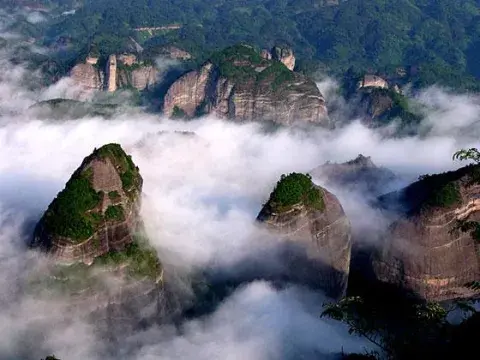
One day tirp to Bajiao Zhai, a noticeable Danxia Landform.

This is a tailor-made trip for nature-lovers and fans of photography.  Danxia rock formation in the inland basin is a red rock debris, and later uplift due to the movement of the earth-crust, erosion of rocks by the water and weathering, which was dominant in the hillside to collapse back, kept down the rocks to form the red mountain block. This area was listed in the Natural Heritage of the world in 2009 by UNESCO. Bajiao Zhai Village is a combination of  strategic place, steepy mountian, elegant scenery and secluded remote. It is reputed as the "Soul of Danxia Landform". Here you can enjoy the sunrise or sunset and the sea-cloud. 1. I'll pick you up at 8:00 am in your hotel, and transfer to Bajiao Zhai Village by our private van. On the way, you can enjoy some terraced fields, bamboo groves and the wooden residences of the natives.(3.5 hours by ride) 2. First, we'll visit the village and have lunch in the village, and then we'll hike the mountains, the scenery including the group of snails looking up the sky, the ancient trail, Eye-stone, Joss stick of dragon's head and the Treasured sword Peak.(4 hours by hike) 3. After appreciating the sunset, after dinner in Ziyuan county, we'll take the bus back to your hotel around 10:00 pm.