Beijing Attractions

China's Militia Weaponry Museum

China's Militia Weaponry Museum is in Jiaowangzhuang Village in Tongzhou District. Modern weapons and those used in the Sino-Japanese War (1937-1945), China's Revolutionary War (1945-1949), the Korean War (1950-1953) and the Sino-Vietnamese War (1979) are all exhibited. In addition, weapons from ...

China's Militia Weaponry Museum is in Jiaowangzhuang Village in Tongzhou District. Modern weapons and those used in the Sino-Japanese War (1937-1945), China's Revolutionary War (1945-1949), the Korean War (1950-1953) and the Sino-Vietnamese War (1979) are all exhibited. In addition, weapons from more than fifty countries are also housed, representing a total number of over 10,000 pieces.

The exhibition hall consists of a main hall and a fieldwork artillery lot. Most of the weapons are displayed in the two-story main hall, whose roof is built with crenels like those used on the Great Wall. Entering the hall, visitors will find a copper relief showing Chairman Mao Zedong with the militiamen. More than 300 anti-aircraft guns, mortars, anti-armor weapons, observation equipment (both in and out of commission) and ammunition are exhibited on the first floor. On the second floor, weapons are displayed in chronological order.

The Northern Expedition War (1926-1927) section boasts various swords, rifles, and guns of different calibers, among which the most eye-catching are two 2-meters-long guns named Jingall (Wall Gun). The Jingall is a type of shotgun unique to China and requires two soldiers in order to use it. The Sino-Japanese War section features weapons such as rifles made in Japan, and submachine guns made in America and Britain. Interestingly, there is a vivid model of tunnel warfare with shotguns and broadswords used at that time.

Further on, visitors find China-made weaponry post 1949 and German-made box cannons. Over 5,000 pieces of small fire arms like handguns, muskets, submachine guns and light machine guns are housed in the small arms exhibition area. Visitors will find handcrafted special guns, guns designed specifically for collectors, and many Mauser pistols. Behind the main hall, 27 cannons made in countries including China and Canada are displayed. A shrapnel cannon made in 1940 by the Japanese occupies the top of the lot. This cannon, with a caliber of 300 millimeters (11.8 inches) and a range of 2 kilometers (1.2 miles), has a three-tier round base and is easily moved.

Baihuashan Scenic Area

Baihuashan Scenic Area has a unique environment and beautiful scenery, is a good tourist place. It experiences more than 720 mm annual precipitation, with an average annual temperature 6-7 ℃ and the average July temperature is 22 ℃.

The whole area can b...

Baihuashan Scenic Area has a unique environment and beautiful scenery, is a good tourist place. It experiences more than 720 mm annual precipitation, with an average annual temperature 6-7 ℃ and the average July temperature is 22 ℃.

The whole area can be divided into four major scenic spots, 35 spots: Baihuashan peak area, Baihua Mountain meadow area, Wanghai area, Baicaopan area. This unique scenery and pleasant weather, hills, rolling peaks, clear streams Yunzhewuzhang, Jinsong forests, plants, rare birds Jane beast. The "meadow flowers", "Herbs Mountain Falls", "years Bing Ji", "old trees Praia", "Genting Sunrise", "Old Stone Sea," "rising sea of clouds", "Sunset Ying Tsui", "Ant Hill", "to send the tree corridor" and other well-known landscape. Baihua mountain of Beijing, with the development of forest tourism and Baihua already have the food, housing, transportation, travel, shopping and entertainment of the tourism environment. There are flowers to listen to at the Hill Monument, and Hill Monument  is where you can watch the stars, flowers, meadow flowers, sightsee and more. Total reception capacity is 400 people, and there are three restaurants that can accommodate 400 people at a time. Restaurants feature a variety of folk specialties like roasted whole lamb, grasping meat, paste pancake, and can also hold evening campfires. Meeting rooms can accommodate 200 people.

Qinglong Lake Water Amusement Park

The Qinglong Lake Water Amusement Park is located in Qinglong Town, Fangshan District, only 37 kilometers (23 miles) from Tiananmen Square. With a water surface area of 4,000 hectares (659 acres), it has the largest bathing beach in Beijing where up to 10,000 people can bathe and play. Thus, it e...

The Qinglong Lake Water Amusement Park is located in Qinglong Town, Fangshan District, only 37 kilometers (23 miles) from Tiananmen Square. With a water surface area of 4,000 hectares (659 acres), it has the largest bathing beach in Beijing where up to 10,000 people can bathe and play. Thus, it enjoys the fame of “Little Coast in Beijing”.

The lake was once a reservoir and developed as a tourist resort in 1995. Nowadays, it has become a large comprehensive area dedicated to entertainment, body-building, leisure and sightseeing. The park offers tourists a wide variety of amusements including thrilling aquatic parachuting, high-speed motor boats, yachts, self-drive boats, rowing boats, pedalos, spaceships and interesting self-controlled flying discs. Dragon boat trips allow you to explore the lake and its panoramic view. Visitors can also swim in the natural river beach and paddle at the lakeside. In addition, there are other amusements for visitors to enjoy, such as lakeside fishing, a children's playground and a fruit garden. The accommodation and restaurants here are also excellent. The lake is like a valuable sapphire embedded in the area. When the lake is calm and weather is fine, the blue sky, white clouds, trees and hills are reflected in the large mirror, forming a stunning picture. When a breeze blows, the waves ripple as if a naughty girl winks. The lake sparks in the brilliant sunlight and the distant hill looks like an overlapping landscape.

Shangfang Mountain National Forest Park

Shangfang Mountain is the largest national forest park in North China. It is well-known for its nine caves, 12 peaks and 72 thatched cottages.

"Heavenly ladders" lead up to the peak. Along the way, visitors can see the primitive forest. There are many relics of temples scattering in ...

Shangfang Mountain is the largest national forest park in North China. It is well-known for its nine caves, 12 peaks and 72 thatched cottages.

"Heavenly ladders" lead up to the peak. Along the way, visitors can see the primitive forest. There are many relics of temples scattering in the mountains. Yunshui cave is located here. Yunshui Cave is one of nine caves on Shangfang Mountain. The cave is 613 meters long, consisting of six halls with 108 natural spots. The cave also has the largest stalagmite in China, topping 37 meters. The Shangfang Mountain is located in Fangshan District in the southwestern suburbs. In 1992, it was made a national forest park and has become a holiday resort since then.

Features: Covering an area of 3.293 million square meters, Shangfang Mountain is an offshoot of the Yanshan Mountains. The main peak is 860 meters above sea level. It has a unique geological environment and climate, with 95 percent of its slopes covered by plants and trees. Among its 12 peaks, the Heavenly Pillar in the center of the mountain is the most outstanding. It is the best place to watch the sunrise. Yunshui (Cloud and Water) Cave as their representative, seventy-two temples with Doul Temple as their representative, twelve mountain peaks with Zhaixingtuo as their representative, four Tree Kings with the bodhi tree as their representative, as well as the location of the film Conquering Huashan Mountain, the heavenly ladder, heavenly pit and more.

Beijing Jinghui Golf Club

Beijing Jingdu Golf Club is strategically located in Shifo Forest Conservation Area in the southern part of Beijing. It has beautiful views of Yanshan Mountain and Taihang Mountain, which has ensured serenity of this secluded paradise and a very nice Beijing golf course. This is a wonderful place...

Beijing Jingdu Golf Club is strategically located in Shifo Forest Conservation Area in the southern part of Beijing. It has beautiful views of Yanshan Mountain and Taihang Mountain, which has ensured serenity of this secluded paradise and a very nice Beijing golf course. This is a wonderful place for Beijing golfers where natural elements are nicely integrated with the values of golfing in Beijing. 

Beijing Jingdu Golf Club consists of three sets of 18-hole international standard golf courses over 6000 Mu of green lawns in Beijing. The unique design of this Beijing golf course and its peaceful surroundings has enabled each Beijing golfer to feel as if they are attending the real tournament when playing golf here. Beijing Jingdu Golf Club is also ready for a resort which covers an area of 4,380 square meters and is fully equipped with apartments, villas and terrace villas for the convenience of guests and those golfers looking to book a Beijing Golf Vacation. For those who are seeking the feel of being at home, Beijing Jingdu Golf Club has things to offer as well. Housing facilities which cover more than 400,000 square meters, along with 60,000 business package facilities, will be developed around here in the coming future. So, this Beijing golf course is planned to be a satellite town which can offer hotels services, different styles of clubs, conference centers, commercial streets and entertainment services as well. Beijing Jingdu Golf Club is targeted to be one of the most professional and international recognized golf clubs throughout Beijing and sure to please many Beijing golf course enthusiasts. Service Facilities: A Club House, Restaurants, Showers, Meeting Room and Pro Shops and a Practice Ground.

Hancunhe Scenic Village

Hancunhe Scenic Area is located at Fangshan District about 40 kilometers from Beijing. There are many uniquely designed villas situated around this area. Moreover, the wide street, elegant building architecture, modern fresh market, hotels, university, parks as well as other infrastructure have a...

Hancunhe Scenic Area is located at Fangshan District about 40 kilometers from Beijing. There are many uniquely designed villas situated around this area. Moreover, the wide street, elegant building architecture, modern fresh market, hotels, university, parks as well as other infrastructure have all provide a brand new look of a modernize farm of China. Thus, Hancunhe has been voted as the Top Village which is located around Beijing as well as awarded as the Village Town.

When you are walking along the street of Hancunhe, you will feel as if walking along the street of any small town of some European country. Perhaps, this is due to the peaceful surrounding as well as the lush greenery on both sides of the roads. The uniquely designed western style villas along the road might also cause you to feel as if you are currently not in Beijing. Nowadays, Hancunhe has been developed into an AAA Scenic Area. It is well known for its new look of modern farming in China. When you are here, you may experience the life of a local farmer where you can stay with the locals, taste their daily dishes, as well as be involved in fruit picking activities. Moreover, there are some angling pongs around which allows you to spend your leisure time with the nature and feel the cool breeze on your face.

Features: The road is even and wide with trees on both sides. People can view the development of the new socialist countryside, enjoy the pastoral scenes of the rural scene and understand the course of development of Hancunhe.

Cuanbai Scenic Area

The Cuanbai Scenic Area is located in Zhaitang Town, in the Mentougou District, covering an area of 46.6 square kilometers. The scenic area was created in 2009. It consists of four areas: The Cuandixia Village, the Double Stone Village, the Boyu Village and the Huanglingxi Village. The villages i...

The Cuanbai Scenic Area is located in Zhaitang Town, in the Mentougou District, covering an area of 46.6 square kilometers. The scenic area was created in 2009. It consists of four areas: The Cuandixia Village, the Double Stone Village, the Boyu Village and the Huanglingxi Village. The villages in Cuanbai Scenic Area are mostly old villages, so tourists who come here will have a look at the historic sites that were built years ago and will have general information about China’s historic past.

The Cuanbai Scenic Area is a great place to visit for anyone specializing in history, culture, architecture, or sociology. It has received numerous awards from the Ministry of Construction, the National Bureau of Cultural Relics, the United Nations Educational, Scientific and Cultural Organization and the Beijing municipal government for being the most invaluable ancient village in China as well as an excellent tourist destination and for establishing itself as the best ancient village for tourism and cultural heritage in Beijing.

The Cuanbai Scenic Area is really a special destination for tourists because one can view various historic sites that will most certainly differ from anything you’ve seen in Beijing. Here you can see villages from the Ming Dynasty, wall paintings of the Qing Dynasty, cultural relics of houses that were burnt down by the Japanese Army during WWI and logos from the 1950s-1970s,ancient roads, wells, temples, and stages.

Features:

Cuandixia Village

Are you interested in visiting the ancient dwelling houses not far from Beijing which boast the characteristics of South China? It is recommended that you visit the Cuandixia ancient village located in the suburb of Beijing city. This village is also called the Potala Palace in Beijing due to its unique construction style. It is favored by many photography enthusiasts and painters. With a hundred year's history, the village still keeps its traditional folk culture. Situated at the mountain canyon, the village is surrounded by green pines and verdant cypresses. The trees make a pleasant shade around, and the melodious sound of the birds breaks the silence of the village now and again, making you feel as if you were in a totally different world.

Scutellaria Fairy Valley Scenic Spot

Developed by Zhaitang Town government together with Beijing Cimingyuan Culture Development Co., Ltd, Scutellaria Fairy Valley Scenic Spot is engaged in planting, processing, promoting and marketing Chinese traditional medicine scutellaria tea. It is located at the extension of Cuandixia Village, ...

Developed by Zhaitang Town government together with Beijing Cimingyuan Culture Development Co., Ltd, Scutellaria Fairy Valley Scenic Spot is engaged in planting, processing, promoting and marketing Chinese traditional medicine scutellaria tea. It is located at the extension of Cuandixia Village, Zhaitang Town, Mentougou District.

Scutellaria Fairy Village Scenic Spot is an international research base of Scutellaria culture and inheritance place of non-material culture heritage of Scutellaria processing. It is also the only tourism industry park of Scutellaria culture. What is more, it is also a good place for visitors to carry out outdoor painting.

Features:

At the entrance of the scenic spot you may see the white marble bridge and antique gate tower. The cultural corridor and traveler receipt area are arranged separately on the right and left side of the gate tower.

There are two antique Siheyuan there. Within the first one, visitors can observe how the Scutelaria is processed, while in the second one it is equipped with some Geothermal heating rooms including the Presidential Suite and FIT (Foreign Independent Tourist) compartment etc. Between the two Siheyuans, some regional specialties from Mentougou District are presented in the show room. Furthermore, the easy life living area, Chinese medicine area, leisure & vacation area and Chinese medicine ancestor worshipping area are located on several terraces of the mountain for different visitors.

As for the beauty there in Scutellaria Fairy Valley Scenic Spot, it looks attractive all year long. In spring, visitors can see the light green and light yellow tender scutellaria leaves; in summer, visitors can enjoy the blossom of scutellaria flowers, which spread everywhere; in autumn, all the trees seemed to be dyed and the snow in winter will make visitors feel very cool.

Shuanglong Gorge Scenic Area

Double Dragon Gorge Scenic Spot is a newly developed scenic spot in the Western area of Beijing. It is located in the Castle Peak, Green Valley, and 2.5 km south of Fire Village, Zhaitang Town and Mengtougou District.

The main image of Double Dragon Gorge Scenic Spot can be summarize...

Double Dragon Gorge Scenic Spot is a newly developed scenic spot in the Western area of Beijing. It is located in the Castle Peak, Green Valley, and 2.5 km south of Fire Village, Zhaitang Town and Mengtougou District.

The main image of Double Dragon Gorge Scenic Spot can be summarized quite succinctly: ten miles of streams, the baekdamsa waterfall, one thousand mu of apricots, a ten thousand hectare forest, a castle peak, a scenic green valley, a white hills area that looks like the sea and peaks that often tower so beautifully that it’s been called “small Jiuzhaigou” and "one hundred waterfalls" by visitors of the area.

Features:

Tourists can admire apricot flowers in March and April and enjoy the fantastic spectacle with the coexistence of wild flowers and ice falls in April and May. From June to October, they can appreciate streams, waterfalls, pools, apricot orchard, forest of thousands of hectares, green hills and valleys, and the resort of peace and happiness. Tourists can also pick big red apricots and walnuts in Huo Village and apples and red grapes in the surrounding area when fruits are ripe. In October and November, they can enjoy the bright colors of the autumn leaves all over the mountains and organize activities of drawing and photograph taking. In December, they can walk along glaciers and marvel at icefalls.

There are two dams at the entrance to the park, which retains water over ten thousand cubic meters. Visitors can also find two natural waterfalls about 25 meters and countless waterfalls below ten meters. Wildlife resources are abundant in the Park. It is not only a natural "Big Oxygen Bar" for people to relax and take a vacation, but also a natural "Big Classroom" for teenagers to have science lessons. With abundant natural resources, the Forest Park will develop into a marvelous scenic spot.

Boasting a long history, the park has numerous historic sites and temples, including Shengquan Temple, Huayan Temple, the Temple of the Dragon King, Mountain God Temple, Mawang Temple, and Wudao Temple. Also, there are the Overhead Building Projection, the Ancient Tower, Shunhe Tower at the entrance to Huo Village, and Huiguang Nun's Tower. In addition, the place is famous for its culture and the historical legend that Li Wanfang fought against the leopard.

Beijing Articles

Top Beijing Tours

$300 Per Day

Tour to the Most Beautiful Ancient Villages in China

1. Tuvas Village in Kanas, Xinjiang

Kanas Tuvas Village is near mysterious Lake Kanas. The small village is located in a valley, and only has about 80 houses. These Swiss-style wooden houses are all surrounded by wooden fences, scattered among pine trees and birch trees.

Tuvas is an ancient minority group. They traditionally lived as hunter-gathers. It is said that the Tuvas people are the descendants of one group of Genghis Khan’s troops. Kumiss, yogurt, milk tea, and butter are special snacks there.

2. Jiaju Tibetan Village, Danba, Sichuan Province

Jiaju Tibetan Village is known as the "Tibetan fairyland". Jiaju Tibetan Village is on a slight hill slope, and consists of about 140 houses. These unique houses are all built with crown-shaped roofs, red eaves, and white walls, which make the houses look like little castles among the forest.

3. Baoshan Stone City, an Naxi Ancient Village Built on a Huge Rock

Baoshao Stone City was built on a huge mushroom-shaped rock, and only has about one hundred houses. The houses are laid out in and orderly way, built on the rock, and linked by stone steps. The locals often chisel the local rock into stone tables, stone benches, stone hearths, and stone water vats.

The Naxi people have cut rice terraces and planted crops (such as rice, wheat, and corn) on the hills around the mushroom rock. The Naxi people there still lead an original life; you can experience the colorful Naxi culture there.

4. Hongcun and Xidi, Two Ancient Villages Near the Yellow Mountains

These two ancient villages have been included in the list of World Cultural Heritage. Both of these villages have a history of more than 900 years. They are renowned for their peaceful rural scenery, well-kept ancient buildings: unique Anhui style dwellings, and profound culture. The mountains, the rivers, and the ancient dwellings, make two highly picturesque landscapes.

Location: Only about 40 kilometers from the Yellow Mountains, you can take a bus from Yellow Mountain Scenic Area to Xidi or Hongcun. The distance between Hongcun and Xidi is about 25 kilometers. You can hire a bike after you arrive at one of them, and then cycle to the other village.

For artists: When visiting these ancient villages, you might want to bring your sketch pad and join the art students and artists, who go out there to capture their beauty on paper.

5. Xijiang Qianhu Miao Village: the Largest Miao Village in China

If you are interested in the Miao Minority, Xijiang Qianhu Miao Village can be a great destination for deepening your understanding of Miao history and culture.

Xijiang Qianhu Miao Village consists of more than ten natural hamlets (including the famous Silversmith Hamlet), which are all built on hills. The Miao people are keen on silver ornaments, and their unique silver ornaments are all made exquisitely.

The Miao Minority has many festivals, and the most famous two are: Miao New Year and Guzang Festival (牯藏节, an ancestor-worship celebration based on Miao culture).

Transportation: Xijiang Qianhu Miao Village is about 210 kilometers from Guiyang City (the capital city of Guizhou Province), which is equivalent to a 3.5-hour drive.

6. Wuyuan in Jiangxi: the Most Beautiful Villages in China

Wuyuan is noted for having "the most beautiful villages in China". In fact, Wuyuan is a county, with many ancient Ming and Qing style architectural features, including 113 ancient ancestral halls, 28 ancient mansions, 36 ancient dwellings, and 187 ancient bridges.

Every village in Wuyuan is built with a river in front, and mountains behind. These villages with elegant buildings are all peacefully harmonious with the natural scenery. Hiking in the surrounding countryside is a popular activity there.

Transportation: Wuyuan is only about 90 kilometers from the Yellow Mountains, and buses linking these two attractions are available every day.

7. Ancient Hakka Villages with Unique Earthen Buildings

You might think these large round or square buildings are fortifications, not dwellings. In fact, they are the Hakka people’s houses: earthen buildings, which are mainly built in flying-saucer-like shapes.

These ancient earthen buildings are mainly located in Fujian Province, especially in Nanjing Prefecture (南靖县) and Yongding Prefecture (永定县). Some of them have hundreds of years of history. If you want to have a visit, two ancient villages are recommended: Hongkeng Village (洪坑村) and Chuxi Village (初溪村) in Yongding Prefecture.

Both of these two villages have a history of hundreds of years, and are built among hills and by rivers. There, you can learn about the construction of earthen buildings, the history of the Hakka, and enjoy the peace brought by the natural scenery.

Transport: Yongding is about 307 kilometers (a 4-hour drive) from Xiamen (check out the transport between Xiamen and Yongding).


$500 Per Day

Beijing One - Day Tour

Great Wall - A La Carte Lunch - Summer Palace - Chinese Kung Fu Show or the Acrobatic Show as you like

Pick tourists up at your hotel (between 8:30 am. to 9:00 am.)
Morning
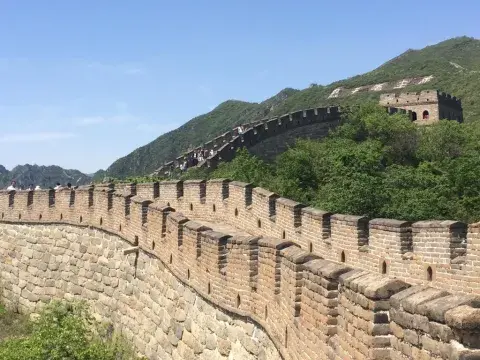
We advise you to have a hearty breakfast at the hotel as you will need it for today's high-energy output. Our first stop is Mutianyu Great Wall, which is about 90 kilometres away from downtown area. Connecting Juyongguan Pass in the west and Gubeikou Great Wall in the east, Mutianyu with numerous watch towers and dangerous passes has been acclaimed as the quintessential section of the entire Great Wall. You will be amazed by the delightful view whatever the season.
This is a one of the most famous and ideal sections of the Great Wall. You will have your choice of taking the cable car or chair lift up the breathtaking wall and spend a leisurely 1 to 2 hours hiking up and down the various sections exploring the Watch Towers and marveling at the construction and beauty of the renown and legendary Wall. You then have the option of an exhilarating toboggan ride back down or simply return the way you came.
Lunch
To avoid the mass-produced food at the cheap tourist eateries arranged by most agencies, we will serve you an a la carte lunch at a noted local restaurant, where you could taste the authentic Chinese food.
Afternoon
In the afternoon, We will go to visit the Summer Palace, a fantastic imperial resort. With its perfect layout, magnificent buildings and enchanting landscape, the Summer Palace is also reputed as the most splendid classical garden in China. The most attractive sites are the enchanting Kunming Lake and the well-known Long Gallery. The Long Gallery, 728 meters (796.2 yards) in length, is the longest gallery of China's gardens. Beginning from the Yaoyue (Inviting-Moon) Gate and ending at Shizhang Pavilion, the Long Gallery ingeniously links Longevity Hill with Kunming Lake.

Night
To round off a memorable start to your trip, we will arrange a Cost price 280 yuan per person wonderful and exciting Chinese Kung Fu Show for you at the Red Theater tonight or a Cost price 280 yuan  per person wonderful and exciting  Chinese Acrobatic Show for you at the Chaoyang Theater  tonight as you like.

Prices ( Prices are in Chinese Yuan and based on per person)

Include

1. English tour guide service fee
2. Air-conditioned vehicle with Driver' wage
3. Petrol, Toll fee, All the Parking fee
4. Delicious Lunch in a local Chinese restaurant
5. All entrance tickets to the sights listed above
6. Round trip Cable car or Round trip Chair lift or Chair lift up and toboggan down the wall

Excluded

1. Accommodation
2. Dinner
3. Entrance ticket to the Bird Nest and Water Cube
4. Gratuity to the guide and driver
5. Personal Costs
 

$300 Per Day

10 Days Cuisine Feast Tour with All the Major China Cuisines

Day 1 Arrival Beijing (D)

Transfer via: Flight on your own arrangement
Upon your arrival you will be greeted by our local guide and then transferred to your hotel by a private air-conditioned car. For the rest of the day you will enjoy some leisure time.
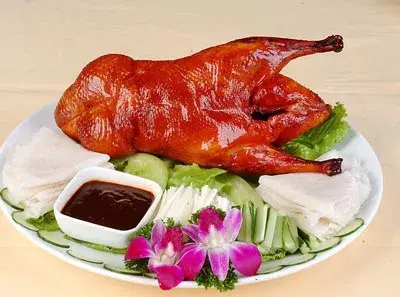
Dinner: Tonight the spectacular Peking duck banquet at Qianmen Quanjude Beijing Duck Restaurant- the most famous Beijing duck restaurant in the world. With a history of 137 years, it will give you an enthusiastic welcome.
Day 2 Beijing (B, L, D)

Sightseeing: Temple of Heaven, Tiananmen Square, Forbidden City
This morning our tour will begin with a visit of the Temple of Heaven, which was completed in 1420, and expanded over the years by two Qing Dynasty Emperors. It was the place where the Emperor came every winter solstice to worship heaven and to solemnly pray for a good harvest. With the three blue-tiled cone-shaped roofs, a unique wooden and blue-tiled structure built without a nail, it has become a worldwide symbol of Beijing.

After lunch, we will go on our city tour to visit Tiananmen Square, the symbolical heart of China and gathering place for the masses. It is the biggest public square in the world, which can hold one million people.

From here we will walk across the Golden River Bridge to visit the Forbidden City and experience the ancient Emperor's daily life. For 5 centuries Chinese emperors carried out their administration here. With almost 10,000 rooms, it was the centre of the Ming and Qing dynasties, a massive complex of palaces, pavilions, courtyards and gardens where 24 emperors used to live. Forbidden City was the largest palace in the world, and in the past it was indeed a forbidden place for commoners. Your tour here will include private access to the Emperor's palace.


Dinner: Fujian cuisine
Fujian cuisine is noted for its light touch, sweet and sour flavor. The cooking puts great attention in choosing the choicest ingredients, and is thus particularly apt in preparing seafood dishes. The dishes mostly marinated in wine, are souring sweet, specialize in all kinds of seafood, stir-fired, quick-fried and shallow oil-fried; simmered, with stress on flavor soup.

Restaurant: BaMinShiFu
Tel: 86-010- 64428833-5855
Address: No. 11, 3section AnZhenXiLi Chaoyang District, Beijing
Day 3 Beijing (B, L, D)

Sightseeing: Badaling Great Wall, Ming Tombs, Sacred Way
After experiencing the royal lifestyle, today we will be transferred to the surrounding countryside of Beijing and visit the Badaling Great Wall, the pride of China and one of the Seven Wonders of the World. Whereas Genghis Khan contemplated it as a military obstacle, Richard Nixon described it as one of humankind's greatest achievements. You will be able to climb and walk one of the best preserved sections of the 2,000 years old ancient wall, admiring the splendid mountain views. Bring a jacket and layer- although it is breezy, the climbing is tough. So be in a good shape!

In the afternoon we will visit the legendary Ming Tombs, which are situated at the foot of Heavenly Longevity Mountain, Changping, northwest of Beijing. Since there are 13 Ming emperors buried there, this place was called the 13 Ming Tombs. You will walk along the Sacred Way, a road guarded by stone statues on both sides, as the ancient emperors did to hold a memorial ceremony for their ancestors. In addition, you will encounter the marble tombs of the Ming Dynasty emperors.
On the way back to hotel, you will be driven to visit the main 2008 Beijing Olympic venues, take an exterior visit of both the, Beijing National Stadium (Bird's Nest/Olympic Stadium), National Swimming Centre('The Water Cube'),feel free to take some photos of the stadiums.
Dinner: Anhui cuisine

Anhui cuisine follows strict rules in the use of heat and salt; stewed in brown sauce with stress on heavy oil and sauce.

Restaurant: Huangshan Hui Restaurant
Tel: 86- 010-63031467
Address: TianQiaoLiuXue Road ChongWen District, Beijing
Day 4 Beijing / Shanghai (B, L, D)

Transfer via: Flight on our arrangement
Sightseeing: Hutongs, Summer Palace
We will experience a unique Hutong tour by taking a rickshaw this morning. Hutongs are a kind of ancient city alley or lane and are very typical for Beijing. Most of them can be found close to the Forbidden City, and many were built during the three dynasties of Yuan, Ming and Qing. Today, the Hutong is a living museum of Beijing history showing the traditional lifestyle of Beijing people.

We will continue by visiting the Summer Palace. Equally famous as the Forbidden City, the Summer Palace is called 'Yiheyuan' (Garden of Nurtured Harmony) in Chinese. Until nowadays, it is the best preserved and the largest imperial garden in China. You will regret it if you leave Beijing without having visited this grand imperial garden.

Then you will take the flight to Shanghai. Arriving in Shanghai, you will be met and transferred to your hotel by our local guide. Together, you will take a walk to the famous Nanjing Road and the Bund. They are among the most recognizable architectural symbols of Shanghai and therefore a must-see when visiting Shanghai.
Dinner: Zhejiang cuisine

Zhejiang food is represented by Hangzhou, Ningbo, and Shaoxing styles. Zhejiang cuisine is tender, mild and fresh.

Restaurant: FeiHuangRenWen Restaurant
Tel: 86- 021-63249533
Address: No.330 Tiantong Road Hongkou District, Shanghai
Day 5 Shanghai (B, L, D)

Sightseeing: Shanghai Museum, Jade Buddha Temple, Oriental Pearl Tower, Yuyuan Garden
Today we will start the day with a visit of Shanghai Museum which is the biggest museum of China. It incorporates a collection of over 120,000 pieces of Chinese art & cultural relics and is especially famous for its treasures of bronzes, ceramics, paintings and calligraphy.

Then we head to the Jade Buddha Temple. The old-time and classical architectural style makes the temple unique and inimitable in this modern city. Both, the Sitting Buddha and the Recumbent Buddha are carved with whole white jade. If you're lucky, you can watch the monks serving a ceremony in a side room.

After lunch, we will visit the Oriental Pearl Tower, the highest TV Tower in Asia, which creates a picture of 'twin dragons playing with pearls'. The entire scene is a photographic jewel that excites the imagination and attracts thousands of visitors all year-round.

Then we will take a relaxing walk to the lovely Yuyuan Garden, a beautiful garden in the south of the Yangtze River. Wandering through it, you will find pavilions, corridors, streams, courtyards as well as many other natural features.
Dinner: Shandong cuisine

Shandong food consists of Jinan and Fushan food. Jinan food makes good use of soup seasoning, frying in deep oil and steaming. Shandong roast chicken is especially good with wine and the chicken is and tender. Tasting it is guaranteed to make the diner believe. Shandong cuisine is known for its light seasoning, qualities of freshness, clear colors and delicate fragrance and pure tastes.

Restaurant: Luwei Restaurant
Tel: 86-021-63738270
Address: No.18 Yunnan Nan Road Huangpu District, Shanghai
Day 6 Shanghai / Suzhou (B, L, D)

Transfer via: soft seat train arranged by us
Sightseeing: Humble Administrator's Garden, Zhouzhuang.
In the morning we'll depart from your hotel and take the express train to Suzhou. Suzhou is praised as the "Oriental Venice" and called 'paradise on earth' along with Hangzhou.
Upon your arrival in Suzhou, our guide will meet you and escort you to a local restaurant for lunch. Then you will visit the Humble Administrator's Garden, the largest classical garden in Suzhou and one of the four most famous ones in China. Originally built in 1513 AD, the garden consists of three parts with different types buildings around streams and ponds.
We will spend the afternoon in Zhouzhuang, one of the most famous water townships in China. Situated in Kunshan City, which is only 30 kilometers (18 miles) southeast of Suzhou, it is noted for its profound cultural background, the well preserved ancient residential houses, the elegant watery views and the strong local colored traditions and customs. Let us explore this town with a history of more than 2500 years and get to know about the architecture, lifestyle and inhabitants there.
Afterwards you will be transferred back to Suzhou to spend the rest of your day on your own.
Dinner: Jiangsu cuisine

The origin of Jiangsu cuisine can be traced to pre-Christian times. Jiangsu cuisine specialties are lightly flavored, whether they combine sweet-and-salty tastes. Soya sauce and spices are mild and used sparingly, although the use of rich-flavored broth is extensive.

Restaurant: BaoFangYuan Restaurant
Tel: 86- 0512-67206597
Address: No. 207 Pishi Street Pinjiang District Suzhou.
Day 7 Suzhou / Hangzhou (B, L, D)

Transfer via: soft seat train arranged by us
Sightseeing: West Lake, Meijiawu Tea Plantation
Our guide and driver will escort you from Hotel to train station (Suzhou). Upon your arrival in Hangzhou, our local guide will meet you and escort you to beautiful West Lake. We will take a cruise boat across the lake to see the 3 pagodas in the lake. The West Lake is the most famous tourist spot of Hangzhou. Graceful mountains surround it on three sides. It has a charming scenery and many cultural relics and historic sites. Then you will visit the Meijiawu Tea Plantation. Tea village is seated at the hinterland of West Lake Park and it is famous for its tea production. Everybody will feel relax in such a natural environment; enjoy the special tea culture and the beauty there.
Dinner:Hunan cuisine

Hunan cuisine takes curing, simmering, steaming and stewing as the main cooking methods. It is fragrant and fresh, sour and peppery, yet soft and tender.

Restaurant: DingXianFang Restaurant
Tel: 0571-87823878
Address: No.456 Qingtai Road Shangcheng district, Hangzhou.
Day 8 Hangzhou (B, L, D)

Sightseeing: Six Harmonies Pagoda, Lingyin Temple and Feilai Feng (also named Ling JiuFeng)
Today you will also visit Lingyin Temple including the Feilai Feng. The Feilai Feng is situated in the east of Ling Yin Temple. Isolated from others, its stone quality is totally different from that of surrounding mountain groups. It is 167 meters high, on the peak there are many grotesque stones in the shapes of charming dragon, prostrate tiger, walking elephant and scared ape. The main hall of Lingyin Temple is about 34 meters (111 feet) tall - incredibly high for a one-storey building. In the center of the hall you'll find the statue of Sakyamuni Buddha, which was carved from 24 pieces of camphor wood. The temple was named Lingyin Temple for its extremely beautiful environment which is serene and suitable for "Soul's Retreat".
After that, we will drive to the Six Harmonies Pagoda, highly erected next to Qiantang River and in the south of the West Lake. It is a perfect example of brick-and-wood structure built in ancient China and was built in 970 AD in the Northern Song dynasty (960-1127) to press down the evil of the river tidal bore in Qiantang River.
After lunch, our guide and driver will escort you to the bus station (Hangzhou), upon your arrival in Huangshan; our local guide will meet you and escort you to hotel by a private air-conditioned car. Then you will spend the rest of day on your leisure.


Dinner: Sichuan cuisine

Distinct features of Sichuan style: they prefer steaming, simmering, and smoking. The cooking is elaborate and meticulous and the flavoring highly varied and mixed. The taste of each dish is very distinct. A common Chinese saying about Sichuan cuisine is that each meal has its own unique taste, and no two dishes have the same flavor. Sichuan cuisine is world-famous for its diverse hot and spicy flavor.

Restaurant: ChuanLiuBuXi Restaurant  
Tel: 86-0571-86069777 87172577
Address: No.246 Jiefang Road Shangcheng District, Hangzhou
Day 9 Hangzhou-Guangzhou (B, L, D)

Transfer via: Flight on our arrangement
Sightseeing: Sun Yat-sen Memorial Hall, Ancestral Temple of the Chen Family
Upon your arrival at the airport you will be met by your local guide. Then you will start your sightseeing tour by visiting Sun Yat-sen Memorial Hall. It is a magnificent building in the shape of octagon and an important place for large scale meeting and performance. Sun Yat-sen Memorial Hall was built in order to commemorate the contributions of Sun Zhongshan, the great predecessor of Chinese revolution for democracy. It is a memorial construction donated by the people in Guangzhou and the overseas Chinese and is listed as one of the first class cultural relics in Guangdong Province.

Afterwards you will visit the Ancestral Temple of the Chen Family which is also called Chen Clan Academy. It is a place both for offering up sacrifices to ancestors and for study. Now the Chen Clan Ancestral Temple in Guangzhou City, the Ancestors' Temple in Foshan City, the former Residence of Sun Yat-sen in Zhongshan City and the Opium War Memorial Hall in Dongguan City are regarded as the four major cultural tourist sites in Guangdong Province.
Dinner: Guangdong cuisine

In preparing the Guangdong cuisine, dozens of varieties of ingredients are often involved and more than 30 different kinds of cooking methods such as frying, grilling, stewing, simmering, deep-frying, roasting, and braising, etc. Freshness is everything to the Guangdong cuisine.

Restaurant: ALiuShiJia Restaurant
Tel: 86- 020-83516761
Address: No.302 Huanshizhong Road Yuexiu District, Guangzhou.
Day 10 Guangzhou (B, L)
Sightseeing: Yuexiu Park, Temple of Six Banyan Trees, Western Han Nanyue King Tomb Museum
In the morning we will start off to Yuexiu Park, the biggest comprehensive sight-seeing park. Yuexiu Park consists of seven hummocks and three artificial lakes. Yuexiu Park is well-known for beautiful hills and waters and plenty of antiques which you can enjoy at ease in the park. There are verdant grasses and trees, birds' singing, and fragrant flowers all through the year. Travelers will lose themselves in the elaborately engraved and Lingnan-styled pavilions, platforms, towers, and corridors; and the rippling water of the lakes.
Then you will head to the Temple of Six Banyan Trees. It has a long history in Guangzhou and is an ancient monastery famous at home and abroad. There are majestic towers, dense trees, plenty of antiques and valuable heritage from those famous people in the history. It is one of the four Buddhism temple complexes in Guangzhou is an important unit for the preservation of antiques.
Finally you will visit Western Han Nanyue King Tomb Museum, which is the oldest and largest Han tomb with the most funerary objects in Lingnan (South of the Nanling Mountain) Area. As one of the 80 famous museums in the world, the museum covers 14,000 square meters (150, 699.6 square feet) with 10 exhibition halls.
In the evening you will be transferred to the airport to take your flight to the next destination.