Beijing Attractions

Beijing Garden of World’s Flowers

Situated in Fengtai District, Beijing Garden of World's Flowers is the largest botanical garden within the capital's Fourth Ring Road. It covers an area of more than 40 hectares and has been awarded top marks as a tourist attraction.

Featured Attractions: The garden opened in 2005 an...

Situated in Fengtai District, Beijing Garden of World's Flowers is the largest botanical garden within the capital's Fourth Ring Road. It covers an area of more than 40 hectares and has been awarded top marks as a tourist attraction.

Featured Attractions: The garden opened in 2005 and offers 15 large greenhouses where you can enjoy a range of exotic flowers, plants and herbs in varying landscapes. The site offers a combination of sight-seeing, science, shopping and dining. There are outdoor gardens too, such as the Japanese Garden, Dutch Garden and Austrian Garden, but they have yet to bloom and blossom. So, while it's still cold it is best to enjoy the indoor gardens, where you can enjoy a range of gardens, including traditional Chinese landscapes that feature reconstructions of temples and palaces that still stand today in various provinces of the Middle Kingdom. You can also view a desert landscape with various cacti; there is also a hall of tropical plants where you can see banana trees and palm trees. And, there is a stunning selection of bonsai trees and gorgeous array of flowers.

South fourth ring: take bus No. 646, 377, 556 to the park.

Take bus No. 736, 740, 996, te 9 to Lianrijiayuan station and go towards the west for 300 meters.

Take subway line 4 to Gongyixiaqiao station and transfer to bus No. 646 to the park.

Jingkai Road: take bus No. 474, 410, 423, 434, 483, 381, 937, 977, 993, 631, te3, 529, 454, 676, 497 to Majialou station.

Beijing World Park

Beijing World Park is a miniature of the world with the five continents represented and located inside following the patterns of how they exist on earth. Here you can see 109 world-famous attractions from 40 countries.

The attractions like the Egyptian Pyramids, Eiffel Tower, Norte D...

Beijing World Park is a miniature of the world with the five continents represented and located inside following the patterns of how they exist on earth. Here you can see 109 world-famous attractions from 40 countries.

The attractions like the Egyptian Pyramids, Eiffel Tower, Norte Dame, the White House, Capitol Building, Lincoln Memorial, the Sydney Opera Theater and some Italian or Japanese styles gardens are scattered around. Here you can also see hundreds of statues like the the Statue of Liberty, the Manneken Pis, the Mermaid, the Statue of David, the statue of Venus, the statue of Chopin and the statue of Mozart. All statues are vividly crafted and bear exact resemblance to the heroes they are depicting.

Featured Attractions: The park can be separated into two parts: the scenic area and the entertainment area. The scenic area in miniature is displayed according to the position of its country on the map, along with shopping, dining and entertainment areas. The entertainment area is situated in an international folk village characterized by buildings in the American and European styles. The park also has a fountain operated by laser beams, a plant maze and a fairyland in which children and adults alike can enjoy themselves. Regular international parades of folklore are planned to provide the tourist with a chance to view folk customs from different countries.

Take bus te7, 959, 937, 967, 913, 944, 692 to World Park

Take Subway Line 9 to World Park station

Fenghuangling Nature Park

Fenghuangling Nature Park is a well-conserved ecological area. Beautiful natural scenery and historical relics together form this park. With the green hills, limpid water, clean air and proper air humidity, it is reputed as the lung of Beijing, together with the Little Huangshan Mountain, west of...

Fenghuangling Nature Park is a well-conserved ecological area. Beautiful natural scenery and historical relics together form this park. With the green hills, limpid water, clean air and proper air humidity, it is reputed as the lung of Beijing, together with the Little Huangshan Mountain, west of Beijing. Meanwhile, the park has colorful cultural sites. There are numerous sites of Buddhism, Taoism, Confucianism, and remains of the health preserving culture of ancient China. These cultural sites are very compatible with scenic spots.

Featured Attraction: To visit Fenghuangling, three routes are recommended: the north route, middle route and the south route.

The north route features a prominent density of scenic spots. The main sights along this route are the Physiognomy of Sea Cliff, the Geyi Nunnery, the Shangfang Temple, the Linglong Pagoda, the Feilai Stone Tower and the Moya Stone Tower, the Kwan-yin Cave, the Xiuxian Cave, the Cangzhen Cave, the Old Ape Cave, the Almighty Fountain, the Yijing Pond, the Water-dropping Rock, the Cetacean Back and the Golden Dragon Pool. The famous Tianti (ladder that leads to heaven) can also be seen on this route.

The middle route starts at the Longquan Temple (Dragon Spring Temple), which was built in the Liao Dynasty. Walking along the mountain, visitors can see the Immortal Cave, the Three-Buddha Cave, the Xuanyuan Cave and the Xiuxianyi. These four historic remains combine to form the largest and the most complete cave group for health preservation. Visitors can see other sights like the White Pagoda Reservoir, the Shadow Pavilion (legend claims that it was a place for the immortals to play chess) and Stone Carving of Fenghuangling (the biggest in Beijing).

The south route is a natural line with few man-made sites. Huangpu Yard, Guandi Temple and Lvzu Cave develop a triangle zone, which has rich religious cultures. Besides, there are many mysteries that are ongoing, for example, the mysteries of Jingangshi (crystals) Tower and Stone Buddha in Northern Wei Dynasty (386-534). In addition, visitors can enjoy relaxation in Cheerying village, which now has taken shape as a place of folk custom tourism.

Yuyuantan Park

Located in Haidian District, Yuyuantan Park (玉渊潭公园 Jade Lake Park) is easily accessible, with the Diaoyutai State Guesthouse to its eastern gate, China Central Radio and Television Tower to its west, Navy General Hospital to its north and China Millennium Monument to its south.

With ...

Located in Haidian District, Yuyuantan Park (玉渊潭公园 Jade Lake Park) is easily accessible, with the Diaoyutai State Guesthouse to its eastern gate, China Central Radio and Television Tower to its west, Navy General Hospital to its north and China Millennium Monument to its south.

With 1,820 meters (1.13 miles) wide from west to east and 1,106 meters (0.69 miles) long from north to south, Yuyuantan Park covers an area of 136.69 hectares and the water surface spans an area of 61 hectares. Back in the Jin Dynasty (1115-1234), Yuyuantan Park was already a famous scenic spot.

Featured Attractions:

Cherry Garden: Located to the northwest of the park, Cherry Garden is famous for its cherry blossoms. In the spring of 1973, 180 cherry trees were sent as gifts from Japan and were planted in the garden. Later on, more and more cherry trees were cultivated here. Today the garden has been the home for over 3,000 cherry trees. When cherry trees blossom in early spring (from late March to early April), tourists pour into the garden to enjoy the beautiful flowers. Metasequoias and bamboos flourish in the garden making Cherry Garden a wonderful place even when cherry blossoms are not in bloom.

Liuchun Garden: Built in 1983, Liuchun Garden ("Liuchun" means to let the spring stay) sits to the east of Yuyuantan Park. Every spring, forsythias, magnolias, roses, crab-apple trees and other plants blossom one after another like a perpetual spring in the garden. Inside the south entrance of Liuchun Garden, you will see a screen wall. Paintings on it are depicted by porcelain pieces. The three front pictures respectively portray a new-born baby in his mother’s embrace, a girl dancing with a swan, and a youngster pursuing knowledge, whilst three pictures designed for children are painted on the back of the wall. From a pavilion in the southwest corner of Liuchun Garden, you can enjoy a distant view of the whole garden.

Zhongshan Island: Zhongshan Island is located to the southwest of Yuyuantan Park. Spanning 800 meters (875 yards) long and 30 meters (33 yards) wide, Zhongshan Island is actually a small hill lying between Bayi Lake and West Lake. A pavilion with a double-tiered roof is built on the hill, from which the full view of Zhongshan Island and the lakes can be seen. Yinshui Lake Scenic Area is situated to the northeast of Yuyuantan Park. Pine trees, gingko trees, poplar trees, crab-apples and other plants are scattered in the area. You can also go fishing in this area.

Ancient Pine Forest: Near the south gate of Yuyuantan Park, there is an ancient pine forest. The trees were planted in Qing Dynasty (1644-1911) and are over 100 years old.

To the west gate: take bus No. 300, 323, 374 or Te 8 and get off at Bayi Lake North Station or Fuchenglu Station

To the south gate: take Subway Line 1 and get off at Military Museum Station and enter from the northern side of the China Millennium Monument

To the north gate: take bus No. 37, 121 or 846 and get off at Mashenmiao Station or Baiduizi Station

Purple Bamboo Park

Purple Bamboo Park is one of the seven largest parks in Beijing and is located at the southern end of Baishiqiao Road. It was first built in 1953 and is famous for the temples of the Ming Dynasty and Qing Dynasty located northwest of the park.

The lake covers one third of the park. N...

Purple Bamboo Park is one of the seven largest parks in Beijing and is located at the southern end of Baishiqiao Road. It was first built in 1953 and is famous for the temples of the Ming Dynasty and Qing Dynasty located northwest of the park.

The lake covers one third of the park. Nanchang river and shuangzi canal run through the park, forming the situation of three lakes, two islands, a river and a canal. It is a natural mountain and water park that makes the bamboo an attraction.

Featured Attraction: The park pursues the natural character by imitating the mountain and water. The stones are laid in delicately. Looking at the park from a high elevation, it is like a picture, making people feel at ease and relaxed. In the middle of the park, there are Bayixuan and Zhuyunjingshi on the qinglian island, wenyue building and xiaoshengzuiyue on the mingyue island. There are fuyin zizhuyuan, kuahaidongzheng and zizhu chuidiao on the west of the park. At the north of the chang river, there is a South-China-garden-featured Yunshiyuan, Qinglianganxiu, jiangnanzhuyun, zhushenhejing and lvyunxuan etc.

East Gate: Bus No. Te 4, Te 6, 86, 105, 106, Yuntong 205, 319, 320, 332, 563, 608, 614, 645, 653, 689, 695, 697, 717
South Gate: Bus No. 334, 347, 360, 482, Te 5
West Gate: Tke Bus No. Te 5, Te 8, 74, 300, 323, 362, 347, 394,482, 534, 617, 620, 658, 699, 944, 967,968

Central Radio and TV tower

Located to the west of Xisanhuan Middle Road, it is close to Yuyuantan Park and Diaoyutai State Guesthouse. Construction began in January 1987. In 1994, the project was completed and it was opened to the public on October 1st of the same year.

Taking up an area of 15.4 hectares, it r...

Located to the west of Xisanhuan Middle Road, it is close to Yuyuantan Park and Diaoyutai State Guesthouse. Construction began in January 1987. In 1994, the project was completed and it was opened to the public on October 1st of the same year.

Taking up an area of 15.4 hectares, it reaches 386.5 meters tall (1,268 feet, or 1,329 feet, if the lightning rod is counted). Its base covers an area of 12,143 sq meters (14,523 sq yards). The square, the surrounding verandah, the foundation, the pedestal, the body, the turret, and the mast together constitute it. Its pedestal imitates double-tiered roofs of ancient Chinese palaces, while its turret (689 feet above the ground) looks like a big palace lantern. When colored lights glow at night, it is like a giant lantern.

Featured Attractions:

Stone carved painting in the east hall: On the first floor, a gigantic stone carving is hanging on the wall of the East Hall, with 20 meters (22 yards) long, 8.7 meters (9.5 yards) wide and an area of 171.4 sq meters (205 sq yards). In the carving, you can see China's most distinctive mountains and rivers.

The Hall: Inside the hall, visitors can visit the revolving restaurant, indoor viewing hall, open-air sightseeing platform, and Liuyun (white cloud) Hall, each on different floors.

The revolving restaurant on the eighteenth floor can admit 250 people and features Chinese and Western-style buffets. It takes 80 minutes to make a full rotation. Visitors can enjoy the cuisine while viewing the city sights.

The indoor viewing hall is on the nineteenth floor.

The highest post office in Beijing is in this hall. You can buy postcards from the office and mail them with the postmark of the in-the-air post office.

The open-air sightseeing platform on the twenty-second floor is 238 meters (781 feet) above the ground, and is believed to be the biggest one of its kind all over the world. Chang'an Avenue, the Summer Palace, and other places can be seen clearly from the platform. Liuyun Hall on the twenty–third floor is the venue of celebrations and recreational activities.

Taipingyang Underwater World Exhibition: This ocean park, constructed at its base, is the home of hundreds of marine creatures. After visiting it, you can also have fun here.

Take Bus No. 40, 64, 74, 77,323, 368, 374, 394, 437, 617, 624, 631, 631 Kuai, 658, 944, 968, 977, Te 8, Yuntong 102 ,Yuntong 103, Yuntong 108, Yuntong 201 to Hangtianqiaonan station

Take Subway Line 1 to Gongzhufen Station and continue north towards Bayi Lake.

Beijing Botanical Garden

The Beijing Botanical Garden was founded in 1956 with financial support from the central government.

The Beijing Botanical Garden is located at the foot of the far Western Hill in the Haidian District. It is northwest of downtown Beijing and covers an area of 400 hectares It is known...

The Beijing Botanical Garden was founded in 1956 with financial support from the central government.

The Beijing Botanical Garden is located at the foot of the far Western Hill in the Haidian District. It is northwest of downtown Beijing and covers an area of 400 hectares It is known as the largest botanical garden in North China. The garden displays a variety of rare trees and stunning flowers. As well, it also houses a number of historical attractions. The plant conservatory, which in some ways resembles a crystal palace, lies at the center of the garden. The greenhouse is the largest one in Asia, and exhibits thousands of tropical and subtropical plants. There are areas designated for various trees and flowering plants. Eleven themed gardens form a spectacular sight within the garden, which features the rose, peony, lilac, bamboo, magnolia, bonsai, prunus mume flower, perennial flowers, herbaceous peony, ornamental peach and numerous other Chinese flowers.

Featured Attractions:

Conservatory: The main Conservatory, one of the biggest projects in Beijing, was setup in 1999 with an area of 6,500 square meters for display. There are a total of 3,000 taxa plants grown in crystal sections, including rainforest house, cacti & succulent house, orchid &carnivorous house, alpine house, foliage plant house and flower show house. The features of the rainforest are displayed in the tropical rainforest house, such as the plank buttress roots, dripping-tip leaves, cauline flowers, and etc. The diversity of epiphytes and carnivorous plants arrests children's and even parents' eyes in the orchid &carnivorous house. More than 1,000 species of cacti and succulents are collected in their house. It makes you feel like walking on an Arizona or Africa pathway. So, the conservatory is a very important site for the education of botany and conservation of plant resources.

Penjing garden: Penjing (Bonsai) is an ancient tradition art in China. Its long history can be traced back to 1,900 years ago. The Penjing garden is an attractive exhibition in the Beijing Botanical Garden. Most Penjing works come from different parts of China with distinct styles.

There are also outdoor miniature trees over 100 years old in the garden. A ginkgo tree is now more than 1,300 years old. The garden provides visitors with an elegant place to study the Penjing art, appreciate and exchange the works. Historic Site Cao Xueqin Memorial Hall, the Tomb of Liang Qichao, the Temple of the Sleeping Buddha and the December 9th Pavilion can also be seen there. The Cao Xueqin Memorial Hall depicts a vivid scene of mountainous villages of China. The Tomb of Liang Qichao, a famous reformist in the late Qing Dynasty (1644-1911), lies beyond the wooded area of the garden. The Temple of the Sleeping Buddha was constructed early in the Tang Dynasty (618-907) when a huge copper Sakyamuni statue, together with twelve smaller Buddha figurines was regarded as sacred. The December 9th Pavilion is built in memory of the December 9th Movement, which took place in 1935 and called for an end to the civil war and resistance towards the Japanese aggressors.

Xiedao Holiday Village Resort

Founded in August 1988, Xiedao Holiday Village Resort is located on the south side of the side road of the airport in Chaoyang District. It is 7 kilometers away from the Beijing Capital International Airport and covers 3,000 hectares, integrating catering, accommodation, recreation, and meeting r...

Founded in August 1988, Xiedao Holiday Village Resort is located on the south side of the side road of the airport in Chaoyang District. It is 7 kilometers away from the Beijing Capital International Airport and covers 3,000 hectares, integrating catering, accommodation, recreation, and meeting reception.

It is mainly separated into two sections: the eco-agricultural tour visit zone and relaxation holiday service zone with the eco-agricultural tour visit zone making up 90% of Xiedao and relaxation holiday service zone being 10%.

Featured Attractions:

Abundant water activities: Xiedao is located on the suburb geothermal area and the geothermal resource is abundant with two 2,400-meters-deep hot spring wells. As one of the resources of recreation in Xiedao, hot springs are excellent here with a water yield of 100 t/h and a temperature of 67 degrees. Near the two wells is a fitness health palace, whose main facility is the hot spring swimming pool and old Beijing bath room. Different people gather in the old Beijing bath room. The highest service is named Guan Tang, which is for officials and those rich business men. Not only are the equipment and service is top-rated, electrotherapy, pedicure, Chinese traditional massage and hairdressing are also available. The underground water in Xiedao is very rich and you can even see water two meters below the ground. This water is recycled water which is processed and reaches this standard. Through years of hard work, a water system has been formed, where there are rivers, lakes and pools, covering more than 300 hectares. The inner door and outdoor fishing, boating, seascape and wet land are developed there.

Authentic Delicate Cuisines: There are in total five restaurants at Xiedao, where visitors can not only choose from eight Chinese cuisines but can also dine on old Beijing flavor and cuisines of the northwest. All the ingredients of the cuisines are all organic and fresh. It will take no more than 4 hours from picking the ingredients to turning them into dishes. Aside from the various facilities for relaxing and keeping healthy from the water-based relaxing facilities, there are some other facilities, such as a large-scale gym and karaoke room. What’s more, there is also an indoor facility for tennis, bowling, archery, table tennis and billiards, etc.

Take Bus No. 688, and get off at the South Gate of Xiedao (Terminal).

Take Bus No. 418 or 909, get off at Xiedao Station, and walk for 600 meters to enter Xiedao.

China Red Sandalwood Museum

It's owned by Ms. Chan Lai Wah, who is a CPPCC member, chairlady of Fuwah International Hong Kong, honorary humanity doctor and director of the college directorate of the Savannah College of Art and Design in America. The total investment is over 200 million RMB. It's a gift project for the 50th ...

It's owned by Ms. Chan Lai Wah, who is a CPPCC member, chairlady of Fuwah International Hong Kong, honorary humanity doctor and director of the college directorate of the Savannah College of Art and Design in America. The total investment is over 200 million RMB. It's a gift project for the 50th anniversary of the founding of the People's Republic of China. It's the first and largest private museum in China specialized in collecting, researching and displaying red sandalwood works of art and connoisseurship of classical furniture, which fills a vacancy in the field of Chinese museums.

The exhibition room covers an area of 10,000 square meters. Here you will touch the essence of red sandalwood culture. The corner tower of the Palace Museum and the Qianqiu Pavilion in the imperial garden assume an imperial air. 320 dragons carved in the Longquan Temple in Shanxi Province are in different postures. The delicate Beijing quadrangles and the Feiyun Building in Shanxi Province are representatives of red sandalwood arts. They are all artistic treasures in the Orient made of red sandalwood. Numerous basso-relievo, sculpture-in-the-rounds, and fretworks give full display to the charms of red sandalwood.

Sandalwood is called the red wood because of its color. Its texture is hard, which makes it excellent material for making furniture. Here, the furniture made in the Ming and Qing Dynasties, traditional furniture materials, designs, and structures give a brand-new interpretation of the meaning of furniture.

Featured Attractions:

If you come to Beijing without visiting this "Red Sandalwood Temple", it will be a great pity, just as what Mr. Zhu Jiajing, a master appraiser of cultural relic, once told one of his friends from England.

Beijing Articles

Top Beijing Tours

$300 Per Day

10 Days Cuisine Feast Tour with All the Major China Cuisines

Day 1 Arrival Beijing (D)

Transfer via: Flight on your own arrangement
Upon your arrival you will be greeted by our local guide and then transferred to your hotel by a private air-conditioned car. For the rest of the day you will enjoy some leisure time.
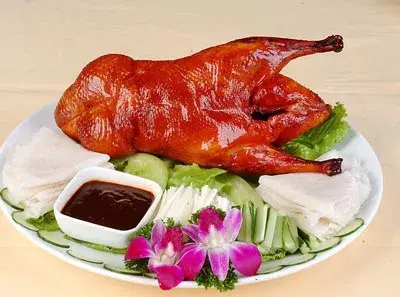
Dinner: Tonight the spectacular Peking duck banquet at Qianmen Quanjude Beijing Duck Restaurant- the most famous Beijing duck restaurant in the world. With a history of 137 years, it will give you an enthusiastic welcome.
Day 2 Beijing (B, L, D)

Sightseeing: Temple of Heaven, Tiananmen Square, Forbidden City
This morning our tour will begin with a visit of the Temple of Heaven, which was completed in 1420, and expanded over the years by two Qing Dynasty Emperors. It was the place where the Emperor came every winter solstice to worship heaven and to solemnly pray for a good harvest. With the three blue-tiled cone-shaped roofs, a unique wooden and blue-tiled structure built without a nail, it has become a worldwide symbol of Beijing.

After lunch, we will go on our city tour to visit Tiananmen Square, the symbolical heart of China and gathering place for the masses. It is the biggest public square in the world, which can hold one million people.

From here we will walk across the Golden River Bridge to visit the Forbidden City and experience the ancient Emperor's daily life. For 5 centuries Chinese emperors carried out their administration here. With almost 10,000 rooms, it was the centre of the Ming and Qing dynasties, a massive complex of palaces, pavilions, courtyards and gardens where 24 emperors used to live. Forbidden City was the largest palace in the world, and in the past it was indeed a forbidden place for commoners. Your tour here will include private access to the Emperor's palace.


Dinner: Fujian cuisine
Fujian cuisine is noted for its light touch, sweet and sour flavor. The cooking puts great attention in choosing the choicest ingredients, and is thus particularly apt in preparing seafood dishes. The dishes mostly marinated in wine, are souring sweet, specialize in all kinds of seafood, stir-fired, quick-fried and shallow oil-fried; simmered, with stress on flavor soup.

Restaurant: BaMinShiFu
Tel: 86-010- 64428833-5855
Address: No. 11, 3section AnZhenXiLi Chaoyang District, Beijing
Day 3 Beijing (B, L, D)

Sightseeing: Badaling Great Wall, Ming Tombs, Sacred Way
After experiencing the royal lifestyle, today we will be transferred to the surrounding countryside of Beijing and visit the Badaling Great Wall, the pride of China and one of the Seven Wonders of the World. Whereas Genghis Khan contemplated it as a military obstacle, Richard Nixon described it as one of humankind's greatest achievements. You will be able to climb and walk one of the best preserved sections of the 2,000 years old ancient wall, admiring the splendid mountain views. Bring a jacket and layer- although it is breezy, the climbing is tough. So be in a good shape!

In the afternoon we will visit the legendary Ming Tombs, which are situated at the foot of Heavenly Longevity Mountain, Changping, northwest of Beijing. Since there are 13 Ming emperors buried there, this place was called the 13 Ming Tombs. You will walk along the Sacred Way, a road guarded by stone statues on both sides, as the ancient emperors did to hold a memorial ceremony for their ancestors. In addition, you will encounter the marble tombs of the Ming Dynasty emperors.
On the way back to hotel, you will be driven to visit the main 2008 Beijing Olympic venues, take an exterior visit of both the, Beijing National Stadium (Bird's Nest/Olympic Stadium), National Swimming Centre('The Water Cube'),feel free to take some photos of the stadiums.
Dinner: Anhui cuisine

Anhui cuisine follows strict rules in the use of heat and salt; stewed in brown sauce with stress on heavy oil and sauce.

Restaurant: Huangshan Hui Restaurant
Tel: 86- 010-63031467
Address: TianQiaoLiuXue Road ChongWen District, Beijing
Day 4 Beijing / Shanghai (B, L, D)

Transfer via: Flight on our arrangement
Sightseeing: Hutongs, Summer Palace
We will experience a unique Hutong tour by taking a rickshaw this morning. Hutongs are a kind of ancient city alley or lane and are very typical for Beijing. Most of them can be found close to the Forbidden City, and many were built during the three dynasties of Yuan, Ming and Qing. Today, the Hutong is a living museum of Beijing history showing the traditional lifestyle of Beijing people.

We will continue by visiting the Summer Palace. Equally famous as the Forbidden City, the Summer Palace is called 'Yiheyuan' (Garden of Nurtured Harmony) in Chinese. Until nowadays, it is the best preserved and the largest imperial garden in China. You will regret it if you leave Beijing without having visited this grand imperial garden.

Then you will take the flight to Shanghai. Arriving in Shanghai, you will be met and transferred to your hotel by our local guide. Together, you will take a walk to the famous Nanjing Road and the Bund. They are among the most recognizable architectural symbols of Shanghai and therefore a must-see when visiting Shanghai.
Dinner: Zhejiang cuisine

Zhejiang food is represented by Hangzhou, Ningbo, and Shaoxing styles. Zhejiang cuisine is tender, mild and fresh.

Restaurant: FeiHuangRenWen Restaurant
Tel: 86- 021-63249533
Address: No.330 Tiantong Road Hongkou District, Shanghai
Day 5 Shanghai (B, L, D)

Sightseeing: Shanghai Museum, Jade Buddha Temple, Oriental Pearl Tower, Yuyuan Garden
Today we will start the day with a visit of Shanghai Museum which is the biggest museum of China. It incorporates a collection of over 120,000 pieces of Chinese art & cultural relics and is especially famous for its treasures of bronzes, ceramics, paintings and calligraphy.

Then we head to the Jade Buddha Temple. The old-time and classical architectural style makes the temple unique and inimitable in this modern city. Both, the Sitting Buddha and the Recumbent Buddha are carved with whole white jade. If you're lucky, you can watch the monks serving a ceremony in a side room.

After lunch, we will visit the Oriental Pearl Tower, the highest TV Tower in Asia, which creates a picture of 'twin dragons playing with pearls'. The entire scene is a photographic jewel that excites the imagination and attracts thousands of visitors all year-round.

Then we will take a relaxing walk to the lovely Yuyuan Garden, a beautiful garden in the south of the Yangtze River. Wandering through it, you will find pavilions, corridors, streams, courtyards as well as many other natural features.
Dinner: Shandong cuisine

Shandong food consists of Jinan and Fushan food. Jinan food makes good use of soup seasoning, frying in deep oil and steaming. Shandong roast chicken is especially good with wine and the chicken is and tender. Tasting it is guaranteed to make the diner believe. Shandong cuisine is known for its light seasoning, qualities of freshness, clear colors and delicate fragrance and pure tastes.

Restaurant: Luwei Restaurant
Tel: 86-021-63738270
Address: No.18 Yunnan Nan Road Huangpu District, Shanghai
Day 6 Shanghai / Suzhou (B, L, D)

Transfer via: soft seat train arranged by us
Sightseeing: Humble Administrator's Garden, Zhouzhuang.
In the morning we'll depart from your hotel and take the express train to Suzhou. Suzhou is praised as the "Oriental Venice" and called 'paradise on earth' along with Hangzhou.
Upon your arrival in Suzhou, our guide will meet you and escort you to a local restaurant for lunch. Then you will visit the Humble Administrator's Garden, the largest classical garden in Suzhou and one of the four most famous ones in China. Originally built in 1513 AD, the garden consists of three parts with different types buildings around streams and ponds.
We will spend the afternoon in Zhouzhuang, one of the most famous water townships in China. Situated in Kunshan City, which is only 30 kilometers (18 miles) southeast of Suzhou, it is noted for its profound cultural background, the well preserved ancient residential houses, the elegant watery views and the strong local colored traditions and customs. Let us explore this town with a history of more than 2500 years and get to know about the architecture, lifestyle and inhabitants there.
Afterwards you will be transferred back to Suzhou to spend the rest of your day on your own.
Dinner: Jiangsu cuisine

The origin of Jiangsu cuisine can be traced to pre-Christian times. Jiangsu cuisine specialties are lightly flavored, whether they combine sweet-and-salty tastes. Soya sauce and spices are mild and used sparingly, although the use of rich-flavored broth is extensive.

Restaurant: BaoFangYuan Restaurant
Tel: 86- 0512-67206597
Address: No. 207 Pishi Street Pinjiang District Suzhou.
Day 7 Suzhou / Hangzhou (B, L, D)

Transfer via: soft seat train arranged by us
Sightseeing: West Lake, Meijiawu Tea Plantation
Our guide and driver will escort you from Hotel to train station (Suzhou). Upon your arrival in Hangzhou, our local guide will meet you and escort you to beautiful West Lake. We will take a cruise boat across the lake to see the 3 pagodas in the lake. The West Lake is the most famous tourist spot of Hangzhou. Graceful mountains surround it on three sides. It has a charming scenery and many cultural relics and historic sites. Then you will visit the Meijiawu Tea Plantation. Tea village is seated at the hinterland of West Lake Park and it is famous for its tea production. Everybody will feel relax in such a natural environment; enjoy the special tea culture and the beauty there.
Dinner:Hunan cuisine

Hunan cuisine takes curing, simmering, steaming and stewing as the main cooking methods. It is fragrant and fresh, sour and peppery, yet soft and tender.

Restaurant: DingXianFang Restaurant
Tel: 0571-87823878
Address: No.456 Qingtai Road Shangcheng district, Hangzhou.
Day 8 Hangzhou (B, L, D)

Sightseeing: Six Harmonies Pagoda, Lingyin Temple and Feilai Feng (also named Ling JiuFeng)
Today you will also visit Lingyin Temple including the Feilai Feng. The Feilai Feng is situated in the east of Ling Yin Temple. Isolated from others, its stone quality is totally different from that of surrounding mountain groups. It is 167 meters high, on the peak there are many grotesque stones in the shapes of charming dragon, prostrate tiger, walking elephant and scared ape. The main hall of Lingyin Temple is about 34 meters (111 feet) tall - incredibly high for a one-storey building. In the center of the hall you'll find the statue of Sakyamuni Buddha, which was carved from 24 pieces of camphor wood. The temple was named Lingyin Temple for its extremely beautiful environment which is serene and suitable for "Soul's Retreat".
After that, we will drive to the Six Harmonies Pagoda, highly erected next to Qiantang River and in the south of the West Lake. It is a perfect example of brick-and-wood structure built in ancient China and was built in 970 AD in the Northern Song dynasty (960-1127) to press down the evil of the river tidal bore in Qiantang River.
After lunch, our guide and driver will escort you to the bus station (Hangzhou), upon your arrival in Huangshan; our local guide will meet you and escort you to hotel by a private air-conditioned car. Then you will spend the rest of day on your leisure.


Dinner: Sichuan cuisine

Distinct features of Sichuan style: they prefer steaming, simmering, and smoking. The cooking is elaborate and meticulous and the flavoring highly varied and mixed. The taste of each dish is very distinct. A common Chinese saying about Sichuan cuisine is that each meal has its own unique taste, and no two dishes have the same flavor. Sichuan cuisine is world-famous for its diverse hot and spicy flavor.

Restaurant: ChuanLiuBuXi Restaurant  
Tel: 86-0571-86069777 87172577
Address: No.246 Jiefang Road Shangcheng District, Hangzhou
Day 9 Hangzhou-Guangzhou (B, L, D)

Transfer via: Flight on our arrangement
Sightseeing: Sun Yat-sen Memorial Hall, Ancestral Temple of the Chen Family
Upon your arrival at the airport you will be met by your local guide. Then you will start your sightseeing tour by visiting Sun Yat-sen Memorial Hall. It is a magnificent building in the shape of octagon and an important place for large scale meeting and performance. Sun Yat-sen Memorial Hall was built in order to commemorate the contributions of Sun Zhongshan, the great predecessor of Chinese revolution for democracy. It is a memorial construction donated by the people in Guangzhou and the overseas Chinese and is listed as one of the first class cultural relics in Guangdong Province.

Afterwards you will visit the Ancestral Temple of the Chen Family which is also called Chen Clan Academy. It is a place both for offering up sacrifices to ancestors and for study. Now the Chen Clan Ancestral Temple in Guangzhou City, the Ancestors' Temple in Foshan City, the former Residence of Sun Yat-sen in Zhongshan City and the Opium War Memorial Hall in Dongguan City are regarded as the four major cultural tourist sites in Guangdong Province.
Dinner: Guangdong cuisine

In preparing the Guangdong cuisine, dozens of varieties of ingredients are often involved and more than 30 different kinds of cooking methods such as frying, grilling, stewing, simmering, deep-frying, roasting, and braising, etc. Freshness is everything to the Guangdong cuisine.

Restaurant: ALiuShiJia Restaurant
Tel: 86- 020-83516761
Address: No.302 Huanshizhong Road Yuexiu District, Guangzhou.
Day 10 Guangzhou (B, L)
Sightseeing: Yuexiu Park, Temple of Six Banyan Trees, Western Han Nanyue King Tomb Museum
In the morning we will start off to Yuexiu Park, the biggest comprehensive sight-seeing park. Yuexiu Park consists of seven hummocks and three artificial lakes. Yuexiu Park is well-known for beautiful hills and waters and plenty of antiques which you can enjoy at ease in the park. There are verdant grasses and trees, birds' singing, and fragrant flowers all through the year. Travelers will lose themselves in the elaborately engraved and Lingnan-styled pavilions, platforms, towers, and corridors; and the rippling water of the lakes.
Then you will head to the Temple of Six Banyan Trees. It has a long history in Guangzhou and is an ancient monastery famous at home and abroad. There are majestic towers, dense trees, plenty of antiques and valuable heritage from those famous people in the history. It is one of the four Buddhism temple complexes in Guangzhou is an important unit for the preservation of antiques.
Finally you will visit Western Han Nanyue King Tomb Museum, which is the oldest and largest Han tomb with the most funerary objects in Lingnan (South of the Nanling Mountain) Area. As one of the 80 famous museums in the world, the museum covers 14,000 square meters (150, 699.6 square feet) with 10 exhibition halls.
In the evening you will be transferred to the airport to take your flight to the next destination.
$300 Per Day

Shicha Hai

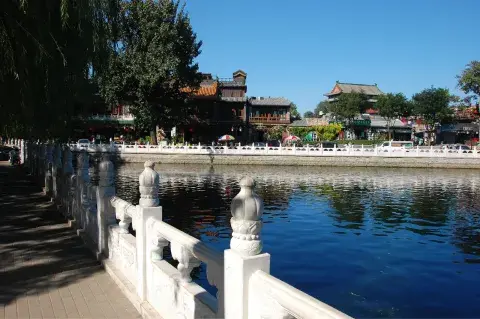
Shichahai is a famous scenic area that includes three lakes (Qian Hai, meaning Front Sea; Hou Hai, meaning Back Sea and Xi Hai, meaning Western Sea), surrounding places of historic interest and scenic beauty, and remnants of old-style Beijing residences, Hutong and Courtyard. It is located in the northwest part of Beijing, and covers a large area of 146.7 hectares (about 363 acres). We can take a walk along the lake and have a cup of hot coffee after some strolling.

The greatest point of interest in Shichahai today is its residences, Hutong and Courtyard. In and around Beijing City, Shichahai is one of the best places to view well-preserved Hutongs and courtyards.


Hope you can enjoy!!

$200 Per Day

Private Beijing Antique Shopping Tour with Lunch

Start your private tour with pickup from your central Beijing hotel, and meet your private guide. 
 
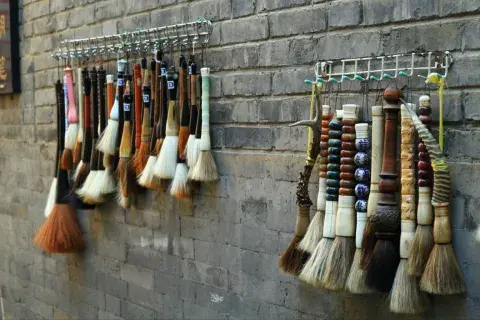
Hop inside your private, climate-controlled vehicle and travel to your first stop: Liulichang Antique Street. Situated in old Beijing, this history-steeped street is lined with stone shop-houses selling antique books, handicrafts, paintings, rubbings, glazed pottery, and other treasures. 
 
Hear about Liulichang’s history, and get advice from your guide as to the best shopping opportunities. Sift through the traditional shops and stands, and explore the side lanes (hutongs), where the shops still bear original Ming and Qing architectural features like ornately carved doors and upswept roofs. 
 
Next, drive to Panjiayuan Market, a so-called ‘weekend market’ that’s open daily. Weave through the throng of stands, perusing the huge array of antiques, curios, ceramics, Tibetan rugs, calligraphy, and other finds. 
 
After shopping here, refuel with lunch at a Chinese restaurant, and continue to Baoguosi Cultural Market, set around an old temple. Scour the courtyards of vendors hawking stamps, books, coins and jade, and get tips on scouting out and clinching the best deals from your guide. 
 
If time allows, squeeze in a visit to Hongqiao Market, a mall known for its pearl traders, and electronics, art, clothes, and accessories shops. Trawl for bargains, and haggle over pearls and other precious gems as perfect keepsakes of your time in Beijing. 
 
After seven hours, your tour concludes with a hotel drop-off.