Yunnan Province Attractions


Yunnan Province Articles
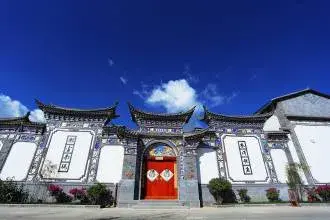
House Of Bai Minority.
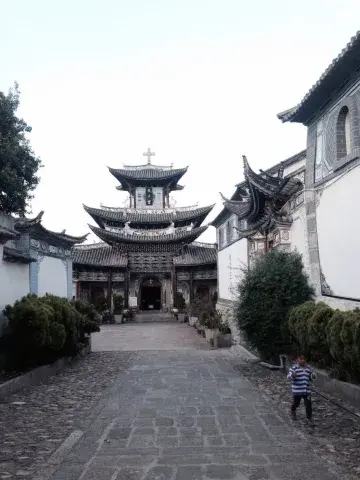
Bai minority are much in evidence at Xizhou, 18 km north of Dali Ancient Town. Green mountains, winding creeks and fertile land make here a lyrical and carefree life.
Bai minority are much in evidence at Xizhou, 18 km north of Dali Ancient Town. Green mountains, winding creeks and fertile land make here a lyrical and carefree life.
The history of Xizhou can be dated back to the Sui Dynasty (581-618 AD). At that time, it was called the city of Dali. It was later conquered by General Shi Wansui, so it also enjoys the name of Shicheng (Shi City).
People nowadays regard Xizhou as a town that is famous for the Bai minority culture. The old houses and streets are well preserved, through which visitors may still find some traces of past glory.
At the entrance to Xizhou, a magnificent structure catches the attention of visitors. It is a two-storey building made of wood and brick. The second floor is an attic of horizontal inscribed board. The first floor is a corridor, leading people into the history.
Not far away is a banyan tree with flourishing leaves and branches. Perched on the tree is a large flock of egrets. They lead a comfortable and luxurious life without disturbance. People may have their doubts about whether the banyan tree and egrets are sacred things worshipped by the locals from generation to generation. All the same, such a seamless and harmonious relationship between human beings and nature really is a great attraction.
Walking along the slate road, sauntering though the winding alleys, visitors can have a good look at the delicate and intricate designs on the walls.
The houses of local residents are characterized by a traditional Chinese rectangular courtyard with a screen wall facing the gate. On the screen wall there are usually four Chinese characters, reading 'Qingbai Shijia' (innocent family) or 'Ziqi Donglai' (Auspicious air comes from the East). Around them are landscape paintings and decorations with profusion of colors. The doors and windows are full of grills with auspicious paintings.
In Xizhou, visitors also have the opportunity to appreciate the genuine tea ceremony of the Bai minority. Sandao Tea is a must-drink. It consists of bitter tea, sweet tea and aftertaste tea, indicating the whole life of the people.
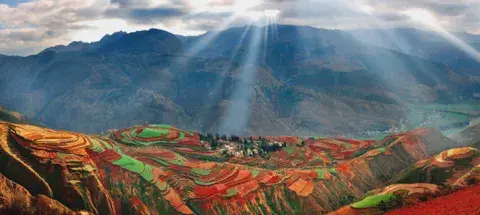
Yunnan In My Eyes
No matter how long you have planned to stay in Yunnan, it will never be enough anyhow, because it is the idealest place for living---Once come here, never want to leave....
No matter how long you have planned to stay in Yunnan, it will never be enough anyhow, because it is the idealest place for living---Once come here, never want to leave. The perfect combination of nice climate, leisure lifestyle, lovely ethnic groups and amazing landscapes makes Yunnan a fascinating destination for your routine life escape, it appeals to all men. Traveling in Yunnan could be like having a date with lover. Background is gorgeous, time is slow, and laziness is advocated here as a right way to enjoy life,.“Simply forget and forgive” is taught to be the smart attitude to deal with the complicate world. It is not wrong to put yourself in a daze for a whole day or sleep till noon.Traveling in Yunnan could also be like fighting with warriors.Any hikes along highland rivers or around snow mountains would make you rethink and respect. When here,to be a tender princess or a tough warrior,Choice is not the question.Only the way to enjoy Yunan matters.
The secret divination of the Jingpo people
When a Jingpo boy and girl are dating, the boy will "steal" some hair or little pieces of cloth of the girl for divination. A witch or sorcerer will be resorted to decide whether or not the boy and girl are "eligible" for marriage....
When a Jingpo boy and girl are dating, the boy will "steal" some hair or little pieces of cloth of the girl for divination. A witch or sorcerer will be resorted to decide whether or not the boy and girl are "eligible" for marriage. If it is ok, the boy's parents will ask the Lejiao (the boy's matchmaker) to contact the Qiangtong (the girl's matchmaker) for proposal.
Some gifts for proposing include silk cloth, eggs, wine and cigarettes etc. If the girl's family accepts these gifts, it means the girl is willing to marry to the boy; and further betrothal negotiation will be organised.
Top Yunnan Province Tours

$35 Per Day
Jade Water Village - half day
Naxi is the major minority in Lijiang. During the Naxi New Year, there is big celebration. The old DongBa carry out traditional celebration and the place is open to public free of charge. Half day visit to Jade Water Village. The village is 20KM from Lijiang city. There is a underground water pouring out from the Jade Dragon Snow Mountain. Water fall flows through the village. That is where the village was build. You can see the Naxi living in demonstration. Price includes pick up from hotel and transfer back. Minimum 2 person.
$300 Per Day
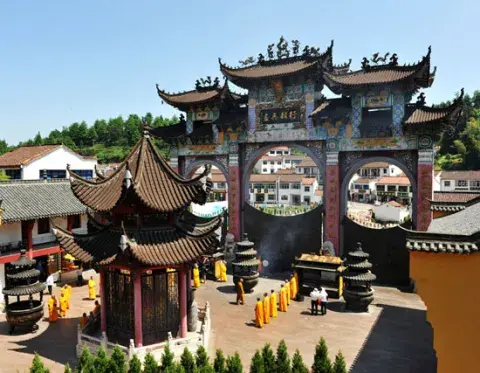
Super China Buddhist Tour
D1 Arrive in Shanghai
Arrive in Shanghai and transfer to the hotel.
D2 Shanghai
This morning visit the Jade Buddha Temple where we can look with reverence for two jade Buddha which came from Myanmar in the year of 1882. Then we will sightsee the Bund in modern Shanghai and highest tower in Asia - the Oriental Pearl TV Tower.
Temple in Mount Putuo
D3 Shanghai - Putuo
D1 Arrive in Shanghai
Arrive in Shanghai and transfer to the hotel.
D2 Shanghai
This morning visit the Jade Buddha Temple where we can look with reverence for two jade Buddha which came from Myanmar in the year of 1882. Then we will sightsee the Bund in modern Shanghai and highest tower in Asia - the Oriental Pearl TV Tower.
Temple in Mount Putuo
D3 Shanghai - Putuo
In the morning take the speed boat to Putuo Mountain. Located on one of the Zhoushan Islands about 100 sea miles off the eastern coast of Hangzhou Bay in Zhejiang Province, it is one of the four famous Buddhist shrines in China, covering an area of 12.5 square kilometers. Built in the Song Dynasty, Puji Temple is regarded as the Bodhimandala of Bodhisattva Guanyin. Also included for today are the Fayu Temple and Thousand-step Beach. Stay at the hotel in Putuo Mountain.
D4 Putuo - Hangzhou
Purple Bamboo Temple was built on the original site of Refuse-To-Leave Temple, the oldest temple in Putuoshan. A visit to it and Kwanyin Statue inside is our schedule for the morning. After lunch, a bus ride to Hangzhou, a city widely reputed as "the Paradise on Earth". According to Marco Polo, Hangzhou was "without doubt the finest and most splendid city the world... there are said to be 13,000 bridges, mostly of stone... vast are the numbers of those accustomed to dainty living, to the point of eating fish and meat at one meal." Stay in the hotel in Hangzhou.
D5 Hangzhou - Tunxi
After an excursion on the pictureque West Lake, symbol of Hnagzhou City, we will be inside the Lingyin Temple (Soul's Retreat Temple) which was built in 326 by the Indian monk Hui Li; and Jingci Temple, another famous temple with a history of more than 1,000 years. Lingyin temple attracts numerous pilgrims each year, both at home and abroad. Later we will drive for about 3 hours to reach Huangshan City. Stay in a downtown hotel. Since you'll have to carry everything yourself up Huangshan unless you hire a porter, it is advisable that you leave your big luggage in the hotel in downtown and bring only a small handbage or knapsack with you up mountain.
Clouds Sea in Mount Huang
D6 Mount Huang
A bus ride to Mt. Huangshan Scenic Area before taking the Yuping Cable-car up mountain from the western step. A three-and-half-hour hike will take you to sightsee the fantastic and unforgettable views, including the Jade Screen Peak, Welcoming-guest Pine Tree, Lotus Peak, Turtle Peak, Heavenly Sea Pavilion, Bright Top Peak, the Flying-over Rock, the Cloud-dispelling Pavilion and Grand Canyon of the West Sea. Stay at the hotel on Huangshan Mountain.
D7 Huangshan - Mount Jiuhua
Descend the Mountain by Taiping Cable Car and drive for two hours to get to Jiuhua Mountain - one of the four most sacred Buddhist mountains in China. The mountain attracts a large number of pilgrims throughout China and overseas daily, a sign that China is more open and tolerant towards religious belief. We'll be visiting Huacheng Temple, the oldest and the leading monastery of Jiuhua Mountain which was built in the Tang Dynasty (756-758). In the hall are preserved horizontal boards inscribed by emperors of the Qing Dynasty. Stay overnight up Jiuhua Mountain.
Mount Jiuhua
D8 Mount Jiuhua
A full day visiting and sightseeing up Jiuhua Mountain today. We'll take cable car to visit the Longevity Palace, which preserves a saint Buddhist Mummy, monk Wu Xia of the Ming Dynasty. The temple, built in the Ming Dynasty, is 871 meters above sea level. Besides, we'll also be visiting the Hall of Sacred Remains, Qiyuan Temple, one of the four biggest temples in the mountain and the Temple of the Heavenly Terrace which towers on a precipitous cliff of the Tiantai Peak and resembles a magnificent castle from a distance. After dinner, we'll go t o Qiyuan Temple to attend a Buddhist ceremony. Stay in the same hotel.
D9 Jiuhua
Drive for two and half hours to visit Hongcun Village-the main village in Yi County which was listed into the world cultural heritage by UNESCO in 2001. The Oscar-awarded movie "Crouching Tiger, Hidden Dragon" was filmed there. Then we'll drive to visit Nanping Village (the place where the movie "Judou" was filmed). Drive back to visit the fantastic Old Street, center of the old town section. Leave Huangshan City by evening flight after dinner.
$300 Per Day
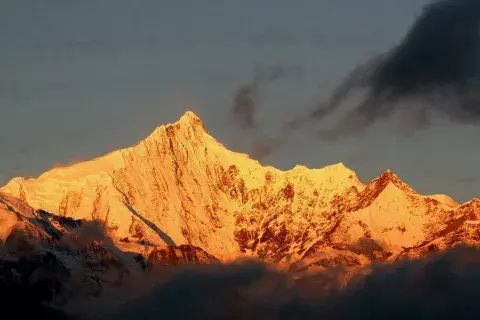
13 Days, Yunnan: Trekking around Mt. Kawagebo
Daocheng is located in southwest corner of Sichuan province, it is well-known for the 3 holy peaks named by the 5th Dalai Lama, Shiannairi Peak(6032 m high), Xianuoduoji Peak(5898 m high), Yangmaiyong Peak(5898 m high). Every year, there are many people trek around the 3 holy peaks for increasing their merits and virtues. Lugu Lake is located in northwest part of Yunnan province, it covers 58 square kms, the water is very clear. The unique matriarchal Mosuo people live by the lake, which earned this area another name: the Mysterious Queendom....Read more
Daocheng is located in southwest corner of Sichuan province, it is well-known for the 3 holy peaks named by the 5th Dalai Lama, Shiannairi Peak(6032 m high), Xianuoduoji Peak(5898 m high), Yangmaiyong Peak(5898 m high). Every year, there are many people trek around the 3 holy peaks for increasing their merits and virtues. Lugu Lake is located in northwest part of Yunnan province, it covers 58 square kms, the water is very clear. The unique matriarchal Mosuo people live by the lake, which earned this area another name: the Mysterious Queendom. Trekking from Daocheng to Lugu Lake is surely one of the best trekking route in China.
ITINERARY
D1
Chengdu/Kangding
We will meet you at the airport and begin our journey to Kangding directly. Kangding, a former outpost on the trade route to Tibet, is a fairly large city tucked within a river valley. The sidewalks of Kangding are crowded with Hui, Chinese Muslims, and Tibetans who have come down from the highlands to sell wild mushrooms, vegetables, yak skins and various paraphernalia. Today's drive will take approximately 6 hours (360km).
D2
Kangding/ Litang
We'll have an early start today so we can have more time to explore this picturesque remote Tibetan town. At an altitude of just over 4000m, this is one of the highest towns in the world (Lhasa is 3700m). Situated high on a grassy plateau, Litang has the feel of a rough and tumble 'Wild West' town. Khampas - dressed in yak skin coats, bedecked in colorful necklaces and hair ornaments, long daggers hanging from their belts - from the surrounding areas amble into town to stock up on food and supplies, play pool on the streets and hang out in the local teahouses. This small town is great for people watching and just strolling around. We will also visit the famous Chang-Qing-Chun-Ke'er-Si monastery and pay homage to the living Buddha with a personal interview. The monastery here is now home to 1400 Yellow Hat sect monks. Once a hotbed of Tibetan dissent, this monastery was destroyed in the 1950s but has since been completely rebuilt. Today's journey from Kangding to Litang will take us approximately 5 hours (306km).
D3
Litang/Daocheng/Yading
Today we will reach the highlight of this journey - Yading nature reserve, home of three sacred Tibetan mountains - Chenresig (Avalokitesvara, 6032m), Jambeyang (Manjusri, 5958m), and Chanadorje (Vajrapani, 5958m). Tibetan Buddhists believe that making a kora (pilgrimage) around these mountains brings great merit, and that the three mountains represent compassion, wisdom and energy - attributes one must cultivate on the path to enlightenment. The scenery here easily rivals that of national parks of the west such as Yellowstone and Yosemite in terms of spectacular, pristine mountain scenery. The drive from Litang to Daocheng will take approximately 4 hours (180km), and the trip from Daocheng to Yading (60km) will take approximately 3 hours as much of the road to the park is dirt track. We will spend the night in tent hotel.
D4
Yading/Kars Yak Ranch
Start your trekking tour with horses, first, trek 1 hour to Chongguo Monastery(3800m) which is in fact a ruin, then trek up to visit the Pearl Lake, then continue trek to the Luorong Yak Ranch(4200m), then trek along the Milk Lake shore up to a mountain pass(4681m), then trek down to the Kars Yak Ranch. Camping.
D5
Kars village
Trek from Kars Yak Ranch down to the Kars Hell Valley, then trek through the valley, on the way, you will see several waterfalls, (the valley is named Hell, but in fact it is as beautiful as Paradise), at the end of the valley, you will cross a narrow wood bridge, walk in the Kars Village. Stay in a local villager house or camping.
D6
Kars Village to Seku Village
Take a tractor for 39 km from Kars Village to Dongyi Village via Geka Village, then change to a minibus, drive another 18 km from Dongyi Village to Eryatong Village via Wangzi Village. Here is the end of the dust road, you have to start your trekking tour again. You will trek 6 km from Eryatong Village to Emei Village, on the way, you will see the U-shape Bend of the Dongyi River, you will also see some ruined castles on the way. (these castles are related with the war between the Naxi people in Lijiang and the Tibetan people living in this area in Ming Dynasty). Then continue trek from Emei Village to Seku Village(3500m, most villagers are Mongolian people). Stay in a local villager house or camping.
D7
Seku Village/Kawa Village
Trek from Seku Village to Eryada Village, then continue trek to Keku Village (most villagers are Pumi people), then continue trek to Kawa Village(3500m, most villagers are Naxi people and Mongolian people), on the way, you will see many cactus as big as trees, you will also see a 100m-high waterfall. Stay in a local villager house or camping.
D8 Kawa Village/Hadi Village
Trek along the Dongyi River and the Tongtian River from Kawa Village to Yiji Village, on the way, you will pass the Hadi Village (most villagers are Naxi people). Stay in a local villager house or camping.
D9 Yongning Hot Spring Village
Trek up a mountain pass (the Yiejiliangzi, about 4000m), then trek down to Yongning Hot Spring Village. Enjoy a hot spring bath. Stay in a local guesthouse.
D10 Yongning Town/Lugu Lake
Trek to Yongning town, here is the end of your trekking tour. Then drive 1 hour to Lugu Lake, take a small wood boat cruise on the lake, visit the Mosuo villages. Stay in the 2 star Daba Hotel by the lake.
D11 Lugu/Lijiang
Drive 6 hours from Lugu Lake to Lijiang, check in a 4 star hotel and rest.
D12 Lijiang
Visit Lijiang Old Town which is a World Cultural Heritage site, including the Square Market, the Mu Family Palace which is like a little Forbidden City, and the Black Dragon Pond where is the ideal place to view the snow mountain. Stay in the 4 star hotel.
D13 Lijiang/Kunming
Take a morning flight from Lijiang back to Kunming, then connect your departure flight back home.