Yunnan Province Attractions
Yunnan Province Articles
China's annual twin extravaganza in Mojiang
The organizing committee for the upcoming Mojiang International Twins Festival — held May 1-2 — were pleased to introduce the double faces of their current advertising campaign....
The organizing committee for the upcoming Mojiang International Twins Festival — held May 1-2 — were pleased to introduce the double faces of their current advertising campaign. During the weekend press conference, the official promotional song for the two-day event was also unveiled, as local media inquired about preparations for the upcoming 'twin-undation'.
Held at the Telecom International Hotel , the conference room was big enough for more than 100 invited guests. Attendees mostly consisted of journalists and photographers from local newspapers and television stations. We were greeted by two friendly looking pairs of twins in traditional Hani clothing at the entrance and, after many smiles and greetings, one young lady handed us a hefty bag promotional literature before guiding us into the room. We were the first guests to arrive, choosing fourth row seats just behind those reserved for committee members, sponsors and other honored guests.
Scheduled for 2pm, the press conference started with a slight 30-minute delay. The wait provided us with enough time to work our way through the abundance of informational material found in our goody-bag. We learned that Mojiang is an autonomous county in the prefecture of Pu'er . Nestled among subtropical mountains somewhat near the Vietnamese border, it is known for producing high-quality tea products and for its year-round warm weather. Home to the Hani minority, Mojiang isn't commonly referred to as a tourism hotspot, except for once a year.
It isn't the local architecture or traditional dances that make it special. It is the region's exceptionally high percentage of twin births. Normally the chance of conceiving identical twins is slim — only about three out of 1,000. But with more then 1,500 identical twins and triplets, such births in Mojiang come around 25 percent more frequently then in the rest of the world. No one knows why this happens, and contributing factors such as inherited genes, the climate, and local well water have all been put forward as explanations.
The conference room filled up and conversations came to close as the press conference got underway. It began with an introduction of the winning twins from last years televised talent show, complete with a short display of the pair's winning ballet skills. Next, the official song for this year's festival was unveiled, sung live by a pair of twins from Mojiang. It immediately seemed to catch on, as some members of the committee, as well as a few journalists, started to hum along with the refrain.
Mojiang's yearly twin festival will include a lot of singing and dancing, plus celebrations of local Hani culture and everything twin-related in general. Identical twins from all over the world are invited to the festival to participate in these activities, which culminate in a huge talent show. It isn't always what most would consider a 'normal' talent, such as a dueling piano performance or singing, that takes first prize. A few years ago, a pair of Russian twins won the talent show for dancing provocatively while dressed in matching skintight catsuits.
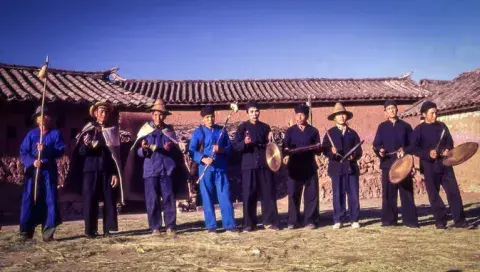
Yi people dress up as tigers when the festival
Wudi Village (五地村) lies in the mountains of southeastern Chuxiong Prefecture (楚雄州), right in the center of Yunnan province....
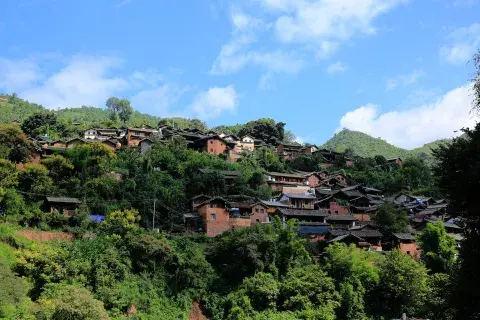
Wudi Village (五地村) lies in the mountains of southeastern Chuxiong Prefecture (楚雄州), right in the center of Yunnan province. To get there requires taking a bus first to Chuxiong, another to Shuangbai (双柏), 60 kilometers south, then yet another one to Fabiao Township (法脿乡), 50 kilometers further southeast. Fabiao is pleasantly sited amidst rolling hills, with a good vantage point for sunrises. It's a Han town, as are the villages immediately south, towards the reservoir. From this body of water, a trail bends west to a long valley flanked by high hills, their slopes sprinkled with medium-sized villages sitting above terraced fields.
Wudi is among them, about an hour's walk from the junction at the reservoir. Like the other settlements in this part of Shuangbai County, its inhabitants are members of the Yi nationality — the largest ethnic minority in Yunnan — comprising five major dialect groups and thirty-odd separate sub-groups. Aside from hearing the language — a Tibeto-Burman tongue quite different from Chinese in both structure and sound — not much exists in the village to mark Wudi as Yi-inhabited. Unlike many other sub-groups, Wudi's Yi do not dress in traditional costume, not even the older women. Nor do they carry distinctive shoulder bags, like the more assimilated of their Yi cousins in other counties of Chuxiong.
About 60 to 70 houses stand in Wudi, sited just below the summit of a high ridge, buildings of rammed earth, timber and tiled roofs. It is the architecture typical of rural Yunnan, with nothing particularly Yi about it, in stark contrast to the Yi log cabins of the northwest or the flat-roofed Yi houses of Honghe Prefecture (红河州). Homes sit close together along cobbled streets and are sited around a pond next to the central square, which extends halfway up the slope behind.
Near the top of this back slope is the village altar, so to speak, with three stones standing in a small clearing. This certainly identifies the village as Yi, for the custom is common to nearly all Yi sub-groups. The stones represent the original Yi ancestors, and rituals taking place here are conducted by a bimaw, the tribal specialist in such matters and office existing in every traditional Yi society. So in spite of their apparent assimilation into the folds of Chinese culture, the Yi of Wudi do retain at least vestiges of their original traditions.
Once a year, though, they do much more than exhibit vestiges. A fortnight after Chinese Spring Festival — or Lunar New Year — Wudi village stages a peculiar festival of its own called laohuzhuan (老虎转), or 'Dressing Up as Tigers' — that in no way resembles anything culturally Chinese, unless it be the shamanistic dances of ancient, preliterate times. For this event, several young men don strange costumes, paint their bodies and masquerade as tigers. They are joined by other men, including the village bimaw dressed in long black gowns. Together they perform magic dances to invoke the gods' blessings for the coming rice crop.
Perhaps in the past villages besides Wudi used to stage this event as well, but in Wudi itself the festival was banned in 1952 by Communist cadres bent on eradicating 'superstitions'. Not magic and ritual, but hard work and discipline will make the crops grow, ran the new argument. The undermining of other Yi customs and beliefs continued, sometimes subtly, sometimes fiercely, until the Reform Era launched by Deng Xiaoping in 1979. The Party then reversed policy on minority nationalities, who were then allowed to revive, more or less, as much of their ethnic traditions as they wished. In Yunnan, home to 24 of China's 55 minority nationalities, the government encouraged the process by repairing and renovating religious buildings and subsidizing festivals.

The Hidden Beauty--Lugu Lake
Lugu Lake is located between Ninglang County in Yunnan Province and Yanyuan County in Sichuan Province, about 300km away from Lijiang. It is a plateau lake with a total area of 52 square kilometers, 2,685 meters above the sea level. The average depth is 45m, and the deepest point being 93m....
Lugu Lake is located between Ninglang County in Yunnan Province and Yanyuan County in Sichuan Province, about 300km away from Lijiang. It is a plateau lake with a total area of 52 square kilometers, 2,685 meters above the sea level. The average depth is 45m, and the deepest point being 93m. The lake remains an uncontaminated plateau lake with the crystal-clear water.
Lugu Lake is embraced in green mountains. The best-loved one by the Mosuo people is the Holy Gemu Mountain (the Lion Mountain). The local people worship it as their Goddess Gemu. On 25th July of each lunar year, they will gather at the foot of the mountain for a great sacrificial rite.
Among the five islands in the lake, three are in the territory of Yunnan and two in that of Sichuan. Heiwawudao, Ligedao are metaphorically called Three Islands of Ponglai (means Islands of the Immortals in Chinese). Sitting in the middle of the lake, Heiwawudao Island is also called the Chieftain Island because Ashaoyun, the chieftain of Yongning, built his villa on the island in the Guangxu period of the Qing Dynasty. Rock, an American scientist, also used to reside on this island. On the south side of the lake stand Liwubidao Island lies at the foot of the Lion Mountain. It is actually a small peninsular formed by the extension of the Lion Mountain into the Lake. A dozen of Mosuo families live on this island so it is possible for the visitors to experience the life on the island and, at the same time, enjoy the beautiful scenery of the lake.
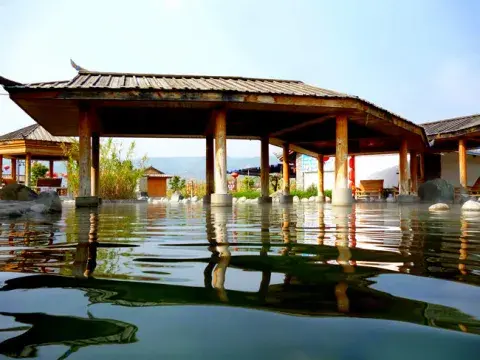
Many cultural sites and scenic spots are scattered along the lakeside. They are Mosuo villages, plateau hot springs, the underground maze- Lucky Cave, the Chieftain's Palace, Zhamei Lama Temple, Riyuehe - The Ruins of the Yuan Army Quarters when Kublai Khan was on his south expansion and Yongning - the key town on the Ancient Tea-horse Road.
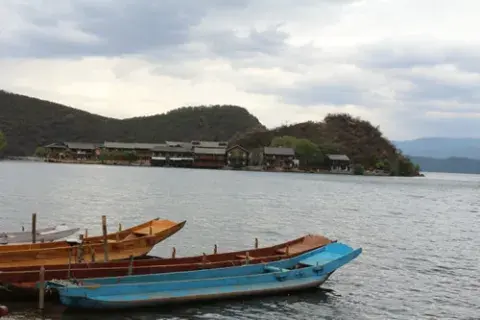
The pretty and graceful Mosuo girls, the ancient and natural canoes and the pleasant fishing songs are considered to be the three most enjoyable things on the lake.
The Mosuos, a branch of the Naxi ethnic group with a population of about 15,000, are the main ethnic group scattered in the lakeside villages. The Mosuo women wear long hair tied into a bun and red, green and black garments and white folding skirts with colorful sashes tied round their waists. Before 13 years old, they usually wear long gowns. After the initiation ceremony at the age of 13, men wear trousers and women wear skirts.
The Mosuo people have their own ways and customs, and still retain some remnants of the matriarchal society. Men and women are not bound by marriage, each living at one's mother's home. Men work at home during the day and spend their night with the women they loved in theiv homes. Children are under the care of and supported by their maternal families. Fathers do not live in the same family with their children and women so that they are not bound up with their women financially in their production and life. This unique wedlock values affection and gives more freedom to men and women in their relationships. They may choose to unite or separate at will. It has been considered as the living fossil as a basis for a study of social patterns and matriarchal marriage customs in today’s world.
The Mosuo wooden houses are built with square-deged timber in the style of 'jinganshi building’ also called Mulengfang (Timber House). The Naxi villages look graceful and unaffected. The Zhuanshan Festival (the Festival of Turning-around the Mountain) which falls on 25th July of the lunar year is the traditional festival of the Mosuo people. On that day they would dress in their Sunday best to worship the Gemu Goddess Mountain (the Lion Mountain) and pray for the Goddess' protection. It is also a time for horse racing, wrestling and antiphonal sining. The young people take the chance to search for their lovers, whom they call A xia.
Top Yunnan Province Tours
$300 Per Day
7 Days Kunming - Dali - Lijiang Classic Tour
Day 1 Arrive in Kunming - Free time
Today's Activities
Arrive in Kunming, the Spring City of China. Meet your guide at the airport and transfer to the featured hotel to check in. After a little rest, free to explore around Kunming city, such as the "Kunming 's Jade" - Green Lake Park, Kunming's symbol building - Phoenix Archway, and the vibrant Flowers and Birds Market. Tonight you will stay at the featured hotel in Kunming.
Day 2 Kunming
...Read moreDay 1 Arrive in Kunming - Free time
Today's Activities
Arrive in Kunming, the Spring City of China. Meet your guide at the airport and transfer to the featured hotel to check in. After a little rest, free to explore around Kunming city, such as the "Kunming 's Jade" - Green Lake Park, Kunming's symbol building - Phoenix Archway, and the vibrant Flowers and Birds Market. Tonight you will stay at the featured hotel in Kunming.
Day 2 Kunming
Today's Activities
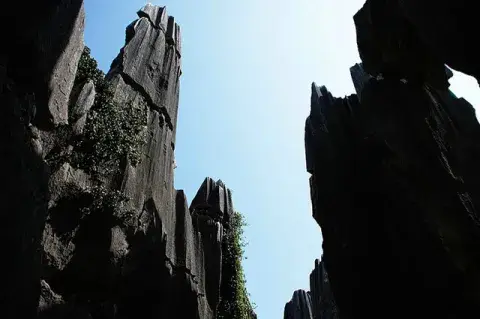
In the early morning we take you to visit the Yunnan Stone Forest, which is one of most remarkable natural phenomena of China. You will wonder at the innumerable bizarre-shaped ancient limestone cliffs and peaks, which is created by wind and water erosion some 270 million years ago.
After lunch you will proceed to explore the Guandu Old Town, which is one of the historic and cultural towns in Kunming area. The ancient Shaolin Temple and Vajra Pagoda are the must-see of this old town. You will spend a lazy afternoon without the hassle of leaving the city. You can sit down for a cup of tea and chat with local people. A designated food street on the old town's east side offers a wide selection of local eats. Tonight you will stay at the hotel in Kunming.
Day 3 Kunming - Dali
oday's Activities
After breakfast in the hotel, you will go to visit the Western Hills where Taoist temples and Buddhism Temples could be found. A very beautiful lake view of the Dianchi Lake comes into your eyes if being on the top of the Hills - Dragon Gate. The elevation of the Dragon Gate is over 2,300 meters, 300 meters higher than the water surface of the Dianchi Lake. It consists of the Sanqing Temple and the Dragon Gate Grotto which was accomplished through 72 years of hard work (1781-1853). The 3rd March of lunar year is a festive time in the Western Hills, when it is considered the best time for Kunming residents to climb the mountains and look into the distance, to admire the spring flowers and appreciate the feeling of new life.
After lunch, transfer to Dali city, the economic and cultural center of the Dali Bai Autonomous Prefecture. Overnight at the hotel in Dali.
Day 4 Dali
Today's Activities
Today, enjoy your one-day day city tour. You will first take a visit to the famous Three Pagodas of Chongsheng Monastery. Then continue to explore Cangshan Mountain that made up of 17 peaks, among which, Malong Peak is the highest one that reach the height up to 4122m. You will catch a cable way up the mountain. On the mountain top, you can enjoy the fantastic view of Erhai Lake. After that, you have chance to ascend on the Ancient City Wall of Dali. Later return back to Dali Ancient Town to explore the town. Tonight you will stay at the hotel in Dali.
Day 5 Dali
Today's Activities
Today's program starts from Xizhou Village which is located about 18 kilometers north of Dali. Xizhou Village is one of the Bai ethnic minority villages around the Erhai Lake and has historic prominence with a cluster of over 100 protected buildings. First you will walk around local morning market to learn about local life and appreciate minority's handicraft works. Then your guide will escort you to visit the Yan Family's Residential House which is the typical house of local residents characterized by a traditional Chinese rectangular courtyard with a screen wall facing the gate. You will be greeted with the show of Three Courses of Tea which is the genuine tea ceremony of the Bai minority, and treated to a song & dance performance by local Bai people. Drive back to Dali. Enjoy a leisure stroll in Dali Old Town in the evening.
Day 6 Lijiang
Today's Activities
After breakfast, we will drive you to the spectacular Jade Dragon Snow Mountain, which is the largest snow mountain in the Northern Hemisphere. You will first enjoy the beautiful landscape at the Baishui River (White Water River). It flows at the foot of the Jade Dragon Snow Mountain. The riverbed is made up of white marble and lime stones and the river looks white, hence the name of White River (Baishui).
Then proceed to Jade Water Village - a sacred palce of Dongba people. where you will visit a local Naxi family to get a close touch to the daily life of Naxi Minority.
Then visit the Jade Summit Lamasery, a famous Tibetan Temple with ancient forests clustering around . In its northern countyard you can enjoy the treasure of the temple - the giant Camellia Tree, which is more than 500 years old. Because its blossoming period lasts more than 100 days a year, and produces more than 20,000 flowers in 20 groups, it is renowned as "Ten-thousand-flower Camellia".
Afterwards catch a cable car to the summit of the Yak Meadow, one of 13 peaks of the Jade Dragon Snow Mountain. The landscape rises and falls on the meadow. In spring and summer, you can find yaks with black and white skin wandering in grass and all kinds of flowers. In autumn and winter, you will wonder at the sharp contrast between the mild edge of the meadow and the peaks of the snow mountain. The view is unforgettable. Looking down at Ganhaizi and continuous mountains, you will find that the snow mountain is so close to you. Cool wind gently blows on your face. All the things here are so beautiful and peaceful.
After lunch you enjoy the famous movie director Zhang Yimou's musical show "Impression Lijiang". Tonight you will stay at the hotel in Lijiang.
Day 7 Depart Lijiang
Today's Activities Free at leisure until transfer to the airport for next destination. Wish you a happy journey!
$63 Per Day
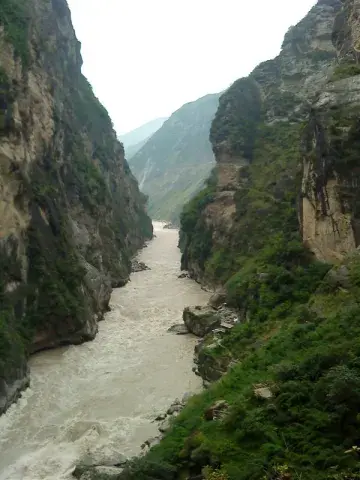
Two days hiking trip in Tiger Leaping Gorge
This is a wonderful hiking two days trip in Tiger Leaping Gorge, Day 1 pick up from lijiang hotel 8:30 by 2 hours car to Qiao tou,start hiking from qiao tou take 5 hours up to Tea hourse G.H over night there. Day 2 after breakfast take 4hours hiking down to the middle tiger leaping gorge ,have lunch there, then walk down to the river about 3-4 hours after take car back to lijiang.
$300 Per Day
9 Days Kunming - Xishuangbanna - Jianshui - Yuanyang
Day 1
we will meet you outside the baggage claim area at Kunming Airport and transfer you to the hotel. The rest of the day is on your own to explore the city.
Accommodation: chose you like it.
Day 2 After breakfast, drive to Stone Forest.
The Stone Forest which is crowned as 'the essence of karst landforms in the world' and 'one of the eight natural wonders on earth'. Besides the rare geologic landscape and various stone formations, the rich Yi ethnic culture is also a highlight in the scenic area.
...Read moreDay 1
we will meet you outside the baggage claim area at Kunming Airport and transfer you to the hotel. The rest of the day is on your own to explore the city.
Accommodation: chose you like it.
Day 2 After breakfast, drive to Stone Forest.
The Stone Forest which is crowned as 'the essence of karst landforms in the world' and 'one of the eight natural wonders on earth'. Besides the rare geologic landscape and various stone formations, the rich Yi ethnic culture is also a highlight in the scenic area.
Day 3 Kunming to Jinghong in Xishaungbanna
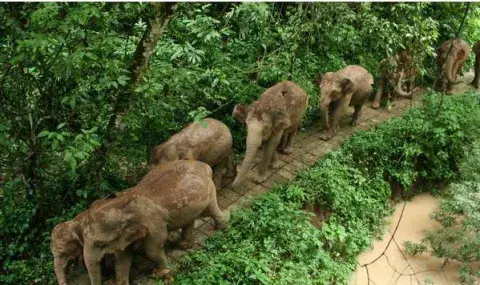
Arrive in Jinghong , transfer to the hotel and have a rest .In the afternoon, you will travel to the Wild Elephant Valley in Sanchahe Nature Reserve, the only region in China where wild elephants are living. Here, you could appreciate the wild elephants herding and moving in companies, watch the trained elephants performing dancing, greeting and bathing as well as admire the amazing tropical rainforest landscape.
Accommodation:Dai Garden Hotel ( 4 star)
Day 4 Jinghong in Xishuangbanna
Today, we will transfer you to Menglun along the Mekong River to visit the Tropical Botanical Garden. On the way, visit the local market, a minority family and the temple in Ganlanba.
The Ganlanba is a place full of tropical scenery and Dai minority flavor. The majestic, splendid and ancient temples are the highlights to see. If Xishuangbanna is described as evergreen boundless forest, the Tropical Botanical Garden would be the soul of it, which collects the most typical rare plants of tropical rainforest. Afterwards, we will transfer you back to Jinghong.
Day 5 Jinghong in Xishuangbanna
The excursion will take you to Menghai in the morning to explore the Jingzhen Octagonal Pavilion, the Aini People's Village and the Tea Plantation.
In the afternoon, you will return to Jinghong and visit the Manting Park, the oldest park in Xishuangbanna. This is a place where you could enjoy beautiful scenery, appreciate unique constructions and taste traditional culture of the Dai People.
Day 6 Jinghong - Kunming - Jianshui
Arrive in Jianshui , transfer to you hotel and have a rest ,or night viewing the Jianshui Old Town.
Day 7 In Jainshui
You will firstly visit the Zhu Family Garden, a grand complex featuring in fancy combination of garden architecture and dwelling house. After that, you will proceed to Jianshui Confucius Temple, the largest Confucius Temple in Yunnan.Then we will take you to visit a 17-hole stone bridge, the Double Dragon Bridge.Last, visit today will end with a visit to Jianshui Ancient Town, famed as the 'Museum of Ancient Constructions'.
Day 8 Jianshui to Yuanyang
Today we will visit to a local market, a brilliant scene in Yuanyang when the locals flock in from all quarters wearing their colorful costumes and dresses. After, you will come to Duoyishu, another famous scenic area of Yuanyang Rice Terraces, to visit its local village and terraced fields. The last travel destination is the terraced fields in Laohuzui (Tiger's Mouth), distributed in a deep valley and resembling a huge flower.
Day 9 Back to Kunming
Depart Kunming, end our this tour.