Yaobang Hu Former Residence
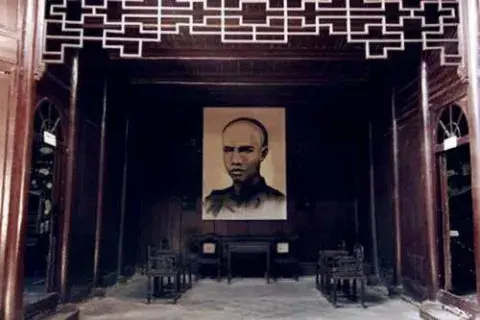
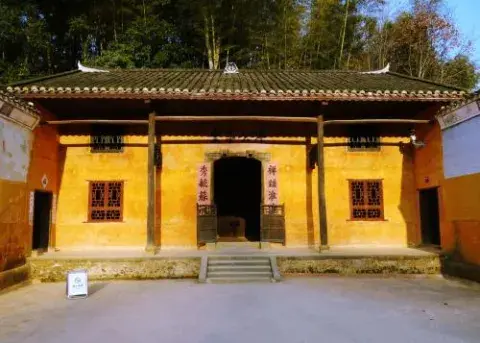
Hu yaobang's home in liuyang city, hunan province in the east direction, into a hilly area, the terrain gradually increased. It is more than 40 kilometers away from liuyang city. Hu yaobang's former residence is a typical hunan peasant buildings, sits, Chinese style tile and brick structure, it i...
Hu yaobang's home in liuyang city, hunan province in the east direction, into a hilly area, the terrain gradually increased. It is more than 40 kilometers away from liuyang city. Hu yaobang's former residence is a typical hunan peasant buildings, sits, Chinese style tile and brick structure, it is said that the reign of xianfeng, qing dynasty established, this rate has a history of more than 140 years for hunan province key cultural relics protection units. On November 20, 1915, hu yaobang was born in the ordinary residence of zhonghe mountain and spent his childhood and boyhood. He began his studies with excellent results and accepted the revolutionary truth under the influence of local progressives. In 1930, at the age of 15, hu yaobang said goodbye to his hometown and embarked on the revolutionary road with the red army of the workers and peasants. In January 1963, when hu yaobang was the secretary of the CPC hunan provincial committee and the first secretary of xiangtan land committee, he made a short stay in the liuyang rural investigation. In 1995, in the superior leadership and importance to the departments concerned, the former residence in accordance with the original repair, rehabilitation display the boyhood home, parents and brother hu yaobang's housing, main hall, the transverse hall, sitting room, kitchen, etc., and opening to the outside world. In January 1996, the former residence was designated as hunan provincial cultural relic protection unit. In 1998, hu yaobang was added to the exhibition. Since 1999, it has carried out comprehensive environmental protection and construction planning with the support of the superior government and competent authorities, and will gradually implement various supporting venues and facilities. In April 2002, the former residence was designated as the patriotic education base of hunan province. Hu yaobang, former general secretary of the communist party of China (CPC) central committee, is located in the village of liangfang in liuyang city, hunan province. The former residence was built in the xianfeng period of the qing dynasty, with the north facing south, the small green tile and the civil structure, which is the typical architectural style of liuyang rural residential buildings in the late qing dynasty. It is an inverted concave type layout with a total area of 450 square meters and a total of 19 rooms, including the former residence of hu yaobang from the west of the central axis, and hu's family home in the east.

Zhouluo Grand Canyon
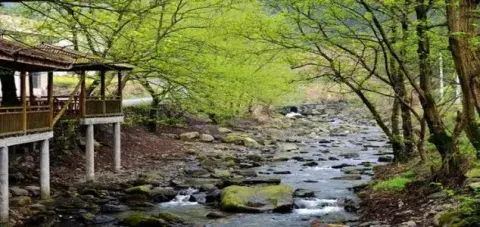
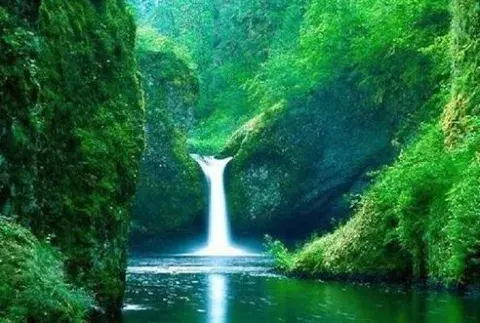
On the basis of the tourist resources of the original stone pillar peak, zhouluo scenic area covers about 14 square kilometers of tourism resources, such as zhouluo, zhouluo gorge and night heshan in shizhu peak area. Zhou Luo club port town of northern scenic spot in liuyang city, hunan province...
On the basis of the tourist resources of the original stone pillar peak, zhouluo scenic area covers about 14 square kilometers of tourism resources, such as zhouluo, zhouluo gorge and night heshan in shizhu peak area. Zhou Luo club port town of northern scenic spot in liuyang city, hunan province, formerly known as Zhou Luo tourism village, scenic area the transportation is convenient, about 60 kilometers from changsha, about 75 km from xiangtan, about 70 km from zhuzhou, connected to the national highway 106.
The traffic

Yangjiajie Scenic Area
Yangjiajie Scenic Area is one of the must-see attractions in Zhangjiajie. Yangjiajie is located in the southwest Zhangjiajie, next to the Tianzi Mountain. Few people knew Yuanjiajie ten years ago. But world knows Yuanjiajie at present. Thanks to its splendid natural scenery. It...
Yangjiajie Scenic Area is one of the must-see attractions in Zhangjiajie. Yangjiajie is located in the southwest Zhangjiajie, next to the Tianzi Mountain. Few people knew Yuanjiajie ten years ago. But world knows Yuanjiajie at present. Thanks to its splendid natural scenery. It is a sacred scene that enjoyed the same fames of Zhangjiajie National Forest Park, Suoxi Valley and Tianzi Mountain.
Yangjiajie consists of three parts: Xiangzhi stream, Longquan valley and Baihou valley, in which there are altogether over 200 scenic spots. At Xiangzhi stream, one sees undulating peaks extending into the distance and limpid brooks winding along the deep gullies, and hears birds and cicadas singing in the dusk along the ancient roads, it is a land of peace indeed!
Yangjiajie has much to do with the aristocratic Yang Family in Song Dynasty (960-1279), whose three generations of members, both the men and women, were faithful patriotic generals or soldiers on the battlefield. It is said the in the northern song dynasty the generals from the yang family camped in the Tianzi mountain when they were encircling and suppressing Xian.Their stories often appear in Chinese TV series or films, such as the film Yang ka cheung. In Yangjiajie many scenic spots are related to the stories of the family.
What to See in Yangjiajie
► Five-color Flower in Liucui Stream
Have you ever seen a five-color flower? You can find this kind of plant in Yangjiajie Scenic Area. According to some researches, the five-color flower can be seen in the upper reach of Liucui Strem.
► King of Vine in Old Vine Bay
There is a spot called "old vine bay" in Yangjiajie. It is a kingdom of old vines. And there is a king of vine here which is called "the largest vine in China"!
► Cliff Pine Tree
It is a strange scene that three pine trees are living in a cliff without soil and water. People would like called this scene as "pine trees bit cliff".
► Dragon Spring Waterfall
Dragon Spring Waterfall looks like a hanging waterfall falling down from the heaven. No matter how hot you are, you will immediately feel cooler when you are standing in front of the waterfall. When you feel a little cold, you can walk into the pool of this waterfall. Since that, you will feel a warm breeze.
► White Crane Lawn
White Crane Lawn is a rest place for white cranes, thus it gets the name. If you have a chance to appreciate white cranes here, you will find a life of Shangri-la. The best time to enjoy scene in White Crane Lawn are morning times and evening times. In the morning, white cranes will spread their wings and begin to fly with dulcet tweets. And in the evening, white cranes come back with the dusk scene as the background. They will play with each other for a period, and then, become quiet gradually in the night.

Yueyang Pavilion
The Yueyang Pavilion is an ancient architectural treasure which is located on the shores of Dongting Lake in Yueyang City, Hunan Province. It is one of four famous Chinese pavilions. The other three are the Tengwang Pavilion in Hubei Province, the Yellow Crane Tower in Jiangxi Province and the Pe...
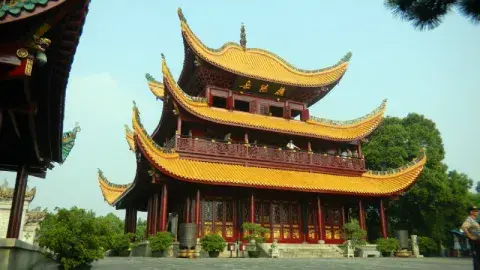
The Yueyang Pavilion is an ancient architectural treasure which is located on the shores of Dongting Lake in Yueyang City, Hunan Province. It is one of four famous Chinese pavilions. The other three are the Tengwang Pavilion in Hubei Province, the Yellow Crane Tower in Jiangxi Province and the Penglai Pavilion in Shandong Province.
The Yueyang Pavilion is a three storey, rectangular building which reaches 15 meters (about 49 feet) high and is constructed entirely from wood. Surprisingly, no nails or beams have been used in its construction. This is a rare feature in classical architecture. Pillars have been included in the construction to ensure the strength of the building. Four pillars made of 'Nanmu' wood support the entire pavilion; twelve pillars of catalpa wood support the eaves of the first storey and a further twelve pillars have been included to support the second storey. The roof is built using unusual curved lines which are similar to the shape of a helmet used by a knight of ancient times.
Seen from a distance, the Yueyang Pavilion seems like a giant bird which is in flight. The red building with its yellow glazed roof tiles is a splendid and colorful sight. Views here are spectacular. You will see the pavilion glowing in the sunshine together with the drifting clouds as reflections on the glimmering surface of the Dongting Lake. You will also see the white sails of passing boats contrasting with the blue sky. Couplets and carved screens are hung on the wall inside the building providing the visitors with the history of this pavilion.
The age of the pavilion is disputed. However, it is generally believed that it was built more than 1,700 years ago. During the Three Kingdoms Period (220-280) the rudimentary form of the building was that of a parade (ceremonial) pavilion. During the Western Jin (265-316) and the Northern and Southern Dynasties (386-589), it was used by the military with the name of 'Baling Tower'. It was not until the Tang Dynasty that it was renamed as the Yueyang Pavilion. The pavilion was damaged in the chaos of wars and was rebuilt in the Song Dynasty (960-1127). Since then, it has become a tourist attraction and a place of inspiration for both poets and writers. It was made very famous during the Northern Song Dynasty (960-1127) by the works of Fan Zhongyan who was a great politician and writer.
Admission Fee: CNY 80
Opening Hours: 07:00 to 18:30 (May 1 to September 30)
07:30 to 18:00 (October 1 to April 30)
Bus Route: take bus no. 10, 19, 20, 21, 22, 23, 24, 31, 50, tourism bus line 2 and 15, and get off at Yueyanglou Park Station.

Brief introduction for the Ancient Town of Fenghuang
The ancient town of Fenghuang is located in the southwest part of the western Hunan Autonomous Prefecture. It is named so because one of the mountain is shaped like a flying phoenix which in Chinese is called Fenghuang. Fenghuang ancient town has a history of ...
The ancient town of Fenghuang is located in the southwest part of the western Hunan Autonomous Prefecture. It is named so because one of the mountain is shaped like a flying phoenix which in Chinese is called Fenghuang. Fenghuang ancient town has a history of over one thousand years. It is surrounded by mountains and Tuojiang River runs through.
Since ancient times, Fenghuang ancient city has been inhabited by Miao and Tujia people with a total area of 1759 square kilometers.
Its history can be dated back to Ming dynasty. At that time, it was built as Wuzai Chief Division. Latter in Qing dynasty, it was known as Phoenix Division. In 1913 it changed its name into Fenghuang County. The typical ancient southern architectural style makes it unique. Fenghuang is famous for its description in Shen Congwen’s novel “The Border Town”, which depicted a vivid picture of Western Hunan. The New Zealand writer Louise Rewi Ally also names it one of the most beautiful town in China. In 2001, it was listed as one of the national historical and cultural cities by the Sate Council.
The beautiful scenery contributed to the birth of genius. According to statistics, from 1840 to 1875, during 36 years, there were more than 110 provincial chief commanders, so on. After the Republic of China, a group of great men were born here. They are Xiong Xilin, who was the first prime minister, as well as politician state men, educationalist and philanthropist, Shen Congwen, a famous writer who twice won the nomination of the Nobel Prize in Literature for his masterpiece of “The Border Town”, Huang Yongyu, the outstanding artist, especially good at drawing Lotus flower. Fenghuang Stars to the world.
There are four Fenghuang Cities in the world, wandering in Shen Congwen’ work The Border Town, plunging into the painting Lotus of Huang Yongyu, evading in the back basket of Song Zuying, the last walking in the travels of Rewi Alley.
The small city is full of Paul Simon affection voice—The Scarborough Fair, following with his old guitar. The little girl with a basket full of colorful flowers is hawking for sale. Every street smells the faint scent. Fenghuang City becomes a big garland. She has forgotten completely that once she was called as Widows City. More than7000 Miao men went to Jiashan, Zhejiang Province to resist the Japanese aggression in 1937. The force is called Division 128. That mutilated commander was Gu Jiaqi, a local Fenghuang citizen. He commanded this powerful army and attacked the enemy tens of thousands miles away, but he also kneed down at Hongqiao crying for his dead fellows and 7000 young wives and old mothers. In that winter mourning apparels and paper flowers filled the city together with the snow. They were as white as the Wild Chrysanthemum which that little girl is selling.

Red Stone Forest Park
The National Red Stone Forest Geological Park is very close the Furong Town and Zuolong Gorge. In 2005, It was approved as the national geopark. There are modeling stone everywhere in the...
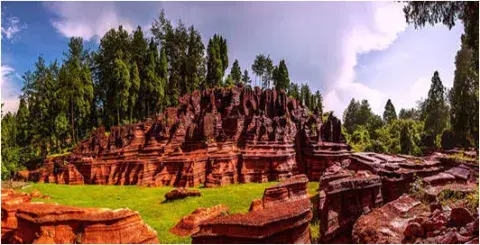
The National Red Stone Forest Geological Park is very close the Furong Town and Zuolong Gorge. In 2005, It was approved as the national geopark. There are modeling stone everywhere in the park and the stone changes colour in different time, different season and different weather. For instance, they are red in sunny days, and become black in rainy days, howerever, it gets brown red in the cloudy day. It is a kind of Karst Landform, nevertheless, most of the Karst Landform is gray, the red one is very unique.
The Stone Forest never got disturbed until it was found. There are plenty of streams, springs and floweres. The whole park is amazing and delicate, like a natural botanical garden. Come here and explore the beauty!

Yaozi Village
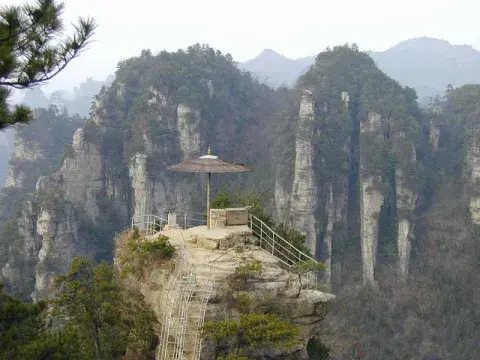
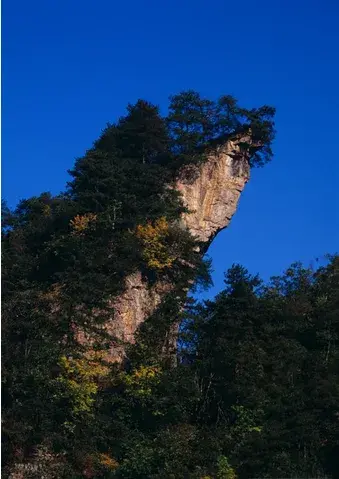
Yaozi village is famous for its dangerous precipices and cliffs, even the “Yaozi”(the forth tone), can not fly beyond it, hence the name Yaozi village. Yaozi, in Chinese, is a bird of prey. Because it appears as a huge “Kidney”, Yaozi village was formerly named “Kidn...
Yaozi village is famous for its dangerous precipices and cliffs, even the “Yaozi”(the forth tone), can not fly beyond it, hence the name Yaozi village. Yaozi, in Chinese, is a bird of prey. Because it appears as a huge “Kidney”, Yaozi village was formerly named “Kidney village, As a matter a fact.

Mt. Hengshan Scenic Spot
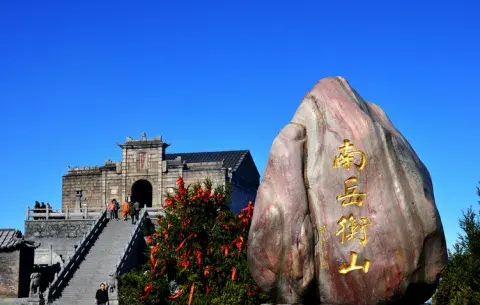
Being one of the famous mountains Wuyue (a collective name given to five famous mountains in China), Mt. Hengshan is found in Hengyang City in Hunan Province, it is also referred as Nanyue, meaning South Mountain. It has eminent mountain peaks and wonderful mountain scenery.
Mt. Hengshan ...
Being one of the famous mountains Wuyue (a collective name given to five famous mountains in China), Mt. Hengshan is found in Hengyang City in Hunan Province, it is also referred as Nanyue, meaning South Mountain. It has eminent mountain peaks and wonderful mountain scenery.
Mt. Hengshan is composed of 72 peaks, among which the first mountain peak you will see when climbing is Huiyan Peak. Going further toward the north, you will feast your eyes on all the graceful scenery. Here in Mt. Hengshan, no mountain peaks are without trees. It is green all over. There are various kinds of precious trees and a vast area of primeval forest. Among all these trees here, some are 300 - 400 years old, which still bloom when spring comes. Some trees are even over 1,000 years old. The trees in the primeval forest are bending with lichen growing on the trunks, resembling old men wearing tattered clothes. From the mountain peaks, you can see the grand view of sunrise, the rolling cloud and the oceans of trees. There magnificent views are called 'four oceans' on Mt. Hengshan: ocean of flowers, ocean of trees, ocean of cloud and ocean of snow.
People summarize all the spectacles here as 'the eight marvels in Mt. Hengshan'. They are the height of the Zhurong Peak, the grace of the Sutra Collection Hall, the profundity of Fangguang Temple, the quietness of Mojingtai, the magic of the Shuilian Cave, the antiquity of Dayu Stele, the majesty of the Nanyue Temple and the steepness of Huixian Bridge. Zhurong Peak is the highest mountain peak of this scenic area. Sutra Collection Hall is located deep in the glen and is surrounded by towering trees. The running spring and flying birds make this place very peaceful and leisurely. Huixian Bridge is in fact a bridge on a big stone. It is narrow and dangerous, and few people are brave enough to go over it.
This scenic area is also a well known and hallowed Buddhist ground. It has abundant temples including nunneries and Taoist temples. The most notable one is Nanyue Damiao, the largest temple in Wuyue. It was originally built in the Tang Dynasty (618-907), but was destroyed by fire. In the Qing Dynasty (1644-1911), it was renovated imitating the design of the Forbidden City.
Various reputations were gained at this scenic area: a particular religious hallowed ground and a marvelous scenic locale for both summering and touring. Here you can watch blooming flowers in spring, prevent sunstroke in summer, watch sunrises in autumn and enjoy the beautiful prospect of snow in winter. If you are traveling in China or going to travel in China, do not miss the wonderful trip to Mt. Hengshan.
Transportation: Take the bus No.1 in the urban area of Hengyang, getting off when you reach the last stop (Western Bus Stop), transferring to a coach to get the Hengyang County, then you will reach the scenic area.
Admission Fee: CNY 100 (Entrance Charge)
CNY 50 (Nanyue Damiao)
CNY 70 (cable car, round-trip)
CNY 40 (cable car, single-trip)