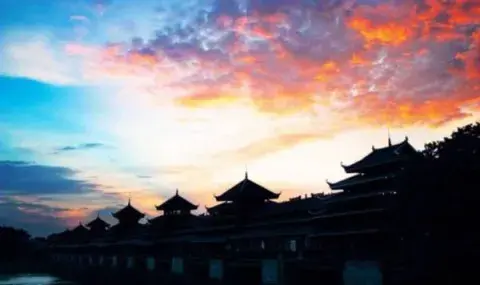
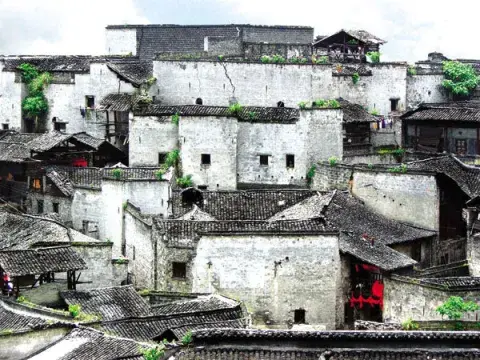
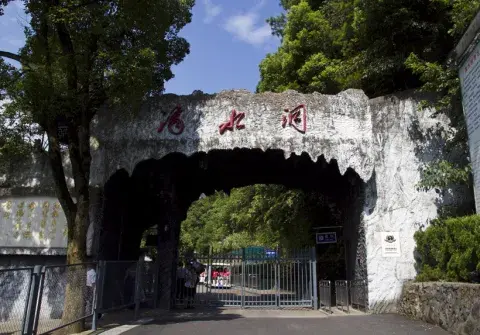
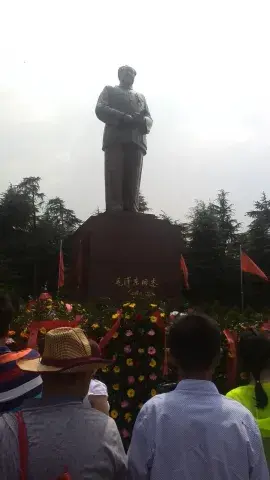
The name Mount Yuelu is related to a famous line from the book" Story of Nanyue" written by Liu Song of the Southern and Northern Dynasties (420AD-589AD). The line reads eight hundred square meters around Nanyue, the head is Huiyan and the foot is Yuelu. And the mountain was ever since called Mount Yuelu.
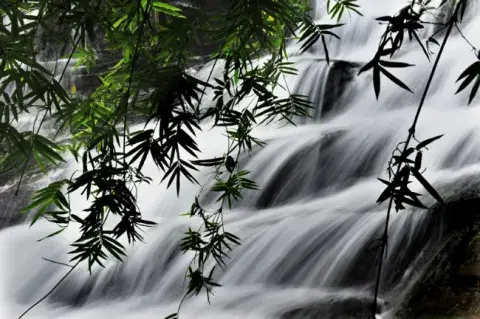
As an extended part of the mysterious Mount Hengshan range, Mount Yuelu covers a total area of 8 square kilometers with its highest peak 297 meters above sea level. There are also many peaks with exuberant trees and reclusive and precipitous mountain streams.
Except for the beautiful natural sceneries, Mount Yuelu is also dotted with lots of famous places and ancient relics since Western Han Dynasty(206BC-25AD), such as Aiwan Pavilion, Lushan Temple, Wangxiang Pavilion, Lushan Temple Stele of Liyong (678AD-747AD) in Tang Dynasty, and the Monument to Emperor Yu carved in Song Dynasty, etc. Among the evergreen pines and cypresses also lie Huangxing's Tomb which is under state protection, and the Tombs of Cai E and Chen Tianhua, who were both outstanding revolutionists.
Aiwan Pavilion
As one of the four well-known pavilions in China, Aiwan pavilion is a pavilion of ancient style built in the Qing Dynasty. It is square in form with gilt columns and painted red inside. There are four external beams made with complete stripes of granite. It is constructed with double eaves on top with four slopes. And a spiking treasure bottle is fitted atop. Its four corners stretch away upward, covered with greenish glazed tiles.
The original name of Aiwan Pavilion was Hongye Pavilion and the present name is derived from the poem Strolling in the Mountain written by Du Mu (a poet of Tang Dynasty).
Aiwan Pavilion is not only a famous scenic spot, but also an important site of treasured memories of the revolutionaries like Mao Zedong, Cai Hesen, and Luo Xuezan.
Lushan Temple
The Lushan Temple, also known as Luyuan or Huiguang Temple, built by the monk master Fachong of Zan religion during the Jin Dynasty (265AD-420AD), has a long history of more than 1700 years. The temple was first built in the second year of Renshou during the reign of Emperor Wen of the Sui Dynasty (581AD-618AD) as he gave an imperial edict that a pagoda for Buddhist relics be built. During the 18th year of Kaiyuan under the reign of Emperor Tang Xuanzong, the well-known writer and calligrapher Li Yong wrote "Lushan Temple" for the stele, known as San Jue Bei, a stele perfect in such three aspects as literary talent, calligraphy and engraving.
Originally, it had a main hall and a rear hall, however, nowadays only the rear hall remains there. The arch gate of the temple is built in the local architectural style and upon it there is a sign bearing the legend "Ancient Lushan Temple".It is roofed with yellowish tiles and supported by red columns.
The Lushan Temple Stele, a black stone with a round top, is a well-known stele of ancient China. Four Chinese characters of "Lu Shan Si Bei"(Lushan Temple Stele) were inscribed on it and the inscription on it contains 1419 Chinese characters which recorded the origins and the development of Buddhist doctrine preaching activities through the period between the establishment of the temple in the Jin Dynasty (265AD-420AD) and the setup of the stele in the Tang Dynasty (618AD-907AD).