

Gubei water town
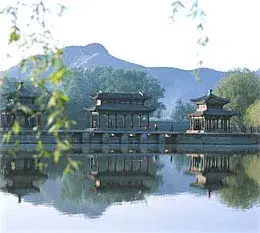
Situated in Gubeikou Town of Miyun County in Beijing, Gubei Water Town surrounds the beautiful Mandarin Duck Lake Reservoir and leans against the Simatai Great Wall, the most dangerous and majestic section of the entire Great Wall. Regarded as 'Wuzhenin Beijing', Gubei Water Town boasts ...
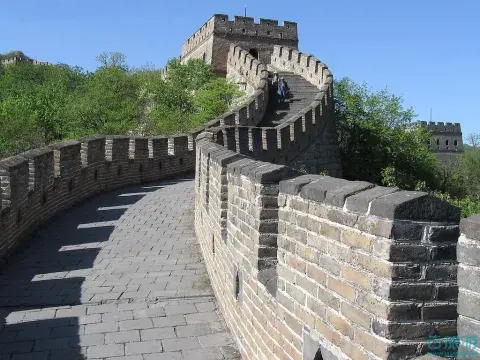
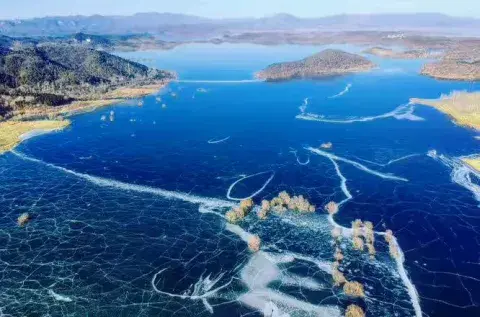
Situated in Gubeikou Town of Miyun County in Beijing, Gubei Water Town surrounds the beautiful Mandarin Duck Lake Reservoir and leans against the Simatai Great Wall, the most dangerous and majestic section of the entire Great Wall. Regarded as 'Wuzhenin Beijing', Gubei Water Town boasts a combination of mountains, water and ancient villages. The town is characterized by the northern architectural style, and the history and culture of the late Qing Dynasty(1644-1911) and the Republic of China (1912-1949) historic period. Most buildings are reconstructed in the traditional courtyard style. Based on five ancient villages and a water resource, this water town has developed into a large-scale sightseeing and holiday destination. Covering an area of 3.5 square miles (9 square kilometers), the holiday resort includes two scenic districts, the Gubei Water Town and the Simatai Great Wall.
Beijing Capital International Airport
Beijing Capital International Airport or "Capital Airport" for short, is located in Shunyi District, Beijing.It is the busiest international airport in China. Beijing Capital International Airport is an important gateway for foreign exchanges.
Capital Airport was built in 1958. For more tha...
Beijing Capital International Airport or "Capital Airport" for short, is located in Shunyi District, Beijing.It is the busiest international airport in China. Beijing Capital International Airport is an important gateway for foreign exchanges.
Capital Airport was built in 1958. For more than 50 years of operation, the annual passenger throughput of Beijing Capital International Airport increased from 1.03 million in 1978 to 86.128 million in 2014, ranking No.1 in Asia and No. 2 in the world.
On September 4, 2015, Beijing Capital Airport ranked the 10th in the top 100 airports in the world by Skytrax, a certification authority of the international civil aviation authority. The selection covers more than 240 airports around the world. According to waiting experience, waiting time, cleanliness and shopping experience, the final result is generated by questionnaires and polls of 110 million travelers worldwide.
December 14, 2016, Capital Airport annual passenger throughput officially exceeded 90 million people mark.
Badaling Remnant Great Wall
The Badaling Remnant Great Wall is located in Donggou Village, Badaling Town of Yanqing District. It is about 65 kilometers (40 miles) from Beijing. This section of the Great Wall is about 5 kilometers (3 miles) from the famous Badaling stretch, and is nearby the western gate of the military defe...
The Badaling Remnant Great Wall is located in Donggou Village, Badaling Town of Yanqing District. It is about 65 kilometers (40 miles) from Beijing. This section of the Great Wall is about 5 kilometers (3 miles) from the famous Badaling stretch, and is nearby the western gate of the military defense system on the Badaling Great Wall. Seen from a distance, the Badaling Remnant Great Wall resembles a dragon winding its way along the mountain peaks. With lofty ridges and towering mountains, the deep trenches and high embankments all contribute to the fortification of this strategically crucial section of the Great Wall. Surviving the vicissitudes of nearly 2,000 years, the walls dominate the scene with an indelible mark made by history. The remnant wall, with its ubiquitous broken body, conveys a peculiar glamour. This section of the Great Wall is in its original form, and exemplifies the character of the Ming Dynasty’s Great Wall. The whole section is 2,000 meters long, but only about 100 meters are open to tourists. Two routes are easily accessible to tourists that plan to enjoy the splendid panorama of the Great Wall at their leisure.
Featured Attractions: The tourist line starts from the watch tower at the opening of the remnant Great Wall, and stretches upwards along the mountains. Tourists can see the damaged walls, collapsed openings, and broken towers. To facilitate the tourists, there are wooden steps and handrails to ensure the safety of tourists. According to the research by experts, there are two ancient sites of great archaeological significance. One is the stone material field where stones were taken to build the Great Wall. There are still huge stones with clear signs of cutting; another place is the brick kiln which was used to produce the Great Wall’s bricks.