Golden Temple of Dambulla
A sacred pilgrimage site for 22 centuries, this cave monastery, with its five sanctuaries, is the largest, best-preserved cave-temple complex in Sri Lanka. The Buddhist mural paintings (covering an area of 2,100 m2 ) are of particular importance, as are the 157 statues.A sacred...
A sacred pilgrimage site for 22 centuries, this cave monastery, with its five sanctuaries, is the largest, best-preserved cave-temple complex in Sri Lanka. The Buddhist mural paintings (covering an area of 2,100 m2 ) are of particular importance, as are the 157 statues.A sacred pilgrimage site for 22 centuries, this cave monastery, with its five sanctuaries, is the largest, best-preserved cave-temple complex in Sri Lanka. The Buddhist mural paintings (covering an area of 2,100 m2 ) are of particular importance, as are the 157 statues.
Polonnaruwa
In the same vein as Anuradhapura, Polonnaruwa is an ancient city occupying a pretty lakeside location offering visitors views of temple and palace remains dating back to the Indian Chola dynasty of the 11th century. The remains are remarkably well preserved and as the city is somewhat small...
In the same vein as Anuradhapura, Polonnaruwa is an ancient city occupying a pretty lakeside location offering visitors views of temple and palace remains dating back to the Indian Chola dynasty of the 11th century. The remains are remarkably well preserved and as the city is somewhat smaller than Anuradhapura, its attractions can be experienced on an overnight trip. Polonnaruwa is 135 miles from Colombo.
We are the best Sri lankan tour operators here in colombo. If you are looking for an amazing travel experience in Sri Lanka. We can make sure This is your one stop online travel shop. find and book your perfect holiday.
Bentota
Bentota used to be a place to rest on the way to Galapatha Temple which legend claims is linked by a maze of subterranean tunnels with all other temples in the area. Today Bentota is big on sea sports and activities; so you may well need a holiday after you get back! On Bentota lagoons calm...
Bentota used to be a place to rest on the way to Galapatha Temple which legend claims is linked by a maze of subterranean tunnels with all other temples in the area. Today Bentota is big on sea sports and activities; so you may well need a holiday after you get back! On Bentota lagoons calm waters you can enjoy everything from jet skiing and windsurfing to wakeboarding and canoeing. Boat trips up the river and deep sea fishing trips depend on weather conditions. Many independent diving schools operate along the beach front during diving season, between December and March/April.
But if thats too much like work, take a brief respite to see the results of a labour of love at the very private Brief, a Jardin tranquille near Kalawila. Sculpted over forty years, it was anything but a brief diversion for Capability Bawa- brother of the renowned architect Geoffrey Bawa who designed some of the most enchanting buildings in Asia, including Lunuganga with an equally magical garden. Brief has a Japanese garden, a Folly, several walled gardens and hidden surprises as well as a private museum of Art inside the house and out.
Adam's peak
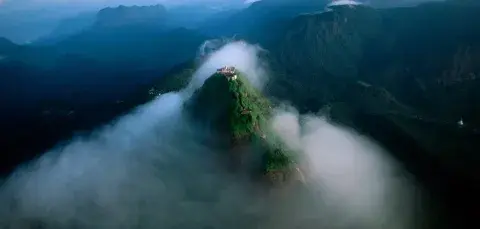
Hill climb of a different type to witness a spectacular sun rise or just for the thrill of the panoramic views of Sri Lanka or for pleasure . Not just a trail but a prilgimage to a summit secred to all of the world's major releigions. The most popular hill trail in Sri Lanka to 2200m above ...
Hill climb of a different type to witness a spectacular sun rise or just for the thrill of the panoramic views of Sri Lanka or for pleasure . Not just a trail but a prilgimage to a summit secred to all of the world's major releigions. The most popular hill trail in Sri Lanka to 2200m above sea level. The season is between December and April when the summit is not misty and relatively dry. There are two popular starting points from the directions of Hatton or Ratnapura.
Easily recognisable from many areas of the western / southern parts of the country because of it's triangle shape summit as well as from the sea to the west. Secret to Christians Muslims as well as Hindus while to Buddhist it is one of the places where Buddha has visited and left a footprint. Today it has been covered by a boulder. The first climbs dates back to 1000AD by then king Vijayabahu I who had built resting places for travellers. Travellers like Ibn Batuta a Arab pilgrim (1304-1377), and Marco Polo (1254-1324) have recorded visiting the summit.
There are few routes to Sri Pada the most used routes are from Ratnapura side or from Hatton/Maskeliya. Public bus services are available from both towns as well as from Colombo and other major towns during the season.
From Ratnapura Side. The difficult path start from about 30km from via Kuruwita, Gilimale, Ratnapura. The climb is about 4-6 hours.
Busses are From Hatton, Special Bus service to Sri Pada is available from various destinations. Alternatively visitors by bus from Colombo (or else where) may first go to Maskeliya and then to Delhousie where vehicular approaches end. The trail is around 8 kM. And the climb would take 2-3 hours minimum depending on how fit you are.
The forest around the area is a wild life sanctuary famous for its butterflies but also and contains a wealth of flora and fauna.
Coral Gardens - Hikkaduwa
Hikkaduwa National Park is one of the three marine national parks in ...
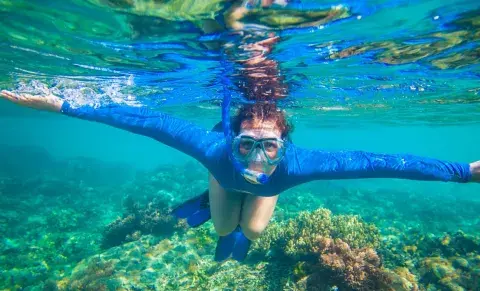
Hikkaduwa National Park is one of the three marine national parks in Sri Lanka. The national park contains a fringing coral reef of high degree of biodiversity. The area was declared a wildlife sanctuary on May 18, 1979, and then on August 14, 1988, upgraded to a nature reserve with extended land area.[1] The growth of the number of visitors in the next 25 years increased thedegradation of the coral reef. To reduce the effects to the ecosystem, the reef was declared a national park on September 19, 2002.
Hikkaduwa coral reef is a typical shallow fringing reef with an average depth of around 5 metres (16 ft).[2] The coral reef reduces the coastal erosion and forms a natural breakwater.[1] The coast of the national park extends four km. Generally the coast is narrow, ranging from 5–50 m according to the climatic conditions of the year. Scuba diving is a popular recreation here.